


 SHARE:
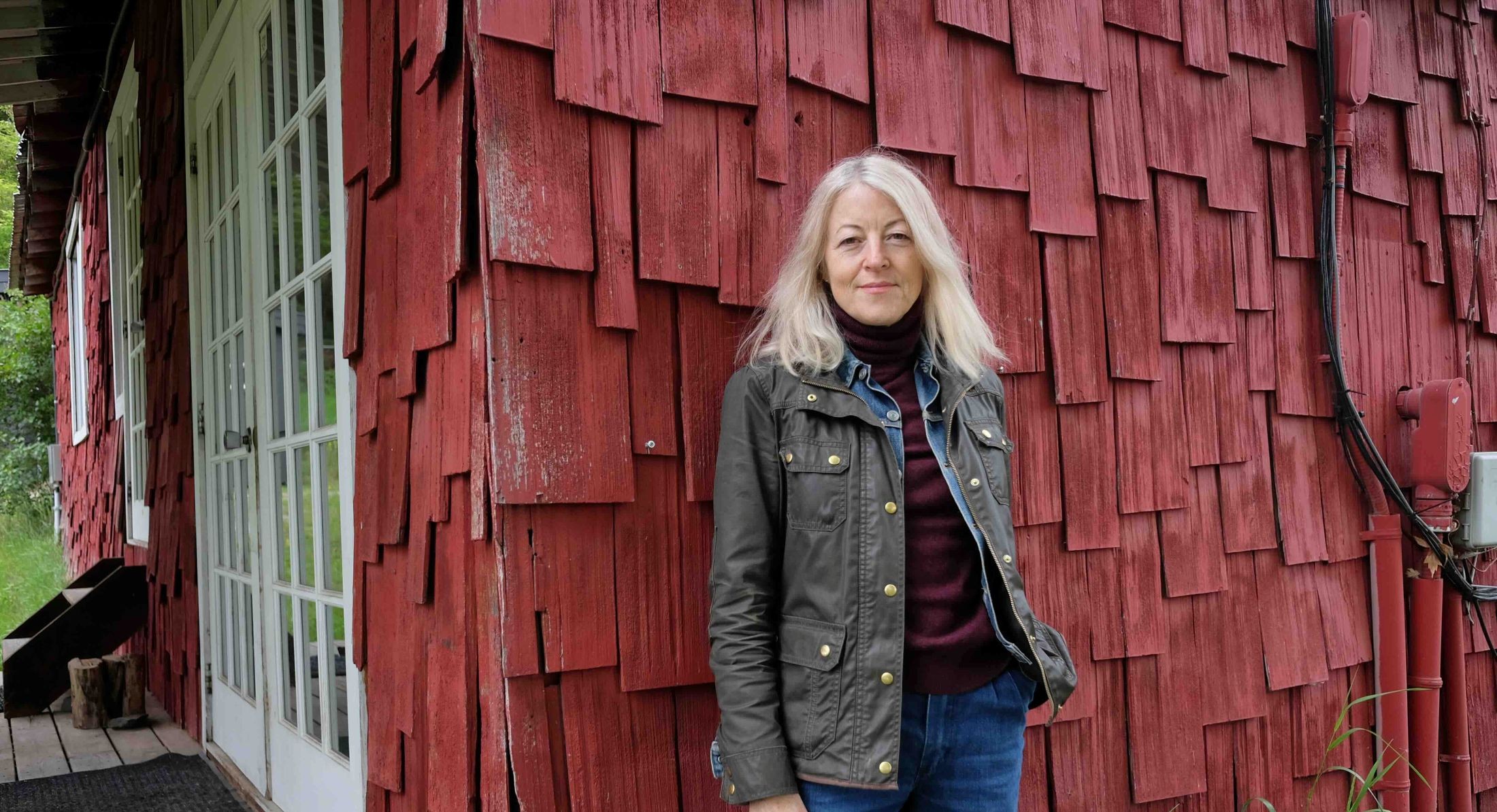
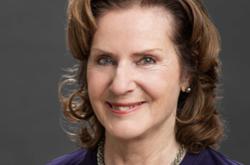
Estelle Shook wants to show you that magic, wonder and beauty exist in the world. The artistic and managing director of Caravan Farm Theatre, an outdoor theatre company in the North Okanagan near Armstrong, B.C., Shook is dedicated to bringing original theatre to small towns in the province. The kind of theatre that leaves you feeling connected to a deeper mystery beneath the surface of things.
“The more individuals who have that kind of experience, the better. Because being open to mystery and wonder and beauty, and all of a sudden having your antenna tuned to that, means that you’re going to go through life looking for that, appreciating it, recognizing it,” Shook said.
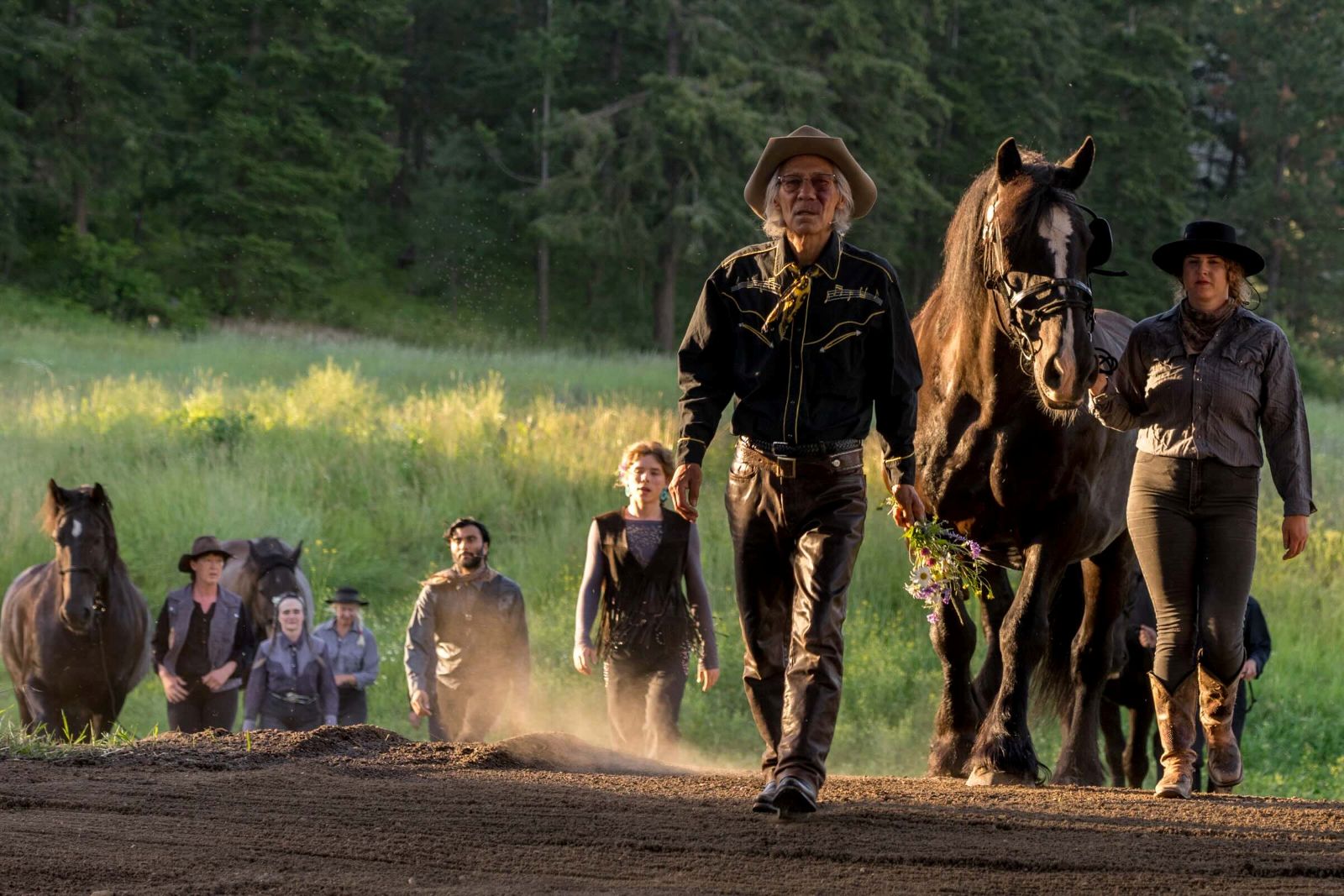
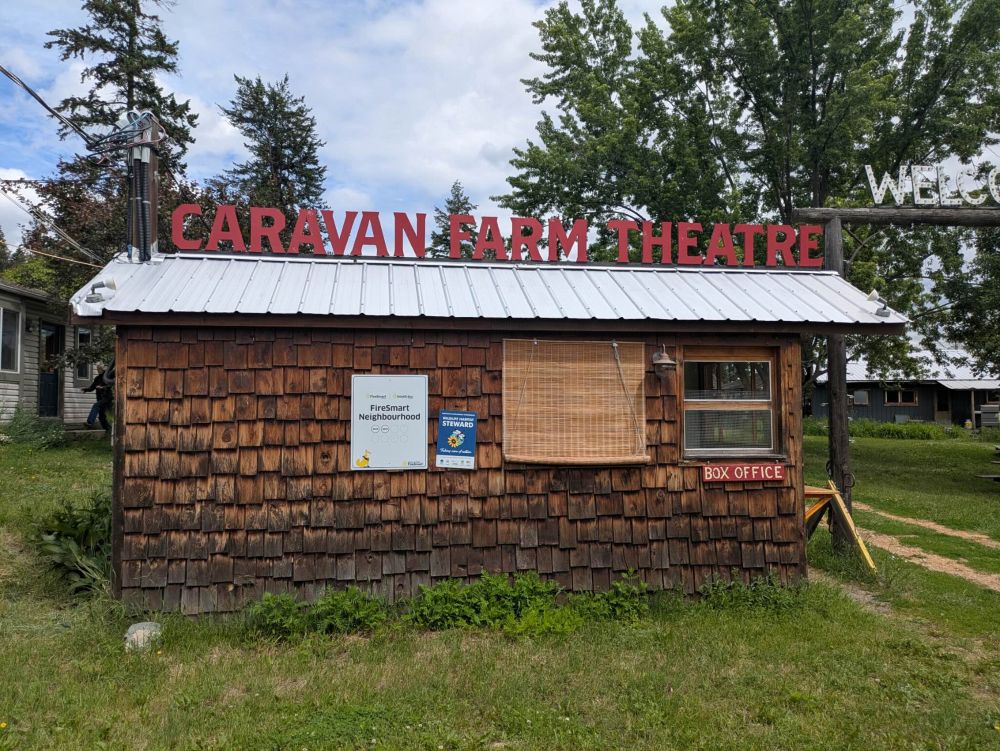
Caravan has a storied history. It’s a professional theatre company located on 80 acres of forest and farmland in the North Okanagan that was founded in the 1970s and to this day retains some of the bold, carefree freedom of the era.
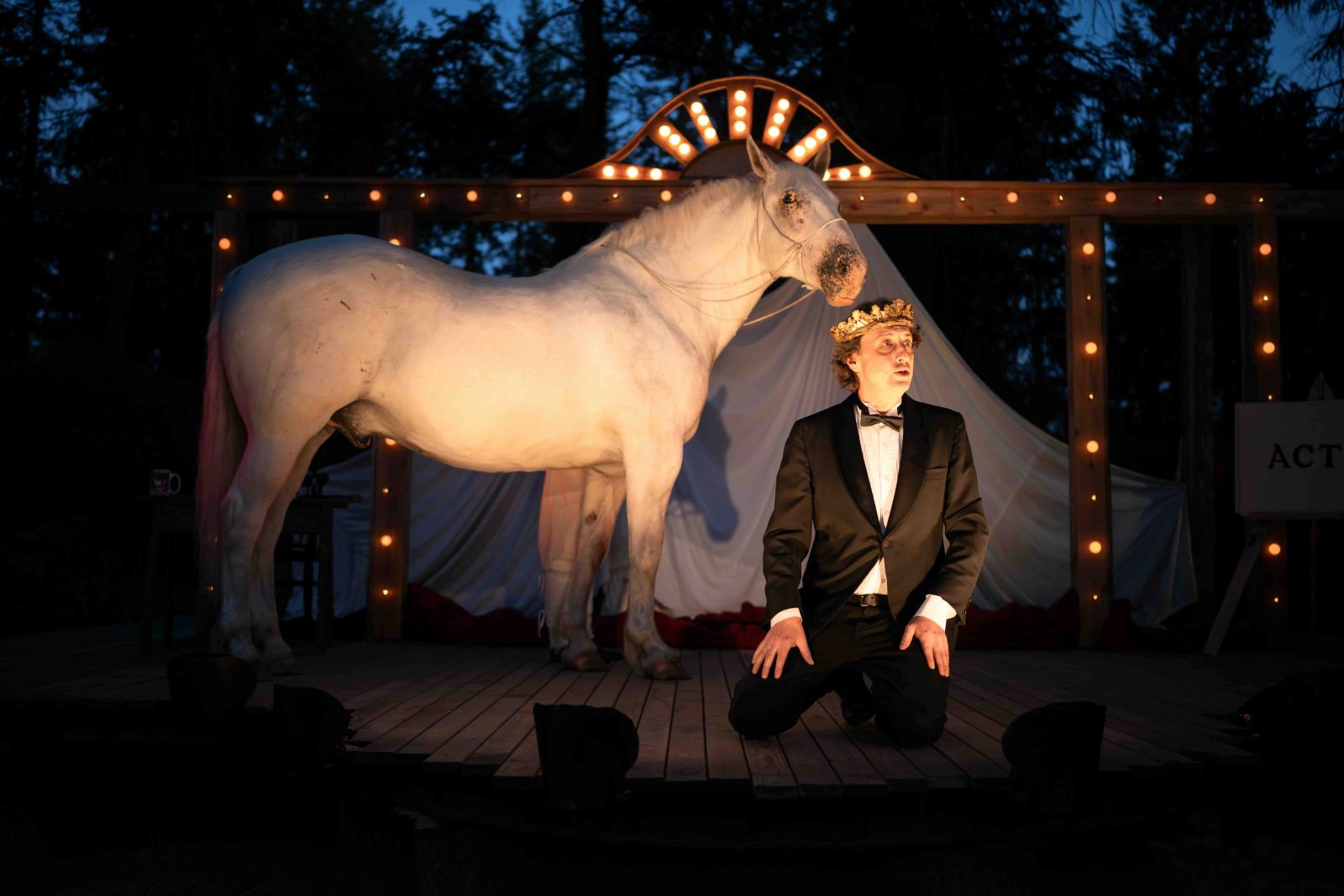
Its mission has been to provide meaningful, open-air theatre to diverse audiences. From large scale horse-drawn operas to a more minimalist rendition of Shakespeare’s Richard III, where the protagonist is a standup comedian, productions at Caravan have been described by audiences as transformative.
For over 20 years, Shook has been at the centre of it all. She’s responsible for setting the programming, engaging the artists, steering the company strategically and being a voice for the wider Spallumcheen Valley. That last part is a role she inherited and takes to heart.
“To bring original Canadian theatre, populous theatre, talking about relevant, meaningful issues of the day to the small towns and communities of Canada, I think is an incredible gift and incredibly progressive,” Shook said.
Laara Sadiq has also long been associated with Caravan as an artist. She describes herself as a city girl from Toronto who arrived at the farm freshly graduated from theatre school at the University of British Columbia. “As soon as I came down the drive, I knew this was a place that was going to be with me for a long time,” she said. “The place just sat in my guts and in my soul immediately.”
“The thing that really comes to the fore about Estelle is that she is all about connection and community,” Sadiq said. “She is deeply connected to the land that she’s situated on, deeply aware of and connected to the history of that land, particularly the Indigenous history and stewardship of that land.”
“I think that’s a very, very unique way to move through the artistic world, partly because I don’t know of any other space like this anywhere,” Sadiq said.
Recently, Shook was named a finalist for the 2025 Siminovitch Prize in Theatre — Canada’s most prestigious prize for theatre artists — in recognition of her outstanding work.
The foundation described Shook’s vision as follows: “in a society that seeks to distance us from the natural world and our communities, Estelle’s work telling stories and creating experience that reveal our interconnectedness is vitally important and worthy of celebration.”
All of it stems back to Shook’s first chance encounter with the Caravan troupe, an experience she had as a kid that drives everything she expresses on stage to this day.
The Tyee caught up with Shook at Caravan Farm Theatre, just outside of Armstrong, on the eve of the company’s 2026 summer season. This interview has been edited for length and clarity.
The Tyee: What was your first encounter with Caravan Farm Theatre?
Estelle Shook: I was standing on the side of a road watching an incredible mirage of a site go by — it was five or six gypsy wagons pulled by Clydesdale horses without riders, and goats, and kids and music.
And this vision just walked by at five miles an hour through Westworld, B.C., where I was visiting my aunt. My mom, my siblings and I were moving up from the coast in ’78 and finding shelter at my aunt’s place when this incredible vision went by.
It was paradigm shifting because I thought that kind of vision just exists in novels and fantasy books. To see something like that for a six-year-old kid who, you know, I loved novels and fantasy and creativity — to see something like that just appear on the highway, stopping traffic, trundling along, really opened up a sense of possibility and magic that I’m forever grateful for.
What was that caravan doing at the time? Were they performing as they were passing by?
They had probably just started their tour and were enroute somewhere. They used to rehearse in the early spring and then hit the road and tour throughout B.C. often into Alberta for two or three months.
We may have seen them as they were just embarking on their summer tour — I believe the show was The Coyotes and it was heading to Kamloops. Shortly after that my mom was hired.
Really?
She was hired to cook for the company, and she was a horse woman, so she helped with the Clydesdales. We went from being this family in desperate straits to finding a kind of landing place here. We lived in town, but my mom would work at Caravan Farm Theatre amongst the artists.
As kids, we would come and hang out after school and watch rehearsals and encounter people we never would’ve encountered in our regular life.
It was an entrée into a world that we would not have had access to because we were quite poor — lower-middle class, not an artistic family.
But all of a sudden, we had access to these incredible people and this incredible art and the ideas that were being explored.
How do you describe what kind of theatre company Caravan is?
Caravan was, and to some degree still is, a very politically motivated, socially progressive theatre company that started out as a touring company via horse-drawn wagons.
Over time, the company procured 80 acres in the North Okanagan as a base from which to build and rehearse shows and then take them on the road via the horse-drawn wagon. That evolved over time into a company that produced theatre on the farm for the local audience.
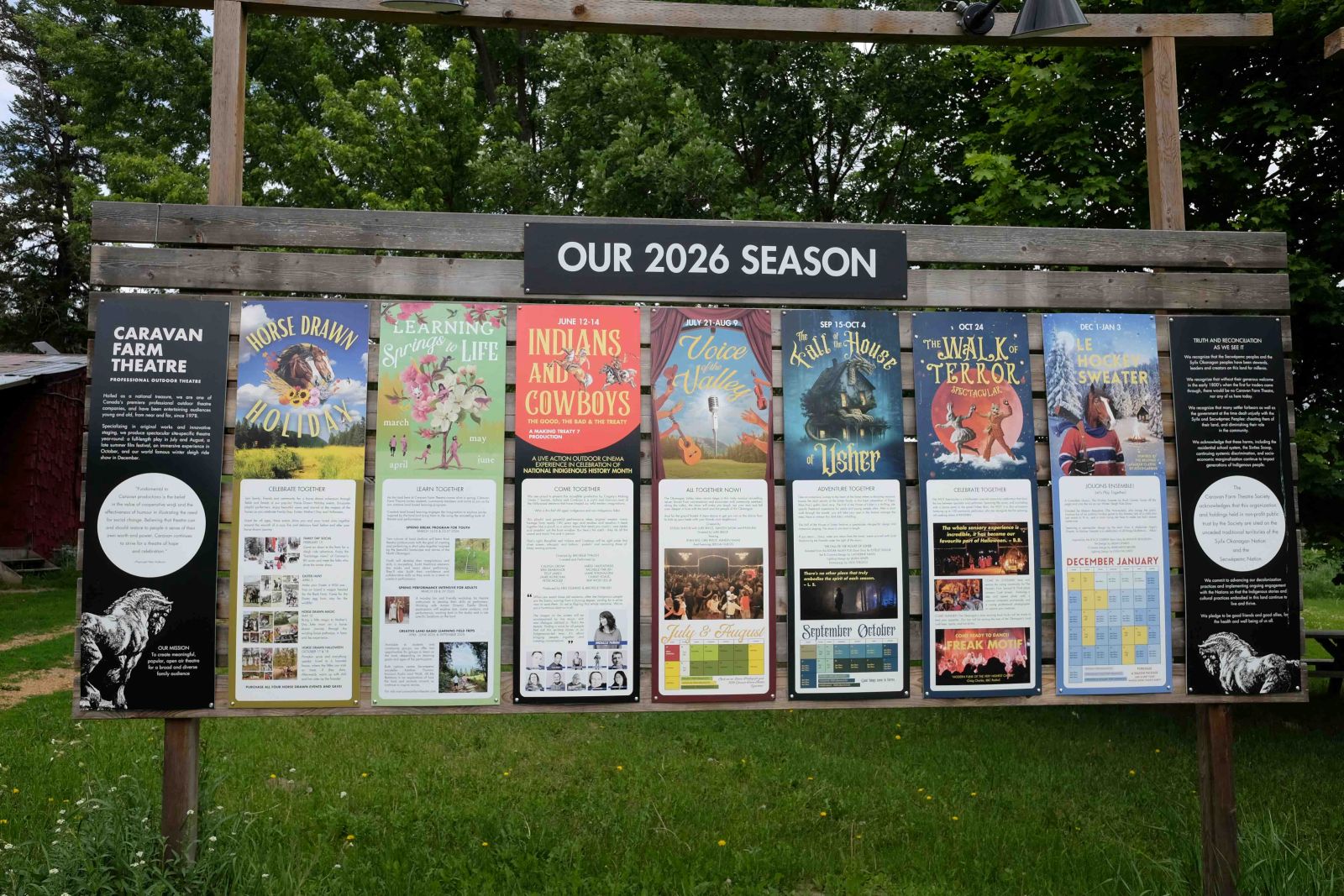
Caravan really integrated itself into the community. And to this day, we are continuing that trajectory where we have youth programs and school programs and land-based learning and year-round programming.
All of that came from quite a beautifully politically charged idea to bring theatre, original theatre, to the small towns of B.C. and Alberta.
That’s a radical idea: to bring art to the people who don’t often have a regional theatre and even if they do, it’s not producing original work. It’s bringing in city productions of probably American or British plays.
To bring original Canadian theatre, populous theater, talking about relevant, meaningful issues of the day to the small towns and communities of Canada, I think is an incredible gift and incredibly progressive.
Can you fill in the gap between the trajectory of you as a child, having this profound experience, to then you becoming artistic director?
I caught the theatre bug early on with the first productions I ever saw here. Because I had tapped into that feeling, I knew this is what I will do with my life. I will attempt to recreate this feeling for other people and explore it.
So I volunteered, and I took theatre in high school and was involved in all of the drama programs and was involved anywhere and everywhere I could, whether it was the community theater, Asparagus Community Theatre or Caravan, and through the drama programs at W. L. Seaton Secondary in Vernon. Those were all really helpful and instrumental, highlighting the value of school arts programs. It all feeds in.
When I left home, I started working in theatre in Vancouver and then later in New York, but always, always loved this place and was always connected to what was going on here.
In hiring you, they hired someone who had a connection to that magic and the power of theatre to inspire change, to alter people. From your position, how have you seen Caravan Farm do that?
I think that the magic of Caravan works on a few different dimensions. There’s the social dimension — just the very act of gathering people together in one space is a tremendous opportunity. When it’s done intentionally it’s easy for people to get present and we know that it is hard to be present.
When you drive down this long, dusty driveway and park in a field and step out of the car and you can smell the fresh-cut hay or the lilacs or the smoke from the campfire, and you can hear instruments, all of a sudden your animal-self starts to emerge. And you become a little more relaxed. And you are able to relax that critical function that often gets in the way of a truly profound experience with other people or with oneself. All of those are very subtle and very unconscious things that are operating.
Shakespeare and the popular tradition of the Elizabethan era knew that it wasn’t just about what was on the stage. It’s about everything. It’s about the moment you see the poster, the moment you land at the theatre, what happens in the lobby, your ability to flirt, eat, drink, relax, be distracted. Those are all part of the experience. We divorce them from the overall experience at our peril. So we embrace that. We embrace the social dimension.
And then in terms of what we attempt to do in our artmaking and the stories that we choose to tell and how we tell them, I am always looking to address fracture and disunity on a very, very uber-zoomed out scale.
Fracture and disunity are the two most volatile and active elements of our Western alienation. What we want to do is remind everyone, when they come here and engage in a narrative, that there is an underlying unity to all things.
I’m choosing stories that always have a circular and cyclical reassuring narrative — a lot of ritual, but that’s a lot of really great plays, famous plays. Most of Shakespeare, all of the greats, even Steel Magnolias, even the big popular Broadway shows, the ones that endure are because they have that ever-renewing narrative at their core.
Can you tell me about the challenges and opportunities that come through hosting a theatre company on this gorgeous 80 acres of forest?
It’s all about hosting. This space is incredibly sustaining because of its natural beauty and its Brigadoon-like quality of being set back from the road and this beautiful, hidden world. It is a very special place.
Ticket sales are how we survive. And yet we are always looking to do meaningful, relevant work, which means we’re not going to do Grease. We’re not going to do the box office gold. We’re going to do plays that maybe the audience hasn’t heard of that they might be a little wary of.
And yet we still have to bring in like 70 per cent of our revenue through the ticket sales. That can be really challenging, because most urban theatre companies are getting municipal funding. There’s a key, quite significant chunk of funding, public funding that comes from their municipality, and we just do not have that.
And then we have extraordinary expenses because we’re bringing artists in and flying them and putting them up.
So it’s very thin in terms of resources, financial resources, but it’s incredibly rich in terms of the natural beauty and the sustaining power that has.
And you have to contend with weather and climate change and the wildfire season.
The wildfires have been the worst.
Our summer show used to be our big show, and we cannot do that anymore because you contract artists six months to eight months in advance. They arrange their lives, you put a bunch of resources together, you rehearse for four weeks, and then one fire can undo all of that.
As a result, we just can’t afford that risk. So we’re in the process of shifting our summer show energy into the fall and turning our summer into more of a concert-type experience so that people can still come out here, but it can all kind of collapse and reorganize itself if all of a sudden everything’s on fire.
You spoke about you as the six-year-old, having your world cracked open, seeing this caravan come by. What does it mean to you to provide that for other six-year-old girls who come here for the sleighride show or the summer show. I imagine you’re seeing that happen again and again, where kids are cracked open in this kind of experience. What does that mean to you?
It means everything. I think that phenomenon sits squarely in the space between our polarized divided selves in society.
That middle space — mystery, wonder, beauty, enchantment — that’s where we don’t have to have the answers. We just have to come in with a question: how do I reconcile? I don’t need to know how, because it’s so complicated, it can be beyond us. There’s a kind of spirituality involved in that, which is beautiful.
I think having more opportunity to kind of activate our mythic imaginations and that sense of power and beauty and awe where we can come in with the question but not know the answer, that’s where the surprise gets to happen.
And we need that because we’re sitting in a sense of knowing: we’re sure, we’ve got it all figured out, it’s defined, we’ve really carved out a sense of identity that we’re going to hold onto white-knuckle.
And then there’s the phenomenon that cracks open a six-year-old’s imagination — that is all not that and that’s what I want. I want to cultivate that. I think that is art. ![[Tyee]](/design-article.thetyee.ca/ui/img/yellowblob.png)


Tyee Commenting Guidelines
Please note that email notifications for replies are not currently working due to a software issue which may be resolved in a future update.
Comments that violate guidelines risk being deleted, and violations may result in a temporary or permanent user ban. Maintain the spirit of good conversation to stay in the discussion and be patient with moderators. Comments are reviewed regularly but not in real time.
Do:
Do not: