


 SHARE:
The definition of being human was once determined by our use of tools.
Take the old-timey parlance of British anthropologist and paleontologist Kenneth P. Oakley, whose 1949 book Man the Tool-Maker detailed the evolution of tool usage by pre-hominin and hominin species. When other species were found to hone in on this turf, the idea was dropped from popular usage.
I would argue that a more inclusive descriptor would be “humans, the artmakers.” Everywhere one goes, all around the globe and throughout every epoch, humans are making art!
Sometimes the strangeness of this strikes me anew. How weird that throughout the course of history and into present day, we make art as though our very existence depends upon it. Maybe it does.
The feeling resurfaced with freshly painted vividness at the Vancouver Art Gallery, which recently opened Highlights from the Collection, an entire floor dedicated to work from the gallery’s permanent collection. While this might not sound super exciting, in actuality, it was thrilling.
Highlights marks something of a new strategy for the gallery, noted Eva Respini, the VAG’s interim co-CEO and curator at large. In her remarks at the exhibition opening, she explained that for the first time in more than two decades, the VAG is presenting work in a more permanent fashion. For the next three years until 2030 (let that number sink in), folks can visit the gallery to see their favourite painting every week if they’re so inclined.
The 200 works on display are chosen from the more than 13,000 items in the VAG’s permanent collection. If you’ve ever had a chance to peek inside the basement vault where the entirety of the gallery’s collection is stored, the fact that the 200 works in Highlights represent just a tiny fraction of the permanent holdings should come as no surprise. The art gallery basement is packed to the gills.
As Respini puts it, Highlights makes the point that the gallery needs more space.
While a new building for the VAG is something of a giant question mark at the moment, the proposed site for its new home at West Georgia and Cambie streets downtown has returned to being a parking lot for now.
Highlights from the Collection is just the beginning of a number of new gallery initiatives aimed at making the collected work more accessible, and it is a bravura entrance into a new era for the VAG.
A marvellous journey across time and aesthetics
Art gallery collections are built by many folks. Over the course of the almost 100 years that the VAG has been in operation, the stewards of the collection have been the curators. Highlights is led by Respini, Richard Hill, Diana Freundl and Stephanie Rebick, but the work of the VAG’s many previous staff is amply evident. Visionaries like the late, influential art historian and curator Doris Shadbolt put such a stamp on the collection that their influence is still visible today.
But the ability of individuals to shape the vision of the institution has long been hampered by money, almost from the get-go. A great many works in the gallery’s permanent collection came into being through donation and the largesse of collectors and artists. That iconic Andy Warhol print series of Marilyn Monroe was purchased in 1968 by the gallery for the grand sum of $700. The amount might seem quaint now, but at the time it was still a considerable amount of money.
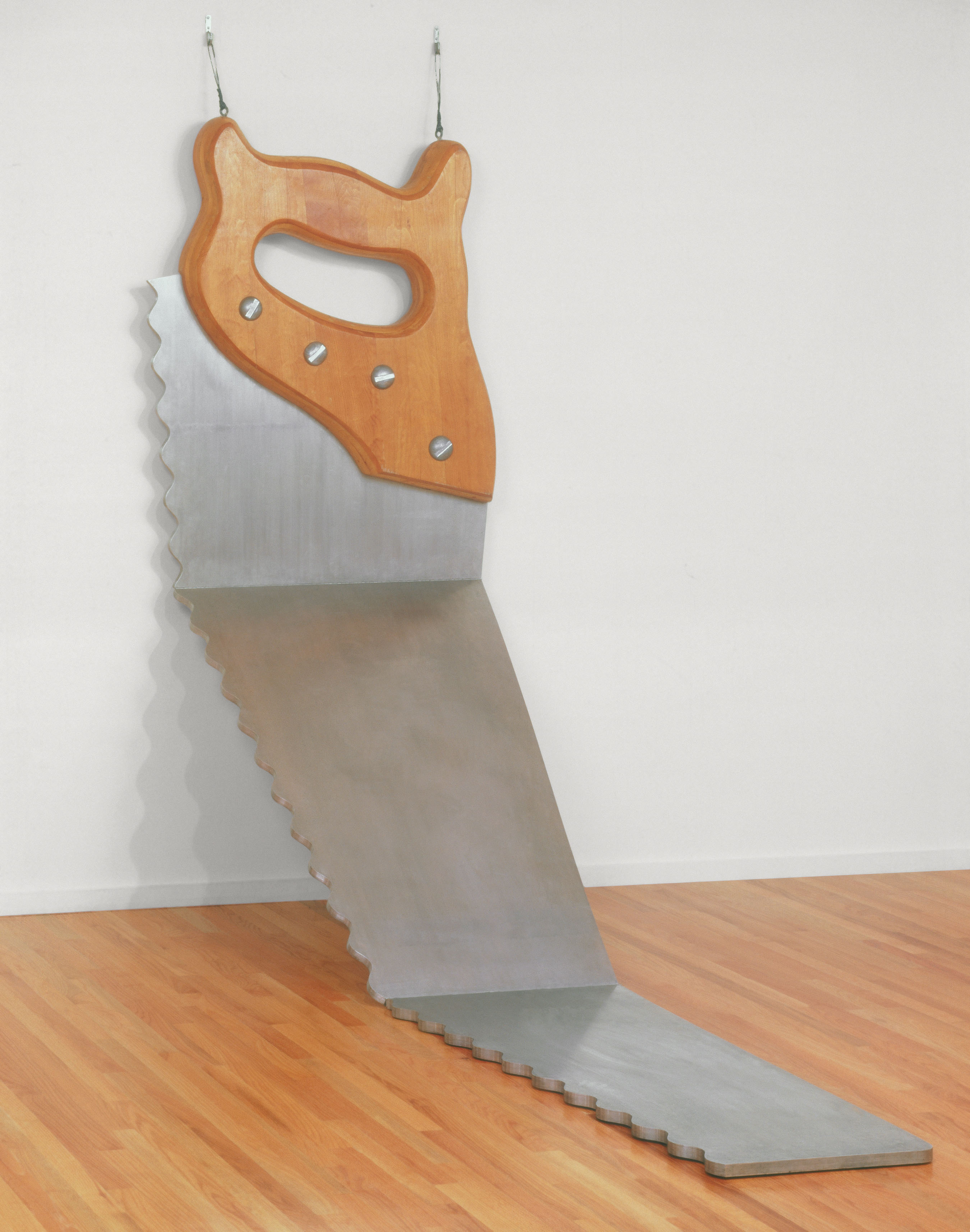
Saw (Hard Version II), a work from American artist Claes Oldenburg, was commissioned for a 1969 VAG exhibition. It remained in Vancouver because the price of the work was cheaper than the cost of shipping it back to the United States.
In the earliest days of the gallery, while exhibitions of Indigenous and Asian art were shown, they weren’t actually collected, as curator Richard Hill explains. Other institutions, such as the Museum of Anthropology on the University of British Columbia’s Point Grey campus and the Royal BC Museum in Victoria have much more robust collections, but the VAG has worked to make up the ground since the 1980s and ‘90s.
Work from Indigenous artists is where Highlights begins, with a selection of 19th-century Haida totem poles, regalia and jewellery, including a woven hat from the legendary Haida artist Charles Edenshaw.
From Indigenous art, it’s a hop, skip and jump through the glories of Emily Carr, the Group of Seven and their contemporaries. E.J. Hughes is there, in his quietly gorgeous fashion.
Then it’s a gallop into the pop art of the 1960s, followed by headlong rush into feminist art, the video scene and the rise of the photoconceptualists.
In addition to the art itself, the gallery has taken pains to demonstrate how the work is hung and presented. As Hill explains, it’s a bit of theatre meant to illustrate changing ideas and aesthetics.
One of the most charming illustrations of this concept is an interstitial space, designed like a cool modernist apartment, complete with chairs upholstered in the burnt umber shade favoured in the time, with an epic Riopelle painting hung on the wall.
Hill was inspired by his time at the Art Gallery of Ontario that featured a similar space. While the AGO’s 1950s gallery represented a face-off between French and English Canada, the space in the VAG is meant not only to capture attention, but to tell a story of how art functioned in domestic spaces.
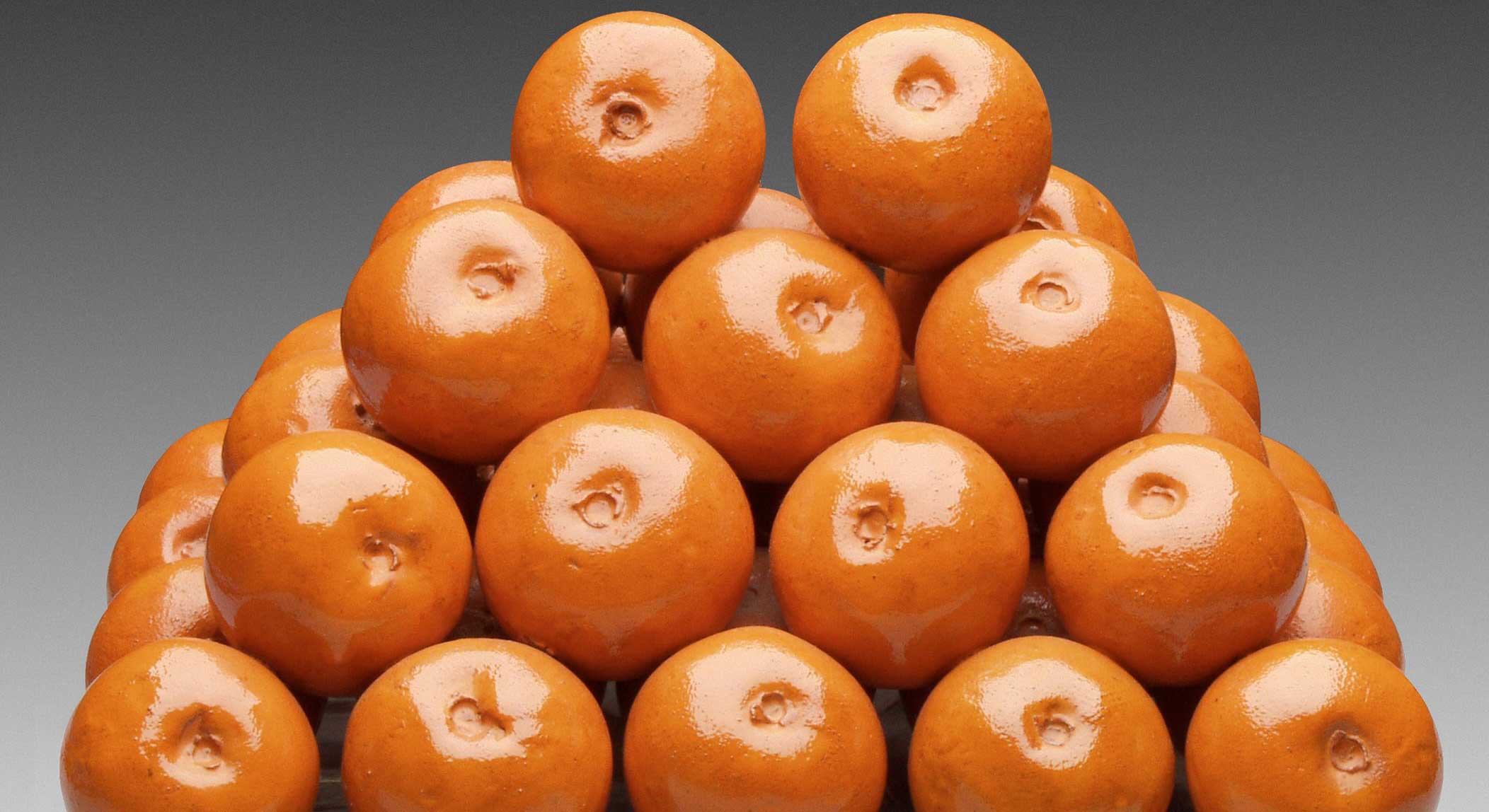
The focused eclecticism of the time offered an incredible sense of optimism, as embodied by the colours (that burnt yellow hue!) and the big, bold shapes of local ceramics and sculptural works.
The VAG has a lengthy history of showing design, furniture, ceramics and even clothing. Although these kinds of shows fell off in the ‘80s and ‘90s, there’s been something of a resurgence in recent years, brought about through the private collections of individuals such as John David Lawrence.
The gallery has benefitted from the obsessive nature of collectors like Lawrence, who safeguarded the history of modernist design long before it was recognized as important or valuable. Whether rooting through thrift stores or collecting items from people’s lawns when they were getting rid of stuff, caches of modern B.C. design were preserved in this homely fashion.
A stunning celebration of Vancouver visual artists
The issue of money surfaces with regularity throughout the exhibition. Once the VAG founders’ funds were exhausted, the gallery didn’t have access to more robust acquisition funds until the 1983 sale of its former home on West Georgia Street, curator Stephanie Rebick explained. This fact shaped what kind of work entered the collection.
In the 1960s and ‘70s, the gallery focused on contemporary American art, often in the form of prints, because they were more affordable and easier to tour. But a number of major works were also acquired in this period, including one of American artist Robert Rauschenberg’s Publicon series.
But as Rebick explains, the needs of a gallery can sometimes clash with the artist’s conception of a work, and thus it is here. Rauschenberg’s work, based on the religious procession of the stations of the cross, was intended to involve a degree of audience interactivity. A viewer could throw open the doors of the piece, revealing the gold-plated canoe paddle inside. Today in the VAG, viewers can’t touch the work, but at least they can lay eyes upon it.
As the art world metastasized into a global monster in the 1980s and ‘90s, the concept of art centres based in cities like New York, London and Los Angeles fell away, and they were replaced instead by artists working internationally in different locations. The nature of how work was displayed in galleries also changed. Cue the rise of the white cube, a type of space dedicated to contemporary creative practices, photography in particular.
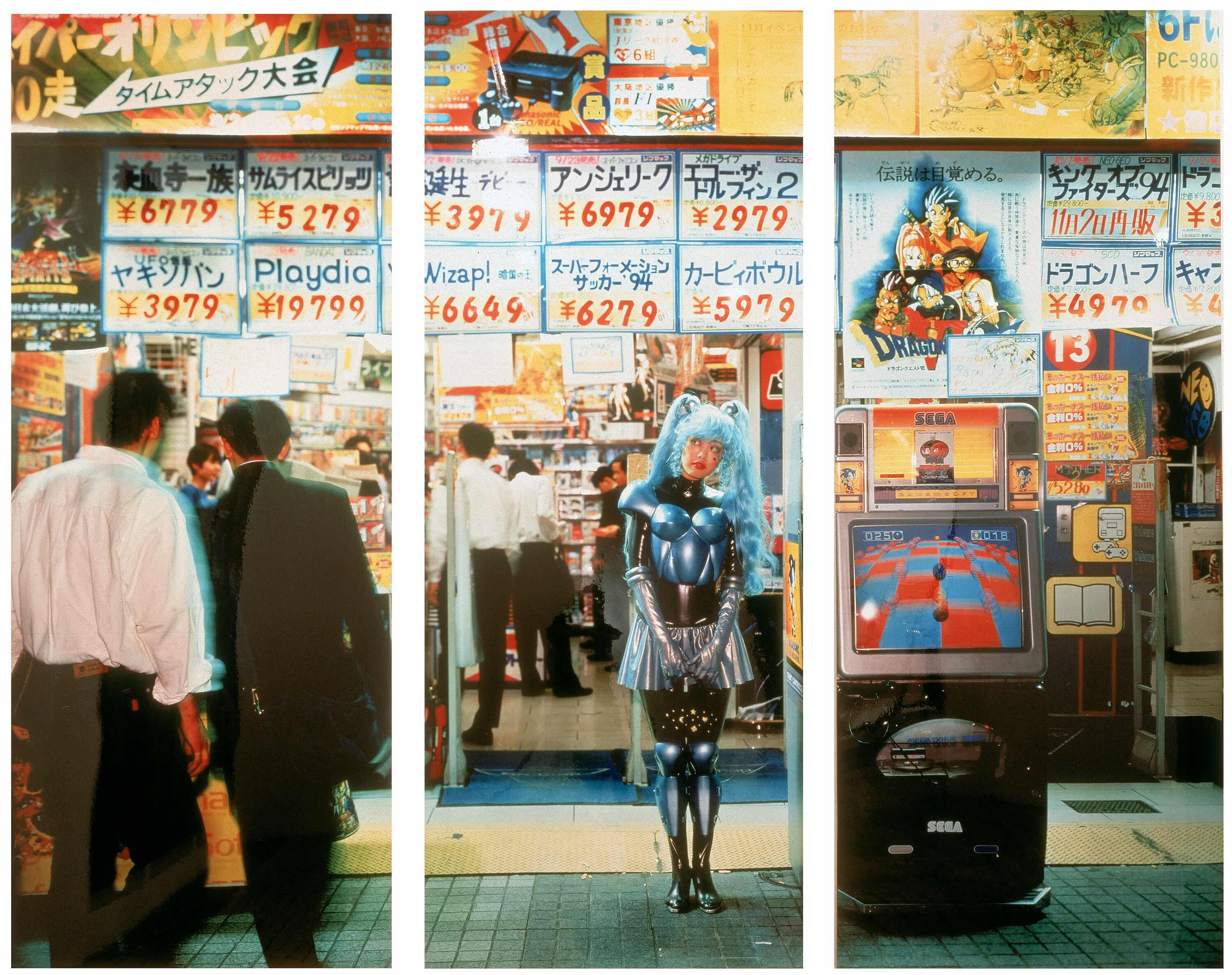
In this era, the scale of photographs got huge, Respini explained. Enter American artist Cindy Sherman and her infamous Untitled Film Stills series that used photography not only as a visual medium but as a container of archetypes, identities and narrative.
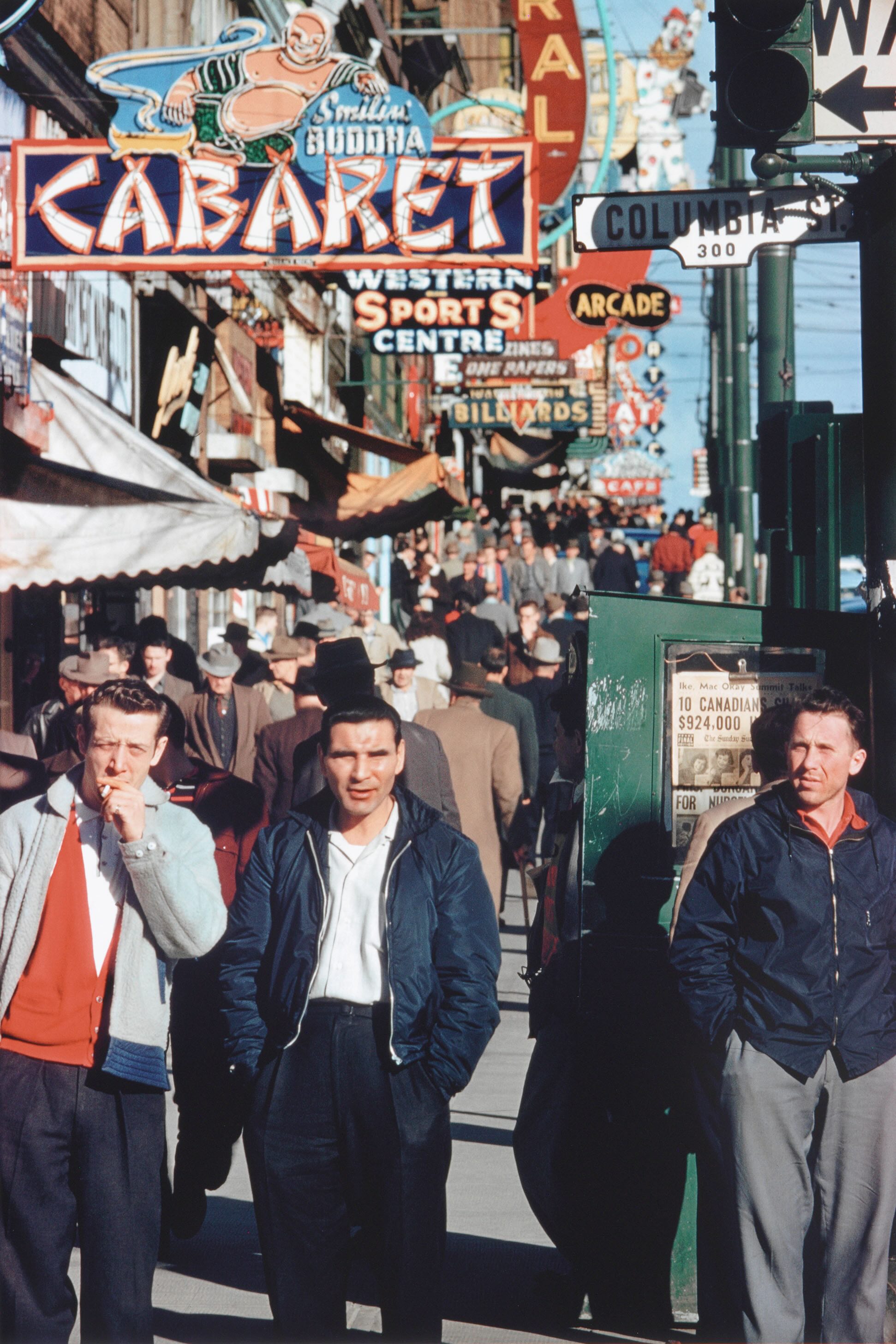
Closer to home, Vancouver itself became a creative hotbed. In his At the Crosswalk series, Canadian artist Ian Wallace’s large photo-based work elevated mundane moments at Vancouver intersections to the status of historical paintings. The emotion in Wallace’s work recalls the paintings of French greats Eugène Delacroix or Jacques-Louis David.
The idea that photography could be as structured, composed and implementing the formal language and history of painting shaped a moment not only in Vancouver art history, but arguably in the greater art world.
In addition to Vancouver visual artists such as Stan Douglas and Jeff Wall, other photo-based artists including Marian Penner Bancroft, Dana Claxton and Jin-me Yoon were making rigorous, complex work.
A living archive
One of the most startling pieces in Highlights is that of Geoffrey Farmer. Farmer’s strange figures from The Surgeon and the Photographer, collaged from different materials, are so oddly compelling that they stand alone.
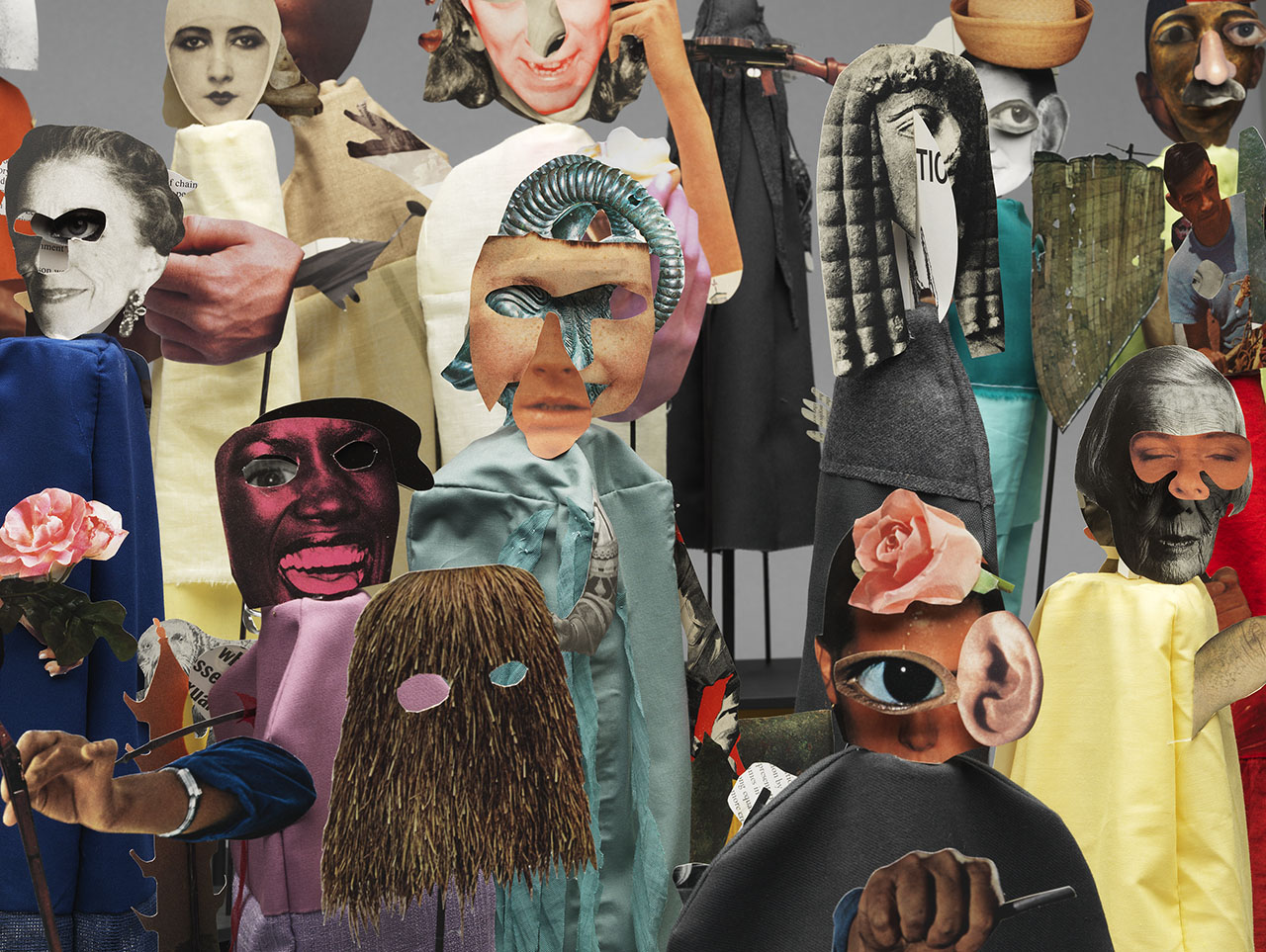
“A permanent collection is the sum of choices made throughout an institution’s history,” says Diana Freundl, the VAG’s senior curator and interim director of collections. “Through the artworks selected and the exhibition design, we hope to make visible those shifts in priorities and aesthetics over time."
The show operates as something of a living archive, a means of speaking to art history and history itself. The art shows how different ideas and concepts circle around and return, making themselves known in work from newer artists investigating their antecedents. Sometimes these connections are overt; other times, they are far more mysterious and obscure.
In presenting a continuity of artmaking in Highlights, what we value, obsess over and struggle with is reflected back to us in colour, form and ideas.
It makes human history not only more visible but infinitely more beautiful and wondrous.
‘Highlights from the Collection’ is on view at the VAG until Jan. 6, 2030. ![[Tyee]](/design-article.thetyee.ca/ui/img/yellowblob.png)
Read more: Art






Tyee Commenting Guidelines
Please note that email notifications for replies are not currently working due to a software issue which may be resolved in a future update.
Comments that violate guidelines risk being deleted, and violations may result in a temporary or permanent user ban. Maintain the spirit of good conversation to stay in the discussion and be patient with moderators. Comments are reviewed regularly but not in real time.
Do:
Do not: