

 SHARE:
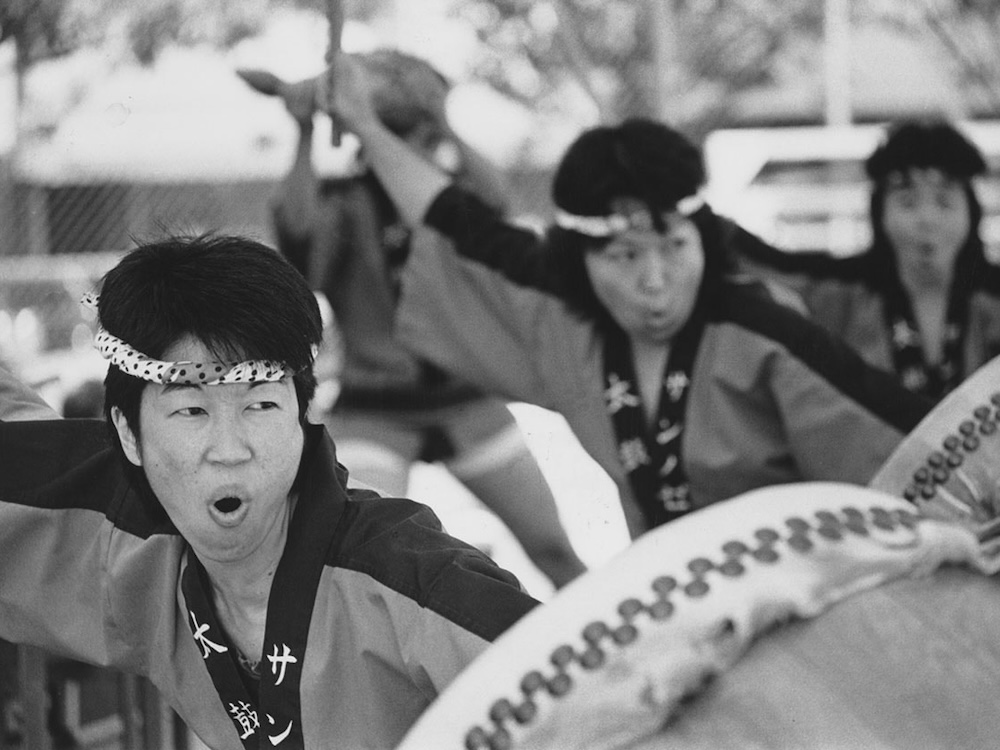
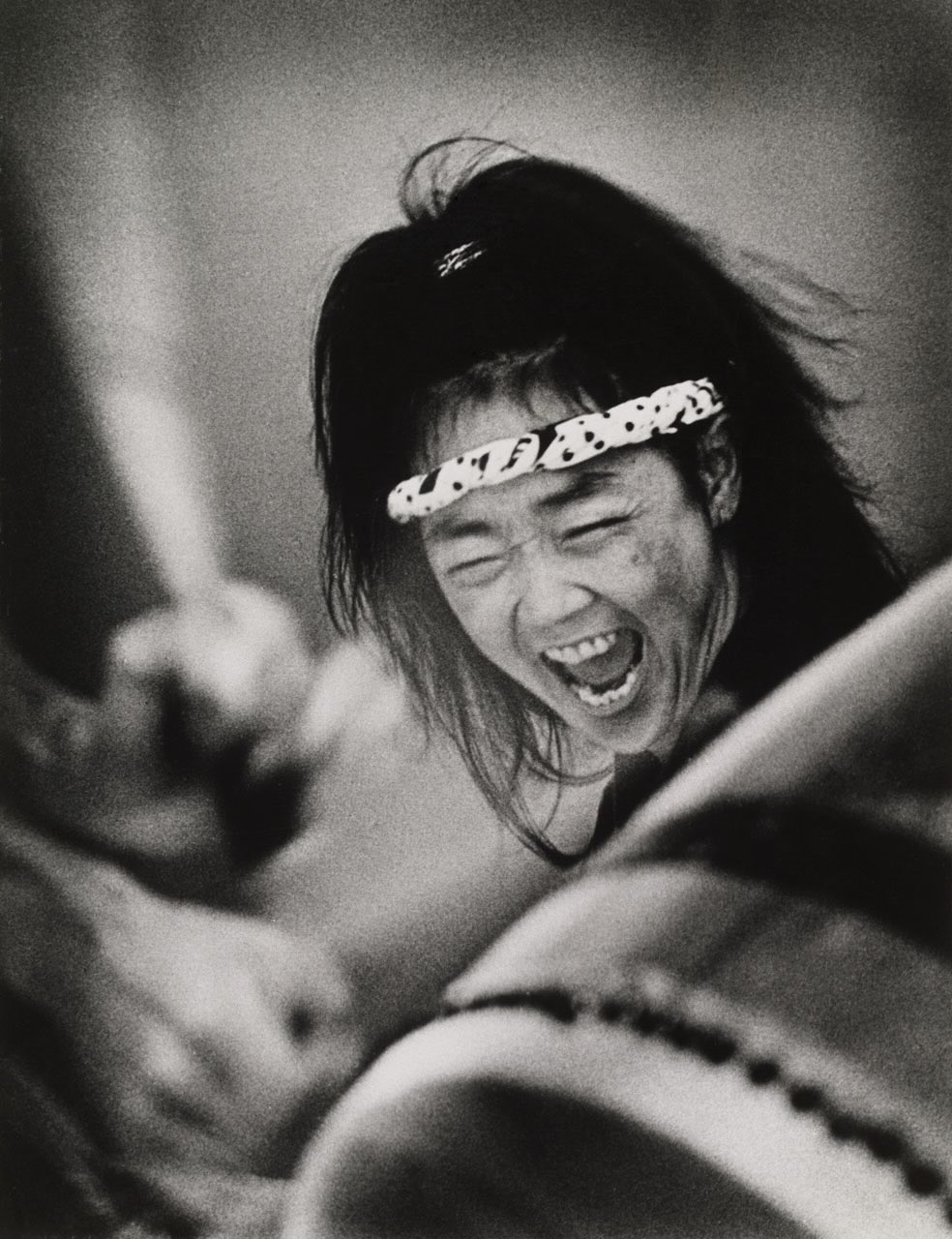
On the north side of the Vancouver Art Gallery is a large banner featuring a photo of Linda Uyehara Hoffman, a local taiko drummer and a friend who I have known for a long time. The sight of her, many metres high, made me laugh out loud.
It was a fitting introduction to Enemy Alien, a new exhibition of the work of B.C. photographer Tamio Wakayama, who was born in 1941 and died in 2018. The epic and the everyday meet in Wakayama’s images in curious ways that catch you off guard. There are over 300 images in the collection. One moment you’re looking at gnarled tree stumps on the coast of Vancouver Island, and the next you’re face to face with the architects of the civil rights movement in the United States. That’s range, to put it mildly, but there is always a certain quality that unites the disparate subject matter.
Call it an eye, perspective or something more ineffable. It’s not the objective or cool glance of an outsider looking in, although there are aspects of that. Wakayama’s work is primarily on the inside of things, be it a festival, a relationship or a seismic cultural movement. As an artist and a person, Wakayama got involved and got his hands dirty. He dug deep and, in the process, documented almost four decades of extraordinary moments both big and small.
The youngest of five children, Wakayama was born in New Westminster nine months before the December 1941 bombing of Pearl Harbor. By the time he was a few months old, the Canadian government’s internment of Japanese Canadians during the Second World War was well underway. Initially Wakayama’s family moved to the Tashme internment camp, which was just east of Hope in the B.C. Interior.
After the war ended, Wakayama’s family was given the choice to either move back to Japan or settle east of the Rocky Mountains. His family decided on the latter, settling in the municipality of Chatham-Kent, Ontario, the last stop of the Underground Railroad that helped Black people escape slavery in the United States. It was a serendipitous choice that later had an enormous impact on the young man.
Wakayama’s father found work in a tannery. It was a brutal, physically demanding job recounted in Wakayama’s unpublished memoir Soul on Rice. As a kid, Wakayama was charged with bringing his dad a bento box lunch at his workplace. The boy was horrified by the sights and smells of the tannery, but it was the vision of his father that cut the deepest.
“He looked so small and spent, as if his life force was swirling down the drain with all the other refuse,” Wakayama wrote. His father died when a car full of teens who had been drinking struck and killed him while riding his bicycle home from a late shift.
Soul on Rice lays out many of the backstories of Wakayama’s photographs, and the book is published in tandem with the exhibition.
Soul features Wakayama in his own words. It is an intimate, deeply personal examination, a look back not only at the artist as a young man, but also at the later autumnal period of his life, when time and experience have transformed his understanding of events, as well as recognition of the critical intersections when seemingly random circumstances send him branching off into what would become his life’s work.
Wakayama puts it more simply. “In looking back, I think the best work I did was of the people.”
In the civil rights movement, a turning point
In addition to the photographs and memoir, there is also Between Pictures: The Lens of Tamio Wakayama, a 2024 documentary by Cindy Mochizuki. Collectively, the different explorations (visual, literary, documentary) radiate out to fully encompass the fullest scope of Wakayama’s life and work. They are inextricable. This is especially true of the series of photographs that came to define Wakayama’s particular skills: his immersion in the civil rights movement and the famous “Freedom Summer” of 1964, a campaign that civil rights activists launched to register as many Black voters in Mississippi as possible.
Growing up as a Japanese man in Ontario, Wakayama had faced his own struggles with racism. Casual cruelty popped up when he was least expecting it.
As a young man, he was aware of young people protesting segregation by staging non-violent sit-ins of lunch counters and the bus system.
The reality hit home in a visceral and immediate way while Wakayama was vacationing in the United States, prior to starting his last year of college.
When the news of the Birmingham church bombing was announced, Wakayama got in touch with organizer John Lewis and became involved with the Student Nonviolent Coordinating Committee, or SNCC, the youth-orientated wing of the civil rights movement dedicated to voter registration and the mobilization of Black voters in the early 1960s.
At the time, the group was organizing campaigns to desegregate restaurants in downtown Atlanta and planning larger-scale events on nearby college campuses. Wakayama was charged with creating flyers to promote the rallies and was handed a camera by colleague Danny Lyon, who noticed that he had a good eye for imagery.
It was a fortuitous occurrence that directed the rest of Wakayama’s life and work.
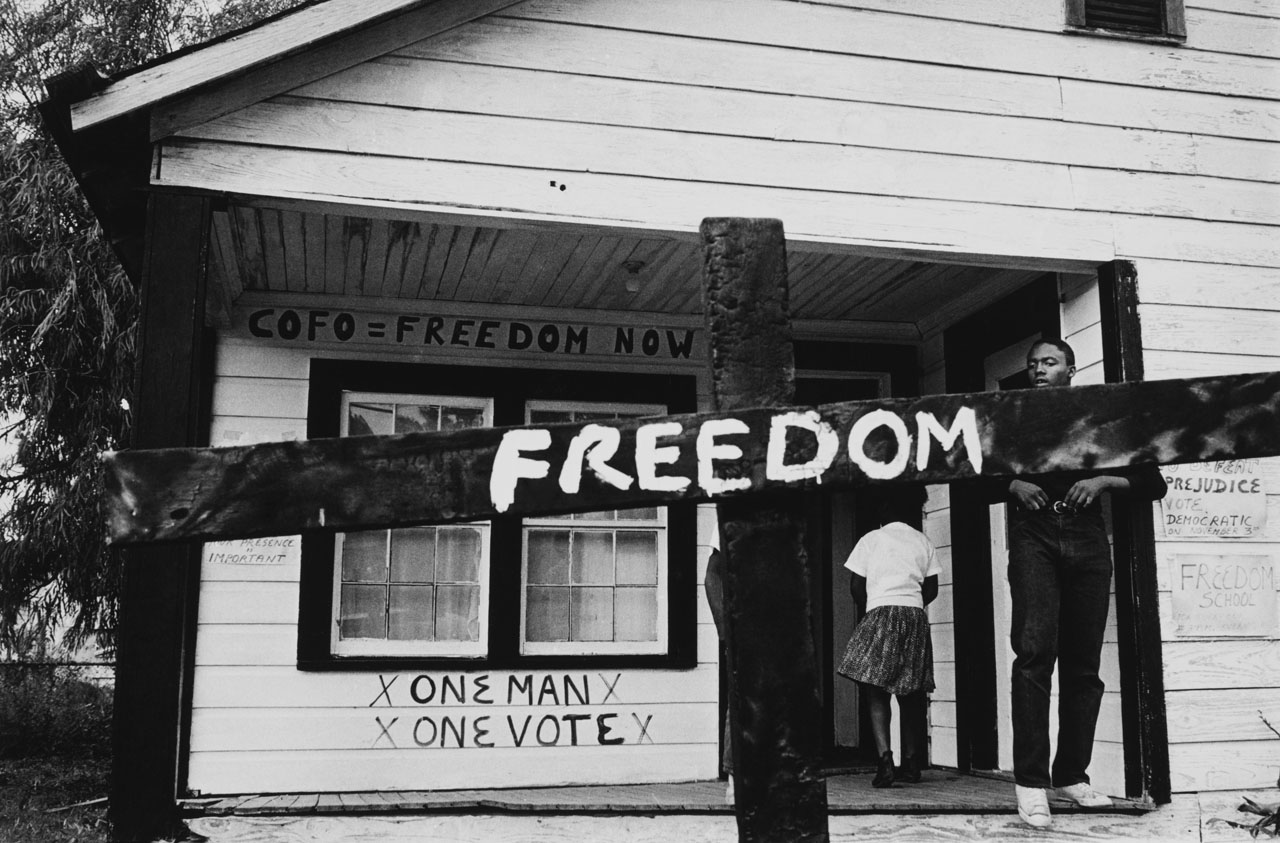
In the Mississippi Delta during the height of Freedom Summer, photographers who were working for SNCC didn’t identify their work. The lack of attribution was in part because of the collective nature of the work meant to serve a cause, not individual creative visions. But even without his name assigned to particular photographs, the luminescent humanism of Wakayama’s images is immediate and undeniable.
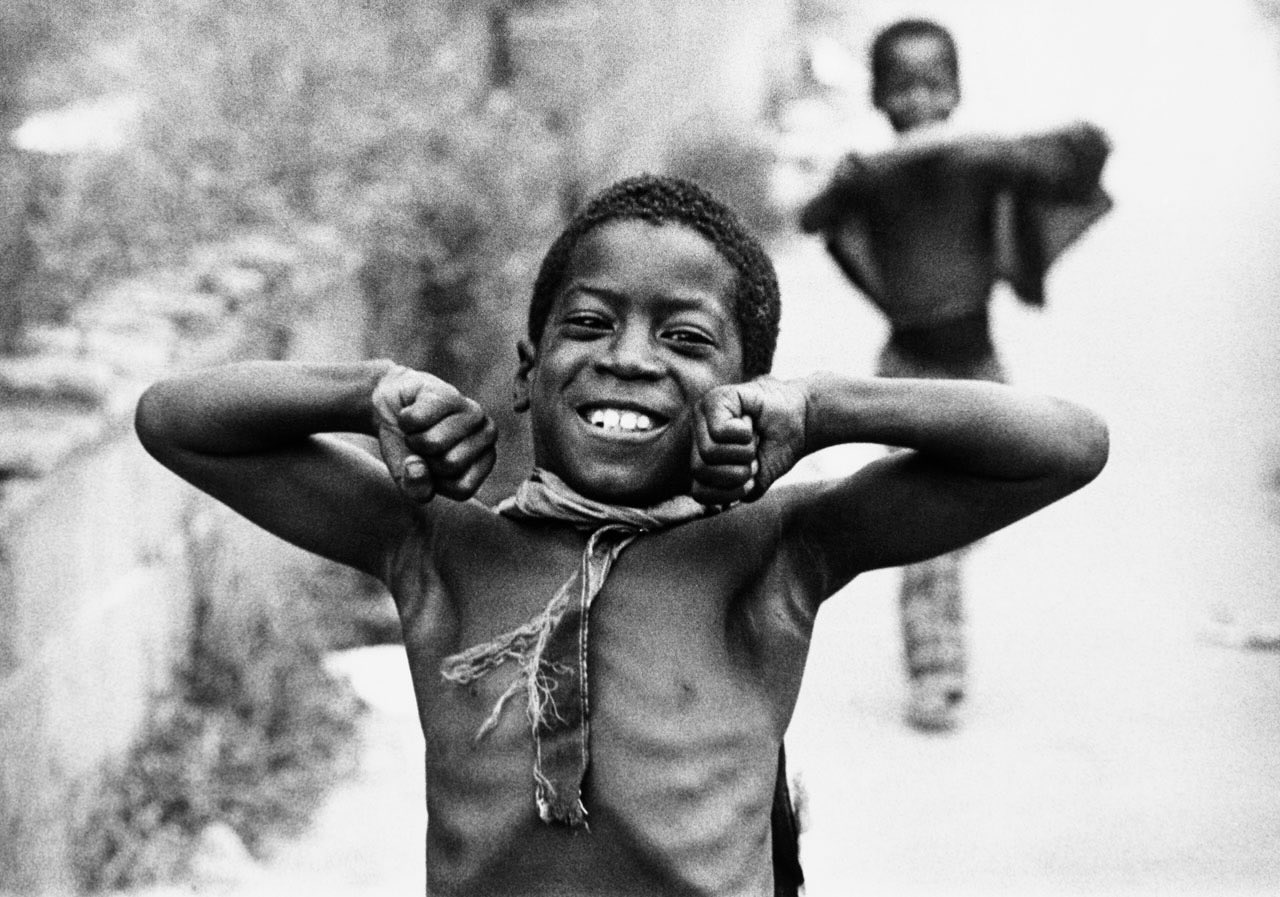
An image of a young boy mugging for the camera, a makeshift superhero cape in the form of a towel affixed around his shoulders, is an example. Bravado, humour and joy are all immediately evident, but underneath that is something else.
Call it love for people. It sounds rather obvious, even plain, put into words. But the aim of the SNCC images was to make evident, explicit and undeniable the full humanity of the people and places documented. In this aspect, the photographs speak for themselves: An elderly woman smiles from her porch. A group of good old boys radiates complacent menace, dense as a pong. A lone cabin is attended only by an ancient tree, its branches impeaching the blank grey sky.
“I wanted to pay homage to that life, to their courage and to their wisdom. Because they were the heroes. They fed us, they housed us, they protected us, they went to vote, all these simple little acts could have cost them... their own lives,” Wakayama wrote about the photographs and people that captured the moment.
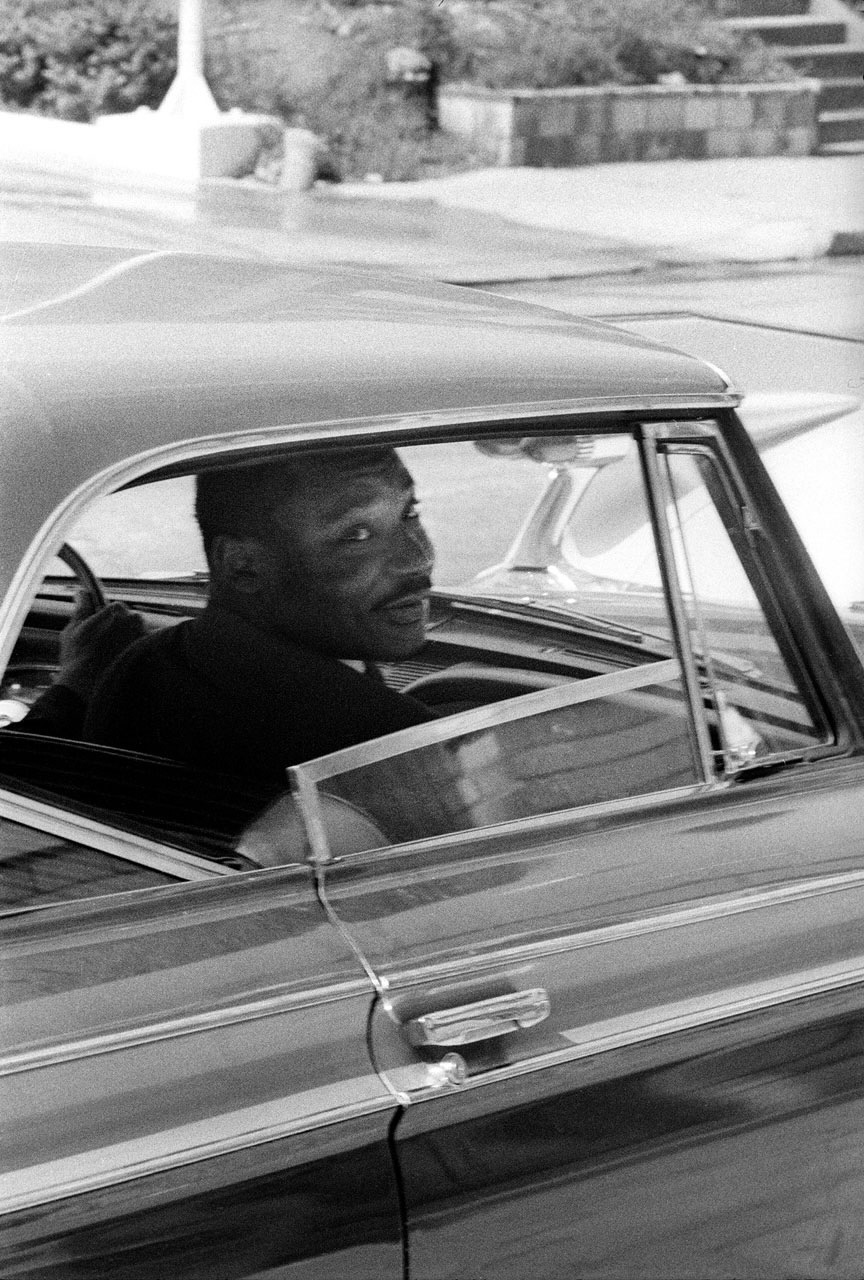
A study in deep humanism
The exhibition of his work at the Vancouver Art Gallery is organized into a number of sections that comprise the different creative periods of Wakayama’s career. At the preview of the show, curator Paul Wong described these delineations as black, grey and finally white. In addition to the photographs, the exhibition also includes a black box theatre complete with a marquee and plush velvet seats. If you have the time, park your butt and take in Between Pictures.
The full body of Wakayama’s work is remarkable. He photographed Indigenous communities in Saskatchewan, the Doukhobors in B.C.’s Slocan Valley, fishermen in the Queen Charlotte Islands (now Haida Gwaii), antiwar protests in Washington, D.C., and Cuban revolutionaries, as well as hippie life, including the leaky geodesic domes on West Thurlow Island. Deep humanism infuses each image.
Beauty is also a key element.
In a later body of work, the convergence of landscape and physicality is embodied in a female nude posed against the verdant lushness of Vancouver Island’s Quatsino Sound. Masked in the majority of images, the woman drops her guise in the final photograph, the glow of the setting sun caught in the eye sockets of the mask. It’s almost radioactive in its sensuality and force.
After an extended time of travel, Wakayama returned to Vancouver and got involved with the Nikkei community, working on a variety of projects including the Japanese Canadians, 1877-1977 exhibition at the Museum of Vancouver.
As the centenary of the Nikkei community approached, the idea for a festival emerged. Oppenheimer Park, a public park along Powell Street that formed the heart of Vancouver’s Japanese community before its members were displaced through internment, was suggested as a home for the event. Prewar Powell Street remained a touchstone for the Japanese community, a fabled lost paradise filled with bustling stores, a robust population, a place to call home. In the summer of 1977, the first of what was to become the annual Powell Street Festival kicked off.
The official photographer for the festival almost from the time of its inception, Wakayama captured a community returning to its roots.
As he wrote in Soul on Rice, the Powell Street Festival was a homecoming.
“The first Powell Street Festival was blessed with the warmth of the summer sun, and the park overflowed with celebrants, many dressed in bright yukata. The visceral beat of the Taiko drums, the soulful sounds of the shakuhachi and koto, the elegance of the odori dancers, the Sakura saplings swaying in the gentle breeze; all of these stirred a nearly forgotten communal memory,” he wrote.
“For the first time, since the war years, the Nikkei from far and wide were reunited on the grounds where an earlier generation had come to enact its ancient rituals and acclaim its heroes. In the hundredth year since the arrival of the first Japanese immigrant to Canada, we were back on Powell Street — not as victims, but as proud victors over a century of racism that had sought our banishment from these lands. After three decades of exile, I had found my way home.”
The opening night of the show at the Vancouver Art Gallery was something of a homecoming itself. I ran into folks I hadn’t seen in years.
The overall quality of celebration was coloured with a sepia grief that Wakayama was no longer here to enjoy the evening. But as Mayumi Takasaki, his longtime partner, explained, the entire archive of Wakayama’s work had been purchased by Stanford University, where it would be accessible for anybody.
Wakayama’s ability to capture time, place and people in both intimate portraits and big-picture events, the social, sexual, cultural upheaval of the 1960s and ’70s, is dizzying and utterly remarkable. But alongside the images is another story of a life well lived. ![[Tyee]](/design-article.thetyee.ca/ui/img/yellowblob.png)
Read more: Rights + Justice, Art

Tyee Commenting Guidelines
Please note that email notifications for replies are not currently working due to a software issue which may be resolved in a future update.
Comments that violate guidelines risk being deleted, and violations may result in a temporary or permanent user ban. Maintain the spirit of good conversation to stay in the discussion and be patient with moderators. Comments are reviewed regularly but not in real time.
Do:
Do not: