


 SHARE:
What else is there to say about Emily Carr?
Well, a lot, it would seem, from the Vancouver Art Gallery’s expansive new exhibition.
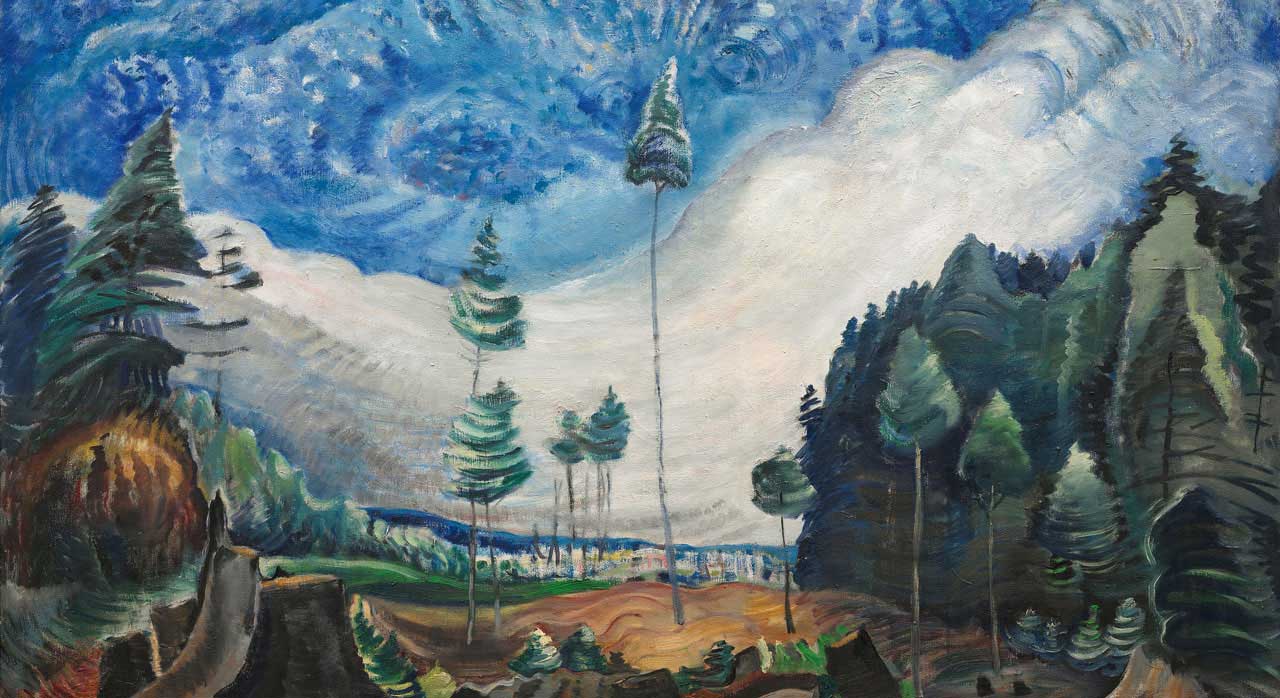
That Green Ideal: Emily Carr and the Idea of Nature, the largest exhibition of Carr’s work in two decades, is largely drawn from the VAG’s own collection. There are only four pieces in the show on loan from other places.
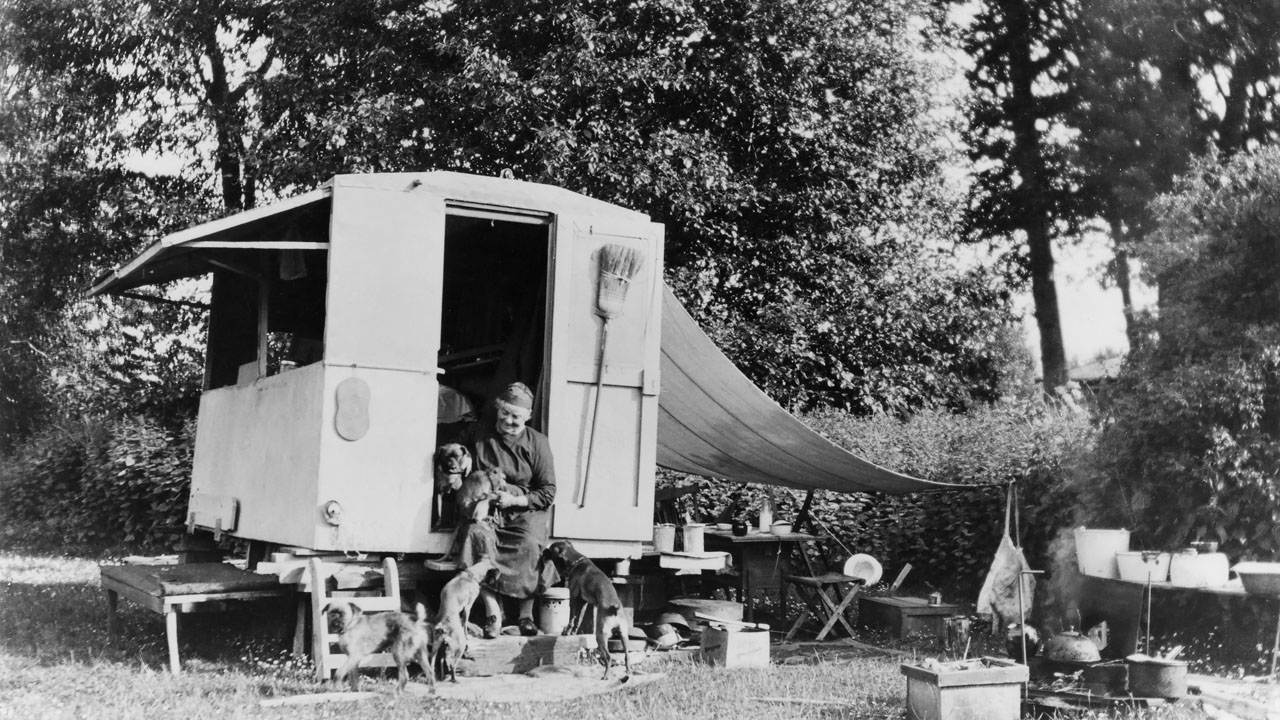
Anyone who grew up in British Columbia probably came of age alongside Carr. She is emblematic of the province, its beauty and idiosyncrasy, its remoteness from central Canada. On the wall of my childhood home, we had prints of Carr’s most iconic landscapes. I feel, like a lot of other folks, that she is part of the family; the kooky elderly aunt with a caravan and a cool monkey.
But while walking through the more than 100 drawings and paintings on display at the VAG, I tried to see Carr’s work as if I wasn’t from here, to see it anew. It is something of an impossible task.
Born in Victoria in 1871, Carr spent most of her life in B.C. Other than trips to Europe and the United States, as well as excursions back east to visit her peers in the Group of Seven, she spent the bulk of her time here. She is synonymous with place, this place in fact — the dense rainforests, coastal landscapes and mountains of British Columbia.
Part of the impetus for the show, as Richard Hill, Smith Jarislowsky Senior Curator of Canadian Art explains, was to showcase Carr to people who aren’t from here. The exhibition runs throughout the summer, catering to the influx of visitors for the FIFA World Cup. Whether soccer fans will attend the Vancouver Art Gallery remains to be seen, but in the interim, us locals can take in the expansive collection and bask in the deep green, browns and greys that typify so many of Carr’s paintings of trees, forests, mountains.
For all the things written about Carr, not to mention the films, dance performances and musical interpretations, at the heart of Carr’s work remains her bedrock commitment to capturing the mystery of the natural world. In this quest, words are sometimes not very useful, but here are a few that come to mind when looking at Carr’s paintings: transcendence, rapture, reveries, the almost ridiculous amounts of towering beauty at almost every turn.
As Carr wrote in her journals: “Here is a picture, a complete thought — and there another — and there. There is everywhere something sublime."
A little less conversation
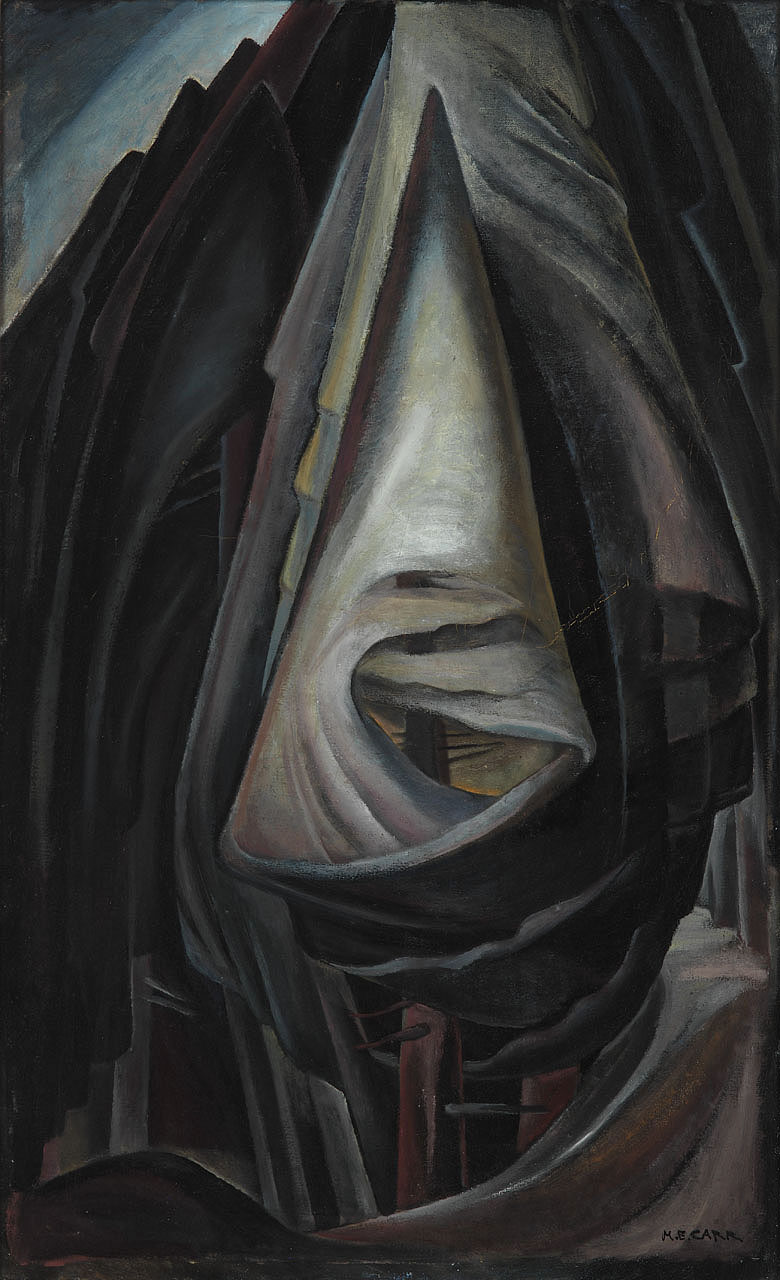
As Hill explained in the media preview of the show, a key component in seeing Carr’s work is to dig deep into the animating spirit behind it. The “R” word, religiosity of a certain kind, a spiralling Sufi-dance of earth, trees and sky.
Wandering around the VAG, I found myself wanting to wave away all the verbiage, the explanatory descriptions, even the biographical details of the artist’s life and just see the work without all the mythos that has been attached to Carr.
How to write about her work without contributing to the enveloping, sometimes obliterating clouds of words, words, words? That part, I haven’t quite figured out.
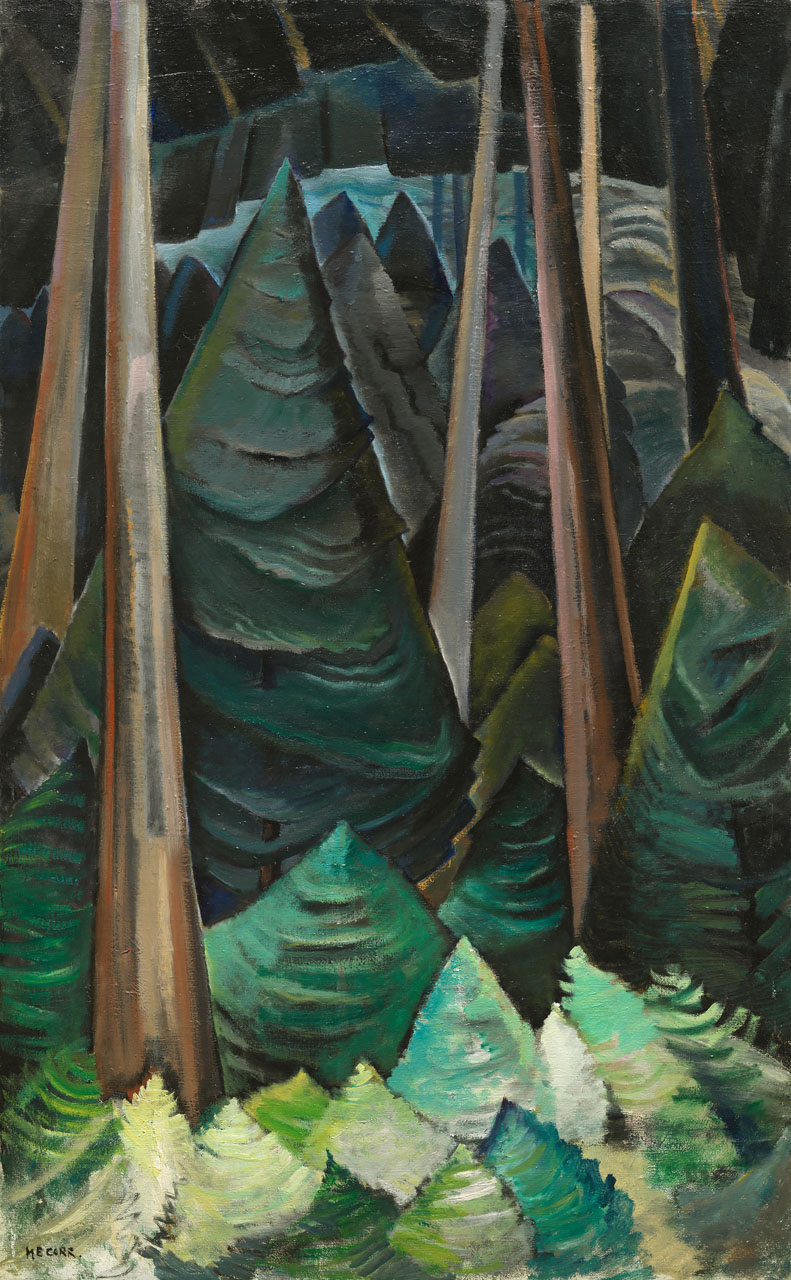
Here is where music might be better suited to summoning Carr’s translation of the density of forest into paintings. When I think about her rugged, sensual, bordering-on-horny depictions of trees, I think of Antonín Dvořák’s 9th Symphony “From the New World” and its trumpeting thrills, galloping like a runaway horse through both darkness and light.
There is similarity or convergence in the heft of the musical movements of Dvořák’s symphony, the scale, danger and ultimately the triumph in pinning some of that magnificence into place through the humble stuff of paint on canvas. It’s a curious form of alchemy.
It’s easy to forget what Carr managed to do, with little in the way of money or support. Eschewing the conventions of the day — marriage, husband, family — in favour of a career as an artist, she went her own way.
As the press material around the show states: “Like all landscape paintings, Carr’s are the product of an artist’s encounter with an observable reality that is then processed through the assumptions and choices made in selecting and depicting what they have seen.”
It’s a dry way of stating what it is actually taking place. Not only between Carr and the places she is depicting, but in the relationship between the viewer, the paintings and the natural world. Inside this reciprocity, boundaries dissolve in the vibrating, pulsing scenes that combine both solidity and movement into an ecstatic communion.
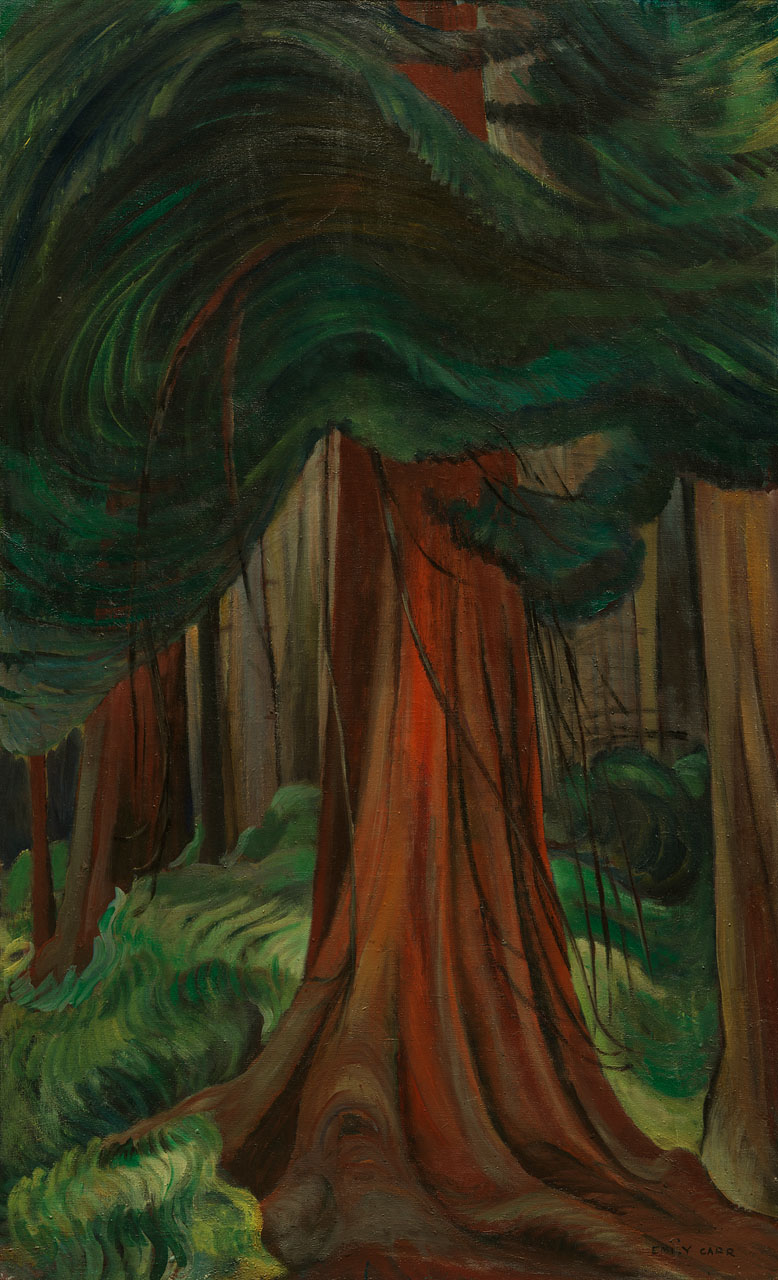
In bringing together competing impulses, Carr created a kind of transmutation, one thing into another.
Hill recounts that in one of her final journal entries, Carr wrote about a recurring dream of walking along the beach, seeing a particularly beautiful scene and wanting to find a way into a greater sense of union.
I would argue that in transforming the landscape of British Columbia into modernist painting, Carr did ultimately fuse with her subject matter. It’s impossible to wander in the woods and not see her vision: ample, abundant, overflowing with a wild and mystical energy that moves from the ground to the sky.
So, enough words. Let’s look at some paintings!
‘That Green Ideal: Emily Carr and the Idea of Nature’ is on view at the Vancouver Art Gallery until Nov. 8 2026. ![[Tyee]](/design-article.thetyee.ca/ui/img/yellowblob.png)
Read more: Art




Tyee Commenting Guidelines
Please note that email notifications for replies are not currently working due to a software issue which may be resolved in a future update.
Comments that violate guidelines risk being deleted, and violations may result in a temporary or permanent user ban. Maintain the spirit of good conversation to stay in the discussion and be patient with moderators. Comments are reviewed regularly but not in real time.
Do:
Do not: