



 SHARE:
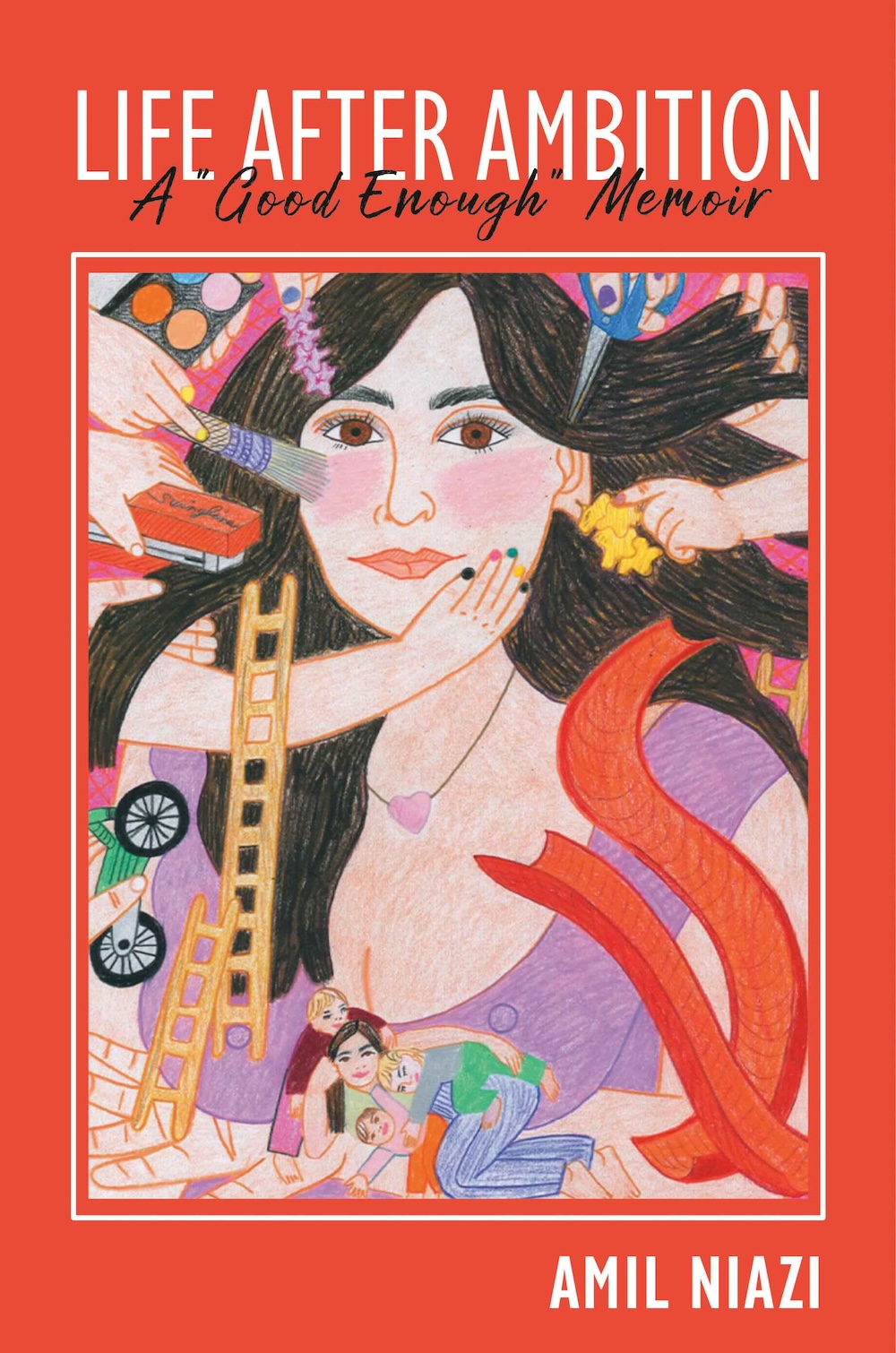
Life After Ambition: A ‘Good Enough’ Memoir
Amil Niazi
McClelland & Stewart (2026)
After receiving a near-perfect grade in English literature at the end of Grade 12, Amil Niazi asked a teacher for a recommendation letter for her university applications. When she went to pick it up, the two got to talking about books they’d read that year. As she describes it in her new book, Niazi asked him “Why everything was so European, so white, so boring — especially one of his favourites, Catherine, Called Birdy.”
He tore up her recommendation letter. She thought he was joking.
“I still think about what it was about someone like me that so infuriated him in that moment. What had I said that deserved such a response?” writes Niazi in Life After Ambition: A ‘Good Enough Memoir,’ out this month through McClelland & Stewart.
“It wasn’t the last time a white man in authority treated me like every hand up they were willing to grant me was something I should be willing to grovel after.”
Ambition can be defined as “an earnest desire for some type of distinction, [such] as power, honour, fame or wealth.” But the Toronto journalist and author’s book — inspired by her viral 2022 column in the Cut, ‘How the Pandemic Made Me Lose My Ambition’ — doesn’t explore ambition as it’s more commonly understood. It explores ambition from the perspective of a person of colour, as a poor kid, as a woman in an abusive relationship. It depicts a person in a vulnerable situation surviving by turning to the bootstrapping and fierce individualism that is central to how we organize ourselves in the western world.
Ambition offered Niazi “a tool to dig my way out of this life in search of a better one.” But as she continued to aim higher and climb further, she realized she wasn’t working toward something, she notes in the book, “as much as running away from something.”
Niazi earnestly and sharply recounts her experiences with addiction, abuse and fertility treatments. In a harrowing anecdote about the time she told her boss she’d been violently assaulted by her ex, she writes: “She asked me if I’d ‘done the right thing’ and called the police. I hadn’t realized that was the right thing to do, but I nodded so she could rest assured that I was the right kind of employee who always did the right thing.”
In the aftermath of the most recent round of layoffs in a job where coworkers warned her, “last one in, first one out,” Niazi “decided it was worth it to ‘keep doing the right thing,’ being the right kind of person by showing up and shutting up.”
While gen Z has given rise to a rejection of hustle culture, we haven’t escaped the kind of striving that can breed poor mental health, low self-worth and even toxic habits. Just look at the extreme popularity of self-help gurus or optimization hackers like Jay Shetty or Andrew Huberman, or even grifters selling manifestation as the tool to getting everything you want in life. Not to mention it’s January, when many of us make hyper-specific New Year’s resolutions, fantasizing about an imaginary, future version of us, rather than spending time with who we are right now — whoever that may be.
In some ways, Life After Ambition is more about life through ambition — how it guides us and embeds itself in the decisions we make, for better or worse — and what happens if we can find a way to let it go.
We caught up with Niazi in the weeks before her book launched earlier this month. This interview has been edited for length and clarity.
The Tyee: In many ways, your story paints a picture of how ambition manifests through trauma, whether it’s childhood poverty, domestic abuse or addiction. We hear friends say, ‘I want a partner who's ambitious,’ or parents say, ‘I want you to dream big and go far in life.’ Why would we benefit from looking at ambition not as a desire to chase dreams, but as a symptom of something else?
Amil Niazi: We’re reckoning with the relationship we have with work. With AI constantly looming and threatening to upend our notion of work; with the economy constantly in flux; remnants of the pandemic and what that did to collapse remaining barriers between work and home; we’re in a moment where we can reorganize how we think about work and why we choose to pursue certain things.
You’ll hear a lot of people talk about late-stage capitalism and what that means. I think it’s much easier to think about what ambition means, why we are desirous of climbing the ladder and what it means when you achieve it and you still feel lost, disconnected and broke. Rather than having these vague conversations about the end of capitalism, which I think really mean nothing, I’m hoping to have a conversation about what happens next. Now that we’ve started to admit that it’s not that great, we’re asking, ‘What else is there?’
I was tempted to ask while reading. ‘What would life have looked like if we hadn’t been so ambitious?’ But that’s not really the point. I do wonder, what else is there? What comes up for you when you ask that question?
I haven't figured it out — I’m not, you know, the Dalai Lama. But I do feel better about that question by bringing my whole self to the conversation. I spent so much of my life trying to figure out how to be valuable rather than feeling connected to the work I do. Feeling good about the work I do rather than good at the work I do. [Realizing] that being vulnerable about who I am makes me better at the work is making me feel excited about work again.
So, success no longer looks to me like getting the promotion or getting the pat on the back from the boss, like, ‘Hey, you are good.’ It looks more like saying yes to work that makes me feel excited and like I’m contributing to the world, helping people see things differently and helping my kids see things differently.
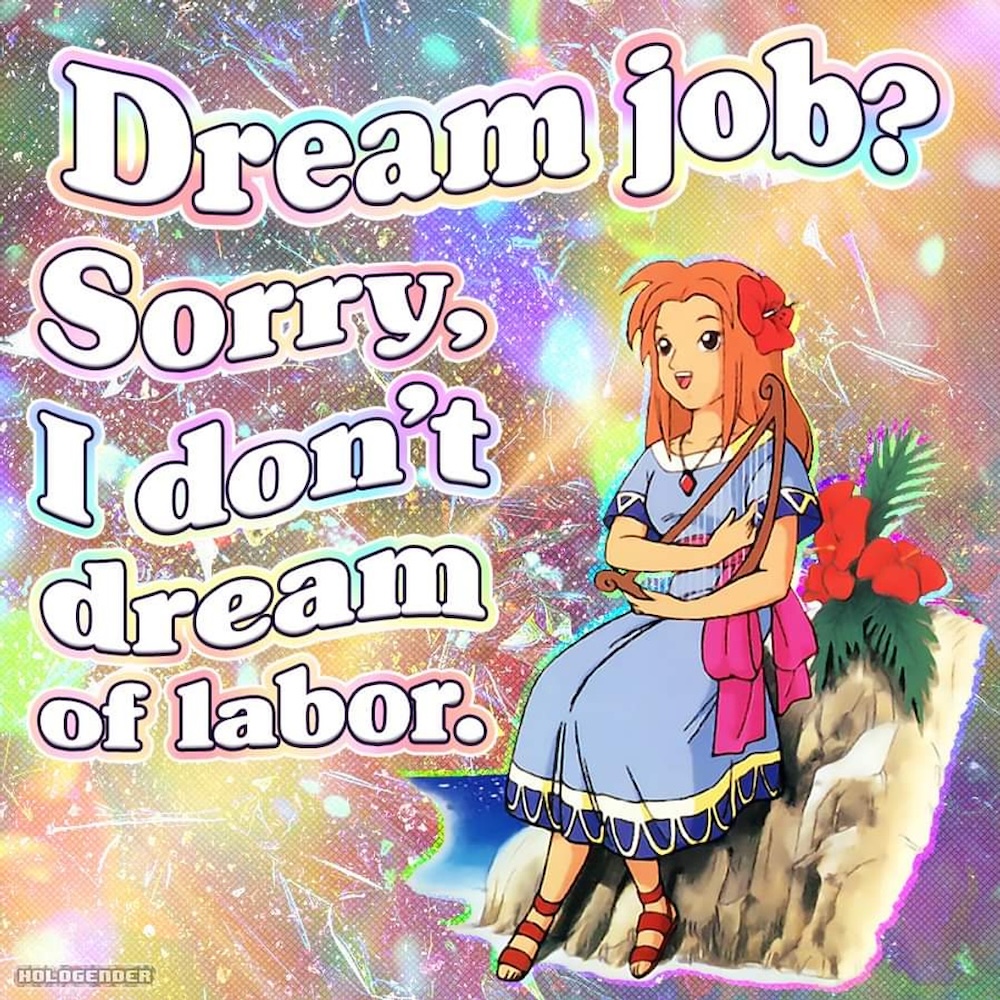
I’m sure you’ve seen the quote-turned-meme, ‘I don’t dream of labour,’ a sentiment often attributed to gen Z. What do you think that perspective is trying to convey, and how did we get here from the very-millennial gold-star syndrome you reference in the book?
That girl-boss hustle culture that was prevalent for my generation for so long, was like, ‘You should want to be good at work. You should sacrifice relationships, children and family for it.’ It was considered small-minded to want to stay in your hometown. It was considered un-feminist to want children, especially at a younger age.
The backlash to that are things like the trad wife movement. One of the more refreshing things that have come out of the backlash to that is people going, ‘I don’t want that. I’m not going to sacrifice my relationships, my mental health, my time, to do — what? Be a good employee? Then you’ll still lay me off? You’ll still fire me at a moment’s notice so the CEO can, like, buy another car?” It made sense when you could own a home on one salary, have multiple kids, go on vacation and save for retirement. You could uphold the myth that capitalism was a moral good. The generation that has come after mine is looking at the fallacy of hustle culture and laughing at it and saying, ‘we choose something else.’
I choose something else. Girl boss culture never spoke to me. Well, that’s not true. I don’t want to pretend it never spoke to me. I, too, was fooled by it. I, too, watched — what’s that movie? Well, any movie where the romantic heroine was a journalist, dresses beautifully, has a beautiful apartment and many boyfriends.
The Devil Wears Prada?
The Devil Wears Prada. But also, the one [with] Matthew McConaughey, she wears the yellow dress —
How to Lose a Guy In 10 Days?
Yes! I was suckered. But that desire for success was pivotal to getting me out of poverty. It [felt] like a necessary evil in the moment. So, it’s a complicated relationship. We have to work to live, and our entire culture is based on the pursuit of material wealth. It’s difficult for most of us to give that up entirely, so I’m just trying to find something in the middle.
Doing the ‘right thing’ came up numerous times in your book: saying yes to a job that didn’t feel right for you; keeping your head down at work despite an ongoing traumatic experience in your personal life; or even something as highly specific as the choice to call the police in the immediate aftermath of a domestic assault. After publishing a memoir and writing a viral Cut column on the topic, what is your relationship now to ‘doing the right thing’?
In a book about ambition, it was important to explore topics like domestic violence, addiction, infertility, childhood poverty, because trying to maintain the facade of being someone ‘worthy’ of being allowed into those spaces is what I think caused me to unravel from ambition. I was so tired of trying to fit myself into the mold of a good-enough person. Faking it didn’t result in me being the right type of person. Frankly, I saw people who were deemed worthy get laid off.
I realized there is never going to be a situation where I can insulate myself from the realities of late-stage capitalism. I’ll never be so good that I won’t get laid off, that I can escape being renovicted.
It was also diminishing to hear a woman in a position of power say, ‘Did you do the right thing about being assaulted?’ Knowing there was, in her mind, a right and wrong answer. There was no nuance, no appreciation, no care [about whether] I was okay — she never really asked me that. It shattered the illusion I had that we were all equal in that space. In her mind, there’s a way for me to answer that would allow me to continue to be successful in that space and there was a way to answer it in which I would suddenly be devalued despite all the good work I was doing.
Even if you think you’re not bringing the personal into the professional, that judgment is always being made. Then in the pandemic, when it felt like life and death, and bosses were still like, ‘Where’s this thing?’ and you’re like, ‘That is so not important right now. People are literally dying, Kim.’
So much of this book is about your journey growing a family. I’m always curious about writers who have kids, who write about their kids or write something their kids might even relate to someday. Did this cross your mind at all while you worked on it?
If I start to think about who’s close to me that might read it, I fear I would start to censor myself. I don't even want my husband to read it.
But they’re so present because I work from home, I often have to work after school pickup and during dinner. Inevitably, they'll be like, ‘What are you doing, Mommy?’ [The older ones] have been so present for all the processes of the book — the early galleys, they watched me write. I love that they’re at this stage where I can talk to them about this, and they know it’s about my life — it’s got me on the cover, and it’s got a bunch of kids. They’re kind of aware of that, and I’m excited for that moment when they will see me as a real person with a real history when they’re adults and, when they're ready to be aware of that history, for them to read this book. It’s beautiful to be able to offer them a literal book of who I was and how I became the person that I am.
An excerpt from your epilogue reads, ‘I'm torn between writing and paying attention to my daughter… It’s the kind of moment I used to feel so frustrated by, feeling pulled in two different directions, work and parenthood, but now I allow myself to accept that there are no hard lines between the two for me anymore.’ What do you hope readers will take away from this scene?
I hope people relieve themselves of the guilt that comes with trying to navigate work and care. Even if you’re not writing at home, you’re still checking your email on your phone, you probably have Slack on your phone. Your kids are interacting with your job, whether you like it or not, and there’s a way that you can be intentional about it. How can you incorporate it into your family life in a productive way that includes the kids, relieving yourself of the guilt and shame?
I have a long desk, and, often, if I have to work in the evenings, the kids will work alongside me. The other night, I had to finish an excerpt for the Cut of the book. My son was working on his own book about a bee, and my daughter was painting some ceramics we’d made. It was so joyful to engage in parallel work. My son was making the cover of his book, and he wanted me to open a Google Doc so he could start making the chapters.
I saw the result of him watching me work. There wasn’t resentment, there wasn't this antagonistic relationship between work and care. It just got him excited about writing and what his place was in that process.
They were still like, ‘Okay, when are you done? Can we have your attention again?’ But at least I saw these things can coexist. That’s all that parents, but also many people thinking about parenting, want. Can I, the person, still exist within, me, the parent? Is there space for me as a writer, an artist, whatever it is you want to still be? I feel there is. I hope if you read this book, you’ll feel like that's true for you, if that’s something that you want. ![[Tyee]](/design-article.thetyee.ca/ui/img/yellowblob.png)
Read more: Health, Books, Labour + Industry, Gender + Sexuality, Media










Notice about commenting changes
The Tyee’s commenting system will be moving to a new platform on Nov. 12. If you’re already a Tyee commenter you must register with the new system on or after Nov. 12 with your preferred username.More information can be found here.