


 SHARE:
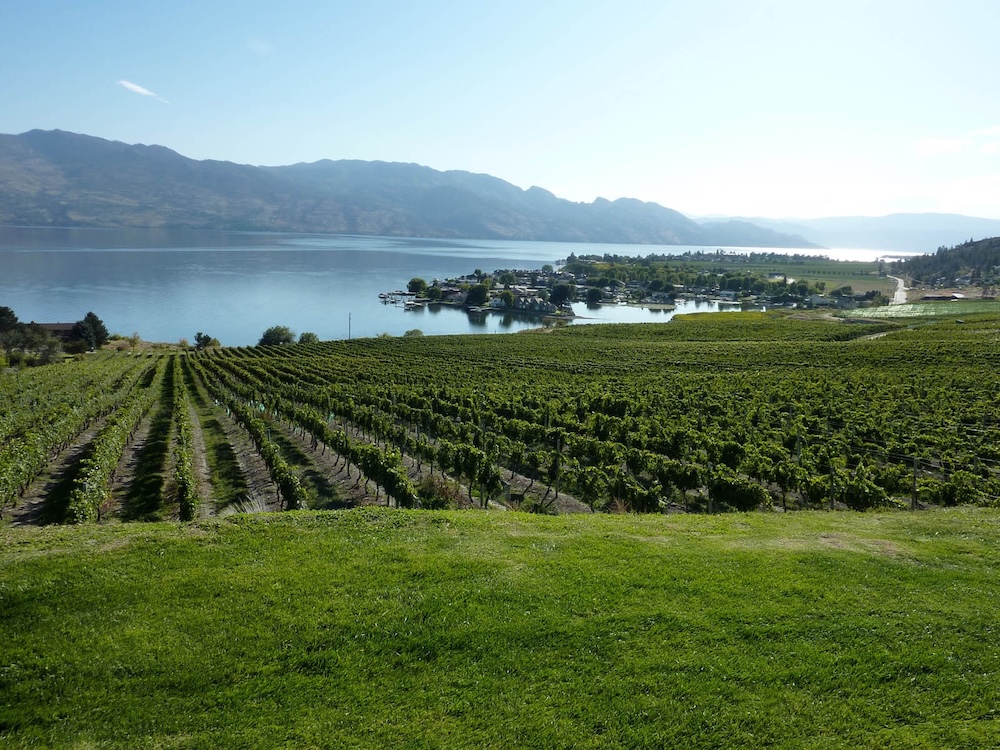
The BC Conservatives will take a position on the NDP government’s contentious proposal to allow more protected farmland to be used for food processing — but not yet.
“We’ll have some of that information coming up in the coming days,” BC Conservative leader Lorne Doerkson said Friday, “but we are trying to bolster our support for different industries in the province, and certainly agriculture will be another one of them.”
Premier David Eby sent the province to an early election just a few days after the public consultation period closed on changes to the Agricultural Land Reserve rules, putting the proposal on pause.
While business interests including the Vancouver Board of Trade and the BC Food and Beverage industry group had lobbied in recent years for more food processing in the ALR, the submissions from the Agricultural Land Commission and others to the engagement used strong language to criticize the proposal.
“The proposal raises serious concerns regarding the long-term protection of the agricultural land base, the viability of farming, agricultural land affordability, and the continued ability of the ALR to fulfill its statutory purposes,” wrote ALC chair Jennifer Dyson in a 17-page submission. The ALC exists to preserve agricultural land and encourage farming.
“In the Commission's view, the proposal represents a significant policy shift that has not been supported by evidence demonstrating the need for change or showing that the proposed change would increase agricultural production, improve farm viability, or enhance food security within British Columbia.”
Dyson went through the proposal in detail, in three places using “alarmed” to describe the ALC’s assessment of it and calling it “one of the most significant policy shifts” affecting the ALR in decades.
“A central concern for the Commission is that the proposal appears designed primarily around the needs of industrial food processors rather than the needs of agriculture,” she wrote.
Currently food processing is allowed on farms anywhere in the ALR as long as 50 per cent of what’s being processed is grown or raised on that farm or on farms it’s associated with. Current rules don’t tie processing requirements to soil quality, which is classed from a high of one down to a low of seven.
The proposed changes, outlined in a four-page discussion paper, would alter the rules about food processing on Class 5 to 7 land.
Under new rules the minimum amount of local product that would need to be processed at a new facility on those lands would be reduced to five per cent. That local percentage could be grown or raised anywhere in the province, not just on the farm hosting the facility, and the rest could come from anywhere in the world.
Processing would also be allowed on Class 4 land if that land is already serviced — meaning there is road access, electricity, municipal water and sewage — at the time the rule is implemented.
BC Food and Beverage, an industry association representing food and beverage processors and manufacturers in the province, advocated for the change.
“In recent years we’ve lost several processors to other provinces and the U.S. because of the high cost of industrial land,” the trade magazine Food in Canada quoted the association’s CEO James Donaldson saying in August. “This change won’t bring them back, but could attract new business to come here, and more importantly it creates opportunities for B.C. processors to grow and expand here without the need to relocate in order to do so, which is a win for agriculture and the economy,”
Donaldson said industrial land is 10 times more expensive in B.C. than it is in other parts of Canada and that the proposed changes to the ALR would give processors access to significantly cheaper land.
When the provincial government launched the consultation, Business Examiner quoted Bridgitte Anderson, the CEO of the Greater Vancouver Board of Trade, saying the proposal was a reasonable compromise. “It will unlock investment, and increase food security.”
And Alex Mitchell, the CEO of the Abbotsford Chamber of Commerce, callied the change overdue. “There needed to be some form of modernization and a recognition food processing and agriculture go together, and allowing for food processing to occur in our region is pretty key to food security and our overall economic competitiveness.”
Responses to the proposal from the ALC and other agriculture groups did not become available until mid-September when the consultation period closed.
Katarina Glavas, a senior agrologist with the ALC, said in her submission to the government that she is concerned about including Class 4 and 5 lands in the proposal.
“Limitations at these classes, such as poor drainage, soil moisture deficiency, and soil structure constraints, commonly found in the Lower Mainland, are improvable through normal farm practices like tile drainage, irrigation, subsoiling, and soil amendments,” she wrote.
“Class 4 land can and does become Class 1 to 3 land once these practices are applied, and in some cases Class 5 land can be improved to reach prime status. In some areas of the Okanagan Valley, for example, Class 5 soils limited by a soil moisture deficiency are classified as Class 1 once irrigated, illustrating how dramatically a single improvable limitation can affect a parcel's soil capability.”
Soil is a finite and largely non-renewable resource that takes centuries to form, Glavas said. “Once paved over or developed, [it] is essentially lost to agriculture permanently.”
Dyson pointed out that the ALC has long supported food processing proposals “where a meaningful connection to B.C. agriculture can be demonstrated” and that existing regulations allow the commission to look at applications on a case-by-case basis.
“The Commission is concerned that the proposal appears to reflect growing pressure to address industrial land constraints through access to agricultural land,” she said. “Over the past several decades, significant areas of industrial land have been converted to other uses, including residential and commercial development.”
The B.C. Agriculture Council, which represents 20,000 farming families and some 30 farm and commodity associations, made a four-page submission saying its board of directors unanimously supports food processing but opposes the proposed rule changes.
“Processing plays an important role in B.C.’s agrifood economy, but the proposed new rule does not address the structural challenges identified by processors themselves,” council president Jennifer Wolke wrote. “These structural challenges are not unique to B.C. and so cannot be attributed to the ALR.”
One of the organizations that had sought a change to the rules was BC Fresh, a company whose 33 shareholders operate 72 B.C. farms.
Steve Roosdahl, who has been the CEO of BC Fresh since January 2025, declined to comment this week beyond saying the company supports the BCAC’s response to the government’s proposal.
Before the election call, the NDP government had been moving towards adopting the proposal. Lana Popham, the NDP’s agriculture and food minister, is not seeking reelection.
Responding Monday to The Tyee, Eby said that rising prices for basic groceries are a food security issue.
“We have to be more independent on a number of levels including on food production to keep cost of living down for British Columbians, but also to make sure we can stand on our own two feet,” he said, noting the province’s reliance on food from California and a threat that the United States will restrict exports of diesel fuel. “Food processing is part of that.”
The proposal would only affect 0.3 per cent of the ALR, Eby said.
There are 45,000 square kilometres of land in the ALR, just under five per cent of the province.
The BCAC said in its submission that the 21,000 square kilometres that could be affected by the change is “a very substantial swath of land” and there were “strong concerns from our membership that the sector would have little to no recourse if the Province were to raise this cap at a later date in response to pressure from other competing land interests.”
It’s crucial to have a conversation with the agriculture sector about how to introduce more food processing properly, Eby said. “We’ve got to support our farmers, and we also have to do more food processing in the province,” he said. “I think we can do both those things and I think in fact we have to do both those things for British Columbians.”
Doerkson declined to give the Conservative’s position on the proposal, but pointed to his party’s support for the beer and wine industry with a temporary removal of provincial sales tax.
“We’re going to do everything in our power,” he said. “There will be more on that for certain in the coming days in our platform.”
The BC Green Party recently released a policy brief on agriculture and food sovereignty that did not address food processing directly, but did call for restrictions on non-residents and investment firms owning B.C. farmland.
“The BC NDP say their changes will improve food sovereignty,” a BC Green spokesperson said, “but that’s not what we’re hearing from small farmers.”
The change would be devastating to large parts of the ALR and would fuel the land speculation that is already driving farmers away, they said. “Much of the land included in this provision is farmable and shouldn't be turned into industrial lands.” ![[Tyee]](/design-article.thetyee.ca/ui/img/yellowblob.png)




Tyee Commenting Guidelines
Please note that email notifications for replies are not currently working due to a software issue which may be resolved in a future update.
Comments that violate guidelines risk being deleted, and violations may result in a temporary or permanent user ban. Maintain the spirit of good conversation to stay in the discussion and be patient with moderators. Comments are reviewed regularly but not in real time.
Do:
Do not: