


 SHARE:
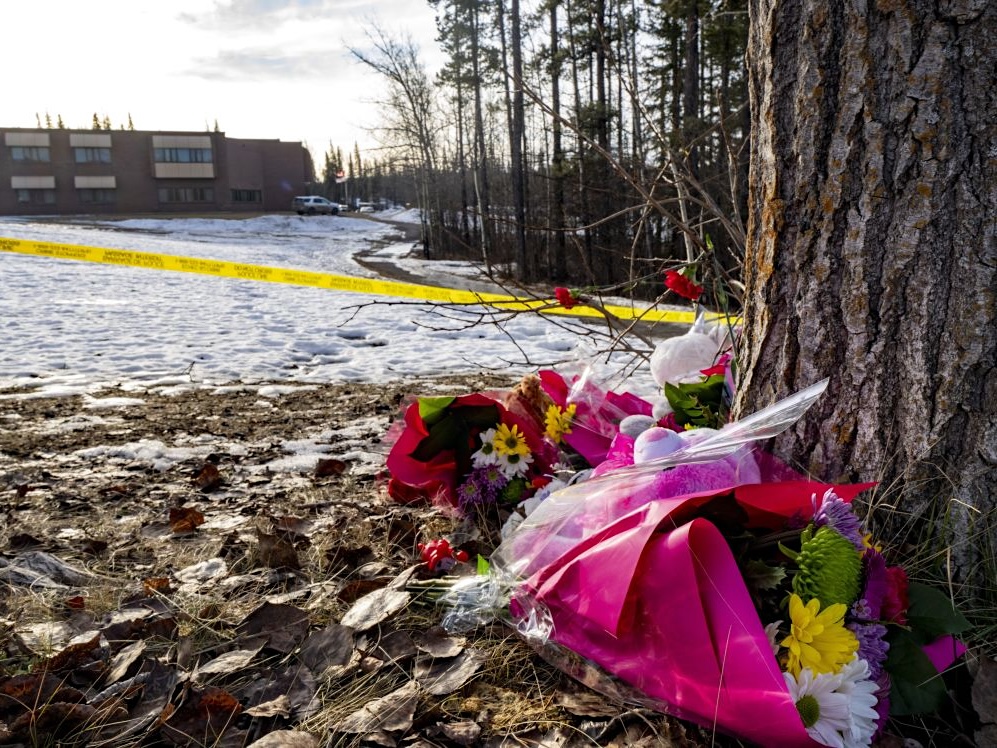
On Tuesday, U.S. officials held a joint press conference announcing the arrest of a 30-year-old American in connection to the school shooting in Tumbler Ridge, B.C., earlier this year.
The individual, whose legal name is James Cody Bryant, was charged with conspiracy to commit murder in a foreign country for allegedly assisting and enabling Jesse Van Rootselaar in the weeks and hours before she killed seven people and wounded dozens of others in the northern B.C. community of Tumbler Ridge. On Tuesday, officials in Washington state said Bryant provided “counsel, technical advice and money to the shooter” in planning the attack, and even planned to help livestream it on the streaming platform Twitch.
With any development in a case like this, thoughts should immediately go to the victims and their families, who are being forced to relive the horrible tragedy once again in the media cycle. But discussion of the victims or their families has taken a back seat to unprecedented levels of anti-trans vitriol from both public figures and media, after officials confirmed that, like Van Rootselaar, Bryant is a trans woman.
As we’ve already seen from the response to the shooting itself last February — and, similarly, the misinformation around the shooting of conservative commentator Charlie Kirk last year — this wave of hate will have resonating effects on trans people across Canada and the United States, and will be weaponized to roll back trans rights in general.
The media narrative that has emerged in the hours since Bryant’s arrest attempting to directly connect this tragedy to transness is a symptom of the larger anti-trans hate movement and will directly contribute to its continued amplification.
The rush to connect the dots
In a report released this June, the Canadian Anti-Hate Network identified how social media was “used by many to spread discrimination and hate against transgender people in the days following the shooting” last February. And within seconds of officials confirming Bryant’s identity, the well-oiled anti-trans social media machine spurred into action. It’s important to identify the wave of intentional misgendering and misinformation about trans people at large for what it is: anti-trans hate.
[Disclosure: The author of this story is employed by the Canadian Anti-Hate Network.]
Former B.C. MLA Tara Armstrong — who, while still in office, amplified a wave of vitriol towards trans people in the hours and days following the shooting and used the tragedy as an excuse to rail against gender-affirming care and inclusive school policies — used the news of Bryant’s arrest to call for a crackdown on trans rights. Former federal Opposition leader Stockwell Day suggested that this should serve as an impetus to investigate gender-affirming care at large and “look into” doctors who administer it.
The same conservative and far-right media figures in Canada and the United States who rushed to amplify the fact that Van Rootselaar was trans have predictably also obsessed over Bryant’s identity. Influencer Andy Ngo fixated on Bryant’s appearance in courtroom sketches. National Post columnist Adam Zivo wrote that “we need to talk about how a significant portion of the online trans community is suffused with violent and anti-social tendencies.” Posts from far-right outlets including Juno News, the Western Standard and the Post Millennial repeatedly misgendered Bryant and Van Rootselaar and fixated on images shared between the two on Discord featuring weapons and trans flags. One newsletter from Juno landed in inboxes with the headline “The Tumbler Ridge Shooter’s Alleged Trans Accomplice Was Found.” Posting on X, Juno News founder Keean Bexte claimed that “THE CANADIAN MEDIA AND RCMP ARE ENABLING THE PERVERTED FANTASIES OF THE TUMBLER RIDGE SHOOTER” by referring to Van Rootselaar and Bryant as women.
The way public officials have referred to Bryant and Van Rootselaar has also fuelled these anti-trans voices online. During the press conference on Tuesday, Washington state officials confirmed that Bryant is a trans woman yet repeatedly used male pronouns in identifying them (Vancouver Sun journalist Kim Bolan reported that Bryant uses they/them pronouns). The official criminal complaint against Bryant, while identifying Van Rootselaar with “she/her” pronouns, refers to Bryant exclusively by last name. This misidentification and lack of clarity have led to a lot of confusion in subsequent media reports, with many accounts even beyond these obvious far-right outlets simply identifying Bryant as a “transgender man,” which is untrue.
Some clear facts, according to evidence made public by officials: yes, Van Rootselaar was a trans woman, and yes, Bryant reportedly also is. Based on evidence presented by officials, their transness was something that connected them and something they discussed together in online spaces such as Discord. But that doesn’t mean their transness predisposed them to violence, or that any other trans person is any more predisposed to gun violence.
Trans people do not commit more mass shootings
Reality points to mass violence being committed by trans people as disproportionately rare. Statistics around mass shootings vary due to categorization of what constitutes a mass shooting, but the Violence Prevention Project, which maintains a database of information about mass shootings with four or more people killed in the United States, notes that of 202 mass shootings in that country since 1966, only one was committed by a trans person — that’s 0.4 per cent of mass shootings committed by trans people, while they make up about one per cent of the U.S. population. In comparison, 197 mass shootings tracked by the Violence Prevention Project were committed by cisgender men and four by cisgender women.
If anyone is disproportionately committing mass shootings, it’s cisgender men — nearly 98 per cent in the Violence Prevention Project database. Similar data for Canada is more challenging to analyze because of the comparative lack of mass shootings here; in 2025, the Rockefeller Institute of Government, a U.S.-based think tank, identified just four mass shootings conducted in Canada since 2000 (the shooting in Tumbler Ridge makes five).
If these people who claim to care about stopping violence actually want to, they could be pointing out the repeatedly documented real commonalities among mass shooters, such as the fact that they are often lonely men radicalized in extremist spaces online. The fact that these media outlets and public figures never talk about that shows that they are not actually invested in curbing violence — they are invested in promoting their own anti-trans agendas.
All of this is the result of a decade-long push to villainize trans people in the media, egged on by the most vocal anti-trans voices online. In turn, this will directly lead to more anti-trans hate overall. There is a reason that whenever a tragedy like this occurs, these figures start fishing for anything that could connect it to trans people. A 2025 report from Wired found at least 12 examples of right-wing online voices falsely blaming trans people for high-profile incidents of violent death, including shootings and plane crashes. And look at how quickly media jumped to suggest that Charlie Kirk’s killer was trans and amplify an unverified report of alleged “transgender ideology” written on the bullets — a report that was ultimately proven to be false.
In the case of the shooting in Tumbler Ridge, these online bad actors found the incredibly rare instance where a trans person actually did it. Bryant’s arrest adds more fuel to that fire but doesn't actually provide any more real evidence that trans people are more predisposed to violence than cis people.
It’s important to be aware of the intentional scapegoating at play here. Even something as simple as U.S. officials misgendering Bryant can serve as a ramp to anti-trans hate at large. Every time a trans woman is called a man in a public way like this — yes, even if the woman in question has allegedly committed terrible crimes — other trans people get the message that their identity is negotiable or temporary.
In amplifying these narratives and disinformation, media and public officials give their audiences permission, or even encourage them, to treat trans people in their real lives the same way. ![[Tyee]](/design-article.thetyee.ca/ui/img/yellowblob.png)
Read more: Rights + Justice, Gender + Sexuality












Tyee Commenting Guidelines
Please note that email notifications for replies are not currently working due to a software issue which may be resolved in a future update.
Comments that violate guidelines risk being deleted, and violations may result in a temporary or permanent user ban. Maintain the spirit of good conversation to stay in the discussion and be patient with moderators. Comments are reviewed regularly but not in real time.
Do:
Do not: