


 SHARE:
There is nothing new under the sun. Or is there?
Whenever I feel like current events are unparalleled, I think about The Tim Traveller. Written, produced and hosted on YouTube by affable Brit Tim Byrne, the series documents regional curiosities dotted about the U.K. and the European continent.
The stories differ wildly, from things like the largest automotive testing track located atop the Fiat building in Turin, Italy, to even more esoteric fare.
In tracking down these continental landmarks, a great deal of European history gets covered. Most notably, the countless wars: the French versus the Swiss, the Germans against the Austrians, the English seemingly against everyone.
To a viewer in 2025, there is something morbidly comforting about these skirmishes that necessitated national borders to be repeatedly redrawn. They are a reminder that almost from the time that there have been humans on the planet, people have been busily in the business of messing with other humans. So, our current state of chaos is nothing new.
Of course, one of the logical conclusions in this line of thinking is “Are we redeemable or are we an ongoing nightmare not only to each other but to just about every other thing on the planet?” The answer is that both these things can be true at the same time.
Nothing provides a better indicator of the ongoing battle between the darker aspects of humanity than history. This year, the Vancouver International Film Festival’s program features a number of documentaries parsing out confounding historical moments that also speak to the current news cycle.
Here are my festival picks that help us make sense of the moment.
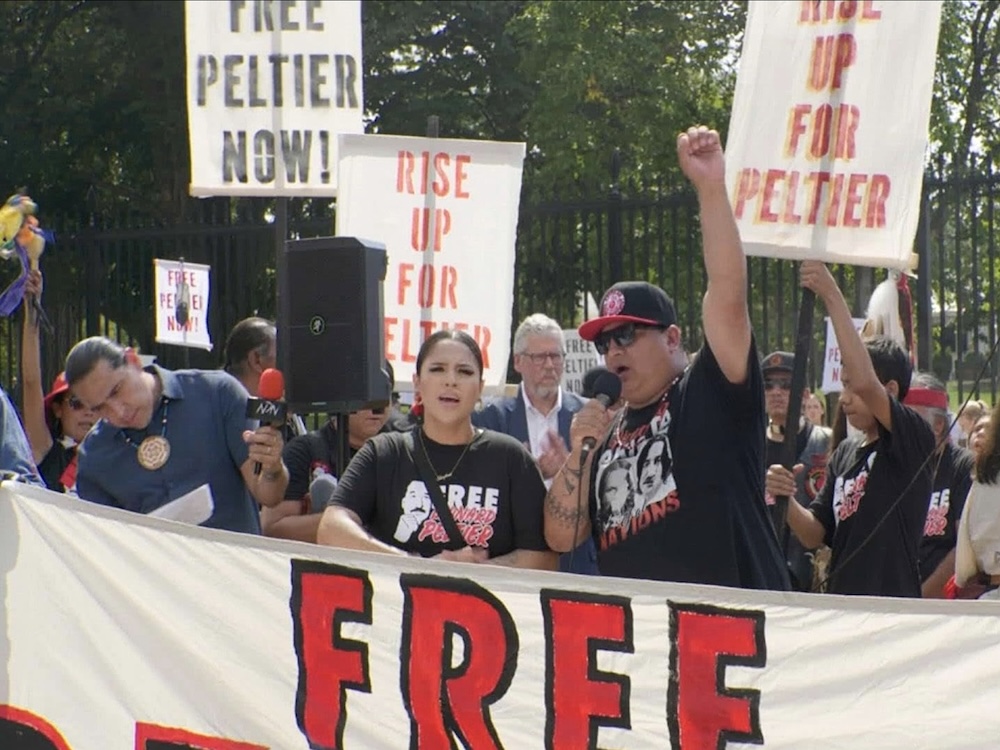
‘Free Leonard Peltier’ lends new perspective to current affairs
If you harboured any doubts about the corruption of the FBI and a good chunk of the U.S. government, then Free Leonard Peltier will come as no surprise.
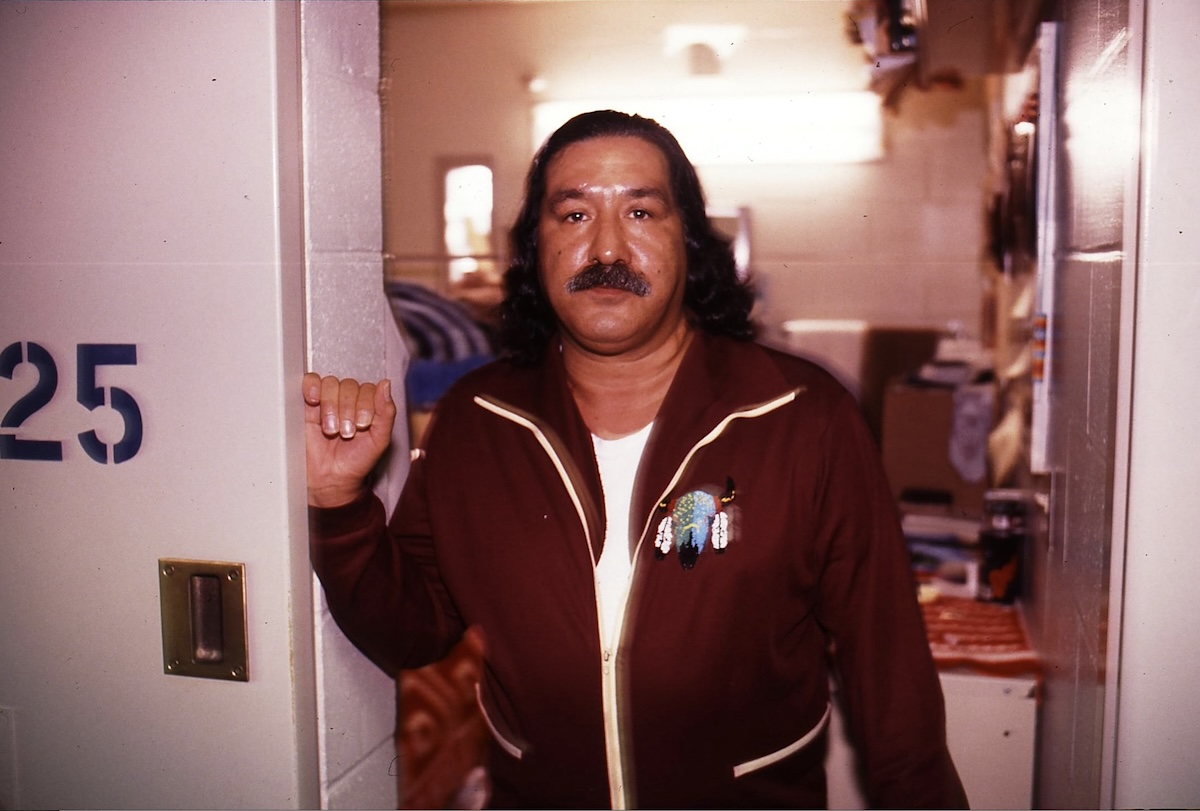
Peltier is an 81-year-old Native American activist whose life has been defined by his interactions with the criminal justice system after he was charged with murdering two FBI agents in 1975. His story has become synonymous with wrongful conviction.
Even in this increasingly cynical age, the bare facts of his case are astounding. The story has been covered previously in documentary (Michael Apted’s Incident at Oglala) and non-fiction (Peter Matthiessen’s In the Spirit of Crazy Horse), but Jesse Short Bull and David France’s new documentary brings together previous information with more recent developments.
In the 1960s and ’70s, the civil rights movement in the United States had made some ground in achieving equity and justice, galvanizing other communities to take up the activist flag. After more than a century of oppression, violence and genocide, the American Indian Movement, or AIM, emerged. The film details the relationship between the U.S. government and Indigenous people, covering both actual and bureaucratic violence, citing discarded treaty agreements, the creation of the reservation system and education initiatives aimed at breaking Indigenous communities and families. “Brutal” isn’t quite sufficient to the reality.
Raised by his grandparents on the Turtle Mountain reservation in North Dakota, Peltier endured the horrors of residential school as a child. He was forcibly confined in a U.S. facility run by the Bureau of Indian Affairs where Indigenous children had their heads shaved, were doused with DDT and were forbidden from speaking their own language. It was his first experience of incarceration.
As a young man, Peltier moved to Seattle, Washington, where he opened an auto body shop and was soon well known and liked for his generosity and courage. He worked on people’s beater cars without charging them money. After getting involved with AIM through Ojibwa activist and AIM founder Dennis Banks, Peltier travelled to Pine Ridge Indian Reservation.
Long before the shootout between AIM activists and the FBI that would come to shape the course of Peltier’s life on June 26, 1975, violence was the reality on the Pine Ridge. Then-tribal chairman Dick Wilson hired privately funded vigilantes to root out the AIM members, with the ultimate purpose of opening Indigenous territory to mining interests. The discovery of uranium had made the land valuable, and the tacit support of the FBI (who supplied arms and ammunition) escalated the brutality. Murder, intimidation and assault against AIM members resulted in at least 60 known deaths.
From the outset, the events of the shootout were chaotic. FBI forces in unmarked vehicles descended on the AIM encampment. Eventually more than 150 armed men composed of FBI agents, mercenaries and cops encircled the ranch house where Peltier and a few others hunkered down. The result was three dead bodies, two FBI agents and an Indigenous man named Joseph Stuntz.
Peltier, along with two other AIM members, was charged and brought to trial. While his fellow AIM members Bob Robideau and Darrell Butler were acquitted, Peltier fled to Canada.
The lengths to which the federal government went to achieve a conviction take on a chilling significance in light of more recent events, such as the murder of Charlie Kirk. As a number of people interviewed in the film state, they were coerced by FBI agents into giving false testimony. This includes a key witness by the name of Myrtle Poor Bear, who claimed to be Peltier’s girlfriend even though they had never met.
After being arrested in Alberta, Peltier was extradited to the United States, charged with murder and sentenced to two consecutive life sentences. His campaign to clear his name and repeal the conviction has defined most of his adult life.
In the remaining moments of his presidential term, Joe Biden commuted Peltier’s sentence, freeing him from prison (although he was still ostensibly under house arrest).
With current Secretary of War Pete Hegseth’s recent announcement that the soldiers who massacred more than 300 women, children and elderly at Wounded Knee in 1890 could keep their medals, the war continues, one battle after another.
‘Free Leonard Peltier’ screens at VIFF on Oct. 3 and 6. Find tickets online.
‘WTO/99’ planted seeds for our present moment
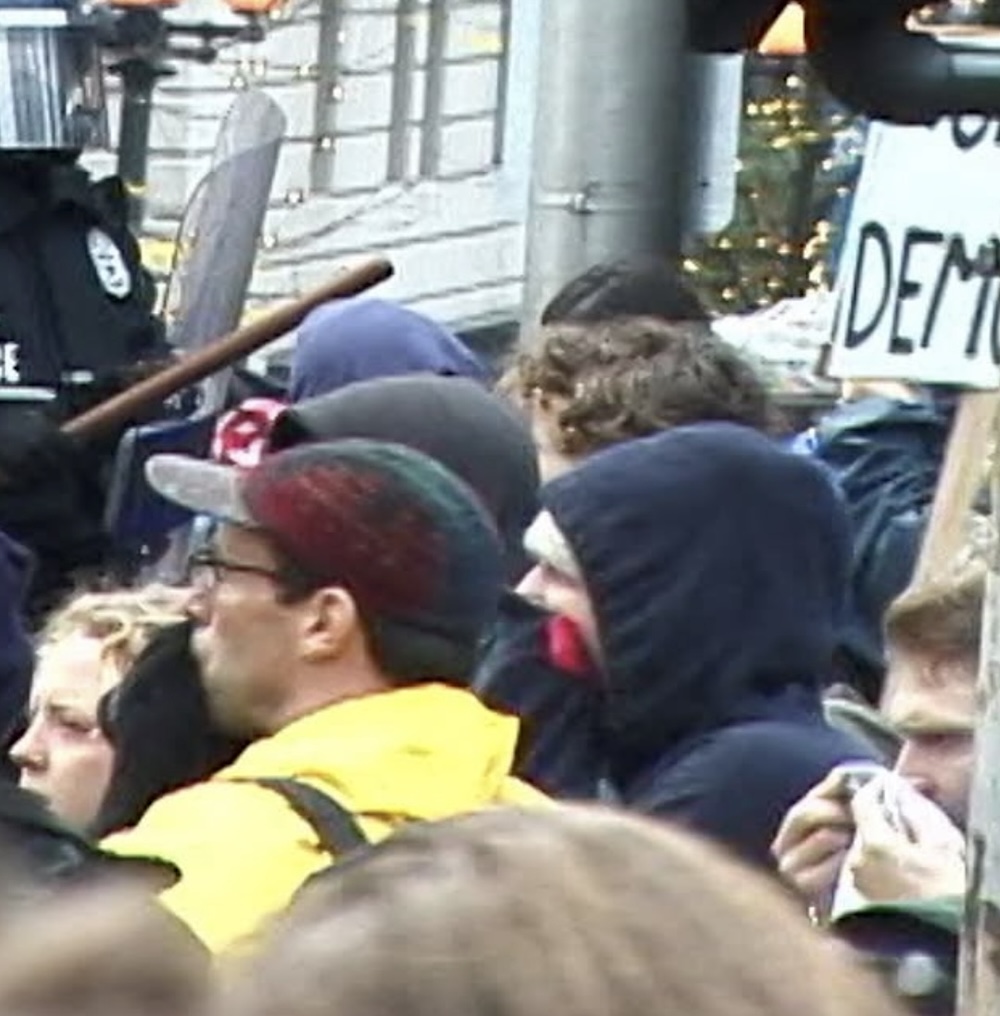
I remember being slightly befuddled when the 1999 World Trade Organization ministerial conference in Seattle erupted into violent protests and a police clampdown. At the time, not much was known about the WTO in wider circles, but in activist communities, the concept of globalization was already something of a looming issue. In advance of the international conference, anti-WTO groups convened in downtown Seattle, joined by concerned locals.
At first it didn’t seem like much of a deal. Protesters, complete with homemade signs and a sense of indignation, took up space in Seattle’s rain-soaked streets. Interactions between the cops and the protesters were initially cordial, even joking, but it wasn’t long before things took a turn.
WTO/99 is a documentary composed entirely of archival footage from the 1999 WTO protests, much of it from the people on the frontlines of the action. As the authorities ramped up their efforts to contain the protesters, employing an arsenal of non-lethal weapons including tear gas, flash-bang grenades and rubber bullets, ordinary citizens were drawn into the conflict.
Televised interviews with Paul Schell, then Seattle’s mayor, and former police chief Norm Stamper show how much these clashes resemble current events. They also demonstrate how different they were. The tonal shift is most evident in the mayor’s entreaties to the city that people had every right to peaceful protests.
Director Ian Bell wields the deluge of archival footage in masterful fashion. I warn you, it does get granular, but the more fascinating aspects emerge in the parallels between then and now. The seeds that were planted in 1999 went on to bear very dark fruit in recent months.
As the Donald Trump administration threatens to send troops into Portland with authorization to use full force, the ghosts of conflicts, past and present, rise up once more.
‘WTO/99’ screens at VIFF on Oct. 7 and 8. Find tickets online.
In film essay about George Orwell, chilling reminders of what’s at stake
If ever there was a prescient writer about the current state of affairs, it is George Orwell.
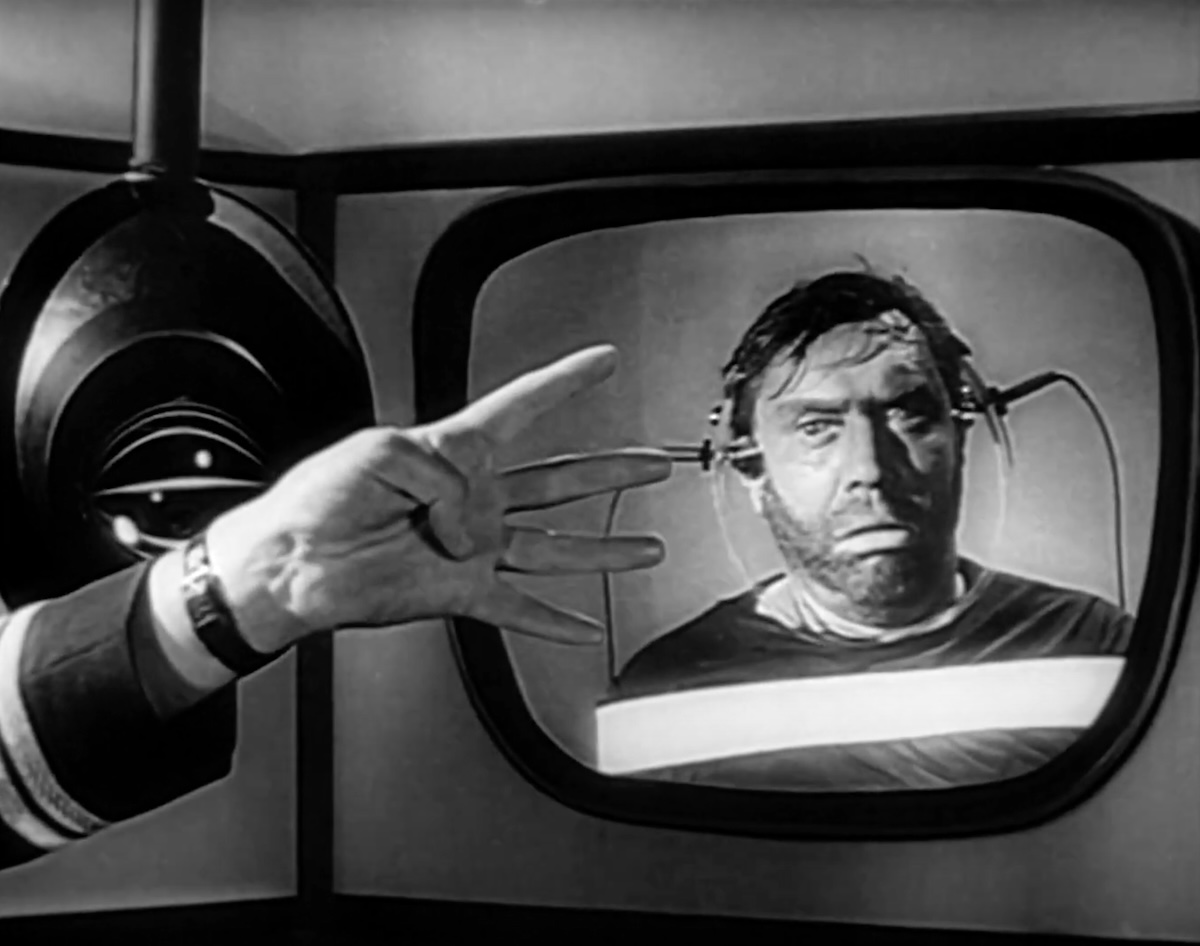
Raoul Peck’s film essay Orwell: 2+2=5 uses the English writer’s life and work to posit hard questions about the state of the world then and now.
From the beginning of Orwell’s life, class figured large. Raised in colonialist India in a middle-class family, the writer learned what it meant to be on the outside of privilege looking in, and never quite accepted. As a young man, Orwell took a job as a police officer in British-occupied Burma, where he learned in brutal fashion what it meant to be the enforcer of oppressive rule.
Peck weaves together multiple narrative strands into an expansive collage. Film clips from different productions of 1984 and Animal Farm are set against episodes from Orwell’s own life (marriage, parenthood, illness). This intermingling of art and life serves as an interesting counterpoint to the larger ideas under examination, namely what it means to maintain one’s humanity in the face of fascism.
The film is not without problems, eschewing subtlety for a blunter approach. But maybe in this period of extremity, that is well warranted. If you want to be heard over the roar of the daily news cycle, you have to scream at the top of your lungs.
I’m not sure if the parallels between then and now, fact and fiction make me less or more hopeful about the human condition. The future remains unwritten, but history can provide some useful guideposts in contending with the current state of uncertainty.
Most of these are common sense: don’t give in ahead of time, find your people and work together, seek truth wherever and however you can find it. And never let the bastards grind you down.
‘Orwell: 2+2=5’ screens at VIFF on Oct. 2 and 5. Find tickets online. ![[Tyee]](/design-article.thetyee.ca/ui/img/yellowblob.png)




Tyee Commenting Guidelines
Please note that email notifications for replies are not currently working due to a software issue which may be resolved in a future update.
Comments that violate guidelines risk being deleted, and violations may result in a temporary or permanent user ban. Maintain the spirit of good conversation to stay in the discussion and be patient with moderators. Comments are reviewed regularly but not in real time.
Do:
Do not: