



 SHARE:
When Petra Costa’s film The Edge of Democracy was released in 2019, I found it was so resonant and effective that it claimed a permanent place in my heart and mind. Nominated for an academy award, the film traced the rise of right-wing politician Jair Bolsonaro alongside the fall of democratic institutions in Brazil, ending with the impeachment of the country’s first female president Dilma Rousseff and jail for former president Luiz Inácio Lula da Silva (AKA Lula).
The heart of Costa’s new film, Apocalypse in the Tropics, recently released on Netflix, takes up where Edge left off, covering the election of Bolsonaro as well as the people who orchestrated his rise to power. One of these architects is an evangelical preacher named Silas Malafaia.
Prone to squeaky fits of rage and grand pronouncements about his holy mission to rescue Brazil from the clutches of evil (meaning anyone even slightly left-leaning), Malafaia is not exactly the kingmaker one might assume from his grandstanding ways. But as the film makes clear his ability to marshal the voting power of the third of Brazil’s population that identify as evangelical Christians, means the weird dude has political clout.
So, off we go, guided by Costa’s clear calm narration that elucidates the different strands at play including the machinations to bring Bolsonaro into power, the global pandemic that left the country with the second highest mortality rate in the world, and finally, the history of the evangelical movement in Brazil.
The meteoric rise of the faith came courtesy of American superstar preacher Billy Graham (often termed the Protestant Pope), who gave a sermon to an estimated 225,000 people in one of Brazil’s largest stadiums in 1974. Graham’s visit was largely enabled with U.S. support, but his message took root and spread rapidly. As Costa notes in her film, “In the last 40 years, evangelicals have grown from five per cent to more than 30 per cent of Brazil’s population, a rapid religious shift molded into an unprecedented political force.”
There is a lot of information in Apocalypse. One of the benefits of the film being available on a streaming service is that you can toggle back and forth and be rewarded for paying close attention. As a number of pundits have pointed out, the parallels between recent events in the American political landscape and Brazil’s are often downright eerie — from the rise of right-wing forces to an attempted coup, all backed by secretive and financially powerful forces.
As Donald Trump’s administration tries to instil Christian theocracy by implementing Project 2025, it is critical to look to Brazil, not only as a cautionary tale, but also for different methods of combatting the forces of control and power that would use religion as a cudgel to reach their objectives.
Praying for solutions
To unravel current reality, Costa travels back in time, looking to the Book of Revelations to explain how this final chapter in the Bible has been exploited by evangelical leadership to set the stage for autocracy. Costa illustrates her point with a variety of images drawn from classical paintings that depict Christ returned to earth to preside over the end of days, where good Christians are tilt-a-whirled into heaven and sinners cast down, gnawed upon by demons as they fall into lakes of perpetual fire.
Why does this old story resonate still? When Costa asks what drives people to look for answers in the evangelical faith, Lula himself offers an explanation in the form of a joke.
A man loses his job. In his despair, he visits his union representative and is informed that he must join the revolution against capitalism. Fed up with the answer to fight larger forces, he next visits a Catholic priest and is told that his reward will come in heaven, after plenty of suffering here on earth. Finally, he visits an evangelical church and is told that his problems will all be magically fixed by Jesus. The implication being that as things get worse, people will accept the easiest seeming solutions even if they’re false.
But even Lula was forced to court the evangelical vote in order to win re-election.
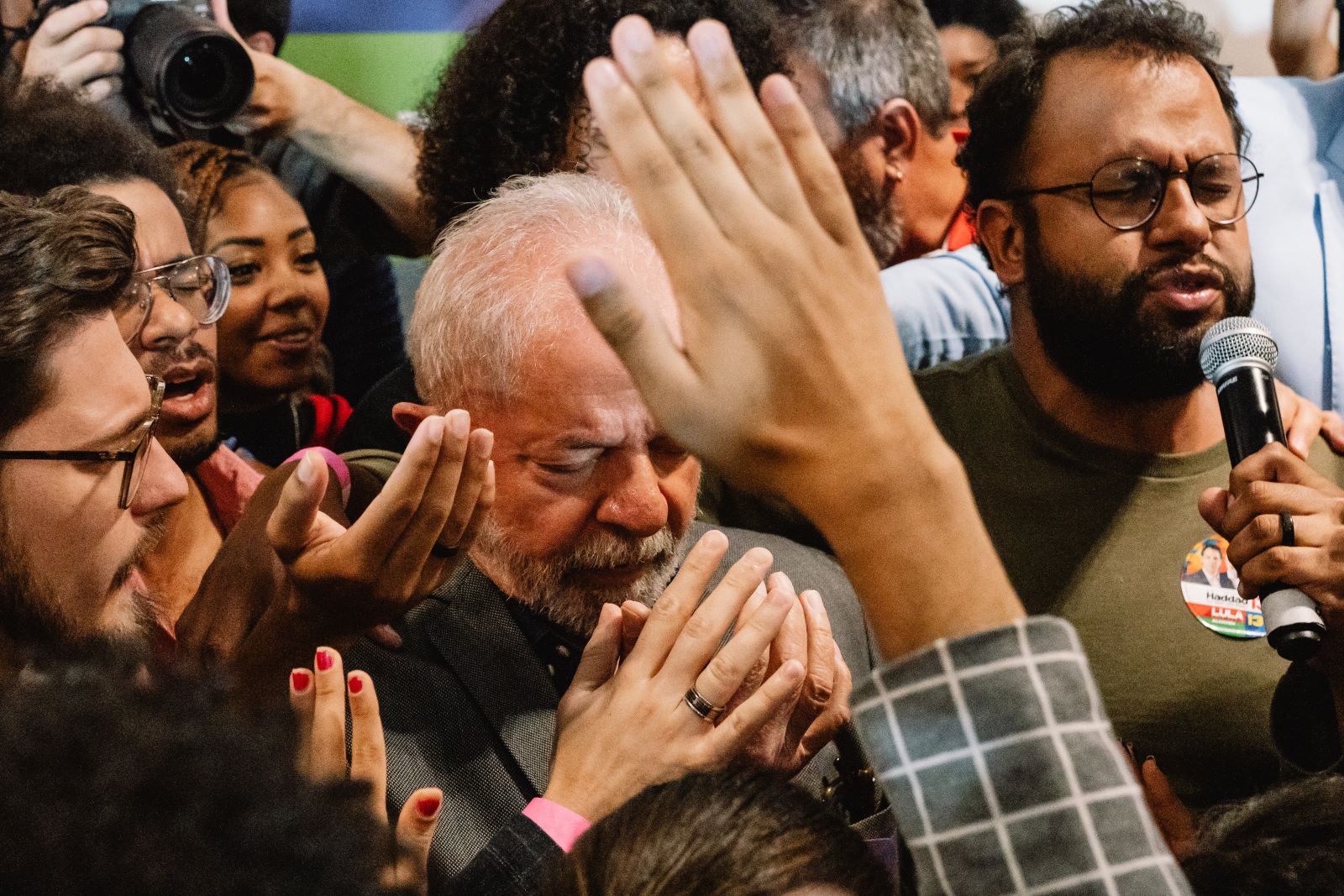
As Christian theocrasies are staging something of a resurgence in different parts of the world (Viktor Orbán’s Hungary being the most obvious), the dissolving borders between religion and government have implications on a global scale. Costa addressed some of the more far-reaching issues in an op-ed written for the Guardian: “If the marriage between religious fundamentalists and the far right continues to succeed around the world, we could soon witness the destruction of one of modernity’s greatest inventions — the separation between church and state.”
Thanks to Costa’s two Brazil documentaries, we are forewarned.
Serving the money changers
Is it too late already for our neighbours to the immediate south? Dominion theology that calls for religious forces to take over the executive, judiciary and legislative branches of government is currently underway in the U.S. The playbook is well-worn. That Billy Graham’s ministry in Brazil was aided and supported by the American government isn’t a big surprise, but it proved an effective inroad to manipulate the populace. Archival footage of Graham in old-fashioned fire and brimstone orator mode underscores Costa’s point that that the rhetoric about the left-wing representing the forces of chaos eating away at the traditional foundations of society haven’t changed much.
But beneath all the blarney is the same old snake in the grass, namely money. The convergence of faith, power and money doesn’t appear to faze evangelical pastor Malafaia who uses the story about Jesus flipping tables in the temple as an example of Christian violence used for the correct ends. Malafaia leaves out the real point of the story — that Jesus denounced craven money changers — as the power-broking preacher flies around the country in his private jet and offers the filmmaker tours of his palatial home.
In spite of the hysterical and histrionic levels of political rivalry, stirred up on social media, televised broadcasts and incendiary speeches from the evangelical community, Bolsonaro’s presidency ended with something of a thud. His administration’s bungling response to the global pandemic, as well as a corruption scandal that ended with former president Lula being freed from prison to run for re-election, set the stage for an electoral showdown.
In news clips and archival footage, the deeply uncharismatic Bolsonaro is often seen looking to Malafaia, his pastor/mentor in delivering key speeches, but when things took a turn in the campaign even God wasn’t much help. After Lula was re-elected to the presidency, Bolsonaro mimicked Trump by refusing to concede victory, claiming voter fraud and enticing his supporters to take back power by any means necessary. On Jan. 8, 2023, protestors stormed the nation’s capital of Brasilia, smashing windows, pooping on desks and demanding the blood of members of the Supreme Court. At the time, Bolsonaro had already fled the country, hopping a plane for Orlando, Florida, where he remains still.
The film ends with the information that following the failed coup d’état that called for assassinations of his political rivals, Bolsonaro was charged by the federal police. But can the will of Brazil’s legal institutions prevail?
That’s the deeper and infinitely more troubling question as Trump applies pressure from Washington, threatening tariffs, and American Secretary of State Marco Rubio denies Brazilian judges visas as punishment for holding Bolsonaro to account.
The war of words heated up considerably in the last few weeks, with Lula wading in, stating that Brazilian affairs had no place for a gringo like the American president telling the country what to do.
How will this stand-off end? In her Guardian piece, as with Edge of Democracy, Costa doesn’t offer any definitive answers, just a wealth of questions, some profoundly disturbing in their implications.
God only knows what will happen next. Pray to heaven for answers if you will, but the supreme being does not seem to be taking any calls at the moment. ![[Tyee]](/design-article.thetyee.ca/ui/img/yellowblob.png)









Tyee Commenting Guidelines
Please note that email notifications for replies are not currently working due to a software issue which may be resolved in a future update.
Comments that violate guidelines risk being deleted, and violations may result in a temporary or permanent user ban. Maintain the spirit of good conversation to stay in the discussion and be patient with moderators. Comments are reviewed regularly but not in real time.
Do:
Do not: