


 SHARE:
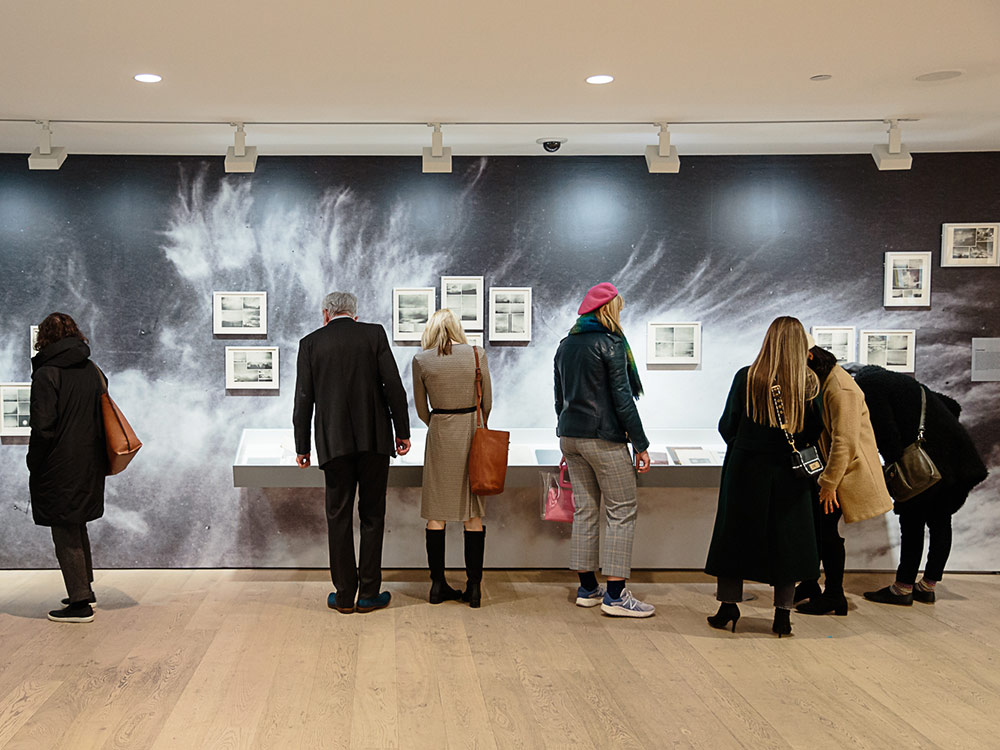
If the idea of looking at clouds causes you to burst into your best Joni Mitchell warble, that’s okay. The lyrics of “Both Sides, Now,” Mitchell’s ode to meteorological conditions, pertains equally well to the human condition. As long as people and clouds have coexisted, humans have been using them as a canvas upon which to project all manner of emotion. Fluffy puffy goodness, dark and foreboding thunderheads, mushroom annihilation — clouds contain and convey anything that we want them to.
Cloud Album, the new exhibition at the Polygon Gallery in North Vancouver, collects a dizzying array of images — paintings, photographs, scientific studies and books — all of it adding up to a catalogue that goes far beyond Mitchell singing, “I've looked at clouds from both sides now. From up and down and still somehow.”
In spite of this exhaustive documentation, there is something that proves elusive about the phenomena, just floating slightly out of reach.
The Tyee posed some questions about the genesis of the exhibition as well as the curious nature of clouds to curators Luce Lebart and Timothy Prus from the Archive of Modern Conflict. This interview has been lightly edited for length and clarity.
The Tyee: When people think of clouds, they probably don’t immediately associate them with war and conflict. But as the exhibition demonstrates there is a strong connection between these two things. How did this convergence originate?
Luce Lebart and Timothy Prus: There is a great diversity of clouds alongside the most well-known cirrus and cumulus. Eruption clouds, explosion clouds, pollution clouds, contrails, atomic clouds, dust clouds, etc. Most of these artificially made clouds have an impact on the atmosphere and on the climate: they are now part of the worldwide Cloud Atlas, the latest version of which is accessible online.
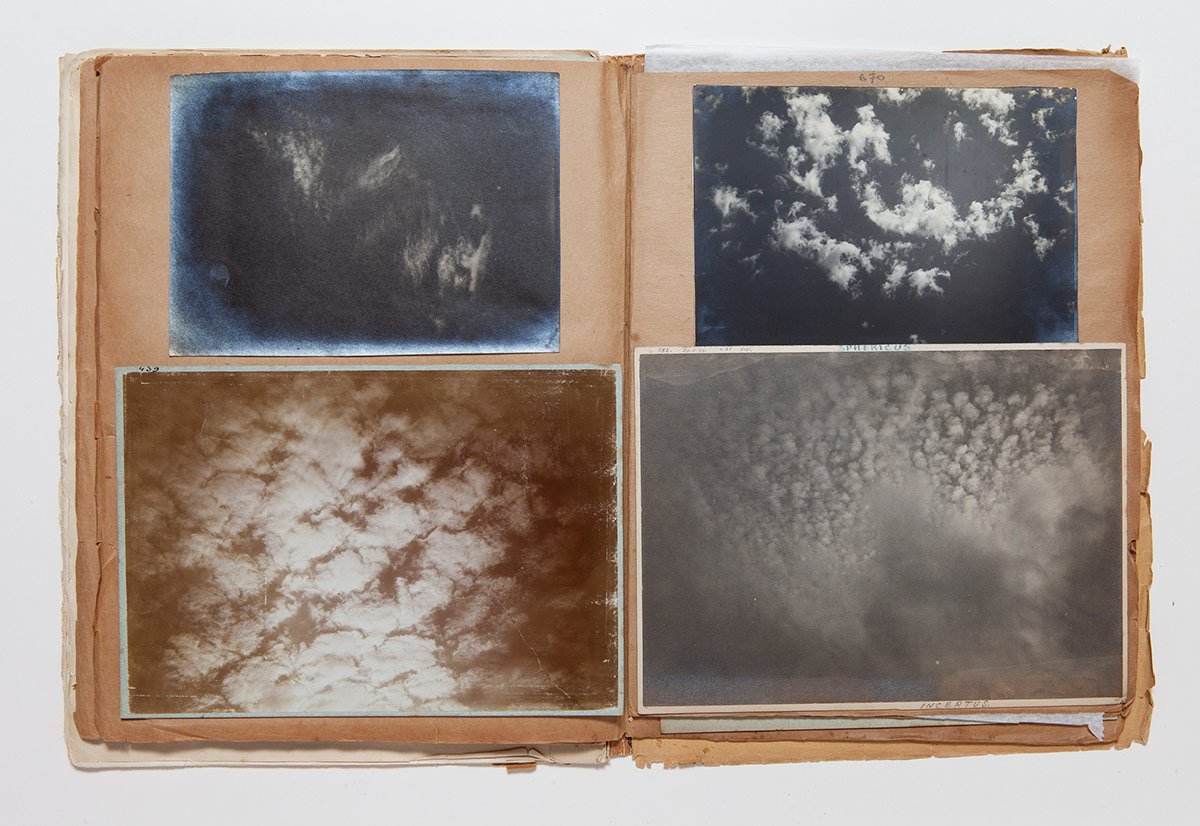
Artificial clouds and notably conflict clouds have been widely photographed. We really wanted to show this cloud diversity as much as we have aimed to share a diversity of cloud photo producers: from artists to pilots and meteorologists, including photographers and satellites. Exhibition visitors will also discover a great range of processes and techniques: some cloud photos are panoramic, stereoscopic, and taken from above, while others are photo montages, or have been retouched or painted.
There is an evolution in the history of cloud representation. Artificial clouds have appeared gradually in photographic iconography, notably because of technical constraints. The first photographic processes were not very sensitive to light and required long time exposures. Capturing explosions was therefore difficult. Nevertheless, dark clouds were easier to photograph than white ones. Innovations in sky observation and exploration techniques were also decisive. Contrail photographs appeared with the development of aviation during the First World War.
Sadly, the arrival of new weapons generated new images of new types of clouds, such as the artificial ones formed during chemical attacks and atomic bombs, or those created to hide aircraft against fire. The exhibition ends with a postcard of a dust cloud on which the visitor can read “Find the face in the dust cloud.” Opposite this image is an invitation to observe and contemplate real cloud formations through a wonderful open window of the Pacific sky.
The Polygon Gallery is so ideally situated for a cloud photo exhibition! Anyone can end their tour of the show with their own sky picture.
Many different artists and image-makers have been drawn to clouds. I think of director Hayao Miyazaki’s very distinctive clouds in his animated films. Did you encounter any particularities in how people around the world choose to view and depict clouds?
Hayao Miyazaki’s clouds are beautiful. They are part of a whole tradition of the representation of clouds in Japan. Cloud Album shows one of the great moments in this history, through the films of Japanese meteorologist Masaneo Abe. In the mid-1920s, Abe built an observatory with a view of Mount Fuji.
From there, and for more than 15 years, he recorded the clouds around the mountain using multiple instruments, including a motion picture and static camera, as well as drawings and stereoscopy. His images echoed artistic traditions, but his aim was scientific and experimental as he sought to visualize air currents and the movement of clouds in film and photography.
Clouds know no borders and have fascinated photographers from all over the world. Exhibition visitors will discover that some of the works were photographed in Canada, France, China, Italy, Russia and elsewhere. It's hard to say if cloud representations vary depending on the country. Still, there are elements in the images that help to identify their provenance as well as their authors. When the horizon is pictured in a cloud study, the building tops can help identify the place, whether it is Rome or Paris or Chicago.
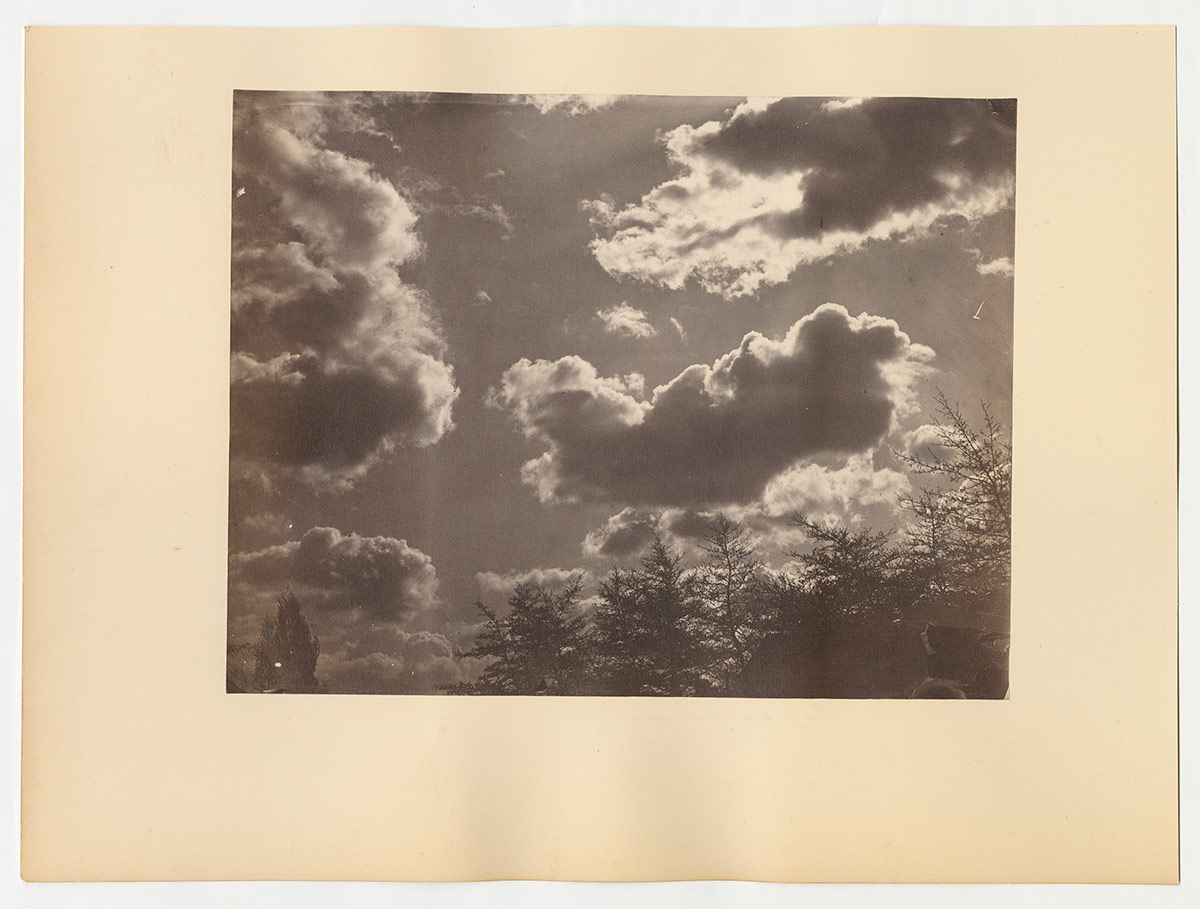
The country or the region was often crucial to the practice of cloud photography or painting. It was in Hampstead Heath that John Constable devoted so much of his time to cloud studies. Most meteorologists would photograph the sky from an observatory that was generally close to an astronomical one, on a hill.
Amongst the more scientific documentation, there is a strong undercurrent of poetry and romanticism in the collected images. Clouds seem to function as an ideal canvas for people’s projections, but has this obscured clouds’ actual function in some sense?
Art and science inform each other but converse within their specific spheres with an autonomous language. One style of perception does not eclipse or make foolish the other.
Even though the technological difficulties in capturing clouds aren’t as onerous as they might have been, is there still a sense that somehow their true nature is still elusive?
We have looked at clouds all our life just as everybody has, and still have no idea what they are.
Clouds are very mysterious things. We read our own meanings into them like blank canvases. More than this, we project images from our subconscious onto them. Who hasn’t seen landscapes and faces in clouds?
Science has found innumerable ways to describe them and their behaviour, but this is a small part of the overall story. The narrative structure behind clouds is practically infinite.
Has climate change impacted how people view and understand clouds as environmental conditions spiral into unknown territory?
Clouds can be portents of climate change as are the lack of them. They both reflect away the heat of the sun and warm us at night.
As the world warms there should be less water in the rain clouds, but nothing is this simple. Praying for rain or a break in the clouds is as old as humanity. We still do it and most likely always will.
In the midst of the current moment of active conflict, what do you think the exhibition offers to people who are trying to understand situations, such as what is taking place in Ukraine?
In Cloud Album there are a number of cloud images that are manmade. Sadly, many of these relate to conflict. Clouds work so well as metaphors, but they are temporal structures. The meanings always shift, and they represent change and uncertainty. To see clouds linked to destruction as the result of explosives is hardly ever uplifting. Even so, they mirror an aspect of our nature. ![[Tyee]](/design-article.thetyee.ca/ui/img/yellowblob.png)
Read more: Art, Environment








Tyee Commenting Guidelines
Comments that violate guidelines risk being deleted, and violations may result in a temporary or permanent user ban. Maintain the spirit of good conversation to stay in the discussion.
*Please note The Tyee is not a forum for spreading misinformation about COVID-19, denying its existence or minimizing its risk to public health.
Do:
Do not: