


 SHARE:
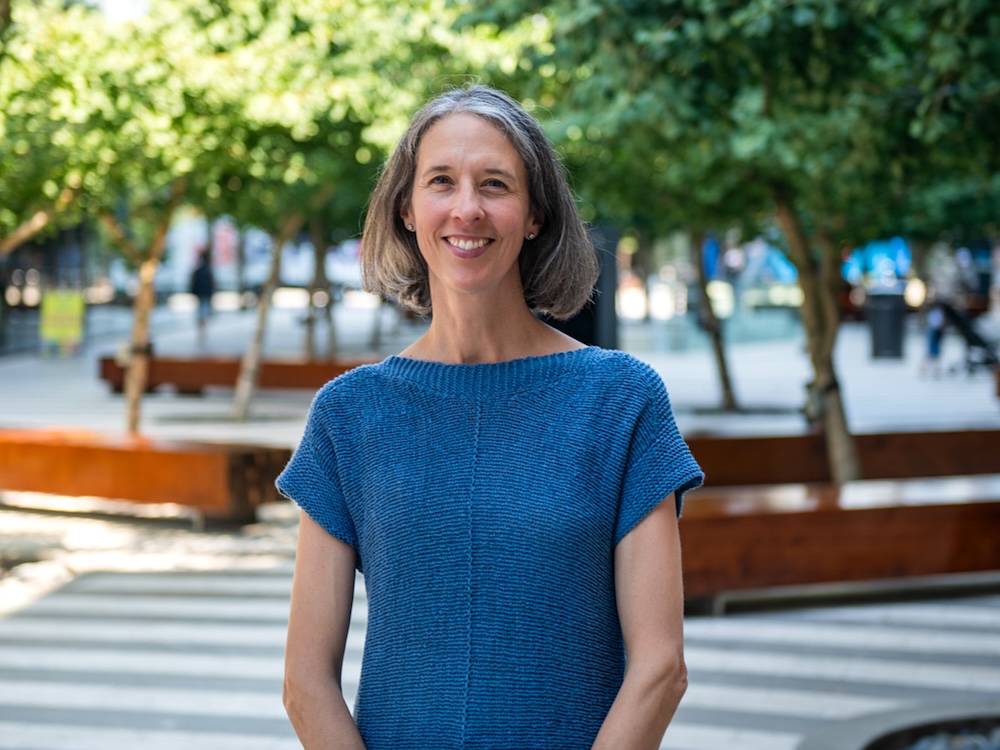
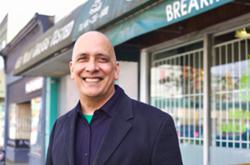
Cynthia Thomson wants to change how Canadians think about and experience pain.
She’s an associate professor in kinesiology at the University of the Fraser Valley and has lived experience with chronic pain.
Back in 2010 when she was studying for her PhD, she started getting pain in her neck, upper back and arm after long hours hunched over a computer or working in the lab.
The pain became chronic. For a decade she tried physiotherapy, massage therapy and countless other practitioners.
Unexpectedly, her path to recovery came during the COVID-19 pandemic when she was cut off from her regular treatment.
She began to listen to audiobooks on neuroscience while she walked in the woods, and learned she’d been thinking about pain all wrong.
Pain is much more complex than injury equals pain, she told The Tyee. A better way to understand pain is through the biopsychosocial model of pain treatment, which recognizes how biological, psychological and social factors influence how pain is experienced, or how strong pain is.
By discovering a new way to think about pain, Thomson was able to eventually cure her chronic pain using multimodal treatment.
The gold-star treatment for chronic pain includes pain science education, cognitive behavioural therapy and physiotherapy, she said.
Today she’s back to mountain biking after a decade of being unable to ride.
Now she’s on a mission to help millions of Canadians change their relationship with pain. One in five Canadians experiences persistent pain, she said.
She’s leading a national advisory panel planning project to develop a guide, supportive tools and training for clinicians to modernize chronic pain treatment.
The Tyee spoke with her to learn what we’re getting wrong with pain, how education is among the best treatments for pain and how to hold on to hope.
The following interview has been lightly edited.
The Tyee: So pain is all in our heads, and that’s a good thing?
Cynthia Thomson: People in pain don’t like to hear that, so we say, “It’s not in your head but it is in your brain.” It’s our brain perceiving the pain. Pain is an output from the brain, not an input.
No sensation is pain until the brain perceives it as pain. Another way to think about it is if you’re unconscious during surgery, you don’t feel pain even though there is tissue damage occurring.
Acute pain is pain lasting less than three months, and persistent pain or chronic pain is pain for three months or longer, after the tissue has healed as much as it can.
Cancer-related pain and headaches get their own category.
The International Association for the Study of Pain has diagnostic categories of chronic primary pain and chronic secondary pain. Chronic primary pain is a condition where pain is the primary symptom and condition.
A lot of musculoskeletal pain is chronic primary pain, such as non-specific low-back pain, or after an injury has healed but the pain persists.
Chronic secondary pain is for things such as diabetic neuropathy, osteoarthritis, sickle cell anemia or cancer, where there is a primary condition, disease or pathology, and then chronic pain is secondary to that condition.
The advent of these definitions was a really big landmark in the field, because it recognized people can have chronic pain and have no underlying diagnosis.
What is pain anyway?
Pain is a sensory and emotional experience. The brain is taking information about sensations and information from previous learned experience, emotions, potential threats in your environment and so on to create an experience of pain. The pain can be the result of actual tissue damage, potential tissue damage or no damage.
The biopsychosocial model has been the dominant model for decades, but it’s still not well understood or used in practice all the time.
Why is that?
It comes down to societal beliefs. We’re raised to think you cut your knee and it hurts. But it’s funny — you can watch a kid fall off their bike and cut their knee. If they’re having fun with their friends, and a parent isn’t there to run over with concern, a lot of kids just get right back up.
We’re socialized into thinking pain is equivalent to tissue damage, and it’s absolutely not. We’re also socialized to think health is directly related to our physiology, but stress plays a big role in that. A lot of, if not all, health conditions have a biopsychosocial basis.
I would love for kids to be taught about pain in a health class in school. Teaching people how to mitigate and improve their experiences can improve coping skills and potentially reduce the chances of acute pain becoming chronic.
It’s as easy as teaching people about pain?
Education about how pain works is one of the best treatments we have for chronic pain. It’s also an intervention in the transition phase when pain goes from being acute to chronic.
It can be a stand-alone treatment but is also improved when you pair it with other interventions, such as cognitive behavioural therapy to target thought patterns. There’s also meditation or relaxation to calm the nervous system and adjunct physical treatments as well.
There’s predictors of when acute pain is more likely to become chronic, such as anxiety, depression and fear. When you’re fearful about pain, you focus on it more and worry it’s going to last forever. This can perpetuate pain.
We use education to interrupt the trajectory towards the chance of developing chronic pain pre-op and post-op. We can modify someone’s trajectory before [hospital] discharge by teaching them how their thoughts are important, and how important it is to find joy and activities to encourage movement, and to not fear movement.
My partner is a physiotherapist and he regularly talks about how his patients are afraid of pain so they don’t do their homework and then don’t get better.
There’s clinical trials happening in the U.S. and Australia with really good success. The one in the U.S. is called “pain reprocessing therapy” to help move away from fear. Fear of movement, which is kinesiophobia, is very common and it adds to the vicious cycle. If you’re afraid to move, you stop moving and then anticipate a movement will be painful. Our brain runs on predictions. If you are constantly anticipating something will be painful, our brain will think it is painful.
The Australia group [the Pain Revolution] is doing similar work with “graded motor retraining,” which starts with education and understanding how pain works, then starting to move and gradually teaches the body it is safe to move.
They’re both about retraining the brain to no longer fear and have a “fit for purpose” view. A lot of people living with pain develop an internal model of themselves that is not fit for purpose.
Acute pain can turn chronic after three months. But in those three months the body has generally healed itself as much as it can.
Think of a broken ankle. At the start, the alarm bells are appropriately signalling to not put weight on the ankle. But after three to six months the bones are set, the ankle is healed and there’s no longer a risk of tissue damage with weight bearing. But alarm bells can still be going off, and that’s when chronic pain sets in. It can affect other parts of the body or other movements which are now perceived as threatening.

One of the key predictors in improvement is when people learn about how pain works and start to employ self-management strategies for their pain. They can reconceptualize their understanding of pain and no longer see certain things as threatening, or living with fear. This has a greater association with improvements in pain intensity, quality of life, movement and pain disability index.
Can people take medication with the biopsychosocial model?
Optimal treatment for pain is multimodal, with pain science education, psychotherapy for cognitive behavioural therapy, physiotherapy and can also include medication and physical interventions.
Medication is not the first line of treatment for most pain conditions. The first-line treatments, or gold-standard treatments for chronic pain, are exercise or physical activity, cognitive behavioural therapy and pain science education. Medication and other physical interventions are considered second line and in some cases cannot be recommended. Each case is different though, and a tailored, individualized approach that incorporates multiple modalities is recommended.
In the acute phase, yes, there is a role for medication.
Can treatment such as education, movement, cognitive behavioural therapy and physiotherapy help with chronic primary and secondary pain?
Yes. A common thing that we encounter when doing pain education is people saying, “Oh, but that doesn’t apply to me. I have real pain.”
All pain is real, and all pain is biopsychosocial.
Even acute pain is biopsychosocial, or pain from sickle cell anemia, which causes tissue damage when blood cells can block blood flow to tissue. That’s a very loud danger signal, and the brain produces pain to reflect the danger to the tissues. The acute pain experience can be further amplified, for example, if they were not believed, were waiting for care or were unable to access care. Pain is always multifactorial.
Another example is a pro athlete getting injured during a game but only noticing when the game is over. During the game their brain decided it was more important to play than to allow pain to take over. Or most people remember discovering a bruise they don’t remember getting. Tissue damage happened, but maybe they were laughing with a friend and didn’t notice.
‘All pain is real.’ I like that.
If you had to stress one thing in this article, that would be it. All pain is real, no one is making it up. It’s not in your head. The experience is real because you are experiencing it.
The only way to assess whether someone is in pain is to ask them and believe them.
First we tell people all pain is real, and then we say pain is influenced by multiple factors.
How do you navigate that messaging for women, Black people, Indigenous people or other marginalized groups whose pain has historically been minimized by the health-care industry?
It’s tricky! There’s a lot of literature on the lack of validation and dismissal people have received from health care.
Patient-centred resources always centre empathetic validation. That patient is the best source of knowledge, right? Because we can’t see pain, we have to believe them because they are the one experiencing it. That is their reality and they are experiencing it.
All articles written with patient partners speak to “Listen to me, empower me, believe me.”
Talking about pain and categories is delicate because then people will often not see themselves as belonging to the category where the brain plays a role, right? This is why we focus on validation first and foremost, and acknowledge that this is the experience of all pain.
How did you come to be leading a national advisory panel planning project to change how Canadian clinicians think about pain?
I had my lived experience and then, based on that, I led a clinical trial on a mobile app called Curable that uses pain science education, mindfulness training, cognitive behavioural therapy with expressive writing and so on.
I studied the app and during that time realized I’d gone down a rabbit hole to learn about pain, but all of these other people didn’t know how pain is multifactorial.
We need a way to introduce this concept to people. The risk is if you tell someone the pain is in their brain, they’ll hear, “It’s all in your head.” They’ll put up walls and not want to listen.
I started looking into whether anyone had explored how to introduce this concept and help connect people with the resources that are already out there.
I’ve been leading a series of studies called “Let’s Talk About Pain,” and it’s all from a patient-centred perspective. For example, how would you want to learn about this information? How could a health-care provider share this with you in a sensitive way?
Hopefully this will open people up to exploring further resources.
Now we’re looking at implementing what we’ve learned in the health-care system. We brought together a multidisciplinary panel with representatives from across Canada. We included people with lived and living experience, health-care professionals from multiple disciplines and knowledge brokers, who can be pain organizations or coaches.
We asked them to explore what resources would be needed to have these conversations. Do we make pamphlets or brochures? How do we include education for health-care professionals?
The first set of meetings focused on barriers for having these conversations, and then we started to explore strategies on how to operationalize.
And you’re going to be working with Pain BC for this?
Yes. Pain BC is also Pain Canada. They’re one. They’re interested in helping us scale anything we create.
What else should people know about pain?
The biggest thing is having hope, and that’s coming from all the people with lived and living experience.
The biopsychosocial model gives people hope because they learn there’s more they can do, regardless of their pain condition.
Information and messaging about pain can be very hopeless, such as “You’re just getting older and you’re going to have to live with it.”
But pain is perceived in the brain, and that’s a good thing because it means we can start to target the way we think about our pain.
The groups in the U.S. and Australia have changed their language to start to talk about recovery, which used to be a faux pas because it was assumed persistent pain would be for life.
Recovery is possible. I don’t want to give false hope, but it’s hopeful to know there’s room for improvement and everyone’s improvement will be different. But there is hope. ![[Tyee]](/design-article.thetyee.ca/ui/img/yellowblob.png)
Read more: Health




Tyee Commenting Guidelines
Please note that email notifications for replies are not currently working due to a software issue which may be resolved in a future update.
Comments that violate guidelines risk being deleted, and violations may result in a temporary or permanent user ban. Maintain the spirit of good conversation to stay in the discussion and be patient with moderators. Comments are reviewed regularly but not in real time.
Do:
Do not: