


 SHARE:

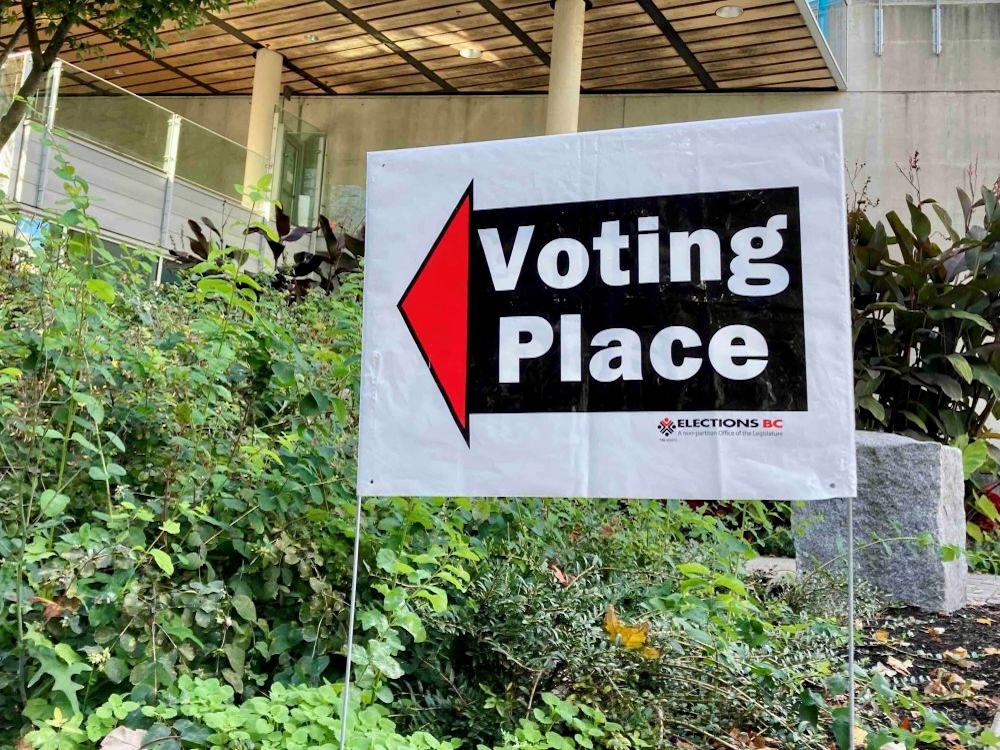
We seem to have entered the age of the flash-mob party, when political organizations appear out of nowhere or implode overnight.
In Quebec, the Coalition Avenir Québec ruled the province for eight years and vanished in the recent election. At the same time, a Conservative Party of Quebec suddenly materialized with 19 seats in the province’s national assembly. And the Parti Québécois went from three seats to a minority government.
Here in B.C., the long-dormant Conservative Party of BC came close to the threshold of power in 2024 after the BC Liberals rebranded as BC United, then shut down.
Then the Conservatives splintered.
OneBC and CentreBC emerged as yet more flash-mob parties, while the Conservatives themselves reorganized with stunning speed.
As the American political analyst Butch Cassidy said to his colleague the Sundance Kid, “Who are these guys?”
Flying by the seat of their pants
We are now well into a provincial election that seems thoroughly improvised. BC NDP Premier David Eby improvised a reason — standing up to Donald Trump — that made no sense. Confronting him are four parties improvising their campaigns with various numbers of candidates, many of them total unknowns.
It might be tempting to vote for a party simply to defeat the others. But voters risk electing the devil they don’t know if they try to rid themselves of the devil they do.
Under these conditions, I recommend looking at the various parties’ platforms and “values” statements. Surely at least one of them must be committed to running the province as you or I would like.
So let us see what each party, from right to left, offers its supporters.
OneBC: No arguments for rolling back legislation
Dallas Brodie’s party was aptly named when it consisted of Brodie alone. Now it has 39 candidates and offers a plan that puts anti-Indigenous policy at the top of its list:
- Repeal DRIPA and declare UNDRIP to have no force and effect in B.C.
- Halt all voluntary transfers of cash, land, and control over public resources to band governments.
- Restore oversight and accountability for Indigenous Band spending.
- Demand constitutional reforms to repeal the Indian Act, transform reserves into townships, and unite all British Columbians under one law and political framework.
- Restore the original names of public institutions and public places — names must primarily be in English.
- End the practice of mandatory land acknowledgements within the government and government-funded institutions.
It’s unclear how a OneBC government would achieve all this against the opposition of Indigenous Peoples, the federal government and many ordinary citizens.
Under “Economy and Public Finance,” OneBC calls for “25 per cent tax cuts for every single tax bracket — including corporate,” plus “two per cent off the provincial sales tax.” Presumably education, justice and health could be adequately run on much less money.
Under OneBC, health in particular would include both “private health care alongside fully funded public health care,” assuming “fully funded” means “underfunded.”
In education, OneBC would “remove SOGI 123 and politicized content from classrooms,” which would of course politicize the whole school system.
And so on. OneBC offers no arguments for rolling back legislation, nor does it propose methods to persuade Indigenous Peoples and other British Columbians to give up their hard-won gains.
With its concern for owners of firearms, the party gives off a strong aroma of U.S. right-wing politics.
That bouquet also includes a whiff of Alberta separatism in its promise “to strengthen our provincial sovereignty and bargaining position for Western Canadian interests and energy projects.”
BC Conservatives: Calmer, but short of breath
Having fallen in behind interim leader Lorne Doerkson, the Conservatives seem calmer but still a little short of breath. Their website has grown rapidly and now features 93 candidates (the BC NDP could field only 92), plus plenty of news releases promising tax cuts and blasting David Eby.
But in March 2025, the Conservative Party of BC adopted a policy platform that’s close to that of OneBC.
The Conservatives have now posted a plan page of campaign promises, but the platform is still on the website, tucked away as an official document.
All the Conservatives’ candidates have presumably signed off on the platform, including its determination to repeal the Declaration on the Rights of Indigenous Peoples Act.
But doing so would throw the province into endless turmoil.
CentreBC: On the rebound
Originally just a shell organization, CentreBC survived the temporary arrival and departure of eight homeless Conservatives, rebounding under its new leader, Elenore Sturko, and 35 candidates.
CentreBC now offers a detailed platform covering everything from economy and affordability to education to AI and the future of work.
For example:
“Income tax relief. Lower the first income tax bracket rate from 5.6 per cent to 5.06 per cent on Jan. 1, 2027, saving a two-income family about $540 a year.”“More help for renters. Raise the renter’s tax credit from $400 to $600 a year. Households earning up to $80,000 receive the full credit; those earning up to $100,000 receive a partial credit. Index the credit to inflation.”
“Home upgrades without upfront costs. Enable low fixed-rate loans repaid over up to 20 years through property tax or BC Hydro bills for heat pumps, insulation and solar. Support about 25,000 homes by 2030/31.”
“Charge across B.C. Install fast chargers at least every 80 kilometres on main highways by 2030, adding about 1,500 fast-charging ports.”
“Data centres pay their way. Require new power allocations to cover their full power costs from 2027. Sites over 10 megawatts need waste-heat reuse plans.”
“Human oversight. Introduce a Trustworthy Government AI Act by spring 2027, with human review of significant decisions, impact assessments, explanations and appeals.”
“AI-ready schools. Set a provincial standard by September 2027, centrally review classroom AI tools for privacy, and provide every teacher a paid AI development day by 2028.”
On AI, CentreBC has more usable ideas than any other party except the Greens, and the party recognizes the unpopularity of data centres.
BC NDP: Maintaining the status quo
The BC NDP has published a plan that describes what the party has achieved so far and promises more of the same: “hundreds of U.S. doctors, nurses, and health care workers to join the thousands of new health care workers hired here,” plus “breaking down barriers for qualified health care professionals trained internationally.”
If the right-wing parties don’t mention climate change, the BC NDP goes on at length about it. But apart from occasional mentions of “partnership with First Nations,” reconciliation goes undiscussed and so does DRIPA, which the Conservatives and OneBC are eager to repeal.
On affordability, the BC NDP plan promises “cutting gas by up to 30 cents a litre — that’s $20 a tank.” It also says ICBC rates, “frozen for seven years running, will be frozen for three more years — meaning a decade of rate freezes.”
Understandably, the BC NDP has a record and is trying to run on it, but the message is really just to maintain the status quo, with more of the same in the foreseeable future.
That is objectively a small-C conservative position, while the Conservatives and OneBC, like the Trump regime, are for radical repeal of the progress achieved in the 60 years since medicare became law.
BC Green Party: Four priorities, and a long platform
The Greens’ platform is a 74-page PDF based on four “pillars”:
A life you can afford. If you work, contribute, or raise a family here, you should be able to afford to build a life here.Care you can count on. When you, or someone you love, needs care it should be there.
Economic fairness for all. Those who are profiting most from British Columbia should pay their fair share, just like everyone else.
Fight for the future. This government talks about protecting our climate, our forests, our rights, and our democracy — and hasn’t delivered on any of them.
Get into the details, and we learn affordability means: “Make transit fast, frequent and free. Restart the stalled $10-a-day child care pledge as we chart a path towards universal coverage, with fair pay for early childhood educators.”
Care means: “Build Community Health Centres in every region, with team-based care and long-term support.”
And: “Fight the toxic drugs crisis with effective harm reduction and real investment in voluntary care.”
Economic fairness means: “A few ultra-wealthy British Columbians, each worth more than $50 million, have been let off the hook. Our Fair Share Act will ensure they pay their fair share and British Columbians get what they’re owed. That would raise about $22.2 billion in its first year, and $5.4 billion every year after, for universal child care, free public transit, debt relief and properly funded public schools.”
It also means “a moratorium on the construction and operation of AI data centres until a detailed public-interest audit is developed and an appropriate regulatory regime is implemented.”
And the fight for the future?
“Remove uncertainty and opacity that currently exists by implementing the Declaration on the Rights of Indigenous Peoples Act through legislation.”“Lead on climate again by reducing our dependence on fossil fuels, lowering energy costs and protecting the communities and places we love.”
“Establish stable, long-term funding for First Nations and local governments to assess local climate risks and prepare for wildfire, flooding, drought, extreme heat and other hazards.”
“Expand support to make homes and communities safer during extreme weather, including access to cooling, clean-air spaces, wildfire protection and resilience upgrades, with priority for people and communities least able to pay.”
Repealing laws and repressing people
Taken together, the five parties’ plans or platforms reflect attitudes as well as programs.
OneBC and the Conservatives are interested in repealing laws and repressing people and ideas they don’t approve of. But they offer no arguments for eliminating SOGI 123, for example, or for removing vaguely defined “politicization” in education.
CentreBC, by contrast, offers new policies that moderate British Columbians should be able to support — especially on the issue of AI.
The BC NDP, having trapped itself into this election, must run on its nine-year record and promises of more of the same — with no mention of the province’s $13.8-billion deficit or questions about the new Pacific Link pipeline proposed to pump a million barrels a day of Alberta bitumen to Roberts Bank.
And the BC Greens offer dramatic new policies to slow climate change and make life affordable, funded by higher taxes on the rich.
Their plans make them the only left-wing party in the race, and as such they may attract some unhappy New Democrats.
After the election, some flash-mob parties may grow still more while others vanish, as the Social Credit party did in the 1990s.
And whoever wins is likely to form a flash-mob government, perhaps a coalition, but it’s unlikely to have a long life expectancy.
Our politics will remain as maddeningly volatile as they have always been. 
Read more: BC Election 2026, BC Politics





Tyee Commenting Guidelines
Please note that email notifications for replies are not currently working due to a software issue which may be resolved in a future update.
Comments that violate guidelines risk being deleted, and violations may result in a temporary or permanent user ban. Maintain the spirit of good conversation to stay in the discussion and be patient with moderators. Comments are reviewed regularly but not in real time.
Do:
Do not: