


 SHARE:
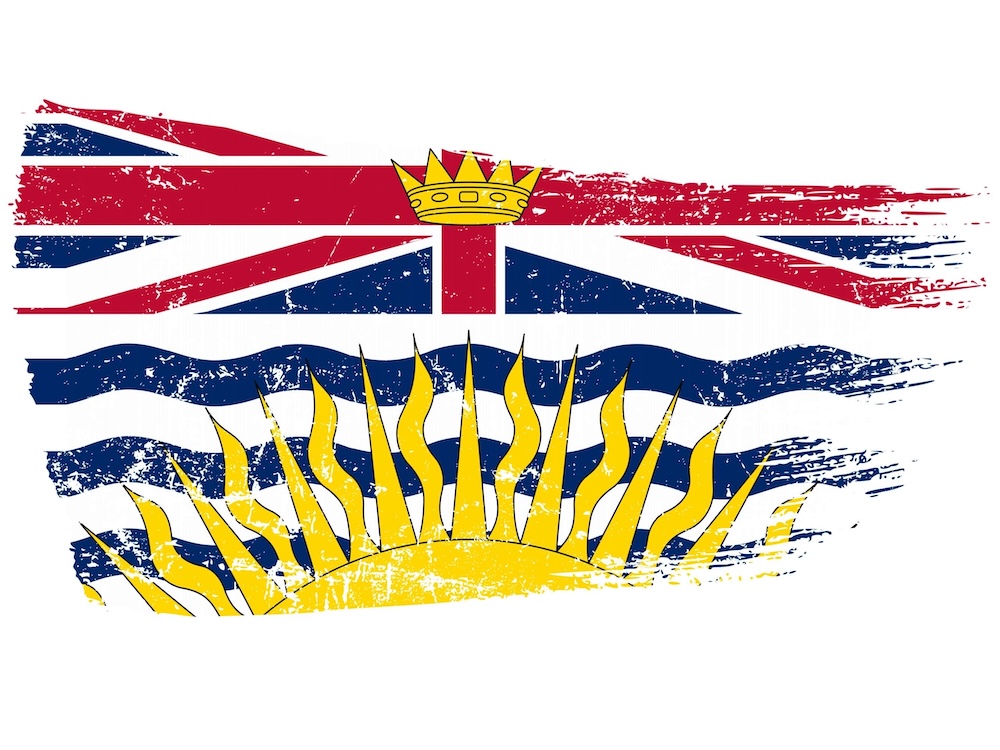
We’ve spent the summer watching the Conservative Party of BC tear itself apart. The MLAs who have left the party are now Independents or considering joining new parties. Some, like Peter Milobar, say they’ve left because their values do not align with those of party leader Kerry-Lynne Findlay.
But a year and a half ago, in March 2025, the B.C. Conservatives held a convention in Nanaimo and published a 20-page, 19-point policy declaration describing how they would govern the province. Presumably today’s dissidents signed on to it, whatever the differences in their values. Every party is a coalition, after all, whose members are willing to bargain over policy, make compromises and then agree on the deal.
So it’s instructive to look at the Conservatives’ Nanaimo declaration in some detail as a political manifesto. We can understand it better by comparing it with those of the nascent far-right and “centre” parties now putting themselves together, as well as the BC NDP and Greens.
Freedom of expression for specific individuals
The declaration has some internal contradictions. In Article 2, on democratic reform and accountable government, we hear that “compelled speech” in any form is a violation of the Canadian Charter of Rights and Freedoms. “Individual freedoms of thought, belief, opinion and expression supersede all compelled speech.”
This seems to be inspired by the federal Conservative party, which on its website has a petition based on two people in B.C. who were allegedly fined large sums of money for stating that “there are only two genders.” The implication is that the two had refused to be compelled, and paid the price.
Fair enough, perhaps, though the American Psychological Association would take issue with the use of “gender” as a synonym for “biological sex.” Compelled speech also appears to include modern civilities like land acknowledgments and respecting people’s chosen pronouns.
Article 14, however, endorses its own kind of compelled speech. It deals with religious freedom and combating antisemitism. In addition to supporting freedom of worship, the party promises to ensure that “religious charities, places of worship and cultural centres have equal access to government programs, grants and community spaces without ideological bias.” Most of the article details how the party would fight antisemitism; it doesn’t mention Islamophobia or criticism of any other religion.
However, the party does promise to crack down on “pro-terror protests,” including “public demonstrations that promote or glorify violent acts of terrorism or engage in and/or encourage criminal harassment of Jewish British Columbians.” Again, no mention of harassment of Muslims or people of other faiths.
Strikingly, the Conservatives single out the BC Teachers’ Federation for investigation over its “role in pushing biased materials that promote a one-sided view on the Israel-Palestine conflict.” As well, a Conservative ministry of education will order a halt to use of the current teachers’ guide on the conflict.
This looks like lightly disguised Islamophobia and a serious infringement of teachers’ right to free speech — one the BC Teachers’ Federation would be certain to challenge in court.
In financial matters, the declaration promises “dollar-for-dollar legislation”: “any new non-essential spending must be matched dollar-for-dollar with cost saving in other areas of government.” In taxation, the Conservatives will “scrap the carbon tax” and “repeal all harmful taxes, licences, fees and permits created or increased by the NDP.”
But they don’t define “non-essential” or “harmful,” nor do they mention the purposes of such taxes and fees.
Don’t mention climate change
That is probably because they would then have to mention climate change, a term nowhere to be found in the declaration. The closest they get is in Article 12, on agriculture, where they promise to help farmers “recover from extreme weather events like floods and heat waves by increasing replanting support and disaster recovery funds.”
Again, the carbon tax is to be scrapped because it increases “operational costs... making local food more expensive.” But measures to prevent or mitigate disasters caused by carbon emission are not in the proclamation.
By comparison, the BC NDP may be promoting liquid natural gas exports, but at least it’s talking about climate change on its website:
We’re making progress. Pollution is down from oil and gas. Investment in our sustainable economy and clean technologies is at record highs. And we’re responding faster than ever to extreme weather and climate impacts.But many MLAs in the B.C. Conservative party don’t believe climate change is happening. They’ve promised to rip up our plan to make B.C. safe from climate impacts, leaving B.C. with increasing emissions, dirtier air, and a greater risk of extreme flooding and forest fires.
Article 11 of the Conservatives’ Nanaimo declaration, on natural resources, has plenty of emissions-rich proposals: to use wood fibre for power generation, to “reverse the NDP’s radical plans to ban natural gas heating and non-electric vehicles,” to build and upgrade pipelines “to primarily facilitate domestic use for natural gas and secondarily the export of oil and natural gas through B.C. ports.”
Big promises light on funding details
Some resource policies are sensible: to “stop all aerial spraying of glyphosates” in forested areas and help prevent wildfires by developing wetlands where possible. They aren’t everything the party could do, but it’s a start.
Article 13 deals with transportation, which the Conservatives associate mostly with cars. They would build new bridges all over the province, including “a new Ironworkers Memorial Bridge with expanded capacity for both cars and public transit services.” And they would “replace the George Massey Tunnel as soon as possible.” How such projects would be funded is not mentioned.
As for public transit, the Conservatives want to build out the SkyTrain to Newton in Surrey, put in regional rail service in the Fraser Valley and “implement a zero-tolerance policy for drug use, threats and violence on public transit.” Again, they say nothing about funding.
Article 15 deals with B.C. seniors. The declaration makes some good points: financial aid for buying eyeglasses, mobility aids and hearing aids, and making flu and shingles shots free. But if all vaccinations were free to everyone, we’d put less of a burden on B.C. health care.
Article 16 by itself should be a deal-breaker: “A Conservative government of British Columbia will repeal the Declaration of the Rights of Indigenous Peoples Act (DRIPA), which mandates alignment with the United Nations’ UNDRIP.” Not many Indigenous people, or their allies, would accept that.
And Article 18, on citizens’ rights and responsibilities, will be a very hard sell. “No organization or business,” it says, “should be asked to require vaccination status of an individual as a condition of employment.”
That’s for anti-vaxers and convoy supporters, and it’s an absurd rejection of basic public health.
Don’t let yourself get addicted to clean water
The article also says, “Government should refrain from fostering dependence on government services by its citizenry.” So don’t let yourself become too dependent on clean water, food inspection, public education or workplace safety.
Article 19, on housing, continues the reluctance to regulate. It would get housing built faster “without unnecessary bureaucratic interference.”
Throughout the declaration some clichés recur: “red tape,” “streamline” and “efficiencies.” Right-wing parties have relied on such clichés for decades to justify deregulation, stripping down programs and reducing the staff who deliver them. The logic appears to be that the full force of the law is reserved for the riff-raff using public transit, while crooked businesses cheat their customers unchallenged.
What are the alternatives to the declaration? Former Conservative Party of BC leader John Rustad kicked MLA Dallas Brodie out of the caucus for “mocking” Indigenous Peoples; her OneBC website features a platform clearer and shorter than the declaration, but heavy on terms such as “red tape” and “cut the fat.” She said she would also stamp out “political activism” in public school curriculums and use school taxes for private and charter schools as well as home-schooling.
Brodie’s Indigenous policies start with “Demand constitutional reforms to repeal the Indian Act, transform reserves into townships, and unite all British Columbians under one law and political framework.” This isn’t far from the declaration’s position, and it’s politically dead on arrival.
Brodie also sounds very Trumpish when she says she wants to “provide a politically neutral space for post-secondary learning by removing all woke administrative policies, including DEI and mandatory land acknowledgments.” Good luck importing that to B.C. post-secondaries.
Meanwhile, CentreBC, led by Mike Bernier, offers not a platform but a vision:
Our vision is clear: a province where everyone has access to housing, quality health care, education, and economic opportunity. We are committed to responsible economic growth, supporting small business, fostering innovation, and investing in green technology — while also championing our resource industries, including mining, forestry, and energy. These sectors are essential to good jobs, thriving communities, and the sustainable development of our province.
It all sounds wonderful, but how CentreBC would achieve it remains unexplained.
Similarly, some Conservative Party of BC defectors are putting together a new party under the leadership of Peter Milobar. Presumably their platform will fall somewhere to the right of CentreBC and to the left of the party they’ve abandoned.
It’s helpful to compare the Nanaimo declaration with the platforms of the New Democrats and the Green Party. They seem more prepared to deal with real issues such as climate change rather than fuss about children’s gender.
But we should welcome the platforms of the right, even if we disagree with them. It’s not enough to enjoy the thrill of disapproving of their policies. We do indeed have free speech, not “compelled” speech, and the declarations from the right should remind us that all parties’ policies should stand up to intense criticism.
That means trying to understand how and why some of our fellow Canadians can hold beliefs so antithetical to our own. We know what frightens us about the other side’s policies; what frightens them about ours?
Moreover, understanding party platforms can teach us which parties are engaged with the present and future, and which dream of a return to a fantasy 1950s British Columbia that never existed in the first place. As I read it, the B.C. Conservatives’ Nanaimo declaration is a road map to that impossible destination. ![[Tyee]](/design-article.thetyee.ca/ui/img/yellowblob.png)
Read more: BC Politics









Tyee Commenting Guidelines
Please note that email notifications for replies are not currently working due to a software issue which may be resolved in a future update.
Comments that violate guidelines risk being deleted, and violations may result in a temporary or permanent user ban. Maintain the spirit of good conversation to stay in the discussion and be patient with moderators. Comments are reviewed regularly but not in real time.
Do:
Do not: