

 SHARE:
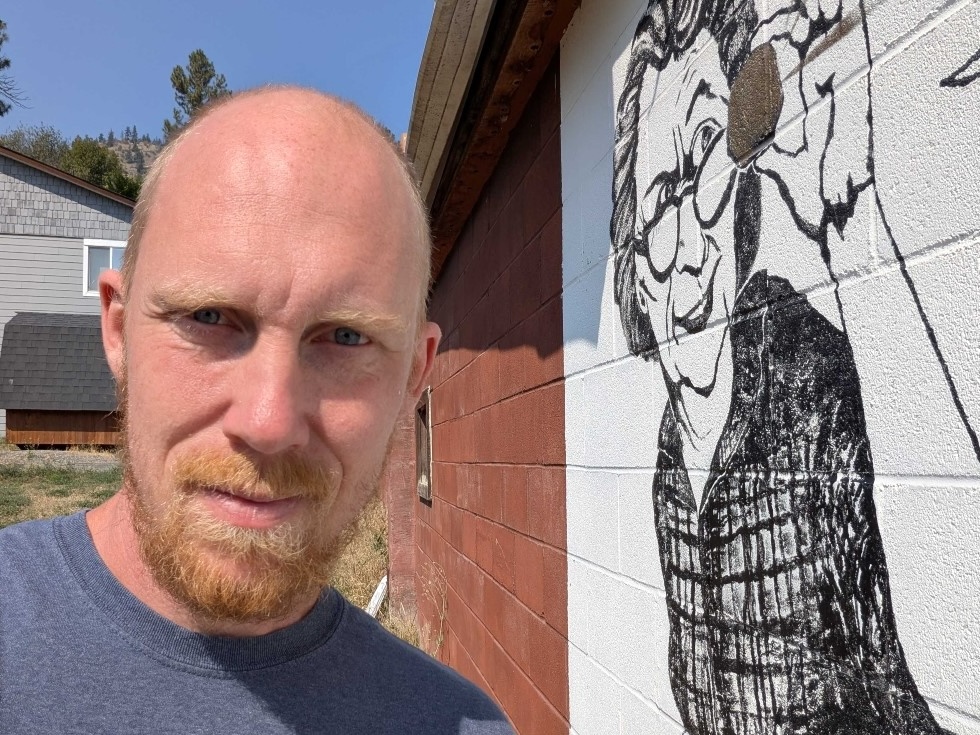
Tyler Olsen is a veteran community journalist, known for his award-winning stint as co-founder, reporter and managing editor for the Fraser Valley Current.
Before that, he held sprawling roles at the Chilliwack Times, the Abbotsford News and the Vernon Morning Star.
Crime, the courts, sports, photography, features — Olsen can seemingly cover it all, and with local news in Canada in sharp decline, he’s often had to. The work has never suffered. In his time with the Current, Olsen garnered three consecutive National Newspaper Award nominations, winning once, not to mention his fourth Webster, the highest journalism honour in the province.
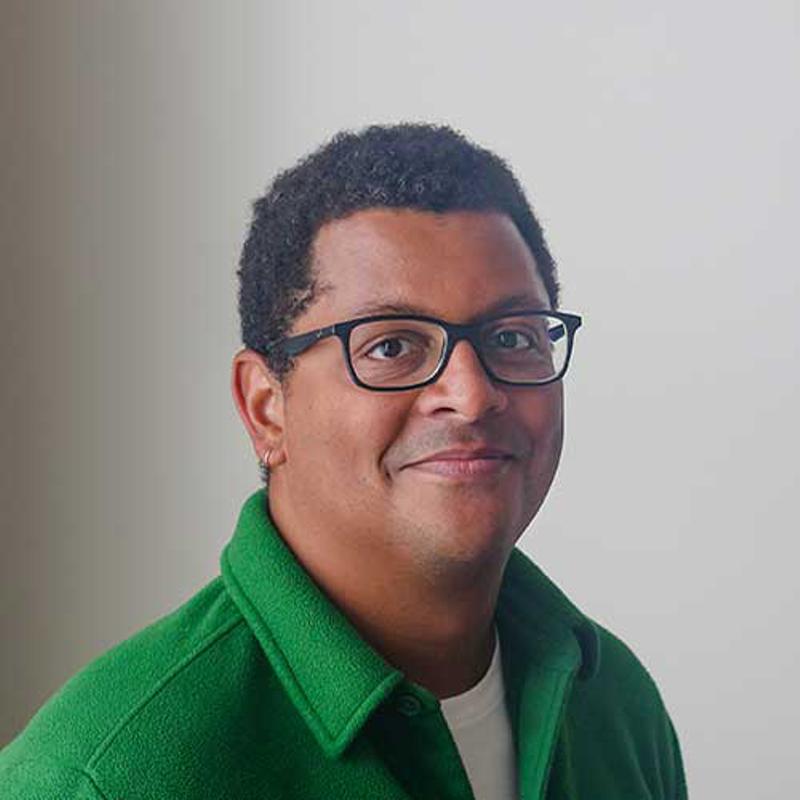
Now he’s joined The Tyee newsroom as a senior editor. We’re very excited. Schooled in Kamloops, stationed all over the Fraser Valley and living in Lillooet now, Olsen casts his reporter’s eye beyond the big cities of Vancouver and Victoria towards B.C.’s smaller cities, towns and rural regions, illuminating how things function, what matters, who lives there. His insight and experience are invaluable.
His work ethic, too. By the time we caught up with Olsen for this introductory interview, he’d already reported and published a week’s worth of stories (find all of Olsen’s stories to date here). Who does he think he is? Let’s go find out.
This interview has been condensed for length and clarity.
The Tyee: Tyler, welcome to the team. How are you feeling about your new position here?
Tyler Olsen: It's been great. Everybody at the team has been super fun to work with and has lots of talent. Everybody's really nice. Nicer than... everybody’s very nice.
Nicer than who? Tell us. Name names.
Nicer than me? It’s very gratifying to join a team that is so well-established and has a lot of different skill sets that one can hope to complement.
It’s exciting to be talking to a new co-worker who's so well-established. You did everything for the Fraser Valley Current. What are you going to be doing for us? I hope for your sake it’s not everything.
The great thing about The Tyee is there's already a lot of people, and a lot of structures and supports in place. So that day-to-day worrying and fretting is distributed in a way that doesn't require a single person or, hopefully, at least doesn't require me to do all of it. So that's a huge weight off my shoulders. I think I’ll be doing a little bit of everything to assist The Tyee in continuing to grow, expand its reader base, and filling in some of the news gaps that have emerged in this province over the last 20 years.
The big potential that I see is that, having worked at other smaller publications — publications that did great work but also had some business and financial constraints on what was possible — The Tyee brings a sort of stability, and a reason to hope that it can grow. Publications that can do that at this point are hugely valuable, not just for themselves and their own readers, but for a broader public that deserves and needs journalism in places that once had it and maybe don't anymore.
Yeah, it must be a little bit gratifying — maybe even a relief — to be at a place with a base of reporters and readers, not to mention a physical newsroom.
Not even that. If you work for a declining or shrinking business of any type, the atmosphere, even if it's shrinking at an exceptionally slow rate, is a lot different than working for an enterprise that’s growing. It gives you reason to be optimistic that you can grow too, as a journalist, in ways that aren't possible when you're constantly just trying to keep the water back.
What are you going to be writing about for us? What are your pet topics? What are you passionate about? What do you have on the go? What sort of content do you bring to the table?
I’ve published five stories, soon six, at this place that is new and different. Yet I look at the topics: I have Fraser Health. I have Hope, B.C., council. I have wildfires.
Don’t forget the one about prison mice. That was a good one.
Some of those topics are similar but written for a different audience. I’m trying to provincialize stories that are also relevant at the local level. I think that will continue but I will be branching out and looking at places throughout B.C. and trying to focus on stories within communities at the local level, explaining to readers what they mean for those communities, and what they say about the broader province — how they fit in with stories and challenges that are taking place across our region.
There are commonalities there, and there are also ways that communities are trying to address those challenges, or ways the government is failing to address those challenges that can then inform how we should think about these topics, on a provincial and regional, broader level.
You're casting a pretty wide net here, guided by, I gather, a fairly grassroots journalistic ethos.
I think the idea is that, especially when we're talking about trying to fill those local journalism gaps, you need to do that in ways that also align with the economics of journalism right now. Unfortunately, that means that it's hard to build and sustain publications at a very small level with relatively small readerships. It’s tricky, but maybe that provides a little bit of a platform in which a publication like The Tyee can fill some of those local gaps. And then, ideally, if it is successful, hopefully that creates a virtuous cycle where, having shown that it can pay for itself, you can kind of keep expanding how much journalism we can provide and cover within these communities.
These are, like, big, long-term, 20-year-type goals that are always going to be a work in progress for a publication. But I do think that The Tyee has as good a shot as any of trying to deliver news to those audiences. And I'd love to contribute in whatever way I can.
Are you my boss?
If I'm your boss, I do not know that I am your boss.
That's good. I don't want to know either, actually. Our conversations will go a lot better if I don't see you as an authority figure.
The other thing that I think The Tyee does, and that is super important at any publication right now, is that as much as many journalism jobs have been lost in our industry, we've seen even more journalists voluntarily leave the industry and decide to pursue other jobs and places of work. We know this because, despite, again, how many jobs have disappeared in smaller communities, and especially outside Vancouver, publications in those places find it incredibly hard to actually hire people — in ways that weren’t always the case. Obviously, pay is one thing, but these places always paid like crap, and people still wanted to work there. So what does that tell us?
I ask the questions here, boss. Uh. What does that tell us?
In general, people don't want to be journalists as much as they did previously in these places. There's a lot of reasons for that, but it's partly because being a journalist in these places isn't as fun, or maybe it’s more of a grind, and there's less of a long-term path for financial sustainability and career progression.
I think publications doing interesting work like The Tyee have an ability to hopefully reverse that a bit by creating jobs and spaces for people who want a long-term career in this industry and want to see how they can go from being a green newbie reporter to an editor or veteran reporter of some sort.
Well welcome aboard, Tyler. I know everyone else here at The Tyee and our readers will benefit from the experience you bring. ![[Tyee]](/design-article.thetyee.ca/ui/img/yellowblob.png)
Read more: Media






Tyee Commenting Guidelines
Please note that email notifications for replies are not currently working due to a software issue which may be resolved in a future update.
Comments that violate guidelines risk being deleted, and violations may result in a temporary or permanent user ban. Maintain the spirit of good conversation to stay in the discussion and be patient with moderators. Comments are reviewed regularly but not in real time.
Do:
Do not: