


 SHARE:
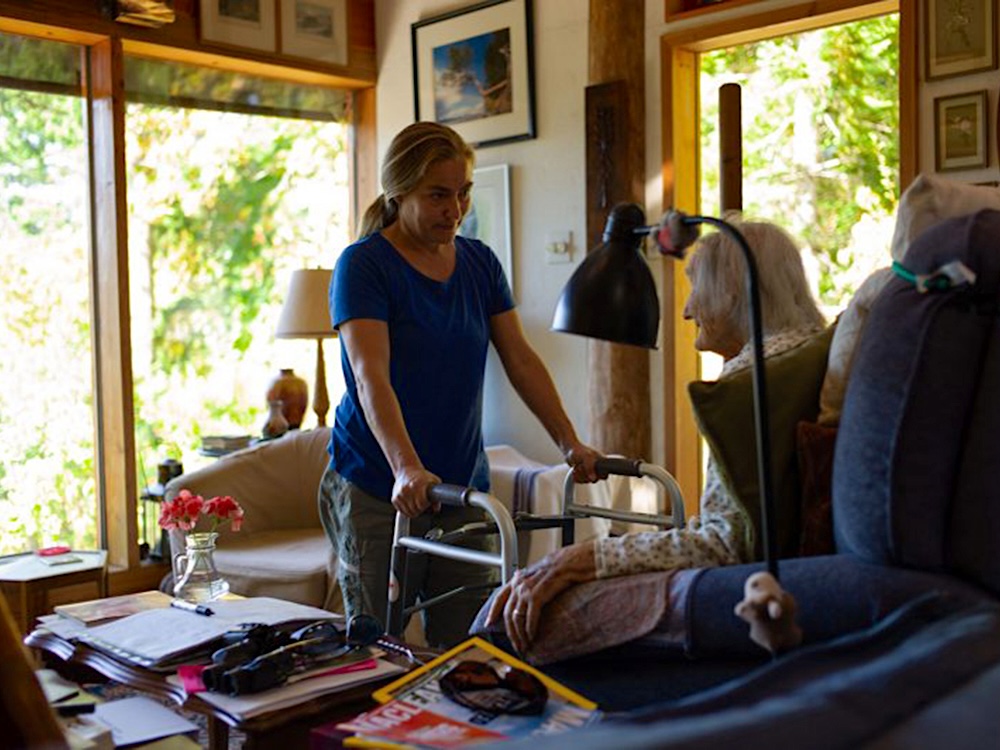
Low-income seniors in B.C. are required to pay one-third of their income to access supports that help keep them living at home, says Dan Levitt, B.C. seniors advocate.
Several organizations are calling on the province to make changes that would put those supports in reach for more seniors in B.C.
The organizations say home supports can radically reduce health-care costs and the strain on the province’s health-care system — while also helping seniors remain independent and maintain their community ties.
Home support services help with non-medical daily living needs, such as bathing, dressing, toileting, meal preparation, light housework, laundry, medication reminders and companionship. Home supports are delivered by community health workers.
“Most provinces, including Alberta and Ontario, do not charge for home support. However, in B.C., seniors with an annual income of $31,000 must pay $10,000 per year for one hour of publicly subsidized home support per day,” Levitt said.
B.C.’s co-payment model creates barriers to accessing care, said Jeff Moss, executive director of the Jewish Seniors Alliance of British Columbia.
The Jewish Seniors Alliance joined seven other seniors’ organizations representing 400,000 seniors last week to launch the Health Care Needs Home Care campaign, calling for B.C. to fully publicly fund home support.
About 65 per cent of all seniors in the province earn less than $37,000 a year, Moss said.
When seniors struggle to pay for rent, food, home supports and other supplemental health costs such as hearing aids and walkers, they have to choose what to give up, he continued.
“Which one are you going to give up first? It’s typically home support. That leads to increased levels of hospitalizations and premature admissions to long-term care,” Moss said.
Levitt calculates that in B.C., 12.5 per cent of long-term care admissions are premature, meaning the senior could have continued to live at home independently with minor supports.
He added that premature long-term care admissions drop to 6.1 per cent in Alberta and just 5.5 per cent in Ontario, where home supports are fully covered.
Just over 60 per cent of seniors in B.C. who enter long-term care weren’t able to access home supports for the last three months.
When seniors aren’t able to live independently and there are no beds available at long-term care facilities, they often end up in hospitals as “alternate level of care” patients. ALC patients don’t actually require the high level of care offered by a hospital but aren’t well enough to be discharged home. Often, the patients can get stuck in uncomfortable stretchers in a hospital’s emergency department while they wait for a bed elsewhere, experiencing delays in receiving food, water and medication, and sometimes developing bedsores. The health of these ALC patients often deteriorates more rapidly than it would otherwise.
The Ministry of Health previously told The Tyee that for 2024-25, the ALC rate for all hospitals across B.C. was just under 16 per cent, which is equivalent to about 1,600 beds.
Levitt said B.C. needs a provincial senior-care plan that focuses on the full spectrum of senior care. This includes investing heavily in building home supports, home care, adult day programs, overnight respite care and assisted-living and long-term care facilities.
The senior-care plan should also cover affordable and accessible housing and transportation, focus on reducing long-term care facility wait-lists and recognize the differing challenges in rural and urban settings.
For example, many rural communities lack housing options to downsize to, and once a senior gives up their driver’s licence they can become quite isolated, Levitt said. Seniors should also be able to access long-term care in their community, and smaller communities could focus on building smaller facilities to accommodate locals.
Investing in home supports would reduce health-care spending too.
Home supports cost about $1,200 per month, which is a lot more affordable than paying $1,000 per day to house an ALC patient in a hospital, Moss said.
ALC senior patients cost the health-care system between $500 million and $800 million annually, Moss said.
It would cost a health authority $15,000 to provide one hour of home support per day for a year, and just over $100,000 to house that same senior in a long-term care bed for a year, according to the Office of the Seniors Advocate.
Boosting support in remote communities
The small, remote communities of Hornby and Denman islands have been modelling how to care for seniors for more than 40 years. Denman Island is accessible by ferry from Buckley Bay, an hour north of Nanaimo on Vancouver Island. Hornby Island is accessible by ferry from Denman Island.
A recent shakeup has required them to pivot in how they deliver care, but the communities are still focused on helping seniors stay at home for as long as possible.
In 1979, a group of local nurses, who were mostly off work to raise families, formed a society to care for their senior neighbours.
They were paid by the province and later Island Health to provide these services, until the health authority took over home support services in December 2022, said Lori Nawrot, executive director of Hornby Denman Health.
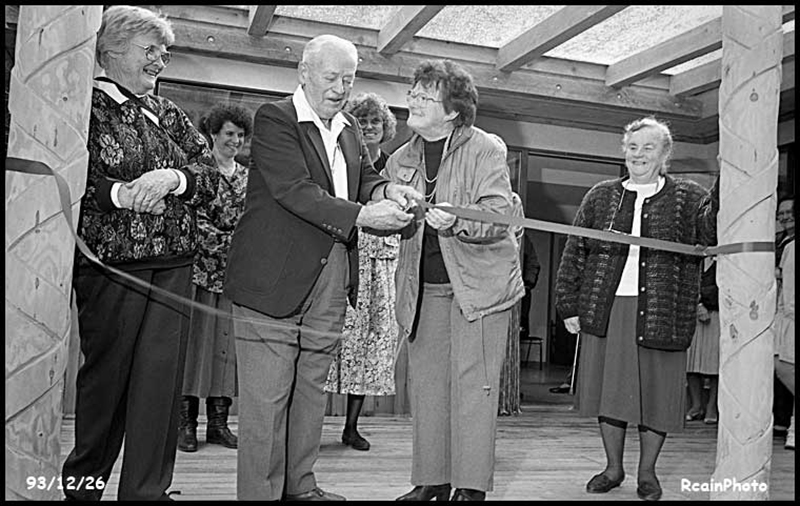
Unfortunately this left Hornby Island a bit short-staffed, which meant home support services were no longer available all days of the week and ended at 4 p.m., she said.
To fill the gap, Hornby Denman Health launched a home assist program, which can help with tasks such as housekeeping, chopping firewood, meal prep and grocery shopping, transportation to appointments and companionship care.
Seniors set their own priorities and lead the home assist sessions, so even if a volunteer points out that the floor could use a scrub, the senior might ask for help planting vegetables instead, Nawrot said.
Some services are free while others have an hourly fee, with a sliding scale between $0 to $35 an hour based on income. No one is turned away based on an inability to pay.
Denman Island and Hornby Island face two significant challenges, Nawrot said. First, these communities have the highest poverty rate in the Comox Valley Regional District. Second, 40 per cent of Hornby and Denman residents live alone.
The home assist program does not provide personal care, such as toileting, showering or help getting dressed, because that falls under the scope of home supports provided by Island Health.
The goal has been to “support Island Health in delivering home support in our communities,” rather than be seen as competition, which could be a “reason for publicly funded home support to disappear in our community,” Nawrot said.
United Way British Columbia runs a similar program called Better at Home, which also provides non-medical supports to low-income seniors. Last week, it announced it is now running 100 Better at Home programs, which support thousands of seniors across the province, in communities such as Langley, Pender Island, Port Hardy and Chetwynd.
Nawrot said Hornby Denman Health is advocating for Island Health to provide a more reliable service.
Some seniors have been pulling out of the provincially delivered services because they’re too inconsistent, Nawrot said.
“Publicly funded support is something that all the people in our community have been paying into as taxpayers throughout their life,” she continued. “We want to see that being a successful service for them to access at this stage when they need it.”
It can be a “heartbreaking” change when seniors have to leave their community to access care, she said.
“It’s not unusual for them to come back and say, ‘That was the worst decision I made. I would rather have been in discomfort in my original place because at least I had all my community. Now I’m by myself in this apartment in town and it’s too expensive and too hard for my friends to come and visit me,’” she said. ![[Tyee]](/design-article.thetyee.ca/ui/img/yellowblob.png)
Read more: Health









Tyee Commenting Guidelines
Please note that email notifications for replies are not currently working due to a software issue which may be resolved in a future update.
Comments that violate guidelines risk being deleted, and violations may result in a temporary or permanent user ban. Maintain the spirit of good conversation to stay in the discussion and be patient with moderators. Comments are reviewed regularly but not in real time.
Do:
Do not: