


 SHARE:
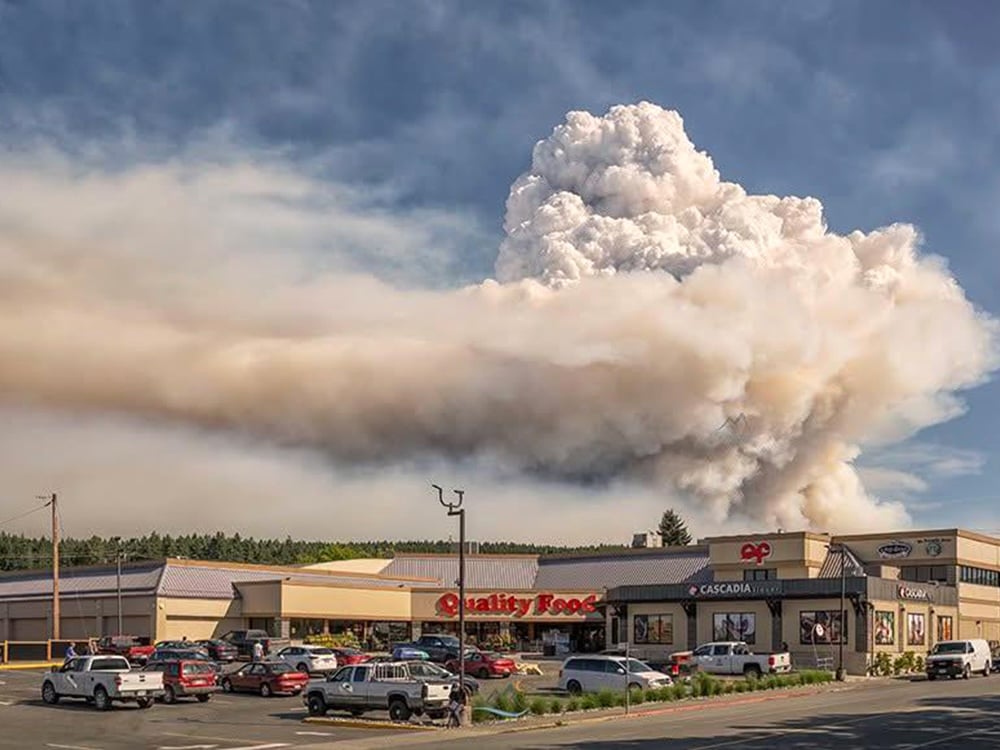
The Mount Underwood fire near Port Alberni wasn’t your typical Vancouver Island blaze. But what is normal is changing.
Thanks to droughts and heat waves, tiny fires that crews were once able to extinguish in a matter of hours are now ballooning into major blazes.
Just hours after the Mount Underwood fire was detected Aug. 11, the blaze had engulfed a mountainside, burning out of control in a region where fires usually stay small and manageable. The fire triggered the evacuation of 400 properties, prompted a local state of emergency, cut off access to the community of Bamfield and sent smoke billowing eastwards.
The blaze eventually grew to more than 3,000 hectares — a mammoth fire by Vancouver Island standards.
Historically, fires have been nearly non-existent in coastal B.C., and the playbook for putting them out has been simple: Find fire. Spray water on it. Dig up hot spots. Case closed. This “direct attack” was possible because of the slow speed at which fires grow in coastal ecosystems.
“We were able to get to the edge of the fire, be on the fire line, apply water, use heavy equipment, and do that pretty close to the leading edge of the fire,” said Jonathan Reimer, a wildfire and emergency manager based in Victoria and longtime coastal firefighter.
“Typically, coastal fires don’t grow very fast at the beginning and so we’ve been able to detect them pretty quickly, because we have people everywhere, and attack them very quickly.”
The risk of a severe fire in coastal forests is limited by climate and the availability of fuel. The coast has enough trees to burn. But its climatic conditions have made large fires uncommon.
But drier forests are starting to give the flames a head start over fire crews.
“That initial attack is becoming more challenging,” Reimer told The Tyee.
“We have to get to them very quickly or they have the potential to do what we’ve seen in the last few weeks here, where they grow to where they are becoming large and impactful fires and sometimes even impactful on communities.”
Fire severity is also changing on the coast.
In the Interior, grasslands, ponderosa pines and fast-burning brush contribute to hot, severe fires. On the coast, soggy falls and winters have instead created forests thick with ferns and green underbrush and canopies far above the forest floor. Coupled with quick fire response, this has generally led to far less severe fires on the coast than in the Interior.
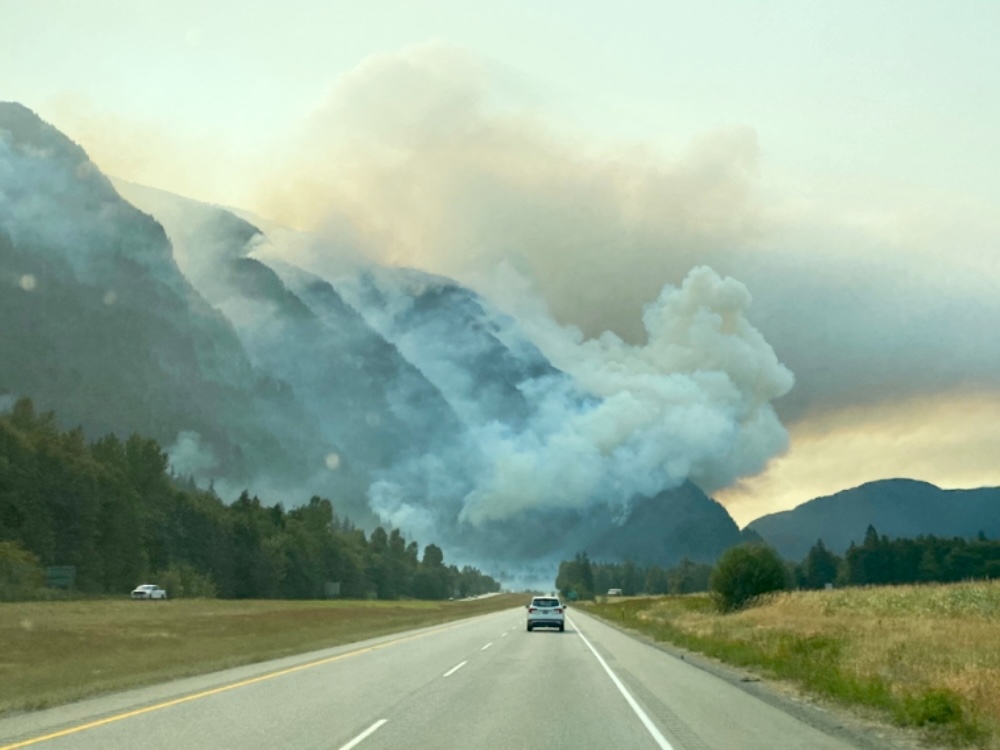
But the Mount Underwood fire, which ignited along the road connecting Port Alberni to Bamfield, spread rapidly, burning as a Rank 5 fire, with flames rising into the crowns of trees and up the mountainside.
“In the seven years I've worked for the Coastal Fire Centre, I don't think I've seen a fire like this on Vancouver Island," BC Wildfire Service communications officer Julia Caranci told CBC.
Watching as an observer from Victoria, Reimer was in awe of the blaze’s scope. “We don’t see Rank 4 and 5 on the coast almost ever,” he told The Tyee.
Reimer thinks the Mount Underwood blaze may be a sign of what is to come. Prolonged drought, he says, is to blame.
“It’s almost like you flip a switch. Now suddenly the treetops become available for fuel,” Reimer said.
“Now that we’re seeing more drought, we’re going to see that more and more.”
‘Wake-up calls’ for coastal BC
The Mount Underwood blaze follows fires in 2022 and 2023 that closed major highways and caused coastal residents to reconsider the threat fire poses to their communities.
Fires near Sooke, Harrison Lake, Zeballos, Squamish and Mission have all left communities wondering about the future and what might be possible in a place where fire is reasserting its potential on the landscape.
“There were a few wake-up calls for us in coastal B.C., and certainly those of us in the fire community have been really worried about climate change and its impacts in coastal B.C.,” University of British Columbia forestry professor and researcher Lori Daniels told The Tyee.
In addition to climate change, logging has also changed the landscape in a way that makes the coast more susceptible to fire. Fire-resistant old-growth forests, which tend to also contain more broadleaf species, have been replaced by younger, smaller, less diverse trees that burn more easily and allow flames a quicker route from the ground to treetops.
“Our second-growth forests are very productive, but there are stages where they are very susceptible to fire, particularly when they are quite young,” Daniels said.
Climate change has also facilitated pest infestations that have damaged and killed trees, leaving them prone to future fires, and is believed to be linked to the dying of yellow cedars along the coast.
And although thunderstorms remain rare, warmer temperatures are also expected to lead to more lightning — meaning the ignition of more fires.
It’s worrisome, and studying fires south of the border — where everything is a little drier, and a little warmer — only ratchets up the tension.
Looking south of the border to see the future
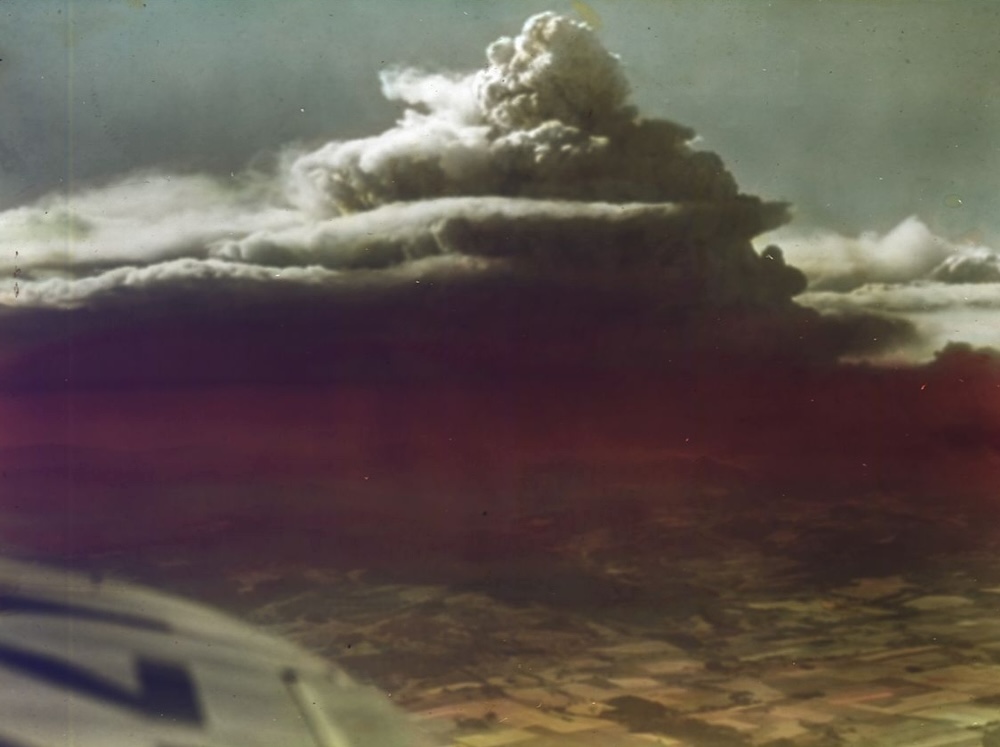
While large fires have been almost non-existent in coastal British Columbia, the coastal regions of both Washington and Oregon have had a much more fraught relationship with fire over the last 150 years. In Washington state, for example, fires ravaged the south, killing dozens, in 1902. In 1933, an even larger fire burned old-growth mountainsides less than 100 kilometres from the coast in Oregon. In late September 1951, a fire burned 15,000 hectares, nearly overnight, and destroyed dozens of homes and businesses in the forestry town of Forks.
In more recent years, massive fires have also ravaged western Oregon. Large blazes in the state destroyed more than 3,000 buildings and killed 11 people in 2020.
Both tolls are far worse than anything encountered in B.C.’s history, and the fire behaviour remains occasionally extreme to this day. Hundreds of firefighters in Washington state are now working the Bear Gulch fire on the Olympic Peninsula. It’s about the same size as the Mount Underwood blaze.
“We can really look to the south and see what’s in our future,” Reimer said.
In a 2020 lecture on the unique characteristics of coastal fires, a team of Washington state foresters directly linked the rarity of coastal fires to their occasional severity and intensity.
Daniel Donato, a forester who works for both the Washington state government and the University of Washington, noted that whereas fires on the eastern side of the state were common, those in the west were almost non-existent between 1984 and 2015. Donato drew a line down the Cascade mountains and compared it to a “firewall.”
B.C.’s equivalent would be the mountains that separate Hope and the Fraser Valley from the southern Interior.
“We've kind of been lulled into this sense of fire as an east-side issue and not so much a west-side issue,” Donato said.
Over more than an hour, he and his team presented evidence of the historical fires to show very intense and large fires do occur in the Pacific Northwest, albeit rarely.
Donato and his colleagues created a new model that approached fires similarly to the way hydrologists predict the risk of large floods, characterizing them by their return period.
If the state’s entire coastal forest might be expected to burn every 500 years, that could be the result of either thousands of very small blazes or a relatively few very large fires. Given the relative difficulty with which fires spread in the Pacific Northwest’s coastal forests, the latter appears more likely.
The takeaway is that an absence of fires does not necessarily mean a region is impervious to large infernos. Instead, as with a large earthquake, pandemic or flood, the rarity of a major event is itself testimony to its large eventual potential.
“The bigger the event, the rarer it is,” Donato said. His team estimated that every 200 years, the western Cascades area of Washington may have historically seen a fire burn 700,000 hectares of forest.
Unlike with floods, of course, humans can now often catch and extinguish that 200-year blaze before it builds energy and becomes unstoppable.
But the research shows that Washington’s forests, if left untended, have the potential to see massive and intense infernos.
And as the climate warms, British Columbia’s coastal forests are becoming more and more like those of its southern neighbour.
“We can quite clearly see what's in our future,” Reimer said.
What coastal residents can do
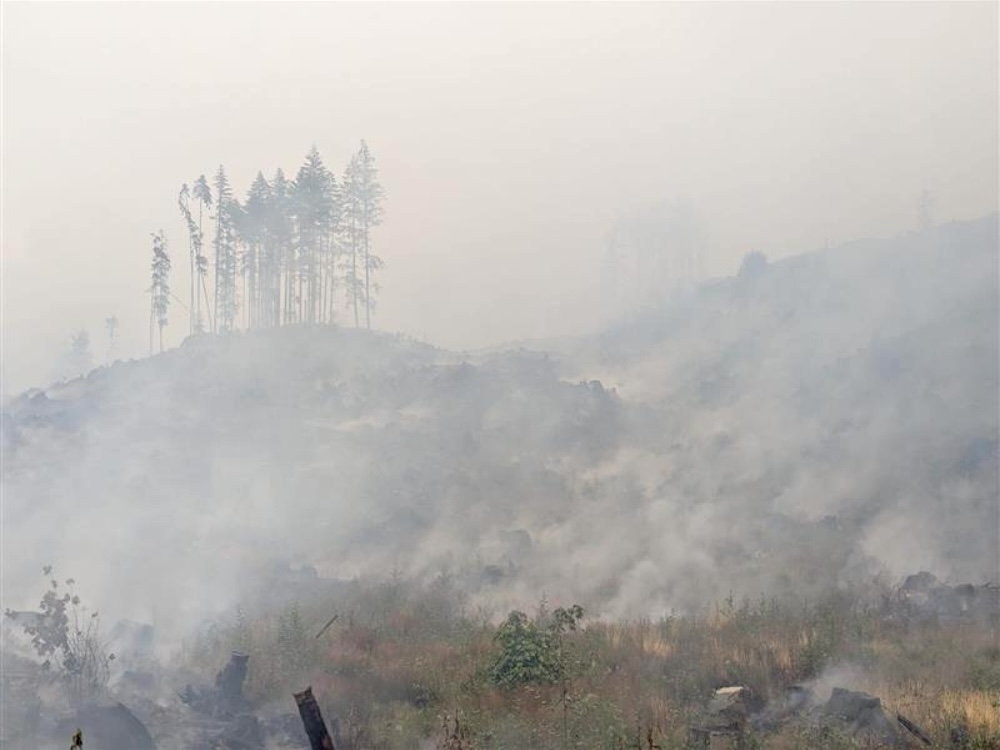
The emergence of fires in a place where they are historically rare has left coastal residents curious — and anxious — when new blazes break out.
Even a relatively small fire, like the Old Man Lake blaze that broke out north of Sooke last year, can send residents scrambling to determine if they’re at risk. That fire burned just 230 hectares of forest and didn’t force any evacuations, but drew more traffic to the BC Wildfire website than blazes many times its size.
The blaze even sparked questions for Premier David Eby when he stopped at a press event 200 kilometres to the north in Courtenay.
“It's really terrifying for a place like Vancouver Island that has never really grappled with wildfires in the way that they have these past few years,” Eby said. “To have these kinds of fire impacts showing up here on the island is really worrying for people who may think we're seeing the start of a significant trend.”
Coastal residents who have previously watched fires on TV are now confronting them in their own regions.
“When you see a [smoke] column, even if it’s rather far away, that can be incredibly stressful and anxiety provoking,” Reimer told The Tyee.
Not all that stress is necessary. And as coastal residents grow more accustomed to fire, they are likely to adapt.
“The anxiety that we see in many communities is inversely related to the amount of fire that they have seen over their lifetime — and often inversely related to the amount of risk that they have,” he said.
As bad as B.C.’s recent wildfire seasons have been, crews have been able to hold the line on most blazes — even those that have broken out directly adjacent to urban areas.
While B.C. has experienced devastating wildfire seasons, the province has managed to avoid the number of deaths and structure losses that are now almost routine south of the border.
Many coastal communities are adjacent to water, meaning there are limited ways for a fire to approach their town. Fires like to climb hills; most communities sit at the bottom of a valley or next to an ocean.
Still, residents can do more. Communities in the Interior have managed to mitigate fire damage through behavioural adjustments on the part of residents, governments and wildfire officials.
Coastal residents can also do more to mitigate the fire risk in their own backyards — clearing gutters, cutting dry lawns during droughts and removing potential fire fuel, such as sticks, branches and other debris, from beside their homes.
In the Interior, Reimer says, humans also tend to react accordingly when the weather gets very dry, taking particular care to avoid starting the next blaze.
“They’re trained to be very careful,” he said. “Here on the coast, we have been able to be pretty cavalier with our sources of ignition and I think that’s starting to catch up with us.” ![[Tyee]](/design-article.thetyee.ca/ui/img/yellowblob.png)
Read more: Environment







Tyee Commenting Guidelines
Please note that email notifications for replies are not currently working due to a software issue which may be resolved in a future update.
Comments that violate guidelines risk being deleted, and violations may result in a temporary or permanent user ban. Maintain the spirit of good conversation to stay in the discussion and be patient with moderators. Comments are reviewed regularly but not in real time.
Do:
Do not: