


 SHARE:

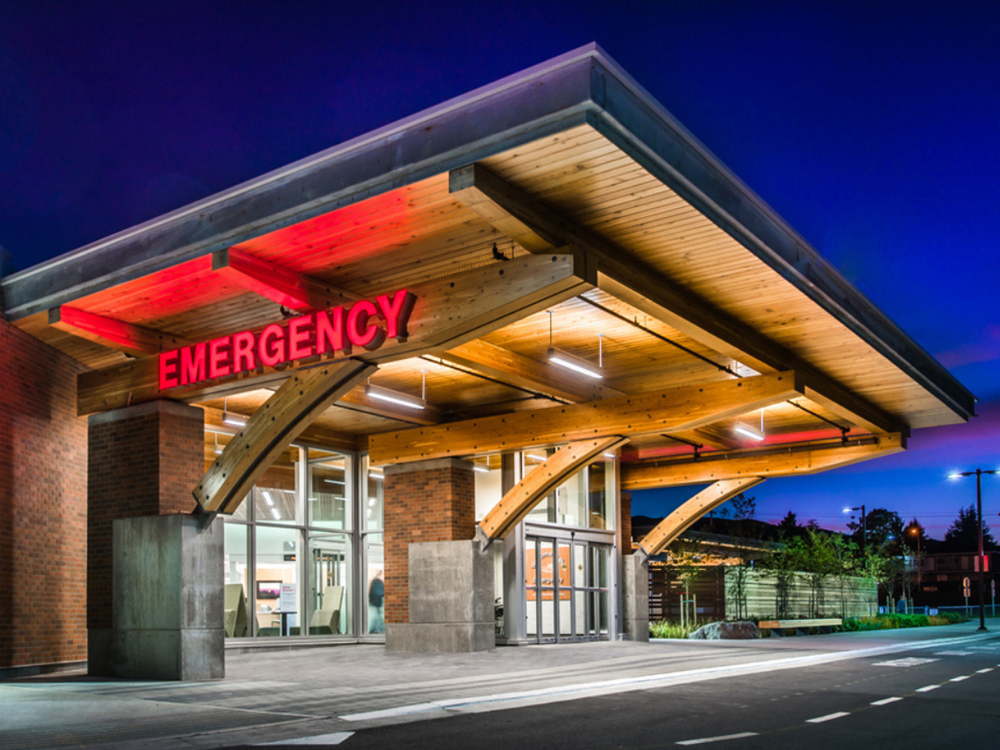
Doctors at Nanaimo Regional General Hospital say the province has delayed critical hospital upgrades for 18 years, which is causing patients to unnecessarily suffer and die.
Nanaimo Regional General was designated a tertiary care hospital in 2008, which means it should be able to offer just about any care a patient on the central or northern Vancouver Island may need, outside of specialist cardiac, neuro and transplant surgery, which are centralized in Vancouver or Victoria.
The services that Nanaimo should be able to offer, but cannot, include a cardiac catheterization laboratory, general internal medicine, neurology and stroke care, oncology, general pediatrics, gastroenterology, palliative care and hospice, pediatric psychiatry and hematology, to name a few.
But the province never followed through on building the extra space needed to offer the additional services, Dr. David Coupland, who worked as Nanaimo Regional General’s president of medical staff from 2018 to 2024, told The Tyee.
The result is a system stretched past its breaking point.
Nanaimo Regional General was designed for 345 beds. It currently has 365 beds and in a typical week can have 465 patients, Coupland said.
“We literally are running out of broom closets and hallways to stick patients in,” Dr. David Forrest, an infectious disease and critical care medicine specialist and current president of medical staff, told The Tyee.
And demand will only increase. A cancer care centre is under development in Nanaimo and “those patients are going to require hospital care and need private rooms,” Forrest said.
Nanaimo Regional General is the seventh largest hospital in the province but it’s the only one of those seven that hasn’t been rebuilt or gotten a new tower since the ’60s, Coupland said. The hospital was built in 1963 and has failed reviews on earthquake safety, electrical safety and infection control safety, he added.
Without a cath lab, people are dying of heart attacks
The outdated infrastructure is costing patients their lives.
The only cardiac catheterization laboratory on the Island is in Victoria. One of the important functions of these labs is to open blocked arteries during heart attacks.
The procedure needs to happen within 90 minutes of the start of symptoms of a heart attack, Forrest said.
As Nanaimo doesn’t have a catheterization lab, patients are instead given clot-busting drugs, which hasn’t been the recommended treatment for heart attacks since the 1990s, Forrest said.
“This has become an emergency,” he said. “There are literally people that are dying or suffering significant harm every week in Nanaimo because they don’t have immediate access to cardiac catheterization.”
Patents can die if the clot busting drug doesn’t work, if it works too well and causes bleeding, or if a patient’s heart is deprived of oxygen for too long and is damaged, increasing the risk of heart failure, he added.
This health-care gap has directly impacted the families of the people advocating for hospital improvements.
Michelle Corfield’s 33-year-old son died very recently from a heart attack. Corfield is an expert in First Nations rights and title and a member of the Ts’uubaa-asatx First Nation (formerly known as the Lake Cowichan First Nation).
Corfield’s son, who lived in Nanaimo, was diagnosed six years ago with a heart condition. The condition went untreated.
“They identified the heat disease but never did anything to solve it, and it was solvable. We can do better, Canada,” Corfield said.
Coupland said there have been five reviews since 2006 that all recommended a catheterization lab be built in Nanaimo.
Excessively long travel days for specialist care
Outside of emergency care, many patients are being impacted by long travel days as they head to Victoria to access the care services Nanaimo should have, but doesn’t. Or they’re forgoing care entirely because they don’t have an option for travel, or stamina for the long day, Forrest added.
“This happens with cancer patients, neurology, cardiology, GI, chronically ill people. It’s terrible for them to have to spend eight hours down and back, every three to four months,” he said. “They should have access to people here.”
Concentrating services in Victoria is also feeding into long wait times.
Coupland said a local Nanaimo business owner recently had to wait three months to get a CAT scan, four and a half months before she was diagnosed with cancer and sent to a specialist, and another month and a half before she was scheduled for treatment.
“She died before her treatment started,” he said.
Even patients who can make the journey shouldn’t have to endure the long travel day, he said. He recently helped a friend with Parkinson’s travel to Victoria to see a neurologist. It ended up being a nine-hour travel day and his friend suffered, enduring spasms and having trouble moving.
The concentration of services in Victoria is also negatively impacting doctors who try to improve care in central and north island.
There are 20 gastroenterologists in Victoria and three in the Central and North Island, Forrest said. One gastroenterologist at Nanaimo Regional General just quit because the workload was too great with too little support, which has in turn has left hundreds of patients with inflammatory bowel disease without a doctor, he said.
And that specialist’s story isn’t unique. A cardiology program also collapsed because the province did not support the development of the service.
“They could no longer practice 20th Century medicine. None of them had been trained in administering clot-busting drugs for heart attacks. That was completely foreign to them,” Forrest said.
“Pick a subspeciality and I can talk to you about the lack of access and the impact it’s had on patient care, or the lack of support for the development of these programs, which has resulted in the nascent programs collapsing,” he added.
Care north of the Malahat
The greater Victoria region has around 445,090 people in it, compared to the 500,000 people Coupland said live north of the Malahat Highway.
The Malahat is a 25-kilometre stretch of highway on Vancouver Island that unofficially separates greater Victoria from the rest of the island. The rest of the island includes Nanaimo, Port Alberni, Courtenay-Comox, and a large number of smaller municipalities.
The population north of the Malahat is the oldest in Canada and therefore has more complex health needs, Coupland said.
“We have a huge health-care burden and it’s increasing rapidly,” he said.
Out of the 52 First Nations on Vancouver Island, 80 per cent use Nanaimo Regional General as their go-to hospital, Corfield said.
The outdated infrastructure at the hospital is impacting remote and rural First Nations because the hospital they rely on doesn’t have the services to help them, she added.
Across Canada, all populations of 250,000 or higher get a tertiary services hospital, except, apparently, for the people living in Central and Northern Vancouver Island, Coupland said.
Coupland says the delays are political: the Nanaimo region is an NDP stronghold, which means the party doesn’t need to commit to building a new hospital to secure support. At the opposite end, the former BC Liberals didn’t want to commit $2 billion for infrastructure when it wouldn’t buy them votes, he said.
Corfield agreed with this analysis, adding, “the NRGH has been the victim of political football.”
Nanaimo Regional General did get a new nephrology, or kidney care, program, which Coupland said works great, but it officially maxed out hospital space. There is nowhere else to build new programs in the existing hospital building.
Advocating for change
Coupland, Forrest and Corfield are all members of the Fair Care Alliance, which advocates for the improvement of health care provision at Nanaimo Regional General. The alliance includes members from Vancouver Island University, First Nations, business people, the Nanaimo Port Authority, Nanaimo and District Hospital Foundation, medical staff and the Island Health Authority.
They’re asking for two main things. First, for the province to build a cardiovascular intervention centre beside the emergency department and to complete the project in two years. Second, for a new hospital tower to house tertiary care programs and to more than double the hospital’s beds. They’re asking for the tower to be completed in eight years.

A cardiovascular intervention centre needs to be built right beside the emergency department to maximize response time, because “minutes mean muscle” when responding to a heart attack, and the longer the heart attack persists, the more damage is done to the heart, Forrest said.
The centre would add 40 beds to the hospital, which are “desperately” needed as the hospital waits for the tower to be built, he said.
The cardiovascular intervention centre would be able to run a vascular surgery intervention suite, which could surgically remove clots from other parts of the body, such as the lungs. While not as common as heart attacks, clots still happen “with regularity” at Nanaimo Regional General and are best treated surgically, rather than with clot busting drugs, Forrest said.
Given how fast Nanaimo is growing, the city will need to double the number of beds in its hospital over the next two decades, to 625 beds from 365, Forrest said. To adequately care for north island patients too, an 800 bed hospital will be necessary, he added.
A couple weeks before the last provincial election in 2024, premier David Eby said the NDP would build a new cancer patient tower for Nanaimo Regional General if elected.
They won, but the last two budgets passed without allocating money for the tower.
Nanaimo appears to be sick of waiting for the province to act. Last December the Nanaimo Regional Hospital District agreed to spend $50 million to build a catheterization lab if the province agreed to build a new tower for the hospital.
The $50 million would cover the cost of building the catheterization lab and would work out to be about 40 per cent of the overall hospital expansion, which is what municipalities are expected to contribute to large capital projects. The other 60 per cent is covered by the province.
Earlier this summer the province accepted bids for a concept plan for the two capital projects and accepted the $50 million for the catheterization lab.
Island Health said it would not comment on the issue during the election period.
Coupland said the Fair Care Alliance submitted a full concept plan to the province in 2023, but it was ignored. The province’s current plan is a “waste of time without timelines and money assigned to it,” he said, and there’s no guarantee it will move the project forward.
At the federal level, the government recently designated $5 billion to a national health infrastructure fund, with around $623 million proportionately designated for B.C.
Corfield said this is an opportunity for the federal government to step in and ensure the Nanaimo Regional General expansion is built.
“The federal government has the duty under the Constitution to ensure health care for First Nations, and they have a duty to act on our best behalf when they see that care is not being provided,” she said.
The BC Conservatives have pledged $60 million in provincial funding for a new cardiac catheterization laboratory at Nanaimo Regional General to be built “as quickly as possible.” The press release did not mention funding for a new tower.
The BC NDP and BC Green Party have not pledged anything this election cycle for Nanaimo.
Coupland and Forrest say they’re talking with all parties during the election to push for the province to build infrastructure that is more than a decade overdue.
Until then, lives will continue to be lost on central and northern Vancouver Island.
“It’s horrible and it’s unnecessary, and it’s been unnecessary for a very long time,” Corfield said. 
Read more: Health











Tyee Commenting Guidelines
Please note that email notifications for replies are not currently working due to a software issue which may be resolved in a future update.
Comments that violate guidelines risk being deleted, and violations may result in a temporary or permanent user ban. Maintain the spirit of good conversation to stay in the discussion and be patient with moderators. Comments are reviewed regularly but not in real time.
Do:
Do not: