

 SHARE:
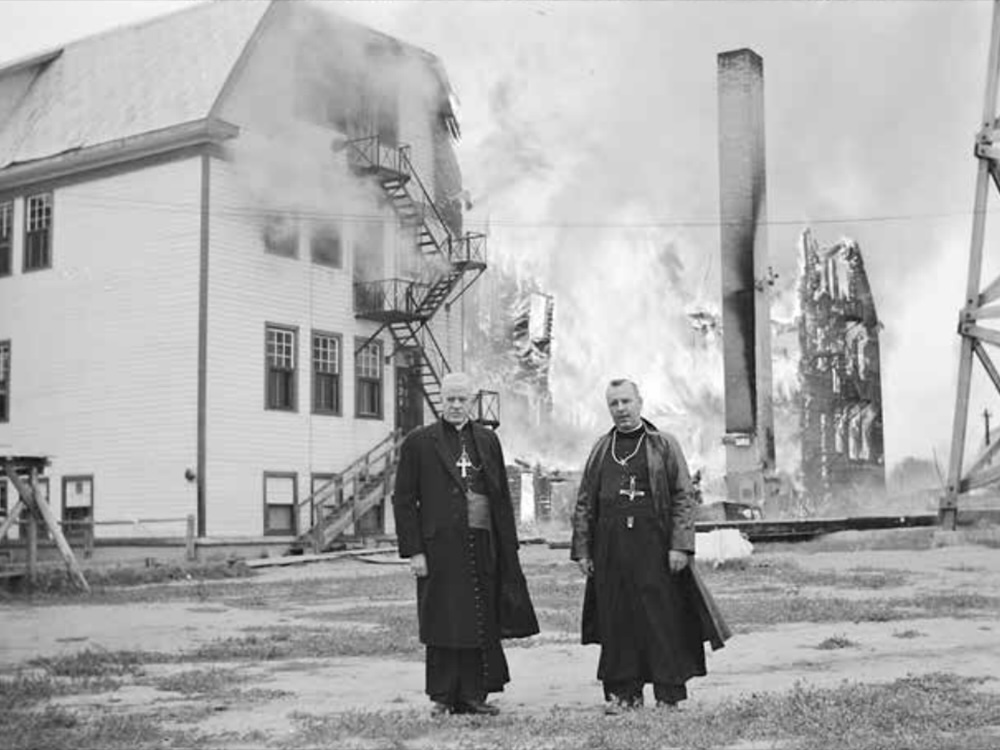
Time is running out to preserve key documents that can shed more light on the impacts of Canada’s Indian residential schools on individuals, families and communities.
Next year, a massive archive of documents and testimony related to experiences at residential schools will be destroyed. The archive contains confidential testimony given during compensation claims processes that spanned more than a decade. A court ruled in 2017 that records collected through the Independent Assessment Process must be destroyed in 2027 because those who participated had been told their testimony would remain private.
Although participants can elect to have their testimony preserved, only a small number of people have chosen to do so. That has researchers such as Toronto Metropolitan University’s Connie Walker worried that many don’t know they have only a limited time to preserve their records.
When the Supreme Court ruled the records would be destroyed, it ordered a two-year advertising campaign online and in print media. But that effort is now long over, and social media accounts intended to share the information have long gone dormant.
Walker, a prominent journalist and Okanese First Nation member, says many people don’t seem to know about the ability to save their records — nor about their looming destruction.
“For six years — arguably the most crucial time to notify survivors and engage with survivors about their choices — there doesn’t seem to have been much engagement,” Walker told The Tyee.
“When we go to communities,” Walker said, “we’re speaking with survivors who don’t know that this impending deadline is about to happen.”
In a statement to The Tyee, a spokesperson for the federal government wrote that Crown-Indigenous Relations and Northern Affairs Canada plans to “launch another national awareness campaign before the 2027 deadline.” Survivors can visit the My Records, My Choice website to ask to have their testimony preserved.
Meanwhile, Walker and Kimberly Murray, former executive director of the Truth and Reconciliation Commission of Canada and a member of the Kanehsatà:ke Mohawk Nation, are working to increase awareness themselves.
On the National Day for Truth and Reconciliation, they and colleagues at Yellowhead Institute are holding an event in Toronto and online to talk about the destruction of the records, the ability of survivors to ask for their testimony to be preserved, and work they are doing to save other critical documents.
Although they’re unable to halt the destruction of the Independent Assessment Process records next year, Walker and Murray are undertaking an ambitious effort to obtain thousands of other public documents that illustrate the impacts of residential schools. Those filings relate to historic lawsuits filed by survivors in the 1990s and early 2000s and aren’t set to be destroyed, though they too involve their own time pressures.
Tyee senior editor Tyler Olsen recently spoke with Walker and Murray about their work. The following interview has been edited for length and clarity.
The Tyee: Why are these files with residential school testimony so important?
Connie Walker: For me, it started with Surviving St. Michael’s, which is the podcast and the investigation that I did into the residential school that my dad went to. Even though I’ve been a journalist for over 25 years now and have done reporting on residential schools and intergenerational impacts of residential schools, it wasn’t until I did that in-depth investigation into a single school that I really kind of understood the truth about what was happening and the scale of abuse at a single institution. As an intergenerational survivor, getting a better understanding of what was happening to the children at St. Michael’s was shocking to me.
It was also so deeply personal because I could directly trace back my own life and how I had been impacted by my dad’s experience at residential school, and also my relatives’ experience. The priest that we interview in the podcast who was accused of abuse is the priest who my uncle Ivan accused of abusing him when he was a boy. And my uncle Ivan abused me when I was a kid and abused several people in our family, and being able to trace that back made me better understand.
That really made me understand how knowing as much of the truth as we possibly can is so important for healing and for families and communities. I felt really upset that it was just this random thing that happened — I happened to be an investigative journalist; we happened to investigate this one school — because I heard from so many other intergenerational survivors after the podcast came out who also had the same questions, who also felt similarities with my experience. We should all have this information. This is information that every intergenerational survivor should know.
[As records related to the Independent Assessment Process are set to be destroyed, Walker and Murray are scouring courthouses to find other documents that may also be in jeopardy of being lost forever.]
Kim Murray: This project is trying to retrieve public records housed in courthouses across this country of the statements of claim, the affidavits, anything that happened through the court process, the open court process. Those records have truths in them as well, and some have been destroyed already. We’re working with communities and survivors to retrieve those records out of the courthouses and put those in a database or an archive that’s community-led and survivor-controlled and to preserve those truths.
Walker: In Surviving St. Michael’s, I started out looking for the priest who had abused my dad. But in interviews with survivors and in talking to not just my family members, but as many survivors as we could from this one school, we heard the name of several priests, nuns and staff members who were accused of sexually abusing students. So we wanted to get a better sense of the scale of the abuse.
We knew a lot of that had been documented through the [Independent Assessment Process], but because it was this private, confidential process, there was no way to get information from those records. But one of our producers, Chantelle Bellrichard, had this great idea to go back to lawsuits that survivors filed in the ’80s, the ’90s, 2000s relating to abuse in residential schools. They sued the government and the churches, and those lawsuits are public documents — they’ve been filed in courthouses across the country. So we filed an access-to-information request and in the end we were able to get 485 lawsuits from St. Michael’s. That gave us a sense of the scale of the abuse at a single school, and that is the process that we’re trying to replicate — accessing these public documents, archiving them, with the goal of returning them to survivors and their families and communities, so they can decide how they’re managed.
Can you talk about the urgency about retrieving these records from courts and how that dovetails with the deadline for Independent Assessment Process records in a year?
Murray: As Connie said, there were 38,000 survivors who testified or brought applications to the Independent Assessment Process. So that’s 38,000 survivors’ truths that are being destroyed unless the survivor opts to preserve those, and less than 100 survivors have opted to preserve.
The Truth and Reconciliation Commission of Canada collected just under 7,000 statements of survivors that spoke about what happened in the institutions they were in. We don’t know the actual full number, but it’s estimated there are between 14,000 and 20,000 statements of claim. Those are records that aren’t being destroyed, and so the urgency is to get those before they [are], pursuant to provincial retention policies. Connie saw some, when she was in the Ottawa courthouse, with stickers on that said to destroy in 2030, because that’s just the disposition policies of the province.
So we need to get into these courthouses and get these records so they’re not destroyed, so that survivors and communities and their families can decide what they want to do with these records. These are the accounts of up to 20,000 survivors who sued churches and governments and named perpetrators. We don’t know the names of perpetrators. The TRC was not allowed to name perpetrators unless they were convicted, so there’s a short list in the TRC report of the people that were charged and convicted, and there have been some subsequent convictions after the TRC. But the Independent Assessment Process records had persons of interest that were noted in applications. That’s all being destroyed. Statements of claim actually name alleged perpetrators, institutions, who ran them, what priests were involved, so it’s really important to preserve that history.
Walker: What we found in the 485 lawsuits that we were able to access in the podcast was that there was other information about kids who died at the school and about survivor accounts of other violence that that they saw — that was never known or investigated or wasn’t in some ways compensable through the Independent Assessment Process because they were looking at a really specific window of kinds of abuse and harm.
We spent several weeks this summer in courthouses scanning large banker boxes, so we now have access to thousands of records, even though this is very preliminary right now. We’re starting to look through them. What we’ve been able to see is that there is just so much truth out there that has never been shared, that has never been understood about Indian residential schools.
About the Independent Assessment Process, what I’m very interested in is the notice program. The reason the Supreme Court in 2017 [required] a 10-year window before the documents were to be destroyed is that there was meant to be a robust notice program that reached out to survivors to inform them of their rights. As Kim said, less than 100 have chosen to preserve their records at the NCTR [National Centre for Truth and Reconciliation]. Does that mean that less than 100 want to? How many [survivors] were actually notified adequately? What did they receive? I went on the website and their social media, and the last post that I saw was from 2020.
So for six years, arguably the most crucial time to notify survivors and engage with survivors about their choices, there doesn’t seem to have been much engagement. When we go to communities and we’re speaking with survivors who don’t know that this impending deadline is about to happen, as a journalist that really piques my interest because it makes me feel like there’s so much more that we need to know and understand. In terms of justice and accountability for survivors, I think we have to ask some tough questions about what kind of notice has been given to them, what kind of information have they had in order to make these decisions.
[In an email on Tuesday, after this interview was conducted, a federal government spokesperson wrote that ‘Crown-Indigenous Relations and Northern Affairs Canada is working to launch another national awareness campaign before the 2027 deadline so Survivors and their families understand their options. Through the My Records, My Choice program, Survivors can request copies of their records and choose whether they will be preserved at the NCTR.’]
After the anomalies were found in Kamloops, there was an initial response of public support. But the discovery since seems to have created a backlash of people suddenly calling into question things that were pretty well established in the historical record. How do you process that experience, and how does it inform your project and the need you see for more specific information on these places?
Murray: When I was the special interlocutor for missing children and unmarked graves, in my interim report, I called on Canada to do one final review of the [Independent Assessment Process] records for information on deaths and burials of children. In my final report, I echoed that call, and they haven’t done anything in that regard.
If those records aren’t going to be reviewed — and we know from speaking with IAP adjudicators that people absolutely talked about deaths of children in the institutions and burials on the grounds, and that they had to dig the graves of the children — we’re now destroying that evidence that deniers say doesn’t exist. As a state, we’re destroying those records. When we speak to international experts that work in atrocity crimes, they’re appalled that this country is destroying that type of information.
When we look at the court cases... people have written in their statement of claim about deaths, about burials, about cemeteries. So this is a really important project to try and gather that information and have it all in one place, instead of dispersed in these basements of courthouses and storage lockers that provinces rent to keep these records. We need to get them all together and be able to see what’s in them and what experiences the survivors shared in regard to the deaths and burials of children at these institutions.
Walker: Obviously the rise in people who deny the harms that happen in residential school is very concerning and troubling. I mean, this was in the TRC report — the number of kids who are known to have died in residential schools. So I feel like it is just more motivation to try to preserve and protect as many of these records as we possibly can, but also to continue to share that information.
I’ve been reflecting on the work of the TRC and how it was really the voices of survivors who came forward and started telling the courts about what had happened to them in residential schools who insisted on the Truth and Reconciliation Commission.
You know, we’re sitting together in the courthouse, Kim and I, and we’re like, “Oh my God, look at this document.”
We’re learning so much, and it makes me feel like this work has to continue. The Truth and Reconciliation Commission was so incredible, but in a lot of ways, it feels like it was really just the beginning. All of this work that we’re doing right now, looking at these records, looking at these documents, really shows me that there’s still so much truth that we have yet to uncover, and so much truth that we have yet to study and analyze and amplify.
Your goal is to access and collect these documents from courthouses. What is the specific work that you’re doing on that, and the assistance you are looking for, or the ways you are hoping to collaborate with the public on this work and to collect these stories?
Murray: I’ll tell you how what a mess the courthouses’ boxes are — and so with the assistance of law students and journalism students and researchers that we’ve hired, we’re able to make some sort of order out of the mess of these boxes and these papers and these documents. We’re doing all that upfront work so it’s easier for people to follow the story of the litigation, to follow the story of the lawsuit of individual claimants of these cases that ended up in the biggest national class-action settlement agreement in the history of Canada. That’s a lot of work that people don’t have the time and the resources to do. That’s our contribution.
But then they will be handed over to the communities, and they will decide: Is this going to be available to people? What will we do with these records? What will we do with this information — these experiences that are captured in these records?
You mentioned that there are worries that these documents will be destroyed at some point.
Walker: It does feel like a race in some ways, not just because of the [Independent Assessment Process] records and the impending destruction around those, but the window for survivors is closing every day. A really tragic reality of this is that we’re losing survivors all the time, and with them obviously is lost an opportunity to amplify their voices and to learn from them and get their input on these records.
The window for justice and accountability closes with that as well. In Surviving St. Michael’s, we were able to, for the first time ever, publicly name 16 priests, 13 nuns and 15 staff members who were accused in those documents of sexually abusing kids. And most of those allegations weren’t one-off allegations, but abuse that survivors say continued over weeks and even months and years in some cases. As a journalist, we’re always searching for truth and justice and accountability. The information that’s in these records should be public. We should all know this. What we found in Surviving St. Michael’s is just one example, but there were over 100 residential schools open for over 100 years. There’s so much out there that we still need to preserve and protect and inform people about.
Register for tomorrow’s Yellowhead Institute event, ‘The Right to Truth: Protecting Indian Residential School Records,’ a conversation between Connie Walker, Kimberly Murray, Marie Wilson and Stephen Kakfwi, hosted in conversation by Hayden King, on Eventbrite. ![[Tyee]](/design-article.thetyee.ca/ui/img/yellowblob.png)
Read more: Indigenous, Rights + Justice


Tyee Commenting Guidelines
Please note that email notifications for replies are not currently working due to a software issue which may be resolved in a future update.
Comments that violate guidelines risk being deleted, and violations may result in a temporary or permanent user ban. Maintain the spirit of good conversation to stay in the discussion and be patient with moderators. Comments are reviewed regularly but not in real time.
Do:
Do not: