


 SHARE:
Tom Fulton is no stranger to cleaning up oil spills.
A former reclamation consultant, Fulton spent years in the oil and gas sector remediating sites across the world. He became passionate about helping wildlife and the environment, two factors that also explain why he lives in Toad River, a small northeastern B.C. community that he has called home for nearly 60 years. Like many people who live in that pocket of the province, he fell in love with the mountain views and the roaming wildlife.
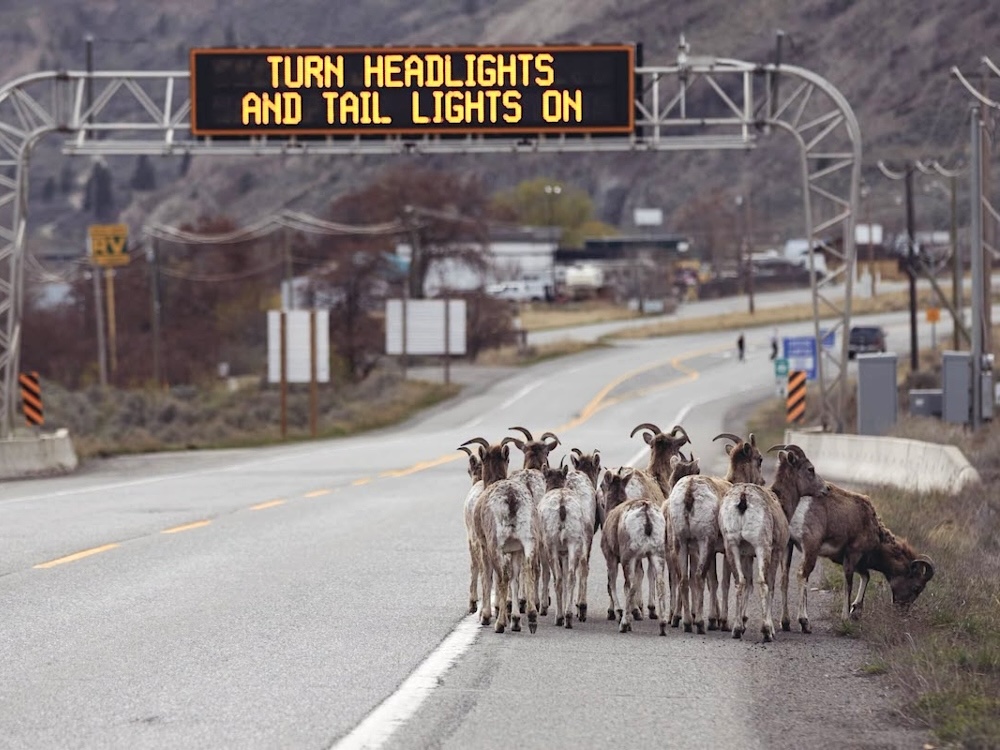
But in recent years, he’s noticed an increase in the number of highway crashes that result in fuel spills. Many of the incidents, he says, threaten the wildlife, such as thinhorn sheep, that frequent the region’s roadways.
Fulton is among the advocates calling for better spill responses and highway improvements after a fuel truck plunged down an embankment in March near Summit Pass, a 1,260-metre mountain pass about 140 kilometres west of Fort Nelson.
The crash on the Alaska Highway killed both the truck’s occupants and released nearly 23,000 kilograms of aircraft de-icer fluid and 500 litres of diesel into the environment.
A few days after the crash, Fulton, a director at the Northeast BC Wildlife Fund, and several colleagues wrote to the Ministry of Water, Land and Resource Stewardship, expressing concern that “an unknown liquid” would spill into local waterways and attract wild sheep and other animals. Fulton and his colleagues offered to assist with remediation of the site.
It was not an unprecedented offer.
“I took it upon myself, when we started having these spills, to observe them and offer local expertise and local help,” Fulton said.
Fulton’s group has been involved with wildlife management in the Fort Nelson area for 30 years and has implemented an off-highway salting program to deter sheep from licking leftover salt on the road.
Officials didn’t immediately take the group up on their offer. Instead, the remediation was led by an insurance group on behalf of the company involved in the crash.
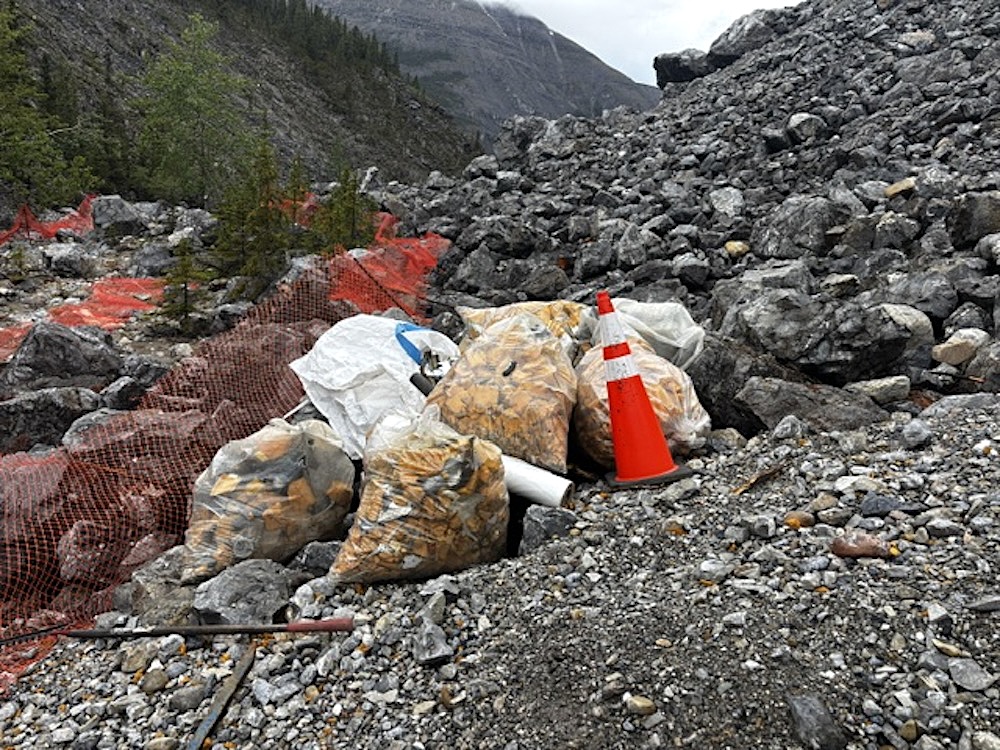
The early efforts left a lot to be desired, Fulton said. Wildlife group members arrived after the cleanup to find downed fencing, scattered garbage bags and sheep roaming nearby. The fencing was meant to deter wildlife from accessing the spill site. Companies involved in the crash and cleanup have not been publicly identified.
It is standard practice for companies to handle spill cleanups in B.C. and across Canada, according to Dale Bull, a senior emergency response officer with B.C.’s Ministry of Environment and Parks.
Companies are responsible for cleaning up any spills that occur on highways, Bull told The Tyee.
With so many different products transported on highways, “the person who is transporting is going to have the best information and likely be the best equipped to handle that product,” Bull said.
In June, the Northeast BC Wildlife Fund wrote another letter to the province, saying they were going to clean up the toppled fencing and garbage themselves. The fencing was unlikely to deter wildlife and fuel had likely soaked into the ground, they added.
The government then forced the insurance company to remediate the site again. Fulton credits the government for stepping up, but he isn’t sure the change would have happened if they hadn’t spoken up.
“If we wouldn’t have put pressure on them and say ‘We’re gonna do it and bill you back,’ I don’t think they’d send anyone back up,” Fulton told The Tyee.
Oversight of the Alaska Highway within B.C. is split between the provincial and federal governments. The feds own the bulk of the highway through British Columbia, including the Summit Lake stretch where the March incident occurred.
Kyle Stelter, the CEO of the Wild Sheep Society of BC, was also disappointed by the initial cleanup effort for the March crash.
“It was, generally, a very, very poor recovery effort,” Stelter said. In June, Stelter wrote a letter to the province expressing concern about the risk to local sheep and asking for more information and more engagement with local advocates and First Nations.
Bull told The Tyee that the Northeast BC Wildlife Fund and Wild Sheep Society of BC became key partners following the crash. But he said neither group was sought out at the start of the remediation process. Bull said that although the province likes to work with locals, it can take time to become aware of local groups and their capacity to assist.
“There’s a lot of very well-intentioned people out there,” Bull said. “We have to make sure that when these groups come out, their interests align with the response and that they are contributing in a meaningful way and a safe way.”
A deadly highway for sheep
Stelter applauded the province’s response to his letter but says more can be done to protect humans and wildlife — especially the thinhorn sheep that frequent the area.
Summit Pass is located between two provincial parks — Stone Mountain and Muncho Lake — where the sheep are protected and roam freely. In the winter months, the sheep are drawn to the two-lane highway to lick sweet-smelling highway salt used to melt snow and ice.
Between 2015 and 2024, 49 thinhorn sheep were killed on that section of the Alaska Highway, Stelter said.
B.C. is home to more than 12,200 thinhorn sheep, which are also known as stone sheep. The animals are not endangered and can be legally hunted — many of the Wild Sheep Society of BC’s members are hunters. But the sheep are “genetically unique” to B.C., and Stelter says that means “we have a global responsibility to look after these species.”
“If stone sheep don’t exist [in B.C.], then they’re gone,” he said.
‘Truck after truck of fuel going up’
The March crash at Summit Pass wasn’t an anomaly.
According to Fulton, there have been six serious crashes on a roughly 300-kilometre section of the Alaska Highway between the Yukon border and Steamboat Mountain over the past two years. That includes a fatal accident in January involving a semi-truck carrying flammable material, an incident involving a semi-truck carrying 50,000 litres of gasoline and diesel 30 kilometres west of Toad River in June and a collision between a diesel truck and a bison in July.

The accidents come as the price of gold is fuelling a gold rush in Yukon’s Dawson City, about 14 hours’ drive north of Summit Pass. Last year, CBC reported that mines in the area had recorded their highest revenue from gold production on record.
Fulton believes the accidents near his home off the Alaska Highway are related to the increasing number of vehicles heading north.
“You just see truck after truck of fuel going up,” he said, suggesting that the crashes may be due to new drivers carrying large quantities of fuel on tricky terrain. “It’s the narrowest, windiest stretch of road,” Fulton said.
Solutions on the horizon
Since raising the alarm, Fulton says proactive measures are coming together.
He said the province has plans to have containment kits available for local contractors, which would reduce the need to send the equipment in from Prince George or Grande Prairie after a spill. But he still wants more local oversight, including a stronger RCMP presence at truck scales and better road maintenance in the winter.
“The grader, in our old stretch of road here, only winged the shoulders twice during the whole winter,” said Fulton, referring to the process where a machine widens the road by plowing snow onto the highway shoulder.
Stelter, from the Wild Sheep Society of BC, suggested that improved highway infrastructure can reduce the number of crashes.
He would like a wildlife overpass or elevated highway that reduces interactions between motorists and animals. Stelter recognizes that those ideas come with multimillion-dollar price tags and may not be feasible. But he said other, cheaper fixes could reduce wildlife deaths.
He suggested the government pave gravel highway shoulders or improve ditches to better allow highway salt to leave the roadway, and consider creating rock-filled ditches to keep salt water out of reach.
He also said highway officials should reconsider how guardrails are used.
The barriers are intended to keep motorists on the road. But on curvy sections like Summit Pass, sheep are trapped by the continuous barrier. When cars approach, Stelter says, “Mum will jump over, or the ram will jump over, but the little lamb gets crushed.”
Breaks in the guardrails could allow wildlife — especially younger animals — to escape when a vehicle approaches.
In an emailed statement to The Tyee, Public Services and Procurement Canada didn’t comment on immediate projects in the works but wrote: “The safety of motorists on the Alaska Highway remains a top priority for Public Services and Procurement Canada. Highway safety is evaluated on an ongoing basis as part of regular maintenance, rehabilitation, and future infrastructure planning activities.”
With colder weather on the horizon, Stelter is hopeful the changes will be acted on, protecting both humans and wildlife.
“These are three immediate fixes,” Stelter said. “Even this winter, we’d see reduced sheep on the highway.”
*Story updated on Sept. 16 at 1 p.m. An earlier version of this story said that a fuel truck carrying 500,000 litres of gasoline and diesel crashed 30 kilometres west of Toad River in June. The crash actually involved 50,000 litres, not 500,000. ![[Tyee]](/design-article.thetyee.ca/ui/img/yellowblob.png)
Read more: Energy, Transportation, Environment





Tyee Commenting Guidelines
Please note that email notifications for replies are not currently working due to a software issue which may be resolved in a future update.
Comments that violate guidelines risk being deleted, and violations may result in a temporary or permanent user ban. Maintain the spirit of good conversation to stay in the discussion and be patient with moderators. Comments are reviewed regularly but not in real time.
Do:
Do not: