


 SHARE:

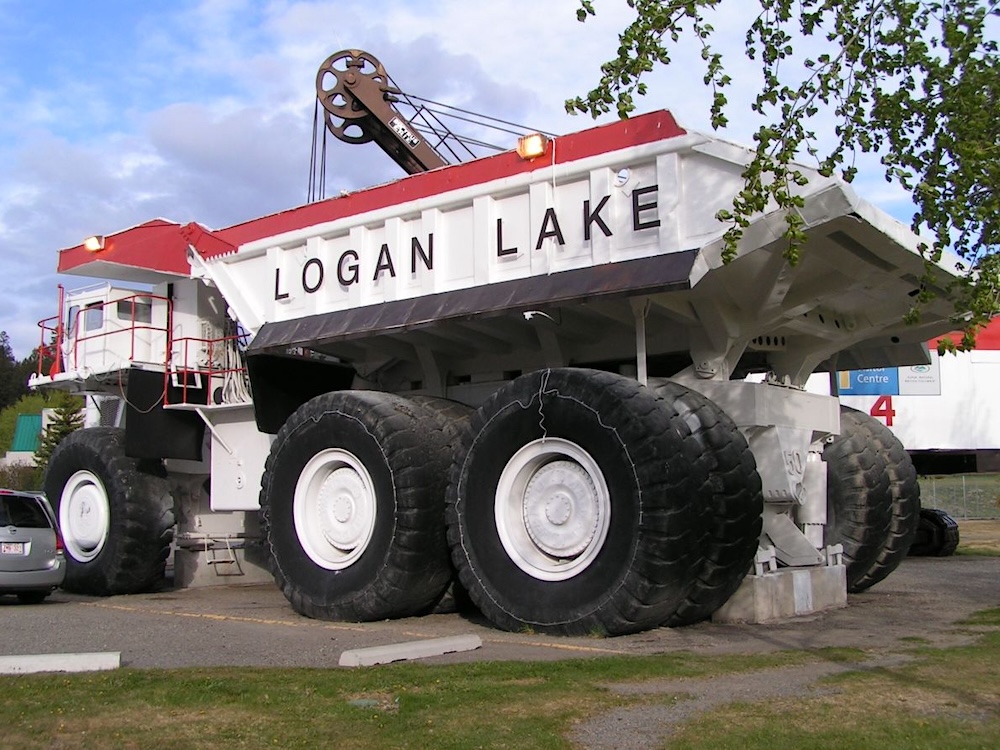
Highland Valley Copper is not your average British Columbia mine. And because of that, Logan Lake is not a typical B.C. community.
As more than 1,000 workers at the massive copper mine southwest of Kamloops continue to strike and demand better pay and conditions, the labour dispute has shone a light on one of B.C.’s largest mineral operations — and its interdependent relationship with the rugged communities that surround it.
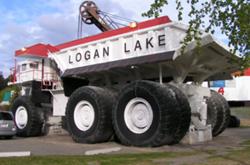
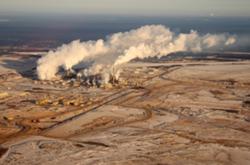
Whether seen in person or from aerial satellite images, the Highland Valley Copper mine is massive, with a footprint 15 times the size of Vancouver’s Stanley Park and a 10-kilometre-long tailings pond visible in any satellite image of British Columbia. The operation is B.C.’s third-largest mine of any type and Canada’s largest copper mine, producing more than 120,000 tonnes of copper each year. That mining brings in big bucks: in 2025, the operation made its owner, Teck Resources, $499 million.
The mine’s human impact can be harder to see but may be just as large, especially in Logan Lake, a small community created specifically for the mine’s workers.
Plenty of copper but challenging to extract
B.C.’s largest base mineral mine is dug into the sides of a modest valley, amid the rugged heights of the Thompson Plateau. To the north and the west, the Thompson River cuts through arid landscapes that evoke western American deserts and scrublands. As the elevation rises, sprawling forests cover modest glacially shaped mountains, interrupted by narrow mountain lakes.
The Nlaka'pamux and Secwépemc have lived in the area for thousands of years, but it was around 1900 when prospectors first started talking about copper-rich soil they found in the area surrounding Ashcroft. Newspapers around western North America padded their pages with stories of locals travelling about the region, searching for the next great mineral find or bragging about their recent discoveries. Some of these tales included prospectors and mineral hounds touting discoveries in the rugged country surrounding Ashcroft, a (relatively) important way station along the Canadian Pacific Railway.
In one 1902 story in the Spokane Chronicle, a Rossland-based prospector declared the area would be “an important copper producing section.” The prospector was right — eventually.
There was a lot of copper in the hills. But it was not nearly as concentrated as early prospectors hoped. It wasn’t until 1962 that the first copper mine opened in the Highland Valley. A second followed in 1972, followed by a third in 1980. The mines, which eventually were consolidated into the single operation, were built on the idea that mining the Highland Valley’s copper and molybdenum could be profitable if done efficiently at massive scale.
It was mining giant Rio Algom’s opening of its Lornex mine in 1972 that put the Highland Valley on course to be the centre of Canadian copper production.
In a dated company-financed documentary posted to YouTube, suit-wearing officials spoke of the project’s high stakes.
“If Lornex is a mine,” one executive declares, “it will become the lowest-grade copper mine anywhere in the world.” A new mine, another executive said ominously, could “become an enterprise that will launch Rio Algom into the big leagues again... or which can in fact destroy the company if the decision is made incorrectly.”
The video, which was produced by legendary Canadian documentarian Frank Crawley’s company, hit on a key challenge. There was a lot of copper in the hills, but it was heavily diluted by other “waste” rock and sediment. That meant that profitably mining the site would depend on finding ways to efficiently process huge amounts of rock cheaply, concentrating the ore and discarding the excess material. That required technology and daunting upfront capital investments. But if the operation worked, it could produce huge profits.
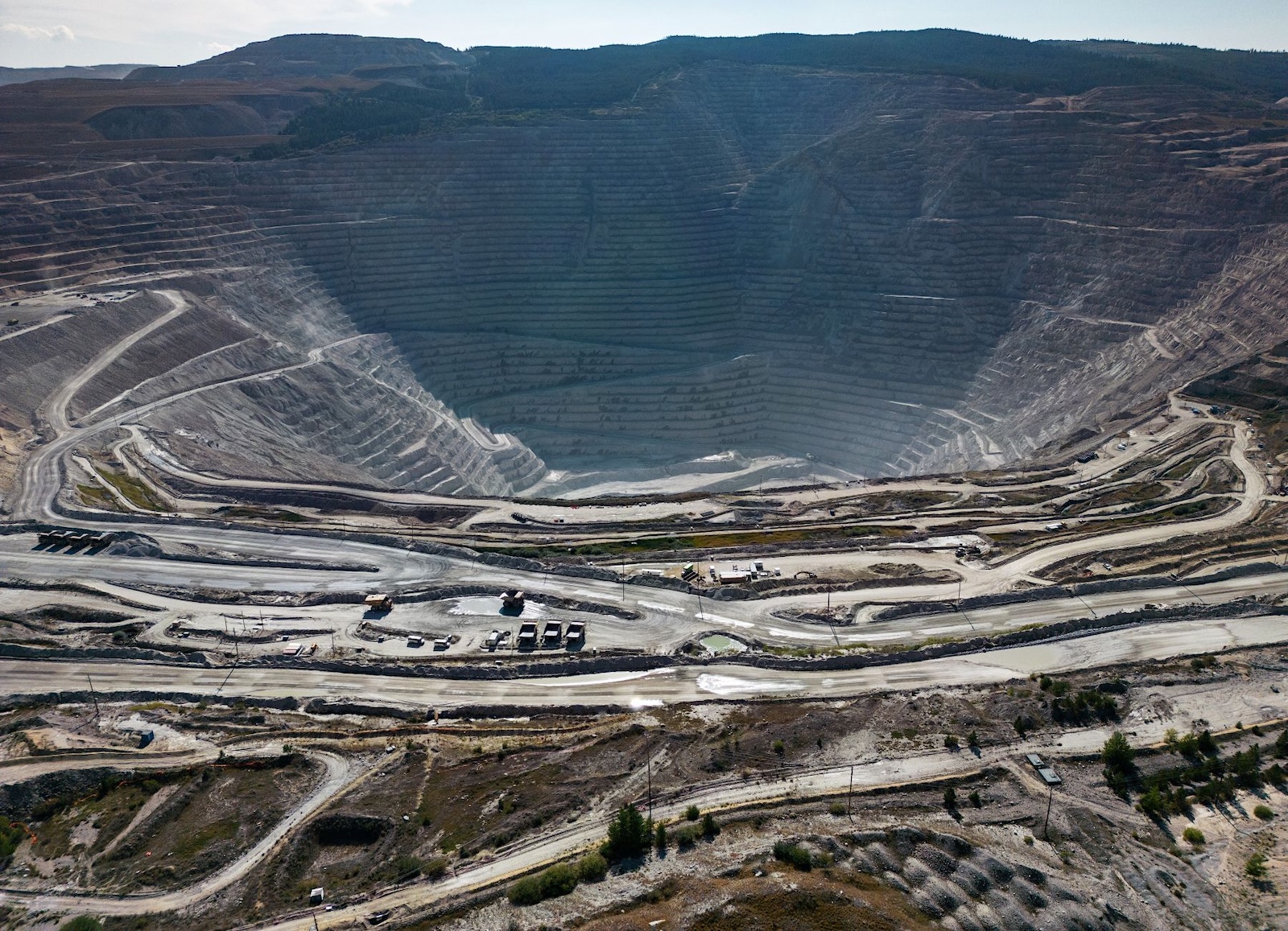
Rio Algom put together millions in loans from three major Canadian banks while signing a $500-million sales contract with a Japanese smelting consortium. That provided the cash needed to construct immense processing and refining buildings and conveyer systems, purchase huge earth-moving vehicles and strip the earth barren above what would become one of Canada’s largest open-pit mines.
The announcement that the project had been given the final go-ahead made news across the country.
It also led to the creation of a whole new town.
A new mine requires workers, and those employees need a place to live. A large mine requires hundreds of workers. Even today, the mine is at least a 45-minute drive to Kamloops or Merritt when the weather is good. Before the mine began operating, the roads in the mountainous, rural and mostly uninhabited area west of the Nicola Valley were notoriously bad, and it would be more than a decade before the Coquihalla Highway sped travellers from southwest B.C. to Kamloops.
As construction started on the mine, the decision of where its future workers would live became a local controversy with huge potential ramifications. The company floated a proposal: the creation of an “instant town” near Logan Lake, a small water body 10 kilometres east of the mine site. But local politicians of surrounding communities opposed the plan, arguing that it would reduce the mine’s economic impact on their own towns.
Officials in Merritt and in Cache Creek, near Ashcroft, hoped that the mine’s workers would live in their communities, spending money in local businesses, boosting school populations and bolstering the local economy.
The province had already pledged to improve the road between Highland Valley and Merritt, and in that town locals urged the province to also improve the connection between their community and farther-flung Kamloops. If the two towns were better connected and residents could easily get to the regional hub, mineworkers would be fine living in Merritt, they hoped. Locals also questioned whether building an entirely new town would be feasible and reasonable, pointing to the decline of other resource towns over the years.
“I just can’t see the sense of another town,” a local clothing businessman told the Merritt Herald.
But asking workers to commute longer distances could also come with its own costs; the Province reported that the unions were likely to demand compensation if workers needed to spend considerable time commuting to work. (The debate over where to house the copper miners was paralleled by another over where the extracted ore would be smelted — see sidebar.)
In September 1970, the province made a decision that would alter the fate of thousands of future mineworkers and Interior residents: Logan Lake would be built.
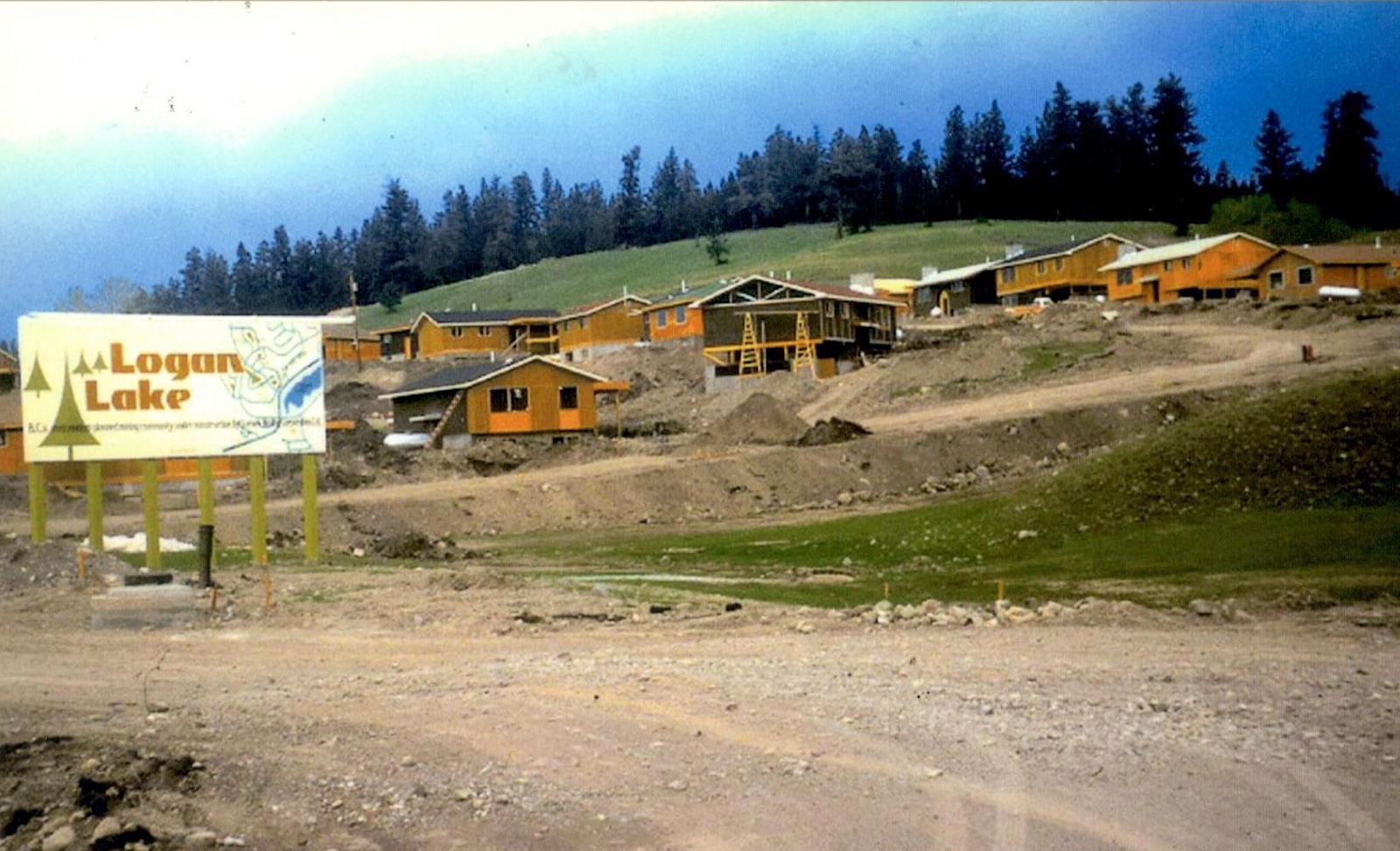
For better or worse, a government approval in 1970 often brought quick action.
Immediately after the province gave the thumbs-up to a new town, Lornex/Rio Algom signed a $1.8-million contract to build 100 homes at the new town site. The following year, the “instant town” welcomed its first families. New schools, an RCMP detachment, a firehall, a community centre and a bank quickly sprung out of the ground. Foundations were poured for hundreds more houses, new apartment buildings and townhomes.
More mining companies would begin pulling copper from the ground. Many urged their employees to live in Logan Lake, and one even provided $12,000 housing subsidies that could be redeemed only in the community.
But the town’s existence remained precarious because it was so tied to the copper industry. Logan Lake was not a company town. It was an independent, democratic entity and land was owned by individuals, not the corporation. But its dependency on a single mineral left it racked whenever the metal’s value plunged and local mines laid off workers.
“Other towns in the area have other windows on the world,” the Vancouver Sun reported in 1977. “Merritt has its sawmill, its ranching and its anticipation of the 70-mile highway to Hope. Ashcroft has its two rail lines and its hopes of cashing in on the huge Hat Creek coal development just over the hill toward Lillooet; and Kamloops has just about everything.
“But in Logan Lake,” the paper noted, “it’s all copper.”
At the time, the question was whether Logan Lake could grow its student population enough to warrant a new high school. The question of whether Johnny would need to take a bus an hour to Kamloops to go to school would depend on the price of copper on the London Metal Exchange — which itself was influenced by foreign wars, U.S. labour disputes and international exchange rates.
The price of copper did rise. By 1981, the population had reached 2,637. But it also fell. Hope that new proposed mines would grow the local workforce and bring thousands of new residents to town never materialized.
And 45 years later, Logan Lake hasn’t grown much — at least on the surface.
That population is still the highest census figure the town has ever achieved. Most homes still date to the ’70s or early ’80s. The same goes for the town’s business plaza and its hotels.
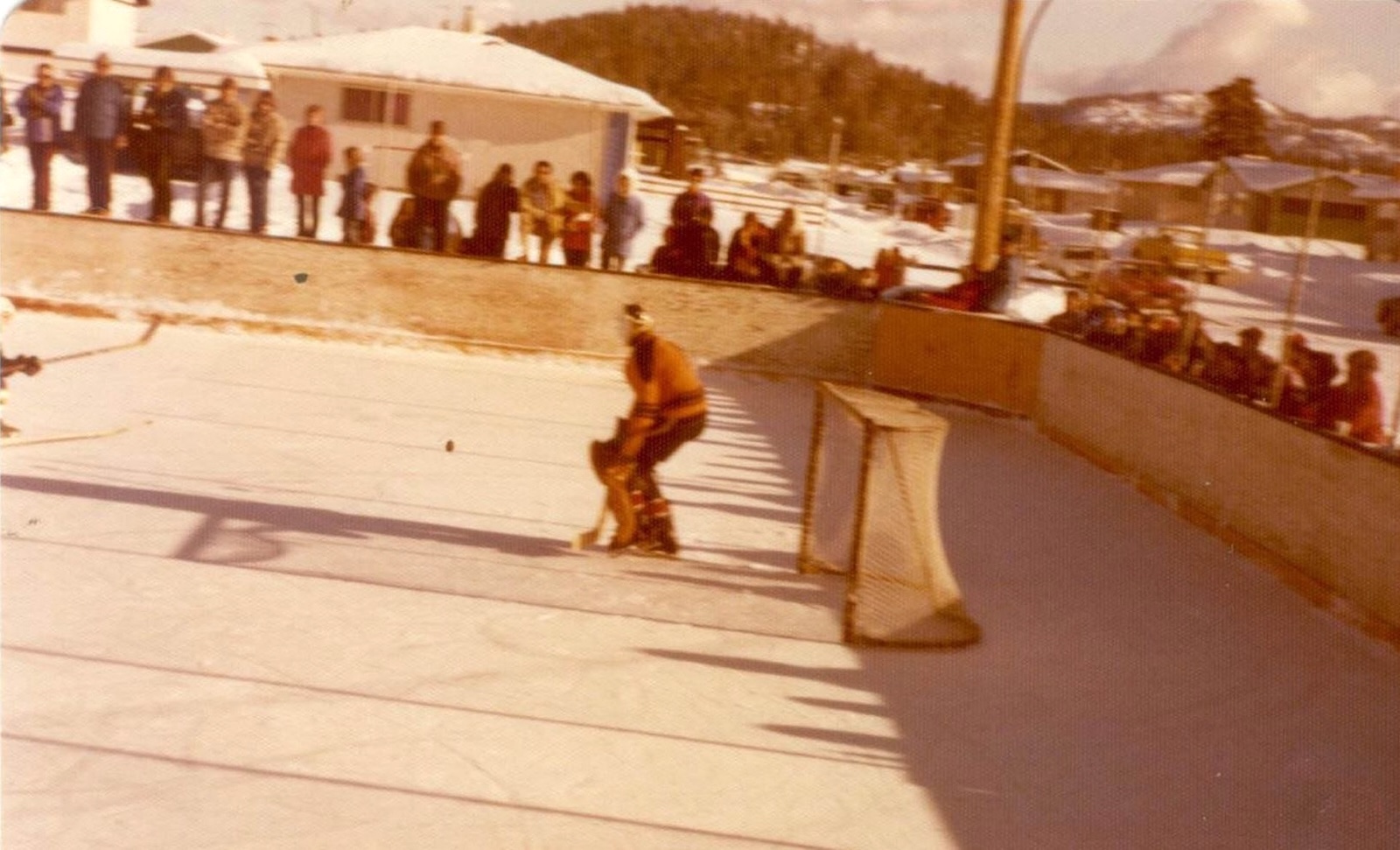
But the community has also not been hollowed out like previous B.C. mining communities. Today, about 2,200 people call the community home. Kids go to school locally, play hockey at the local rink for the Logan Lake Renegades and ride mountain bikes on local trails. It has a disc golf course called Copper Ridge and a traditional golf course, where residents can play all spring and summer for $782.
‘Good family-supporting jobs’
Over the last 40 years, as Highland Valley’s copper mines have consolidated, grown, shrunk and then bounced back, mining’s influence on Logan Lake and other communities in the area has also evolved. Fifty years ago, substandard roads connected the mine site to its scattered outlying communities. Today, those paths are provincial highways. That’s helped disperse the economic benefits of the mine in just the way some Merritt residents had hoped. And though it has reduced the mine’s dependence on Logan Lake, it has also lessened Logan Lake’s reliance on its local mines — somewhat, at least.
As highways have improved between the mines, Ashcroft, Merritt and Kamloops, more workers have begun living in those farther-flung communities.
Today, between 80 and 100 mineworkers live in the Spences Bridge-Ashcroft-Cache Creek corridor along Highway 1, Ashcroft Mayor Barbara Roden says.
“They’re what politicians like to call good family-supporting jobs,” said Roden, who is also editor of the local newspaper, the Ashcroft-Cache Creek Journal. Any job stoppage, she said, “sends out ripple effects through the entire region.”
In good times and bad, the mine has an impact far beyond direct employees and their families.
Roden remembers going to get her hair cut during a previous work stoppage in the late ’90s and hearing that business was suffering because miners and their families were reducing expenses as they tried to survive on strike pay.
“When you are involved in something like that as a family, a lot of extraneous expenses get cut,” she said. “You wouldn’t necessarily think there is a connection between hairdressers and Highland Valley, but there is.”
The mine also has extensive links and economic relationships with many of the region’s First Nations.
Across the region, many First Nations members also work at the mine or hold related jobs.
The Lower Nicola Indian Band recently issued a statement in which it acknowledged that some of its members are striking union members, while others are still working as contractors. Like many businesses and organizations in the region, it tried to model a position of neutrality.
“We believe all workers deserve safe working conditions, fair treatment and respect,” the Chief and council wrote. But it stressed that the dispute is between the company and the union and the band is not involved.
The band’s development corporation had previously leased a property near the mine strike, but the band stressed that had occurred before the strike and that the use of the site didn’t reflect the First Nation taking an allegiance.

In recent decades, local First Nations have signed new agreements with the province and the mine to share economic benefits associated with the operation. In 2013, eight local First Nations signed a deal with the province to share mineral tax revenues. The money is placed into a legacy trust and the returns disbursed to individual First Nations. The bands also collaborate on an assembly that provides job training, education and bursaries. The Lower Nicola Indian Band, also a Nlakaʼpamux First Nation, signed a similar deal in 2016.
To the north, the Skeetchestn and Tk̓emlúps te Secwépemc First Nations have objected to plans to expand the mine, saying it has already “caused serious harm to the lands and water in ancestral lands.”
The construction of the Coquihalla Highway cut the commute time from Logan Lake to Kamloops in half, linking the small mining town with the vibrant Interior hub and its nightlife, university and health services.
Over the last four decades, Kamloops (like its northern cousin Prince George) has grown dramatically as more rural communities have stagnated. Since 1981, Kamloops has added more than 30,000 residents and Merritt has added 1,000 people, while the populations of Ashcroft and Logan Lake have declined.
But Logan Lake, like Ashcroft, has resolutely persisted.
As mineworkers have moved to the larger city, workers in Kamloops have bought homes in Logan Lake, where a house can be purchased for around $600,000 — about the cost of a Kamloops townhome. Like 100 Mile House and other Cariboo communities, Logan Lake now pitches itself as a recreational paradise, and it is known for its successful FireSmart program that was credited with stopping flames from consuming the community in 2021. Over time, the economy has diversified a little, but anything happening at Highland Valley continues to have a considerable impact on Logan Lake — and on neighbouring communities.
The Highland Valley Copper mine pays about three-quarters of the taxes collected by Logan Lake. That has enabled the town to keep residential rates remarkably low for a community its size, where it’s costlier to deliver services such as sewer and water than in large cities. This year, the town’s municipal tax rate was among the lowest in the province, and less than half that of Kamloops and Merritt.
The strike has highlighted the deep connection between Logan Lake and the mine.
The owner of a local hotel and liquor store recently reported a sales drop and ballooning room vacancies as mine contractors stay away. That forced the business, the Pick and Shovel Pub and Logan Lake Hotel, to curtail its own hours.
The emotional and economic impact of the strike has left businesses and external organizations walking a careful line and largely calling for respect and a speedy resolution to the dispute.
“To our loyal customers, we know that almost every person reading this is being impacted, either directly or indirectly, by the situation at the mine,” the hotel recently posted on Facebook. “Many of you are on the picket lines, supporting family members who are, or tightening your own household budgets while waiting for a resolution.”
The hotel said they were hoping for a “fair and swift resolution” to the strike.
The strike, though, continues, even as momentum appears to be on the side of the workers.
On Friday, the British Columbia Labour Relations Board declared the mine had to stop using replacement workers. That was followed by a visit by the area’s Conservative member of Parliament, Frank Caputo, to the picket lines. He called the union’s demands “reasonable.” Caputo pointed to the operation’s economic importance to surrounding communities and urged the company to negotiate.
“Christmas is fast approaching and the union members want to get back to work.” 
Read more: Indigenous, Labour + Industry










Tyee Commenting Guidelines
Please note that email notifications for replies are not currently working due to a software issue which may be resolved in a future update.
Comments that violate guidelines risk being deleted, and violations may result in a temporary or permanent user ban. Maintain the spirit of good conversation to stay in the discussion and be patient with moderators. Comments are reviewed regularly but not in real time.
Do:
Do not: