


 SHARE:

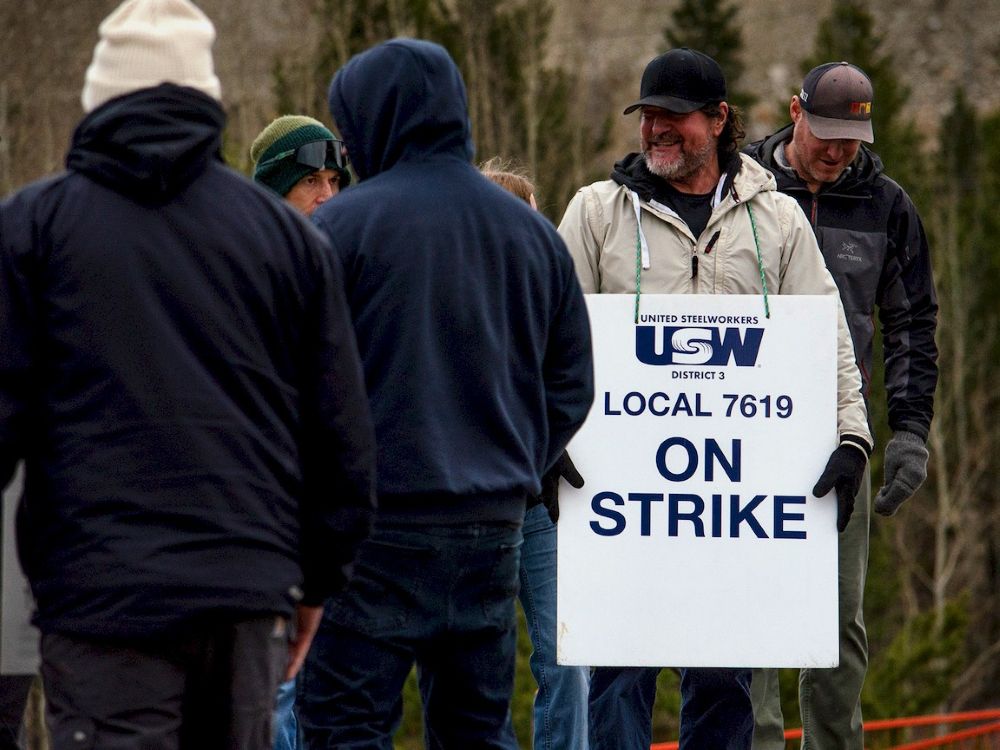
The BC Labour Relations Board has ordered Highland Valley Copper mine owner Teck Resources to stop using replacement workers while more than 1,200 employees are on strike.
The miners, unionized with United Steelworkers Local 7619, first walked off the job on Oct. 24, when contract negotiations broke down over wages and health and safety concerns.
In the three and a half weeks since, workers have picketed outside the mine 24-7. Teck Resources, the Vancouver-based company that owns Highland Valley Copper, has kept the mine near Logan Lake running at a reduced capacity.
The flow of buses, trucks, equipment and copper concentrate past picket lines has led to tense confrontations over the use of replacement workers, or “scabs.”
The union took its concerns to the labour relations board, alleging Teck had enlisted recently promoted supervisors to do the work of the striking miners, which is a violation of B.C. labour law. Union representatives asked the board to stop Teck from continuing to use this labour, and give the union access to the mine to make sure it doesn’t continue.
On Friday, the board sided with the union and ordered Teck to stop using replacement workers. But the labour board did not give the union access to the mine. Sarah Payne, a spokesperson for Teck, said the company will comply with “all applicable requirements” of the labour code.
“We remain committed to reaching a negotiated collective agreement that is fair, responsible and supports the long-term success of our B.C. employees, operation and communities,” Payne said in an email.
USW Local 7619 president Kyle Wolff said while the ruling was a win, his fight is far from over. He said the union has about 30 more reports of scab labour that it is planning to take to the board, and that it will continue to fight for access to the site during labour action.
“While you’re on the picket line, normally, the operation kind of grinds to a halt,” Wolff said. “What we’re seeing is an increase in the amount of people that are doing what we believe is work that we should be doing. Which is wrong.”
The union voted 100 per cent to strike for the first time in more than three decades after the company and union came to loggerheads on wages, and Teck put a 25 per cent pension cut to future pension contributions on the bargaining table.
The strike has also become a flashpoint for long-held health and safety concerns about silica dust, degraded mining equipment and safety protocols.
When workers walked off the job, Wolff said they hoped the economic pressure of bringing the mine to a halt would get Teck back to the table to discuss better safety measures and wages for the workers.
And as the picketing enters its fourth week, each side is ramping up the pressure. Labour allies have bolstered the picket lines and asked workers across B.C. to block the flow of copper concentrate from the mine.
Meanwhile, union members say Teck has been withholding vacation pay and using replacement workers to keep the mine running.
B.C.’s labour code prohibits employers from hiring another person, or using a contractor, to engage in the work of a striking employee. It also prohibits employers from redirecting employees from other sites to do the work of a striking employee.
“It creates a tremendous problem when you’re trying to strike to protect your work and the employer has contractors, or their own employees, doing our job,” he said. “It’s impossible to put the economic shield and sword on the employer if they’re cheating the system to continue to run.”
In its decision, the labour board found Teck used replacement workers in four cases. It found that two recently promoted supervisors and one recently rehired worker who was not in the bargaining unit had stepped in to do the jobs of striking workers.
The board also found that in one instance on Oct. 28, a contractor cleared the snow off a mine road — work that was usually reserved for the bargaining unit, violating the labour code.
Wolff said the ruling was helpful, and “shows that the employer was in fact using a replacement workforce.”
He’s still hoping the board will offer the union access to the mine to investigate how Teck is keeping the mine running. He said without the access order, it’s difficult for the union to determine whether or not the workers on site are doing bargaining unit work.
“We’re blind,” Wolff said. “We’re sitting on the picket line, two and a half kilometers away, and the employer is doing basically whatever they feel like whenever they feel like it.”
Wolff added that one entrance to the mine continues to remain open as construction of the Highland Valley Copper mine life extension continues. The project will expand the mine and keep it running until at least 2046.
And while Wolff said workers on the extension have been sympathetic to USW 7619’s cause, the project means workers are still in the mine. He said without access to the site, the union isn’t able to see whether those employees are being asked to replace the striking workers. 
Read more: Labour + Industry











Tyee Commenting Guidelines
Please note that email notifications for replies are not currently working due to a software issue which may be resolved in a future update.
Comments that violate guidelines risk being deleted, and violations may result in a temporary or permanent user ban. Maintain the spirit of good conversation to stay in the discussion and be patient with moderators. Comments are reviewed regularly but not in real time.
Do:
Do not: