


 SHARE:
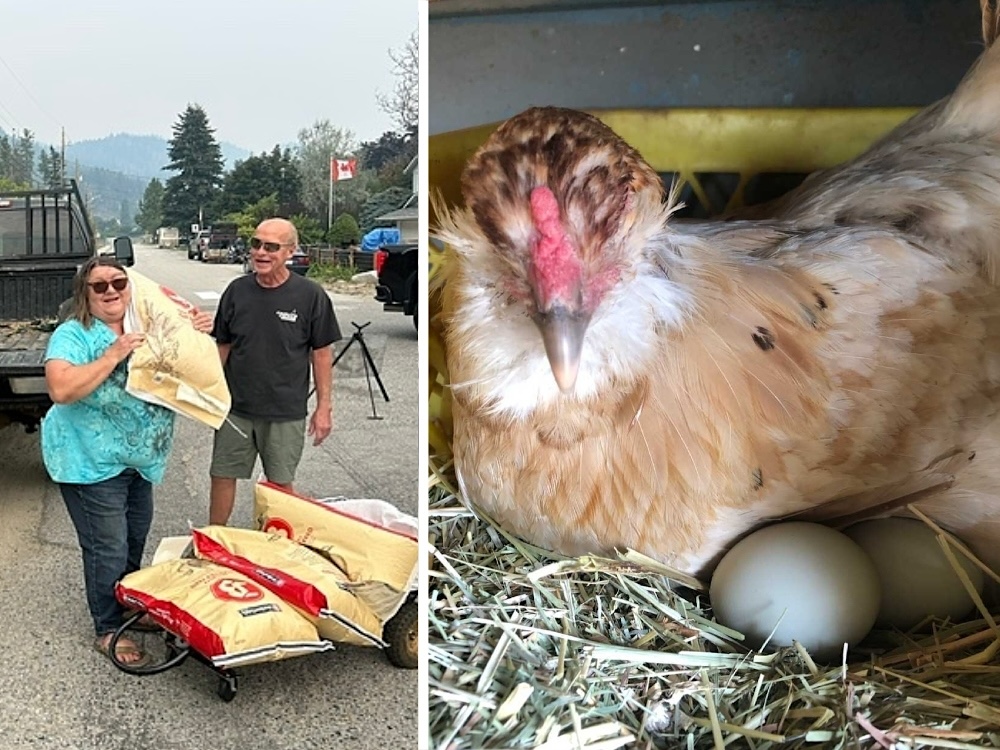
For Peachland resident Taryn Skalbania, summer has become synonymous with fleeing.
Since 2017, she has either evacuated or considered doing so six times as wildfires tore through the Okanagan’s tinder-dry tree plantations, grasslands and forests.
But what makes this wildfire season so different is its ferocity. The Bald Range fire that burned close to Skalbania’s home became a 5,000-hectare monster in just hours, forcing 20,000 residents in Summerland and nearby Peachland to evacuate.
Despite receiving an evacuation order, Skalbania elected to stay in her home. She told The Tyee that she chose to say because, if she leaves, she may not be allowed back to feed her prized turkeys and chickens.
It’s a dilemma that many rural residents and farmers in wildfire zones now face, and provincial Agriculture Minister Lana Popham says she hopes the issuance of temporary access permits will allow rural residents to “carefully go back and see if their livestock is OK.”
But obtaining those permits is difficult, and not guaranteed for safety reasons. So Skalbania is staying in place — for now.
Skalbania saw the fire when it was in its infancy. She was on the road, heading home with hundreds of pounds of grocery-store-rejected fruit and vegetables that she planned to feed to her cows and turkeys, when she saw the smoke outside of Summerland.
“It was a small plume, but I could see how quickly the plume was building,” Skalbania recalled, adding she knew in her gut that it was the kind of fire “that goes crazy.”
Skalbania and her husband, Robert Taylor, knew almost immediately that they’d soon be told to leave their home and 14 acres of pasture and woodland behind.
Her son-in-law Ryan Vlooswyk arrived at midnight to help, making the two-hour drive from Falkland to rescue the couple’s three cows and a number of uninsured dirt bikes.
Vlooswyk knew what was at stake. Two weeks before, the Bradley Creek fire near Vernon had forced him and his wife and children to evacuate their home.
A friend, Jen Sanderson, and her kids also showed up at 2 a.m. to rescue three horses the couple were boarding. The horses were loaded onto a trailer and driven to stables in West Kelowna.
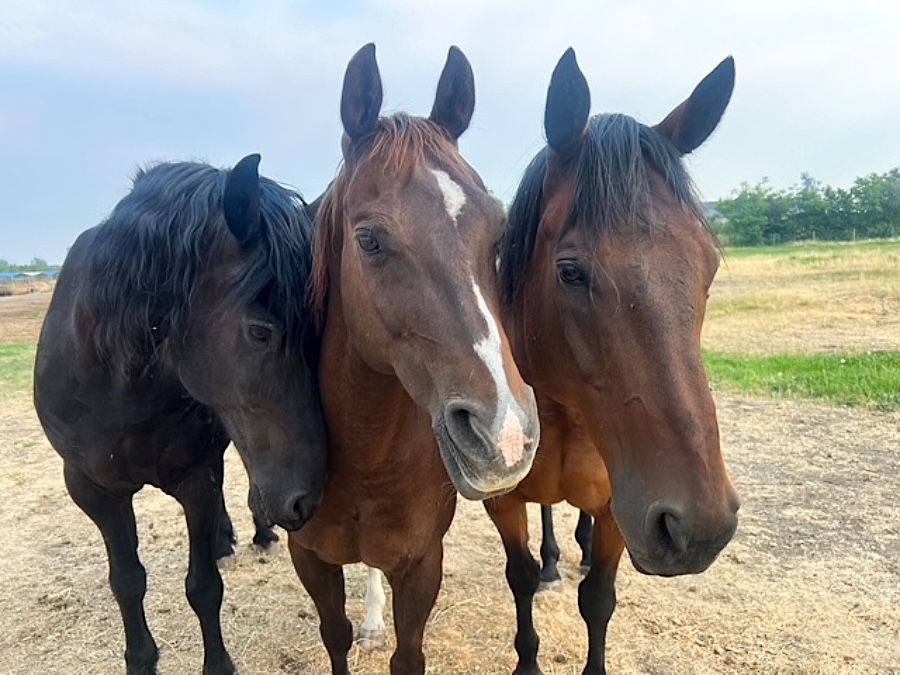
But that still left Skalbania and Taylor with 50 turkeys, 75 laying hens and 50 baby heritage chickens prized for their colourful blue, purple and copper-coloured eggs.
Birds are hard to move. Even if you can find someone who has a confined, roofed area suitable for birds, the chances are they have birds of their own. And no one wants “strange birds or a strange flock” mixing with their own for fear of avian flu, Skalbania said.
When an RCMP officer showed up at Skalbania’s home at 3 a.m. Saturday morning, he “kindly asked” them to leave.
“My husband said, ‘Look, we have livestock on the property... so I will be staying.’ And the cop said, ‘Fine, that’s your prerogative. I’ll just have to write that down. How many people will be staying at this address?’”
Shortly after that, police placed two large sawhorses on the road, blocking access into the community. Skalbania and Taylor now find themselves in a no-go zone. If you are outside, you can’t go in. If you are inside and elect to leave, you can’t go back, Skalbania said.
Skalbania said the RCMP made it clear to her that staying was a risk to them. She also said that flagging crew members who later took over watching the barricade told her that disobeying any subsequent orders to leave could result in fines because they “could put emergency responders at risk” if they have to be helped with evacuation.
On Tuesday Skalbania went to the barricade, where she picked up bags of dry turkey and chicken feed that a friend had picked up and delivered. The local pharmacy also delivered a prescription refill and another inhaler for Taylor, who suffers from COPD, a long-term lung disease made worse by the smoke.
That morning the smoke was so thick, she said, that there were times she could not even see her neighbours’ house across the street.
Skalbania said the fires have been extremely stressful for local farmers. In Summerland, a farmer who was forced to evacuate had to walk away from his pigs, which he left in a corral in an open area, hoping they would survive. They did. But Skalbania said others were not so lucky.
Now that pig farmer and others need to get back to look after their animals, something Skalbania said she may need to do, too, should she cross to the other side of the roadblock.
She may soon have to do so. RCMP officers have begun a second round of door knocks in her community compelling any remaining families with children to leave and warning that fines may await others who don’t leave when asked to.
On Wednesday Popham said regional governments were starting to issue temporary access passes allowing farmers to return to their farms to feed and water their livestock, as long as it was deemed reasonably safe to do so.
“We know how difficult it is for folks to be kept away from their farms, and so we are working on that and making sure that those decisions are made as quickly as possible,” Popham said. But she stressed that such access was not guaranteed. Safety for residents and firefighters alike takes priority.
Skalbania said she is confident that everything has been done on her property to reduce the risk of fire. With half of her 14 acres wooded, doing that work has been onerous.
“We’ve raked and limbed hundreds of thousands of branches... every tree on the property that’s close to the home,” Skalbania said.
It’s work that may pay dividends, Skalbania said. But in the 35 years she has lived in Peachland, she said, the land has never been drier or more vulnerable to burning.
Peachland’s residents were hit with Stage 3 water restrictions in mid-April, far earlier than such restrictions are usually implemented.
“That’s unheard of,” Skalbania said. “But that’s how low Peachland’s reservoir was.”
As for the trees in the plantations and forests surrounding the region’s besieged communities, Skalbania can only shake her head.
“The needles of the pine and the pine cone are falling like rain. And some of the deciduous trees in my watered yard have already turned yellow and dropped their leaves. The earth, even after every rain that we’ve had this summer, is powder-dry within minutes.” ![[Tyee]](/design-article.thetyee.ca/ui/img/yellowblob.png)
Read more: Environment









Tyee Commenting Guidelines
Please note that email notifications for replies are not currently working due to a software issue which may be resolved in a future update.
Comments that violate guidelines risk being deleted, and violations may result in a temporary or permanent user ban. Maintain the spirit of good conversation to stay in the discussion and be patient with moderators. Comments are reviewed regularly but not in real time.
Do:
Do not: