


 SHARE:
[Editor’s note: This story was written based on interviews, previous news coverage, interviews by other media, footage from council meetings, and personal observations from more than a dozen trips to the townsite throughout the last two years.]
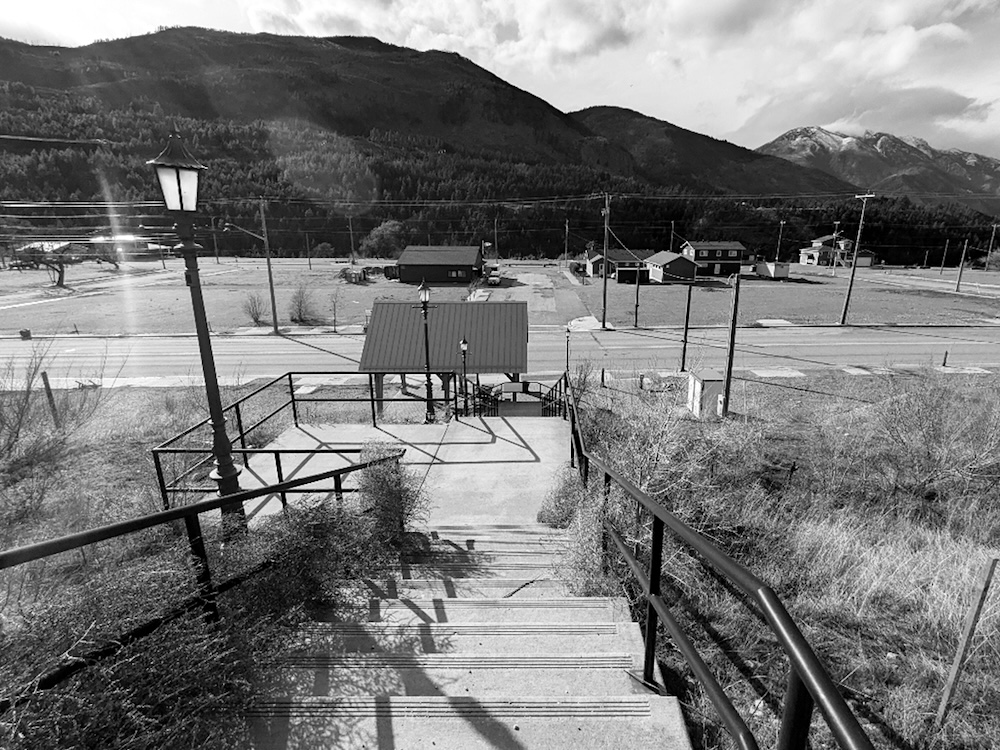
This is the future of Lytton.
Wearing a hard hat, a reflective vest and a broad smile, Romona Baxter runs her hand over the surface of a massive, planed log rising out of the plywood floor on which she stands.
The log’s base is carved with a pictograph design and, as she feels its rough edges, Baxter imagines young children making rubbings of the design using pencils and paper. The log and others rise into the building’s roof, providing the bones for the building taking shape around her.
“This reflects who we are as a people and our land,” says Baxter, the longtime executive director of Nzen’man’ Child and Family Development Centre and the driving force behind the $16-million project. The sounds of kids won’t be heard for a while yet and the building still needs walls, stairs and paint. But when it’s complete, the Nzen’man’ Birds Nest will have room for 60 kids and community spaces for Lytton residents of all ages.
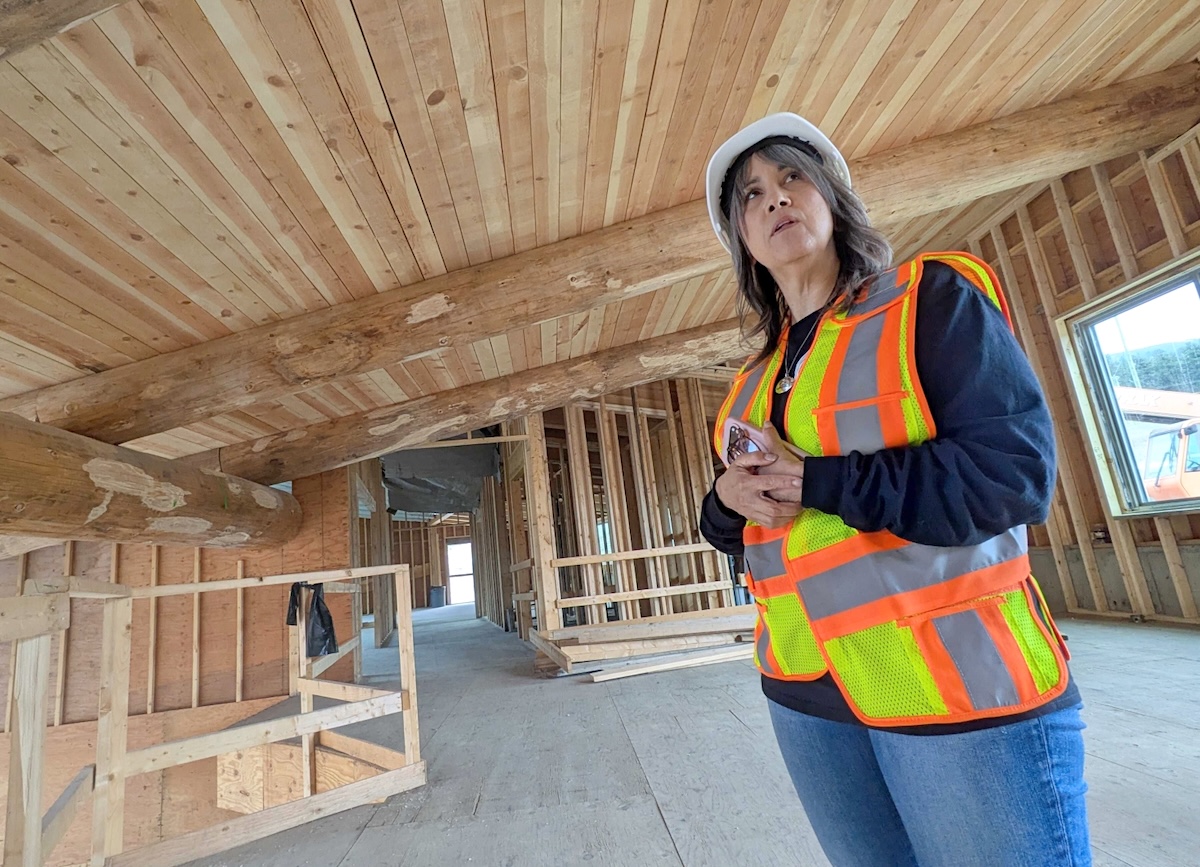
Two miles north of the village of Lytton in a bustling neighbourhood untouched by the area’s devastating 2021 fire, Nzen’man’ stands as a testament to what is possible. From its towering logs to its panoramic view of the Stein Valley to its spaces for coffee-drinking parents, socializing preteens and fingerpainting toddlers, the building hints at a new era for a community that has existed for thousands of years.
For Baxter and many others, Nzen’man’ is a beacon: an example of reconciliation in action, an economic engine and a sign of Lytton’s renewal and diversity.
It’s a hopeful future, and a welcome one. But it’s also hard not to draw a contrast between Nzen’man’s rising walls and the debates about the future of Lytton’s core townsite just up the road.
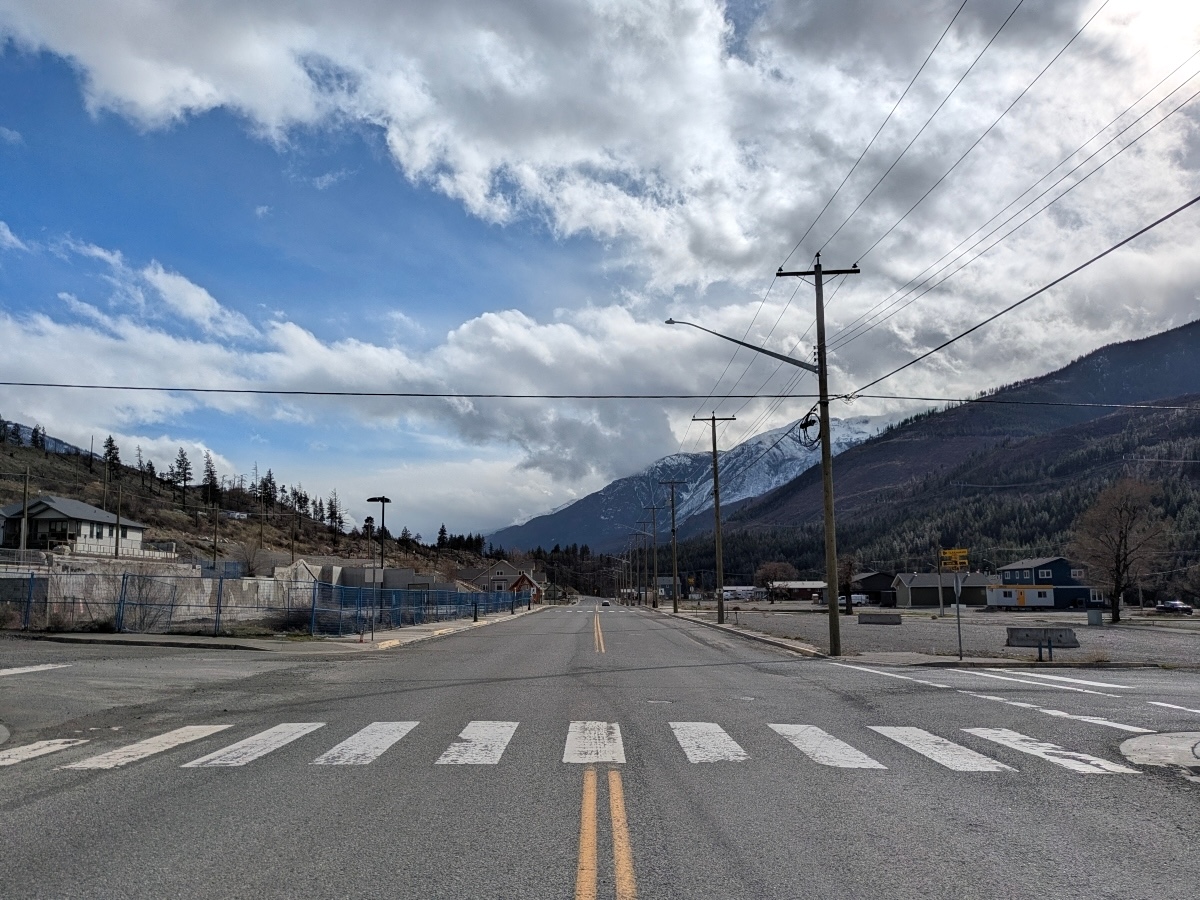
Five years after the fire, the future of the village is the subject of intense local debate. A smattering of homes has slowly risen from a vast plain of gravel. Progress is happening, even if it is slow and tedious. But trauma lingers, and many Lyttonites are concerned that new federally funded buildings will become unaffordable white elephants. On top of it all, a recent auditor general’s report shone a light on the imperfect relationships between the local municipality and surrounding First Nations.
The recent past and the legacy of jurisdictional boundaries imposed long ago could be a recipe for heartache and toxicity. But in a close-knit community linked by trauma and personal history, locals of all backgrounds are suggesting that maybe it’s time to stop colouring within the lines established by Victoria.
If Lytton is hampered by its tiny size, and its recent past, maybe the solution is to redefine the village entirely. In the context of seven millennia, five difficult years isn’t so long.
We’re still here
When it comes to understanding Lytton, outsiders need to know two things from the outset: the broader community of Lytton did not become an uninhabited no-go zone on June 30, 2021; and “relocation” is not happening.
The village of Lytton sits at the confluence of the Thompson and Fraser rivers and is one of the longest continuously occupied settled areas in all of North America.
Five years ago, flames tore through homes and lives, killing two people and destroying 90 per cent of structures in the village of Lytton, and dozens more on an adjacent Lytton First Nation reserve and in rural areas to the north of town. The flames levelled the police station, the village office, the hospital, the grocery store, the legion and various other community outposts. The fire forced the evacuation of the village’s entire population for months.
But the community of Lytton — as locals think of it — is much larger, and much of it survived the 2021 blaze. A half-dozen First Nations north and south of the village remain home to more than 1,000 people, many times the former population of the village. The largest is the Lytton First Nation, which has more than 2,000 members, including about 750 who live on-reserve. The village itself isn’t a white outpost in a region of First Nations; the last census revealed that nearly 40 per cent of residents are Indigenous. At the area’s high school, Kumsheen ShchEma-meet School, all but two of the 77 children have Indigenous roots.
And while a significant number of those evacuated in 2021 have not returned, many others relocated to other housing in the region or still live on properties that survived the fire.
When the fire hit, everything did change.
“All our lives were just turned upside down,” Baxter says. “It was horrific.”
But moving their community wasn’t on the table.
“This is the oldest continually settled village in all of North America for a reason,” Baxter says.
“This isn’t our first ride at the rodeo. We’ve had, like, slam, slam, slam of colonial impacts and — probably before contact — natural disasters too. But there’s something about this place that’s really magical and special.”
The village office
On a hot, early-May afternoon nearly five years after the fire, Mayor Denise O’Connor contemplates a fenced lot along Lytton’s short and once vibrant Main Street.
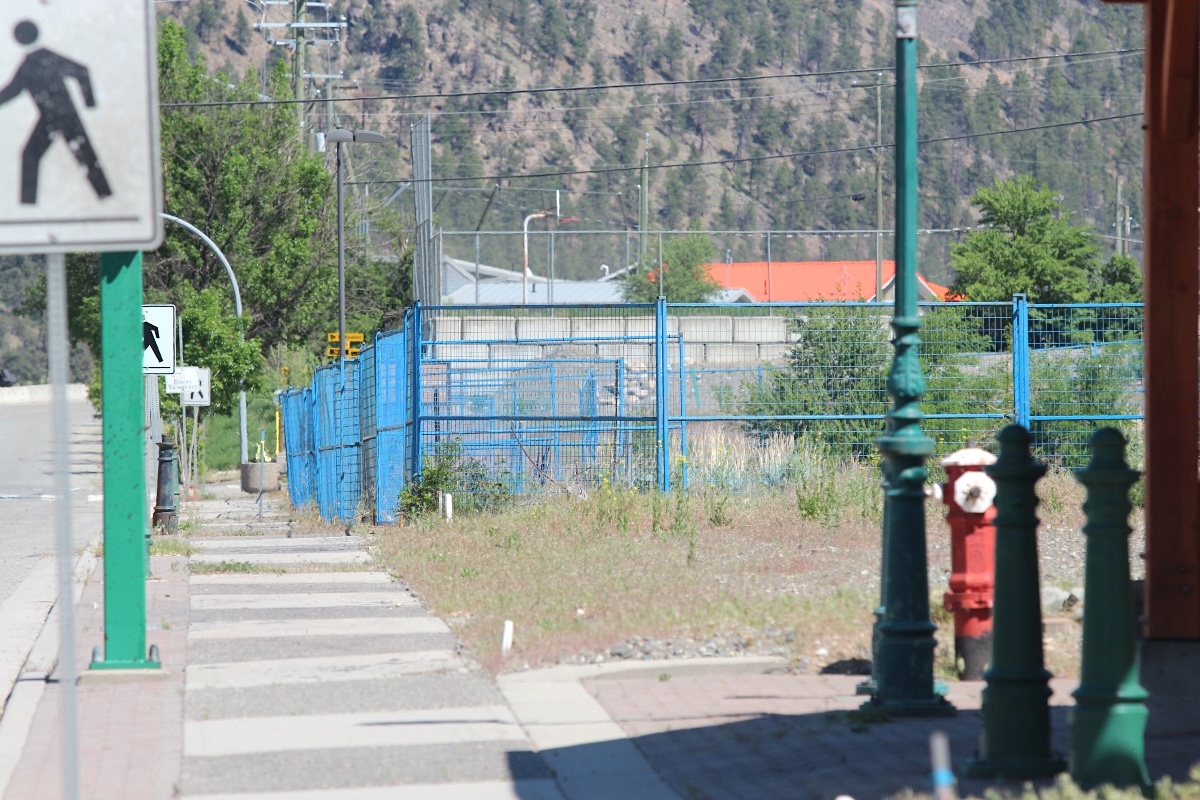
The property looks like most in the tiny village. Which is to say it’s a flat, gravel pad surrounded by other vacant lots and bordered by the remnants of pre-fire bricked sidewalks. This lot is a little different from most, though. Over the summer, if all goes to plan, a two-storey building will rise from the ashes and provide a focal point for the village’s latest act in a thousands-year history. Construction on the office has now broken ground.
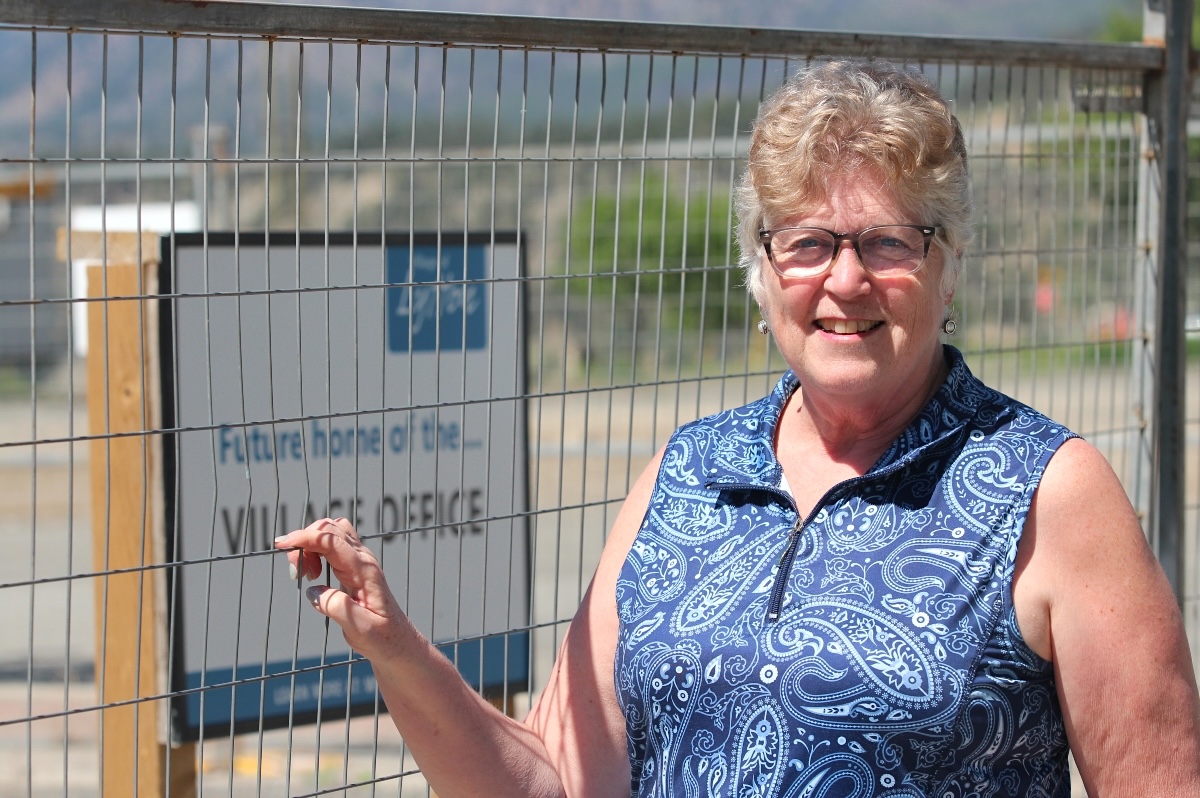
Three and a half years ago, O’Connor ran for mayor because she was unhappy with the slow pace of rebuilding.
There has been real progress in the years since: more than a dozen homes have been rebuilt, the Lytton Chinese History Museum reopened last year, the legion will reopen soon, a trench is being cut across the town to replace a key sewer main, and construction has begun this spring on another slate of new homes. But rebuilding is still much slower than everybody would have hoped, and most of the village site remains in a frustrating state of unfulfilled potential. Challenges are myriad because of Lytton’s distance from larger centres, questions over cost and insurance, and the financial uncertainties hanging over a village that has never been a place one goes to get rich.
The office and another proposed municipal building are set to be built with money promised and provided by the federal government, and O’Connor and most village councillors see them as crucial amenities that will encourage more rebuilding in the village.
O’Connor believes Lytton needs to seize the moment.
“If we don’t build, they won’t come,” O’Connor says. “It is a gift that’s been offered to us. We would never, ever, ever, ever be able to afford any kind of public amenities if we don't take advantage of this.”
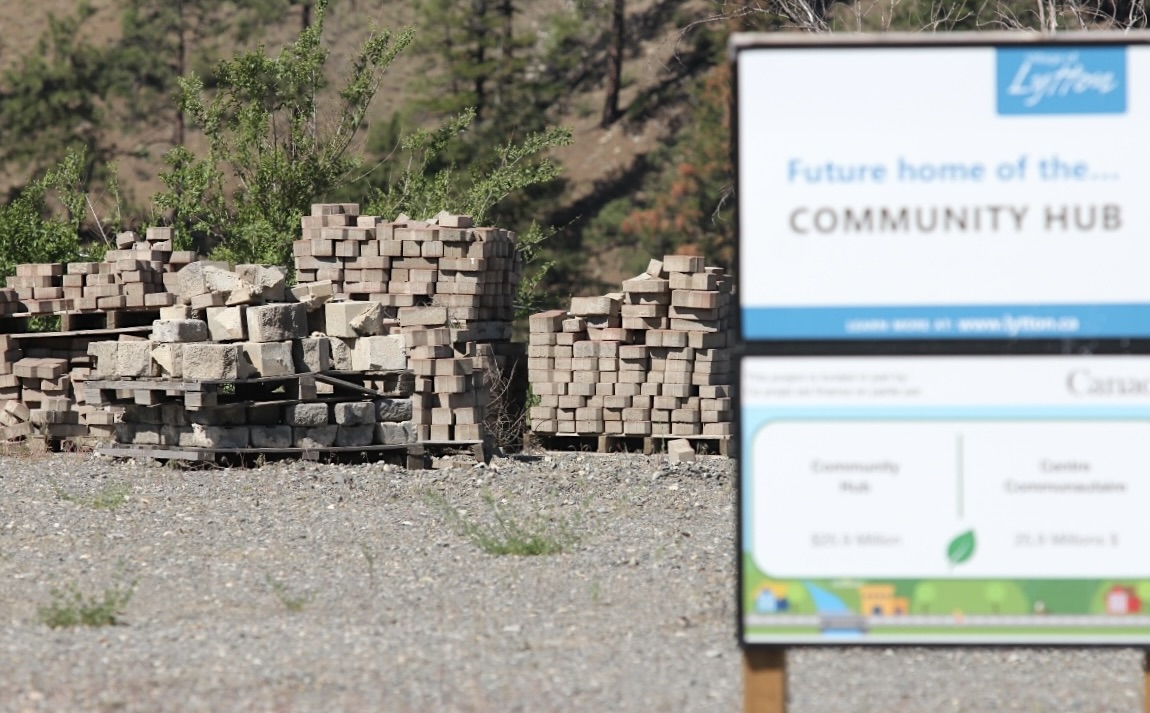
But some residents worry the grant-funded buildings may become poison pills that bankrupt the municipality, stall its recovery and potentially even lead to its dissolution. There are growing disagreements about the projected costs, path of future development and the level of risk Lytton and its taxpayers should be prepared to assume at a fraught time.
The debates are similar to those that will occupy many municipalities this year as new elections beckon, but the Village of Lytton faces uncertainties, limitations and emotions unlike those confronted by any other city or town. And at the heart of many discussions are key questions about the relationship between the village and its staff and the First Nations communities that surround it.
Playing it safe, or taking a risk
As in many rural, remote communities, life in Lytton is fundamentally shaped by the close proximity of its residents to one another over the course of years, and, in many cases, generations. The closest settlements with more than 8,000 people — Kamloops and Chilliwack — are nearly two hours away.
The dynamic, which was reinforced by the village’s tight layout, has forced residents who might profoundly disagree with one another to find ways to coexist.
“You walked up and down Main Street and you saw the town,” says Ross Urquhart, a former councillor and retired highways worker whose wife was a teacher and principal at the local school.
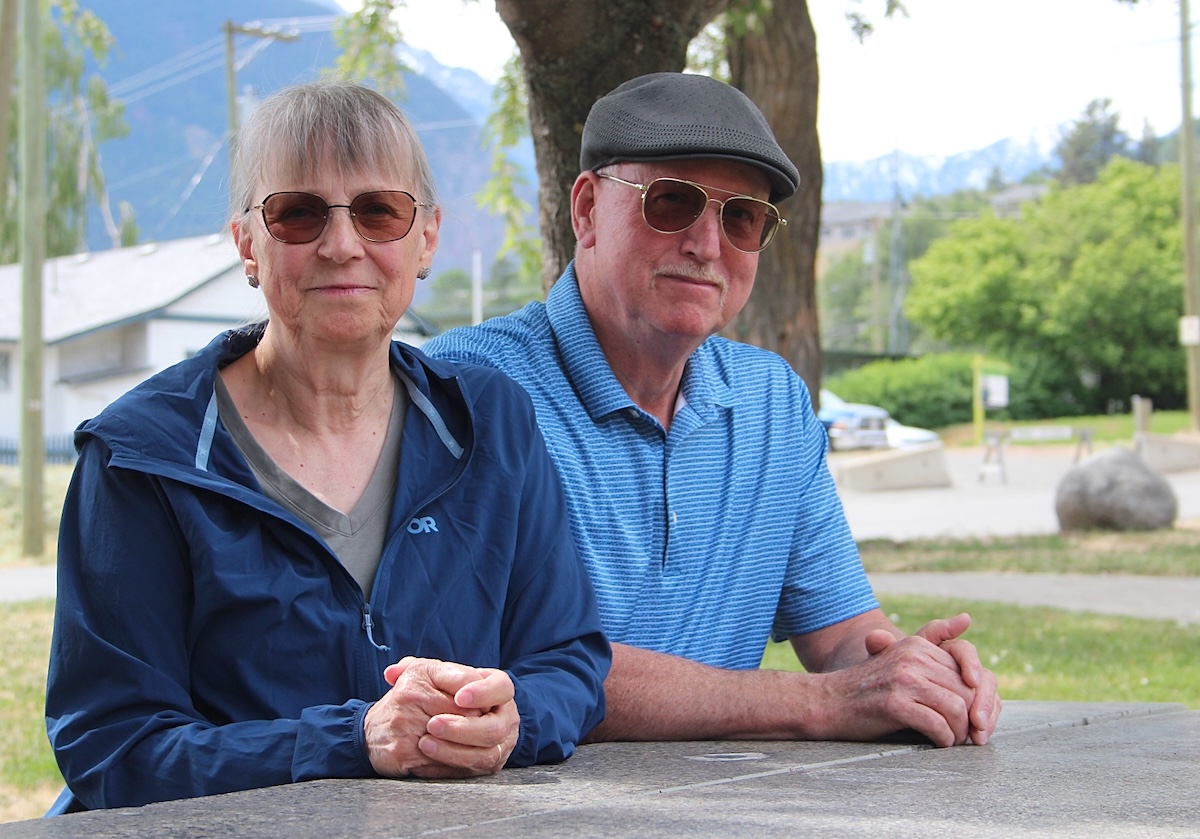
Residents brushed up against one another constantly — on the village’s bustling Main Street, in the grocery store, at community events and at workplaces they shared with one another.
“You couldn’t maintain a grudge against anybody,” Urquhart says.
“People whose guts you hated would phone up and say, ‘Could you come and pick my cherries? I got too many on the tree.’”
The legacies of some relationships remain. But other connections — and the opportunity to forge new relationships and moments — were lost when flames tore through Lytton.
“We lost our community,” Ross’s wife Judith says.
“We lost our community,” Ross echoes, as if to punctuate it. “I want to be able to walk to the post office again and meet everybody all the way.”
The road to get that back is harder and more perilous than it first seemed five years ago, when politicians were promising to do everything they could to rebuild the community.
Even before the fire, the village had little money and a tiny tax base. Its long-term revenue prognosis is even less certain now.
The Urquharts, who rebuilt their home after temporarily renting a place on a First Nations reserve after the fire, are among the local residents concerned that the Village Office and Community Hub building will saddle the municipality’s fire-ravaged tax base with long-term operating costs they’ll be unable to cover.
Double-digit tax increases are forecast for this year and next, and a spate of building is needed soon to boost the village’s long-term revenue outlook. The Urquharts and others, including Coun. Jennifer Thoss, have called for a closer accounting of the new buildings and suggested their scale is too large.

The Village Office will be a two-storey building with a visitor centre and rental retail spaces on the first floor and offices upstairs. The Community Hub, also two storeys, would be even larger, housing a library, a museum and several multi-purpose rooms. Its second storey would include multiple one-bedroom rental housing units to be rented to local essential workers. The village also wants to construct a new pool to replace the one lost during the fire.
Work on the office is underway. But the councillors are now considering shrinking the Community Hub after responses to a recent request for proposals resulted in higher-than-expected cost estimates.
The conflict boils down to whether Lytton, as it rebuilds, will play it safe — or whether it will take a chance on an ambitious and optimistic view of its future.
“I’m a firm believer that we need to take some risk,” O’Connor says. “If we don't take any risk nothing’s going to happen. Nothing’s going to change.”
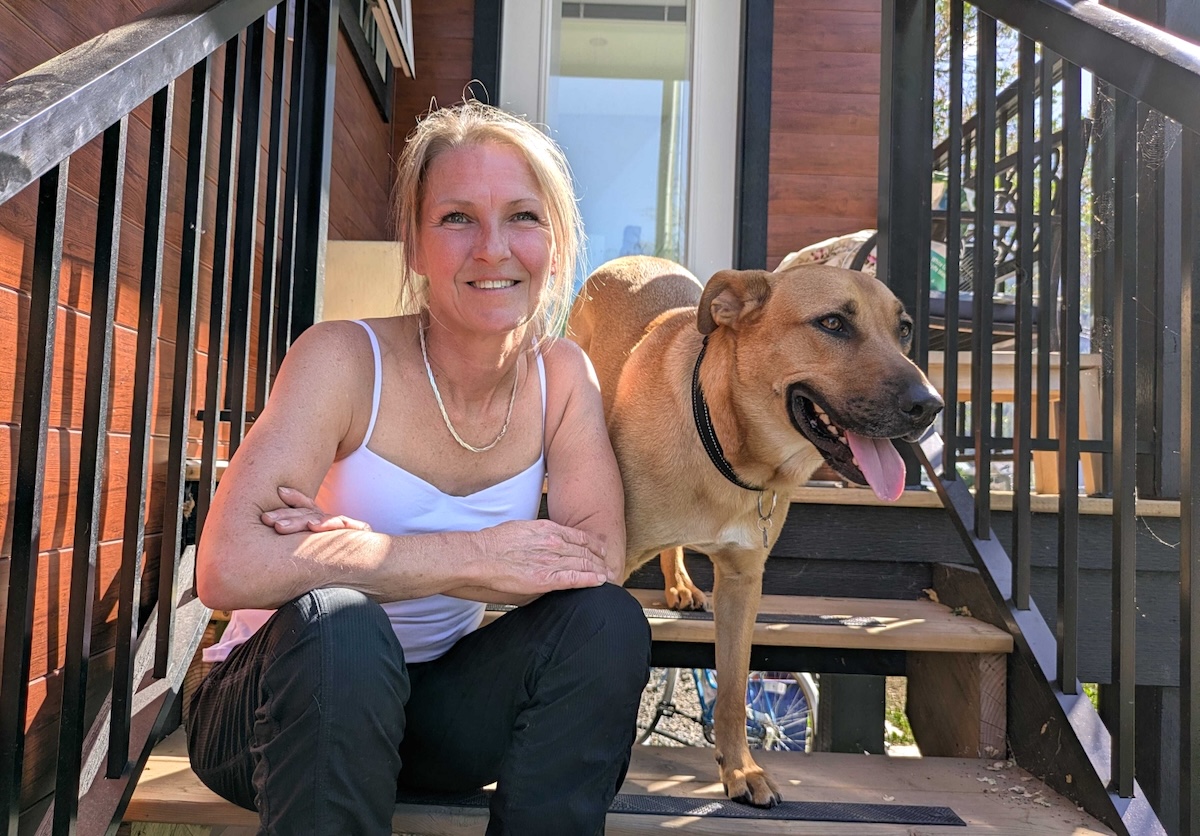
Thoss, the lone councillor pushing back against the amenity buildings, believes the village’s facilities should be much smaller. Lytton needs to be more practical about its future, she says.
“We don't have enough of a tax base to maintain what we had before the fire, [and] we're building exponentially bigger buildings that are going to require maintenance with a fraction of our tax base,” she says.
While Lytton is hoping to cover some of the buildings’ costs with revenue generated from renting out spaces, maximizing those opportunities will require buy-in from people and organizations beyond the village’s boundaries.
In Lytton, that means the municipality is hoping that local First Nations and affiliated organizations will leverage their financial power to help fund the new facilities.
But although personal relationships remain tight in the region, the auditor general’s report highlighted that a cornerstone of the region’s identity — the relationship between the village and surrounding First Nations — has, at the government level, become a source of tension, not familiarity.
Impossible accounting
Last month, an auditor general’s report on municipal spending found that it was impossible to account for portions of the provincial recovery spending that had been issued.
Inside the village, Thoss balked at the idea that any money couldn’t be accounted for. O’Connor issued a mild response, suggesting the village and provincial structures were ill-suited to lead the recovery. And many locals felt angry and unheard.
“It didn’t make any sense at all to us who lived there,” Ross Urquhart says.
One thing that struck particularly close to the bone was a section of the report that described a lack of co-operation between the Village of Lytton and the local Nlaka’pamux First Nations. The report noted that the village had declined to sign a memorandum of understanding with the Nlaka’pamux Nation Tribal Council, which represents four Fraser Canyon First Nations.
“The tribal council told us it was frustrated that the province did not compel the village to work with them on other aspects of the recovery,” the report says.
For Ross Urquhart, who served on council in 2022, the section was bitterly received. He says the village was told by a lawyer not to sign an MOU because the Nlaka’pamux Nation Tribal Council wasn’t an incorporated entity. Thoss says the current council had also been given similar advice.
The Urquharts worried that outsiders would take the report as evidence of an unwillingness to work with local First Nations.
“We wanted badly to work with our local band because they were our people, they were our friends, they were all Judith’s former students,” Ross Urquhart says.
But talk to enough people in Lytton and the surrounding First Nations and it’s clear that even if personal relationships remain robust, Indigenous and non-Indigenous governments are struggling — and often failing — to connect with one another.
“Where we’re struggling right now is even sitting down together,” O’Connor says.
Village of Lytton Coun. Nonie McCann says Lytton First Nation has hesitated to directly engage with the village and she isn’t sure why, beyond speculating about its focus on its own recovery, which has included considerable building activity.
McCann says her biggest wish is that residents and councillors of local First Nations “have meaningful consultations on a regular basis about the future of Lytton.”
Lytton First Nation has not responded to interview requests for years. But it’s not too hard to find other First Nations leaders willing to engage. And many of them point to fundamental differences between how the Village of Lytton operates and how First Nations governments and leaders conduct relationships.
The disparity is particularly glaring because many of the individuals involved know each other so well.
O’Connor and Sherry McIntyre, a do-everything councillor with Skuppah First Nation, have a particularly close connection.
“I have to stand by Denise,” McIntyre says, unprompted. “She saved my life when I almost drowned at the pool.”
McIntyre was 10 or so at the time. O’Connor was a lifeguard. One minute McIntyre was struggling in the pool. The next she was waking up in the emergency room, having been pulled from the water by O’Connor.
Both women went on to long careers in education and have remained friendly. But McIntyre felt something change when O’Connor became mayor.
“The current mayor used to come here all the time until they became the mayor,” McIntyre says.
“Why is it that that office and that representation of government separates us?” she says. “It’s like a power struggle, maybe?”
Both village and First Nations leaders have suggested that a desire for power — even just in the form of control over rebuilding efforts — may be partly behind the disconnect. That’s a human tale as old as time, but there’s another major challenge, and it’s rooted in two very different bureaucratic frameworks that undergird every discussion between Lytton's municipal government and area First Nations.
Intergovernmental relations
Like Romona Baxter, Jordan Spinks, the Chief of Kanaka Bar First Nation, is a key figure in a major rebuilding project in the area. His band’s reserve perches on a mountainside 10 minutes south of Lytton.
A former care aid at the local assisted-living facility and now Chief, Spinks worked with the village and five other First Nations to secure funding for a new lodge for Elders within the municipality.
Close collaborations across jurisdictional lines are possible, he says, but they take time and face-to-face conversations. And he says some of those personal relationships haven’t happened when it comes to rebuilding within the village of Lytton.
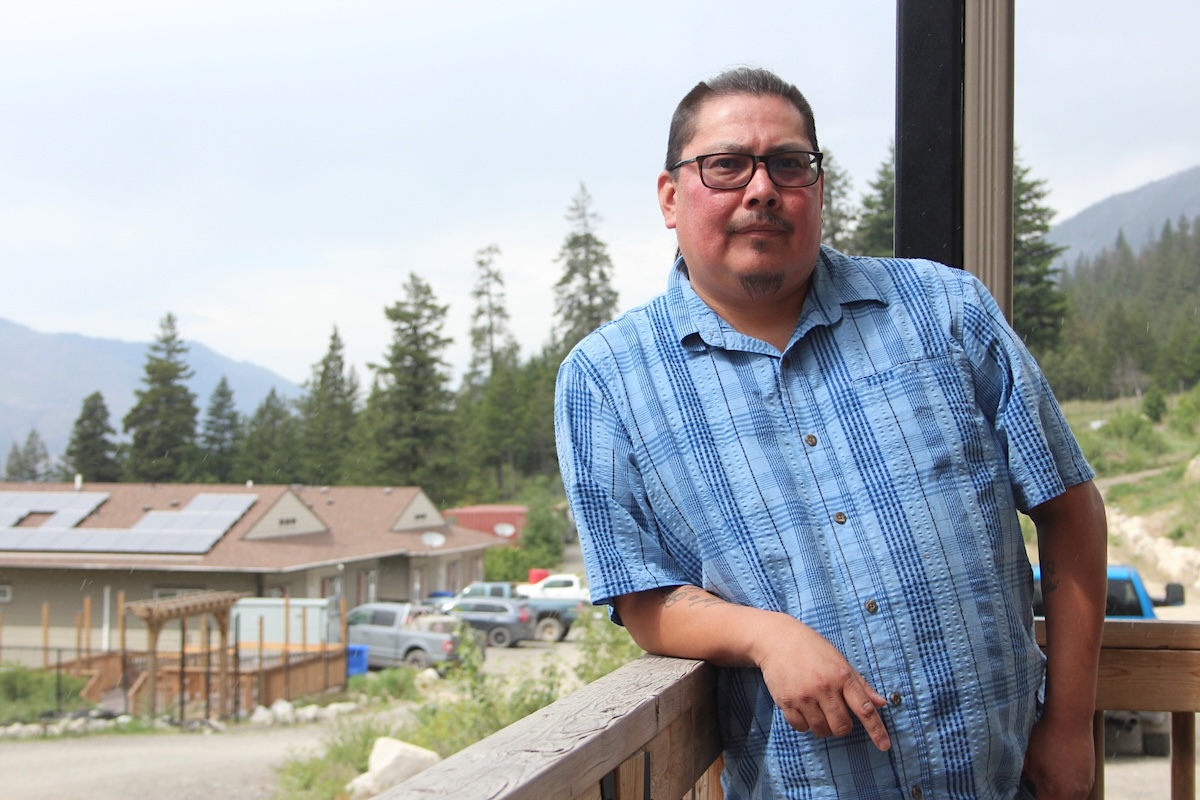
“They didn't come and meet with the local leaders,” he says. “At the end of the day, you’ve got to work backwards from what you want to achieve and try to find a way there.”
Earlier in the day, Baxter expressed exasperation.
“I have a lot of respect for them and who they are, but for the love of God, go to the band office,” Baxter says.
The question of why that isn’t happening takes one deeper into the weeds of how tiny villages like Lytton typically operate. And it may get at another regular sticking point: the fundamental differences between a First Nations government and a British Columbia municipality, and the way the roles of leaders differ in the two forms of government.
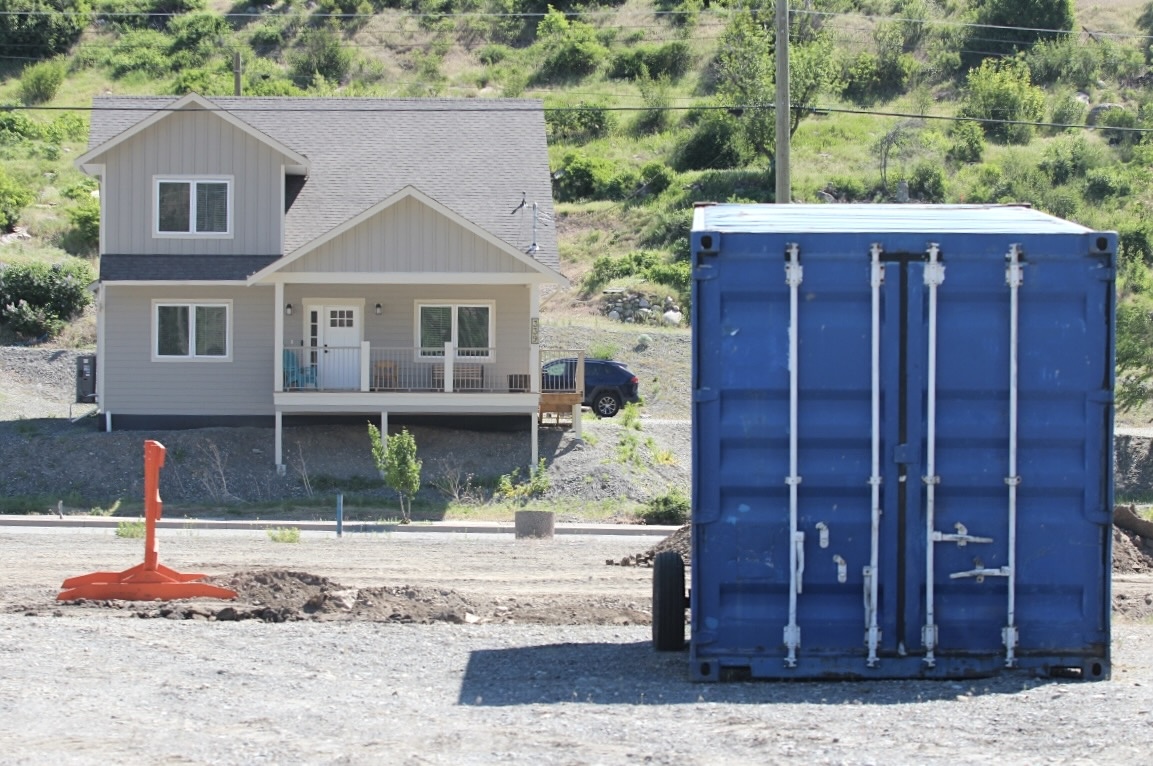
O’Connor came to office after spending a year criticizing the slow pace of rebuilding efforts. But today, she is the one begging for patience. Her view on Lytton’s challenges changed as she learned more about how municipal governments work in British Columbia and the limits imposed on them.
“Before, I assumed this was unprecedented so we should have unprecedented response,” she says. But the municipality doesn’t set its own rules. “We have the Community Charter, we have to follow a Local Government Act, it doesn't matter our situation. We have to abide by those kinds of things. I think previously I didn't understand that, and that's why I was on the media and writing letters and demanding things.”
But as Lytton plays by the book, the standard operating procedure for local municipalities may be at the root of its disconnect with local First Nations, which operate under very different rules that are set out by federal law.
As a rule, municipal governments depend heavily on senior staff and leaders to do the hands-on work of administering a city or town.
Talk to many mayors about how their municipality operates and they’ll stress one thing: a council has a single employee — the chief administrative officer — who in turn appoints a staff to oversee a community. Council sets a leadership direction and it’s then up to staff to execute it.
The situation is magnified in very small communities like Lytton with part-time politicians. O’Connor’s annual salary barely exceeds $10,000, councillors make even less, and many compare the work they’re doing to that of volunteers.
In 2023, having cycled through a variety of short-term, out-of-town administrators, the village hired Diane Mombourquette to be its chief administrative officer and recovery manager. Mombourquette lives in Nova Scotia, and her hiring was followed by other officials to support recovery projects. Mombourquette’s continued presence has brought a degree of stability to the village staffing situation, despite questions over her pay. Mombourquette was paid more than $300,000 in 2024, the last year for which figures are comparable. That’s considerably more than chief administrative officers at other small municipalities, and twice as much as the Village of Ashcroft paid its top bureaucrat that year.
O’Connor has stressed that Mombourquette also manages the recovery process and is the village’s financial officer.
“Her responsibilities are astronomical,” O’Connor said. “The experience that she brings, the connections that she has and has made, are invaluable to us.”
O’Connor has also stressed the importance of deferring to the expertise of Mombourquette and other recovery staff.
But Spinks, McIntyre and Baxter all say that the village’s reliance on staff — and particularly staff who don’t live in Lytton — has created some of the alienation between the municipality and surrounding communities.
McIntyre and Spinks both suggested that hiring locals could have helped avoid pitfalls and seize opportunities presented by Lytton’s specific and unique location and attributes.
“When the people making these decisions about Lytton and Lytton’s rebuild are coming from outside the community, they’re bringing those experiences and ideas in,” McIntyre says. “They’re really optimistic they’ll work here, but I haven’t seen a lot of success.”
Spinks suggests there is paternalism at play, with a lingering institutional distrust of the expertise of Indigenous people. McIntyre sees things differently, pointing to a non-Indigenous family across the river whose skill set, in her view, hasn’t been fully realized.
But all three assert the region has enough skilled people to fill many of the village’s roles.
“One of the biggest failures is they’ve hired a lot of people who aren’t from here to try to do that relational building, and they can’t because they don’t know us, nor do they care, in that they don’t have any skin in the game,” Spinks says.
Baxter suggests it was wrong for Lytton’s staff, rather than its mayor, to try to initiate high-level discussions with Chiefs.
“They shouldn’t do the relationship building when they’re meeting with Chief and council,” Baxter says. “Government-to-government means mayor and council to council.”
And the relationships have to occur in person, rather than through computers.
“You’re not going to get a response through an email, through writing a letter. You’re two miles up the damn road.
“We’re relational people. Stop and visit. It’s like, do you not have time?”
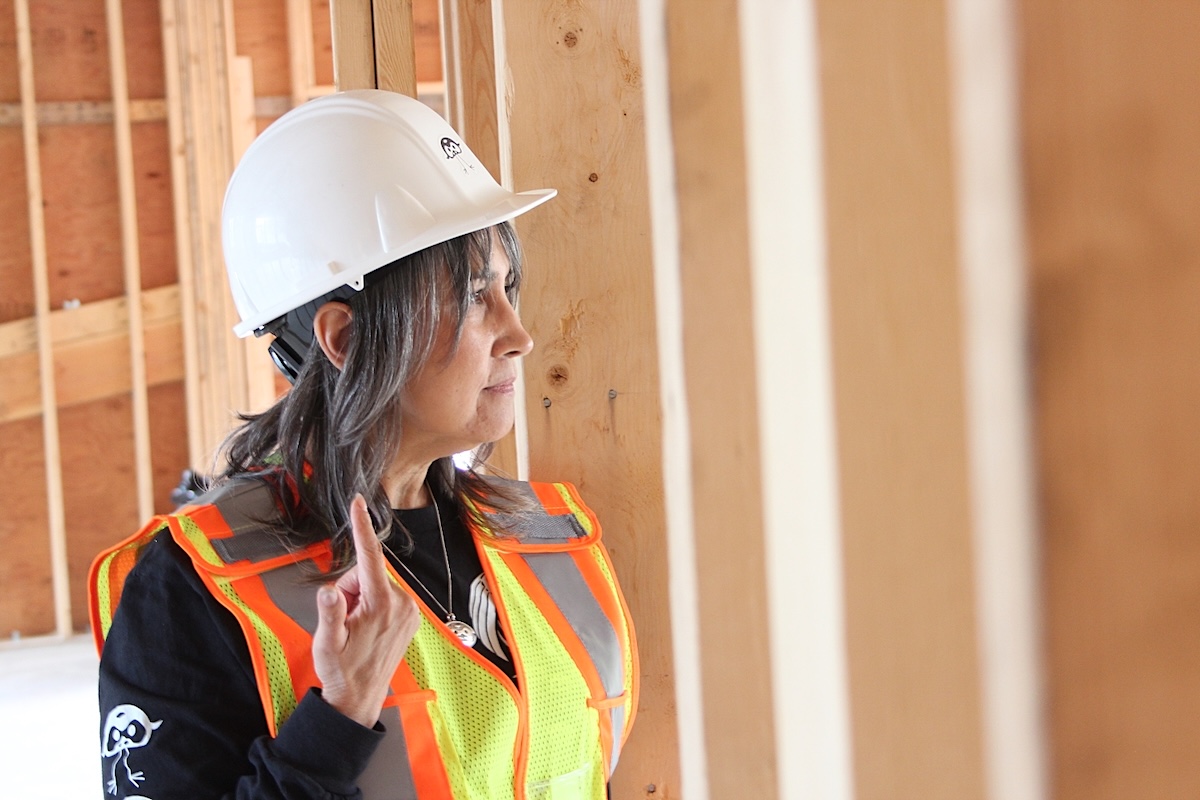
O’Connor and Baxter see each other all the time, and O’Connor says they are good friends who disagree on things. And both point to the challenges created by the jurisdictional boundaries and rules that have interposed themselves between Lytton and area First Nations.
O’Connor agreed that First Nations leaders tend to be more involved in the day-to-day workings of their government. But she says municipal staff are leading many discussions for a reason, citing the interconnected water and sewer systems between the village and adjacent First Nations communities.
“I don’t have any expertise” in that, she says. “We need the experts.”
The future as co-governance
At a time when provincial politicians are walking back efforts — like the Declaration on the Rights of Indigenous Peoples Act, or DRIPA — to incorporate Indigenous governance and rights into existing provincial legislation, the discussion in Lytton is starkly different.
Baxter has floated the idea that Lytton consider creating its own charter to overhaul how the area is governed and how decisions are made.
In B.C., municipalities operate under the one-size-fits-all Community Charter, a set of rules and laws laid down by the provincial government. The only exception is Vancouver, which has had its own charter since 1953. Surrey’s council has asked for its own charter, with its mayor saying the rapid growth of the community requires a customizable arrangement with the province. But the provincial government, as the institution that creates B.C.’s cities and towns, ultimately has the final decision about the governance structure of municipalities.
In Lytton, Baxter says a charter specific to the village might allow it to also escape the narrow confines of current provincial law in such a way that would bring surrounding First Nations into local governance structure.
“If Vancouver can do it, why can’t we?” Baxter asks. She is adamant that the current arrangement doesn’t work. “We all need each other, but we seem to get caught up again in these different legislative frameworks that aren’t fitting the situation.”
The idea seems to have currency throughout the region. At Kanaka Bar, Spinks also mentions it.
“It would be really nice to test out a governance system where you have the village’s mayor and council with surrounding leaders involved in making co-decisions,” Spinks says.
The Urquharts hailed Baxter’s idea as a potential path forward. And Thoss also sees governance reform as a critical plank to allow the entire region to financially support infrastructure and amenities within the village.
“It’s the only way, as far as I’m concerned, that this town is going to be economically or financially viable,” she says.
Thoss also suggested the village be renamed Tl'ḵémtsin, its Nlaka'pamuxcin name. Lytton’s current name comes from Edward Bulwer-Lytton, an English writer who once served as secretary of state for the colonies but who never visited British Columbia.
O’Connor says the idea was mentioned by Lytton First Nation Chief Niakia Hanna at a meeting.
“I don’t think any of us are opposed to looking at a different structure at all,” she says.
The challenge, she says, would be navigating the process with provincial and federal governments.
“I don’t believe that it’s something that could happen quickly,” O’Connor says.
In an email, Baxter suggested there seems to be relatively limited actual appetite for pursuing the idea.
Thoss says she would like to see local First Nations people run for council and push the idea forward from within the village. Currently just one of Lytton’s five council members, Melissa Michell, comes from a local First Nation.
“I think that is the best way forward, is from within,” she says. “If the Nlaka'pamux Nation want to see a shared governance model, they should run for council, and I think they would be successful.”
In many communities, local First Nations might not have the voting base to push such a plan forward — or such a discussion could spark some of the worry seen elsewhere regarding DRIPA. But in Lytton, Baxter’s idea has the allure of something that brings both reconciliation and, potentially, more stability.
“I don’t think fee-simple property owners are going to be wanting to revert to band land,” Thoss says, “but I think if there’s a reasonable framework put forward, I believe the community would be 100 per cent behind it, because I think with the shared governance and the shared responsibility and vested liabilities, there comes a stability and confidence in government.”
Looking to the past to envision the future
Sherry McIntyre’s small, tidy office is tucked in an aging wooden building along Highway 1.
McIntyre has a streak of purple in her hair, and a twinkle in her eye. Like most Lytton leaders, she spent much of her life working in schools. But when she is asked how she sees Lytton changing over the next decade, she immediately questions the premise.
“In a town that moves as slowly as this area does, five to 10 years is just a little blip,” she says. “It took hundreds and thousands of years for us to get where we’re at.”
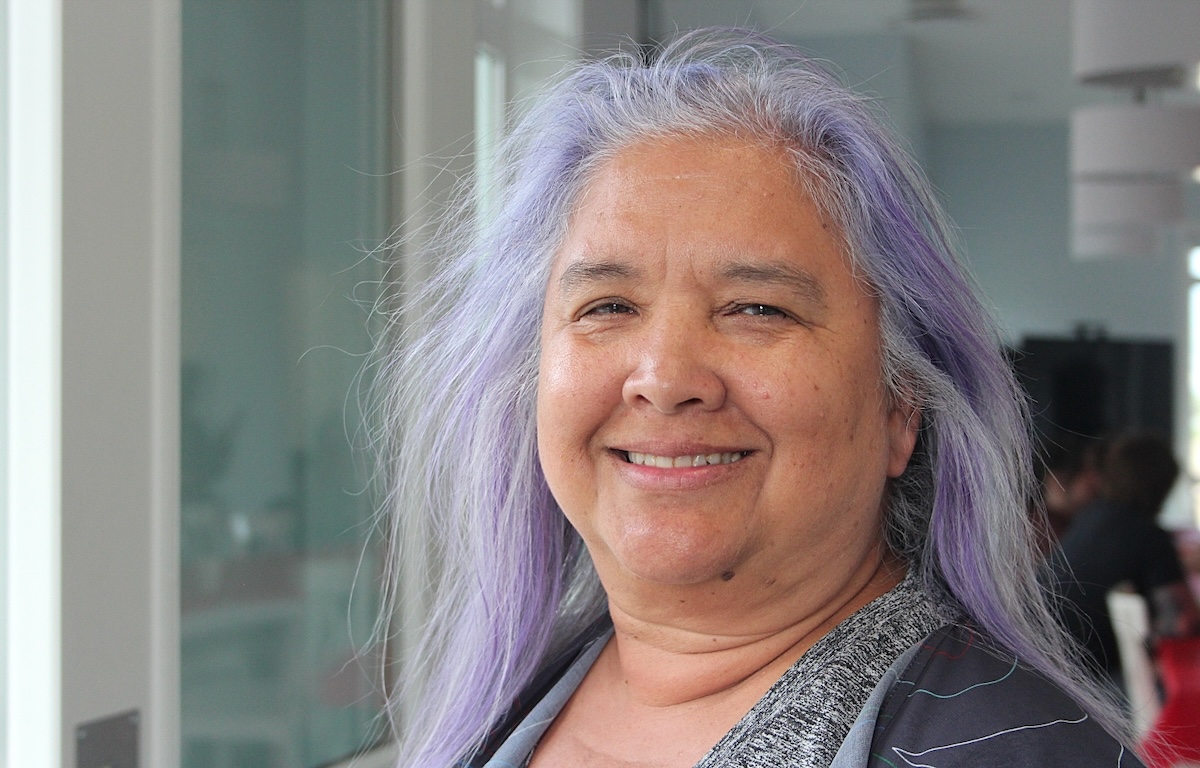
Skuppah was never evacuated in 2021. As the flames raced north away from the reserve, Skuppah became a focal point of recovery and support efforts immediately following the blaze. Today, just below the band office, a new community building provides room for meetings, lunches and gatherings.
Skuppah is a partner in Nzen’man’, Baxter’s project on Lytton First Nation land, and in the Chief Spintlum Elders Lodge project being led by Spinks. And the small First Nation, which has 151 members, is now contemplating its own project in the village. Near the end of our interview, McIntyre picks up a package of papers and hands them across her desk.
The papers reveal plans for a modest but modern two-storey structure with four apartment units upstairs and commercial units on the ground floor. The structure hints at one of the next potential stages in Lytton’s rebuilding, as the initiative, patience and presence of local First Nations like Skuppah and Kanaka Bar start to exert their own momentum on the village’s future.

Interior Health hasn’t rebuilt Lytton’s hospital. The RCMP hasn’t rebuilt its local headquarters. BC Emergency Health Services hasn’t rebuilt its ambulance station.
But McIntyre says the community’s broader future isn’t in doubt. Lytton persists, as it has for thousands of years.
“The surrounding community is the community, and Lytton is just one place in that community.”
The village centre will eventually go back to what it has always been, McIntyre says. “It’s just a pattern and patterns tend to repeat themselves. It will be the hub.”
Exactly how long that takes remains to be seen. But to McIntyre, it’s necessary to take the long view.
“My great-grandparents lived here and my great-grandchildren will probably live here,” she says. “This area has always been populated, and always will be.” ![[Tyee]](/design-article.thetyee.ca/ui/img/yellowblob.png)
Read more: Indigenous, Municipal Politics









Tyee Commenting Guidelines
Please note that email notifications for replies are not currently working due to a software issue which may be resolved in a future update.
Comments that violate guidelines risk being deleted, and violations may result in a temporary or permanent user ban. Maintain the spirit of good conversation to stay in the discussion and be patient with moderators. Comments are reviewed regularly but not in real time.
Do:
Do not: