


 SHARE:
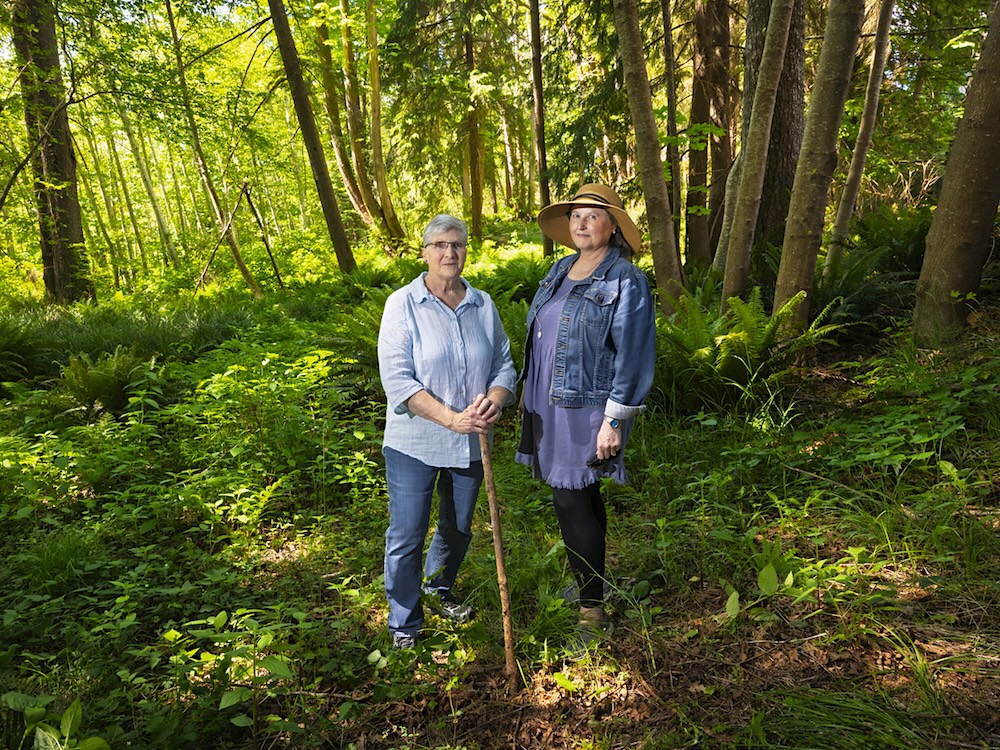
Three years ago, Barb Round heard heavy machinery chewing through the urban forest behind her home in Campbell River, a small city on east Vancouver Island that bills itself as the salmon capital of the world.
Round waved down a man in a hard hat and asked why the excavator was working in the greenway, which is a haven for birds, dotted with pocket wetlands and adjacent to Simms Creek, home to four salmon species.
“He explained to me that the property had been sold,” Round, a retired nurse, tells The Tyee. “Everyone in the neighbourhood thought it was protected land.”
When residents found out a local developer planned to cut down much of the forest and fill in the wetlands to build a large housing development near the creek, “they were gobsmacked,” Round says.
“It just makes me so mad,” she says. “How can the self-proclaimed salmon capital of the world not act to protect the salmon-bearing creek?”
Since then, Round and more than 300 other Campbell River residents have sought every possible recourse to save the forest and wildlife corridor they call a “biodiverse urban gem.”
They held community meetings and formed the grassroots Save Simms Creek Society. They sent hundreds of letters to Campbell River’s city council, urging members to turn down an application from WestUrban Developments Ltd. to build 200 market rental housing units in three buildings on part of the city’s cherished Simms Creek greenway.
They filed freedom of information requests and were shocked to discover the B.C. government had given the green light to the project last July, despite “substantial concerns” raised by government scientists. In January, community members served notice to the B.C. Environmental Appeal Board that they are appealing the government’s decision.
“If we don’t act to save these precious places, they will cease to exist,” Round says.
The society’s dogged effort to protect the forest isn’t Nimbyism, she says, referring to a term used to describe local opposition to new neighbourhood developments.
“It’s stewardship,” Round says.
As B.C. communities grapple with an urgent need to build new housing, they also face climate-change-related issues such as flooding and drought and steep declines in salmon and other wildlife populations.
Urban forests lower temperatures during heat waves, soak up water during extreme rainfall events, confer numerous health benefits for people and provide homes for wildlife. But there are no provincial safeguards to preserve them in B.C.’s plan to expedite new housing.
And while the province does have rules to protect wetlands — which are key to tempering the effects of flooding — the story of Simms Creek illustrates how B.C.’s safety net for wetlands is full of holes.
One development in Campbell River might seem inconsequential in the grand scheme of things. But it shines a light on the bigger tensions gripping communities across the province — and underscores how wetlands and salmon-bearing creeks across the coast are dying by a thousand cuts.
For its part, the City of Campbell River told The Tyee that WestUrban’s application is on hold, pending the “resolution” of provincial permits. The developer told The Tyee it has “no plans or schedule in place to commence any work” on the site.
‘We are very tenacious’
Seen from the air, the Simms Creek watershed and greenway splashes through Campbell River’s south end like a giant tadpole — bulbous where the greenway extends into the protected Beaver Lodge forest lands to the city’s west, and then narrowing to a little upturned tail before butting up against the Discovery Passage in the Salish Sea.
The seven-hectare property in question, a tangle of trees and lush undergrowth, sits just before the tadpole’s tail begins.
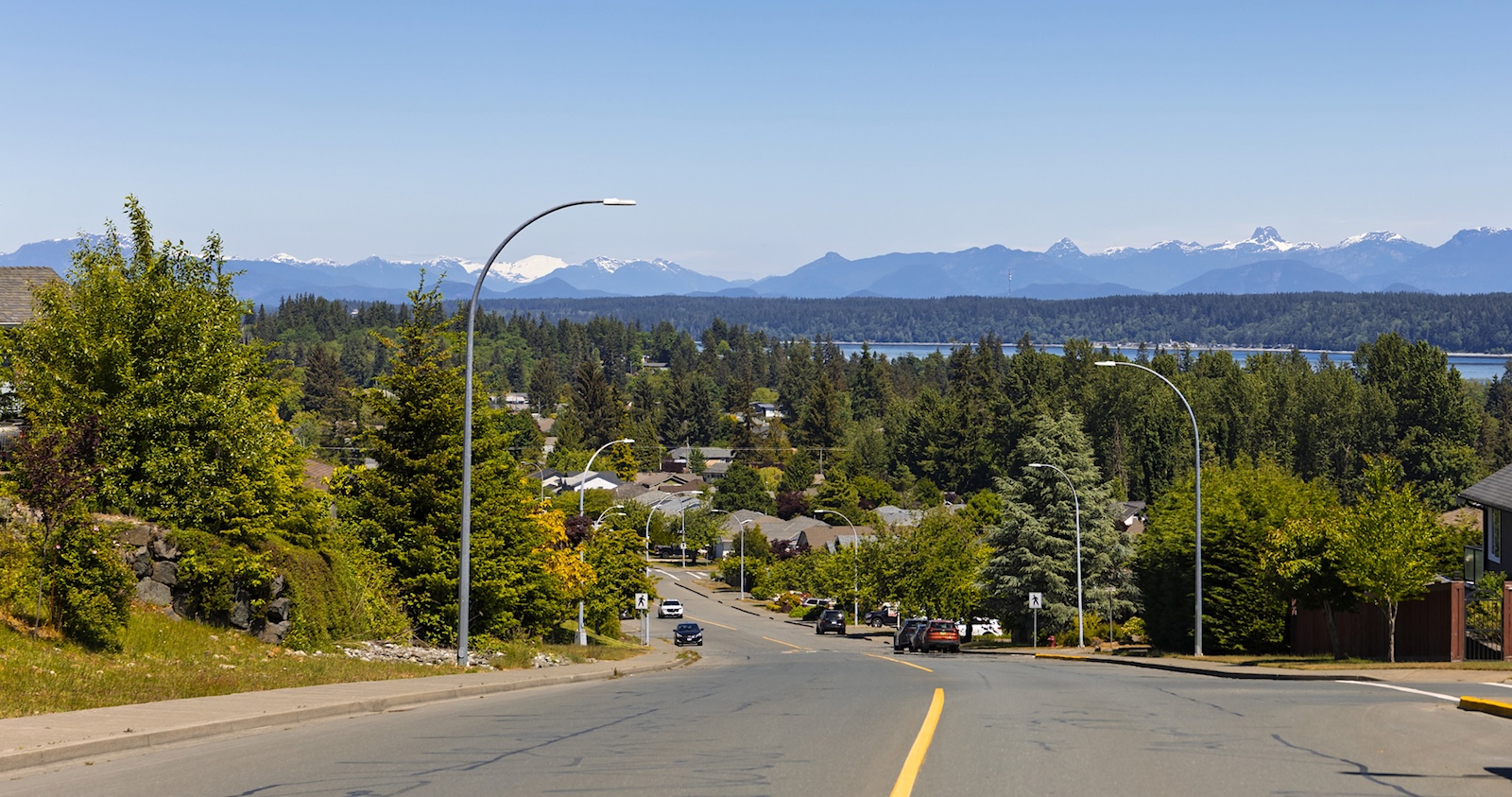
Streets with pastoral names like Meadowbrook Drive and Creekside Way form a widening swath of brown and grey above and below the forest planned for development. Some neighbourhoods are so new they’re still lined with rows of empty serviced lots, a testament to Campbell River’s status as one of Canada’s fastest-growing cities.
The creek begins as two trickles in marshy areas west of the protected Beaver Lodge forest lands, gathering momentum as it jogs through the greenway towards the sea. In the late summer and fall, coho, chum, pink and chinook salmon swim upstream to spawn. They share the looping waterway with steelhead and cutthroat trout, sticklebacks, sculpins and western pearlshell mussels.
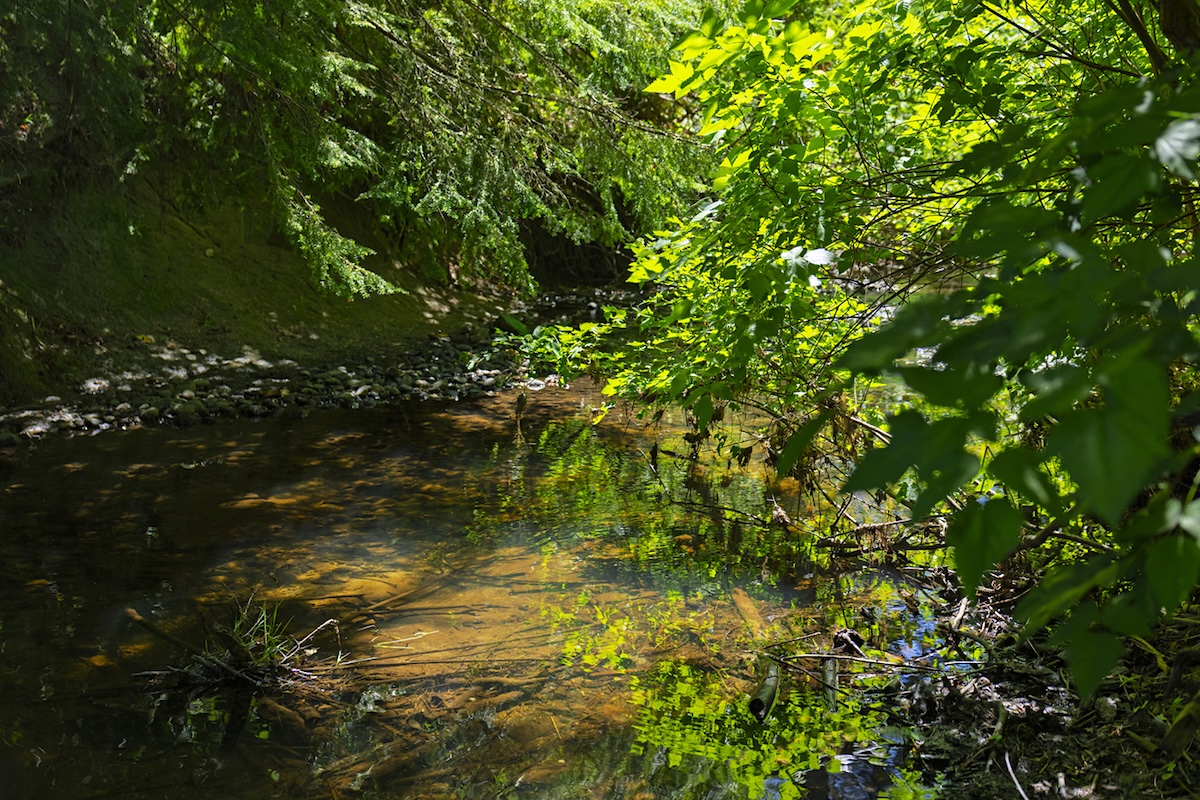
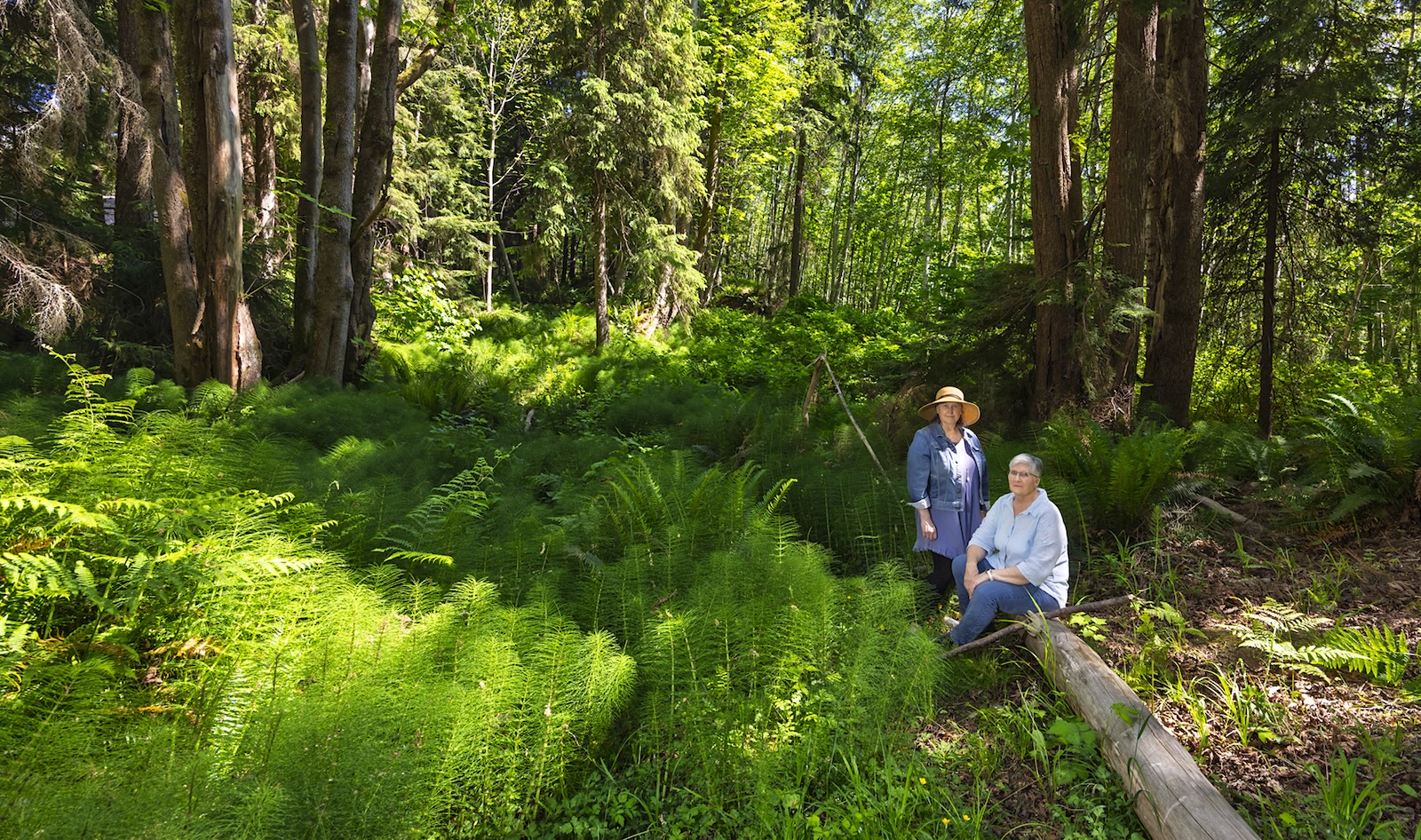
The proposed development parcel lies more than 15 metres away from the farthest reaches of the creek, in keeping with mandatory provincial setbacks from watercourses. Visitors leave asphalt and traffic behind and enter a dense, canopied, second-growth forest where red alders jockey for space with mature bigleaf maples and western hemlocks.
“You can feel how much cooler it is as soon as you step in,” says Deborah Broadley, a founding member of the Save Simms Creek Society, as she tours The Tyee through the planned development area. She picks her way along an overgrown path that leads past a jumble of garbage a black bear has dragged in.
It’s mid-afternoon on a warm, blue-sky day, a time when birds are often quiet. But some of the 27 bird species recorded so far in the proposed development area are quick to make their presence known. The piercing whistle of a northern flicker cuts through the still air, while a song sparrow trills rhythmically, “Madge-Madge-Madge, put-on-your-tea-kettle-ettle-ettle.”
“We’re on the lookout for pileated woodpecker nests,” Broadley says. “We know the woodpeckers are in here, but if we could find the nest cavity, then [the developer has to] protect it with a big buffer and for a decent amount of time too.”
Broadley is an avid gardener, the mother of two adult children and grandmother to a toddler. Like Round, she wasn’t involved in environmental issues before she learned about the Simms Creek development proposal. Now she spends much of her time working to save the forest and wetlands, an “all-consuming” job.
“It’s been a steep learning curve and a ton of work to dig through everything,” she says. “We don’t have the advantage that the city has with paid employees that are quite familiar with all the processes, or the money that the developer has. But we are very tenacious.”
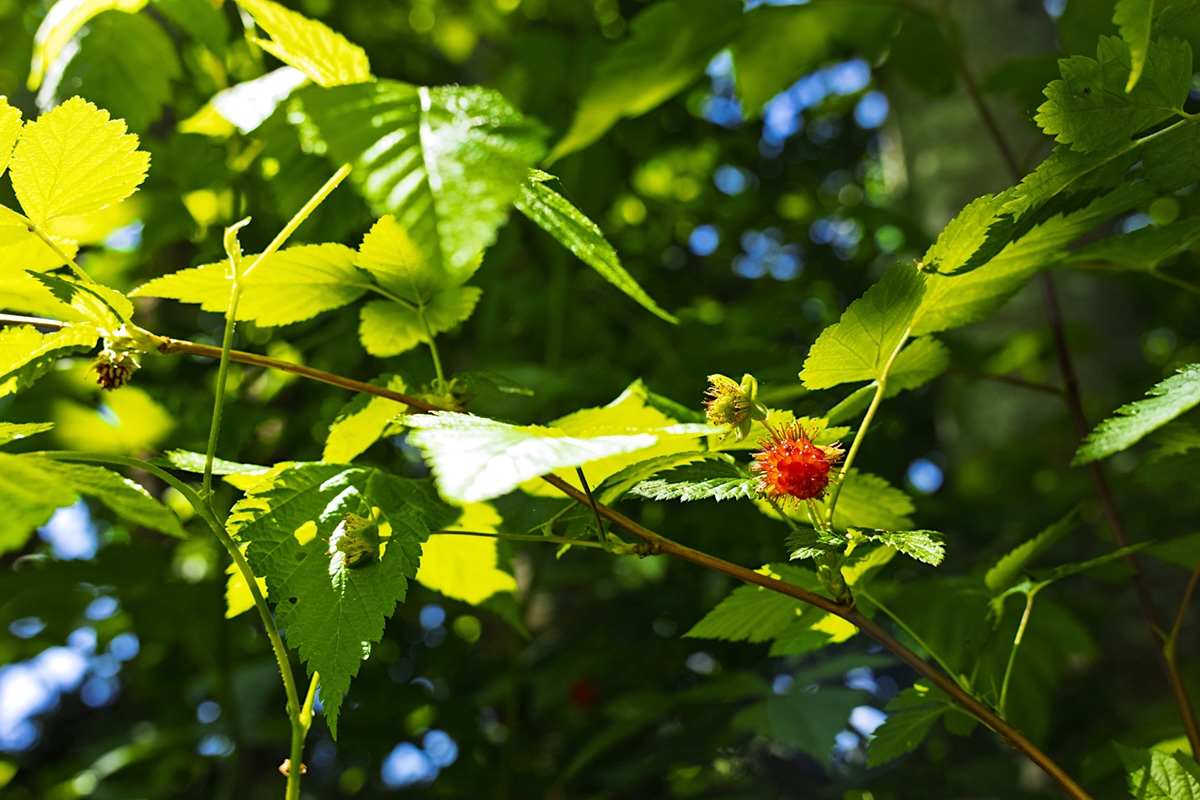
Frilly horsetails and big-leaved skunk cabbages signal the presence of one of six scattered wetlands in the development parcel. Swordferns, salmonberry and sedges circle the wetland in shades of bright green, and slanting sunbeams form a kaleidoscope of patterned movement on their leaves and fronds.
These pocket wetlands have become the main bone of contention in the community’s battle to save the forest.
Government scientists outlined ‘substantial concerns’
Unlike other B.C. municipalities, including Vancouver and Victoria, Campbell River doesn’t have a citywide tree protection law for private property.
Campbell River council approved an urban forest management plan in principle in 2016, as a guiding document that is not enforceable, leaving the forest in the development parcel without any automatic municipal protections.
But add wetlands into the equation and provincial rules kick in.
In B.C., you can’t destroy a wetland without authorization. Wetlands, according to the B.C. government’s website, “act like the kidneys of the earth, cleaning the water that flows into them.”
Wetlands also provide habitat for about 80 per cent of wildlife species in the province at some point during their life cycles, the government notes.
Despite their key ecological role, up to 85 per cent of wetlands in B.C.’s most populated areas have been lost. One of the main threats to wetlands, the government says, is “drainage and development for residential and industrial uses.”
If you have a wetland on your property that you want to remove, you must seek authorization from the government under Section 11 of B.C.’s Water Sustainability Act.
That’s just what WestUrban did in July 2024, according to documents that Broadley and other members of the Save Simms Creek Society obtained through a freedom of information, or FOI, request.
The documents, reviewed by The Tyee, show that a numbered company doing business as WestUrban asked for authorization to remove five wetlands, “off-setting” their loss by building a new, larger wetland.
According to the FOI documents, the three biologists in B.C.’s Ministry of Water, Land and Resource Stewardship who reviewed WestUrban’s application outlined “substantial concerns” with the company’s application and supporting documents.
The scientists — an aquatic ecosystems biologist, an ecosystems biologist and a wetland specialist — detailed those concerns in a four-page letter to ministry water authorization specialist Patricia Halinowski in February 2025.
“This development, as proposed, will impact public resources, including red-and-blue-listed wetland ecosystems that regulate water flow and quality and nutrient inputs to salmonid habitat,” the biologists wrote.
Among other concerns, the biologists flagged “deficiencies” in aquatic ecosystem identification, “significant misunderstandings of wetland science” and “misapplications of assessment protocols” in WestUrban’s submission.
“Accurate delineation of aquatic features is critical to assess the impacts and to properly avoid, mitigate and compensate for these impacts,” the three biologists wrote.
They warned that inadequate protection of — or compensation for the loss of — the wetland ecosystems and their streamside protection areas and functions could “exacerbate drought effects and risk impacts to wild salmon populations in Simms Creek,” noting the region now annually experiences prolonged Level 4 and Level 5 drought.
But last July, despite those concerns, the ministry granted WestUrban authorization to remove the wetlands, most of which channel water into Simms Creek, according to the biologists.
Plans to build new wetland criticized
As part of the Section 11 authorization, the ministry also approved WestUrban’s plan to build a new wetland — even though the three biologists said the company’s proposed wetland design did not adhere to accepted standards, would result in a net loss of aquatic ecosystems and would make it difficult for wildlife like amphibians to access and use the new wetland.
The FOI documents show WestUrban submitted a wetland design plan in July 2025, the same month the authorization was issued, but it’s not clear if government biologists reviewed that plan and approved of it.
“We can’t reconcile that the biologists in one section [of government] say ‘no, no, no’ in a very loud and strong way with evidence, and the people have been able to dismiss that,” Broadley says.
“It leads us to wonder why on earth they could make the decision they did.”
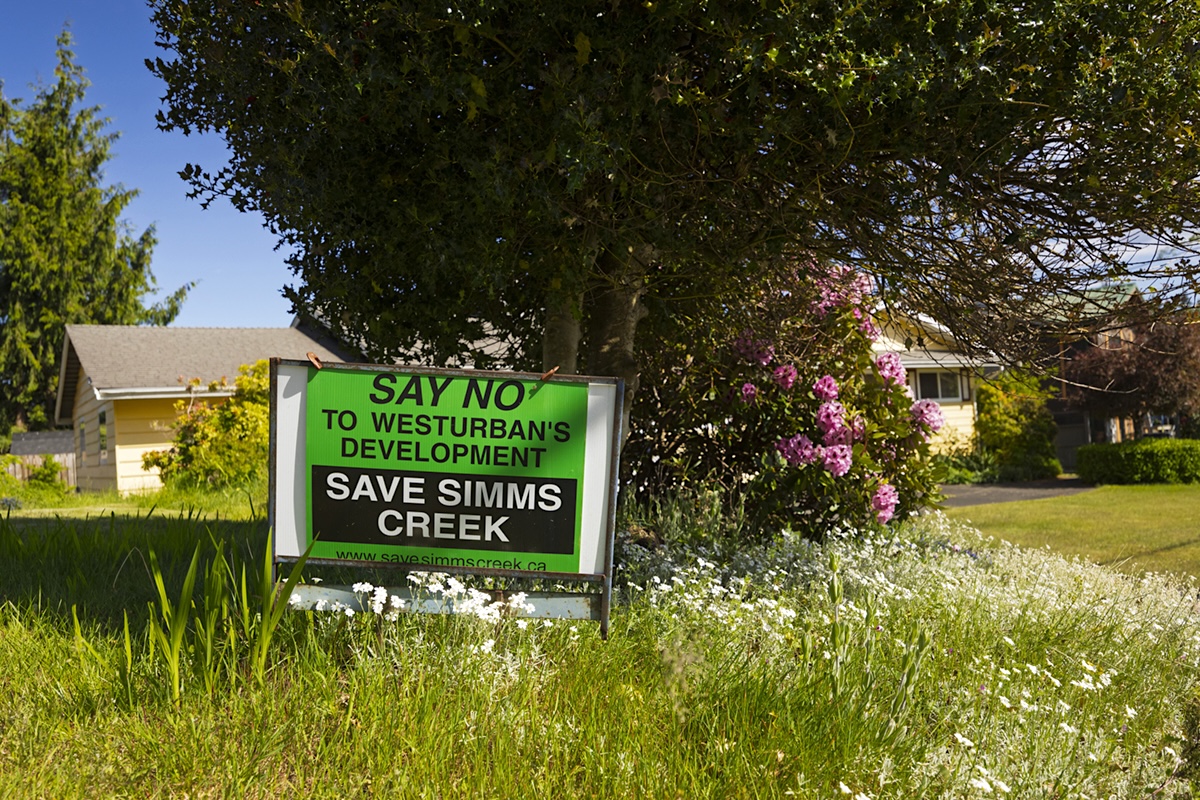
The Tyee requested an interview with any one of the three biologists who wrote the letter, but the ministry said it could not grant the interview request or respond to any questions because the matter is under appeal before the B.C. Environmental Appeal Board.
The Tyee asked WestUrban if it is aware of any outstanding concerns voiced by government scientists. In response, WestUrban spokesperson Kirsten Rudyk said the company is “not in a position to comment in detail” on regulatory correspondence, draft technical submissions or ongoing discussions between consultants and government agencies.
“At this stage, we can confirm that WestUrban continues to work with qualified environmental professionals and the relevant agencies, and any final approvals rest with the applicable regulatory agencies,” Rudyk said, adding, “I do not have further information at this time.”
In response to an interview request, Rudyk emailed a statement saying the company understands the strong community interest surrounding the property and “the importance of thoughtful growth and environmental stewardship in our city.”
“We also want to acknowledge that although there has been significant discussion and speculation in the community regarding the site, most of it is based on incomplete and unconfirmed information,” Rudyk said.
“At this time, no final development plans have been made for this site.”
Rudyk said the property — which WestUrban purchased in December 2022 — has been zoned for multi-family residential development for decades.
Any future development is “subject to rigorous environmental studies, provincial and municipal approvals, and all applicable regulatory requirements,” she said, adding that WestUrban remains committed to any future development thoughtfully and with consideration for both the environment and the evolving needs of the community.
Riparian reports, a salmon-bearing stream
Like many salmon streams on B.C.’s coast, Simms Creek has been heavily affected by industrial logging and urban development. In the lower Fraser River, University of British Columbia researchers found salmon have lost access to up to 85 per cent of their historical flood plain habitat — “biologically rich” wetlands next to a river or stream.
But Simms Creek salmon restoration efforts over the years are paying off. Last fall, local volunteers joined Fisheries and Oceans Canada to release 2,500 coho fry into the creek, where coho spawn in the Beaver Lodge forest lands.
Before Campbell River and other municipalities can approve developments in riparian areas — the zones of “lush, green, moisture-loving vegetation” surrounding wetlands lakes, streams and rivers — they need to receive a report, approved by the B.C. government, that is written by a qualified environmental professional who is hired by the project developer. It’s known as a RAPR report, which stands for Riparian Areas Protection Regulation.
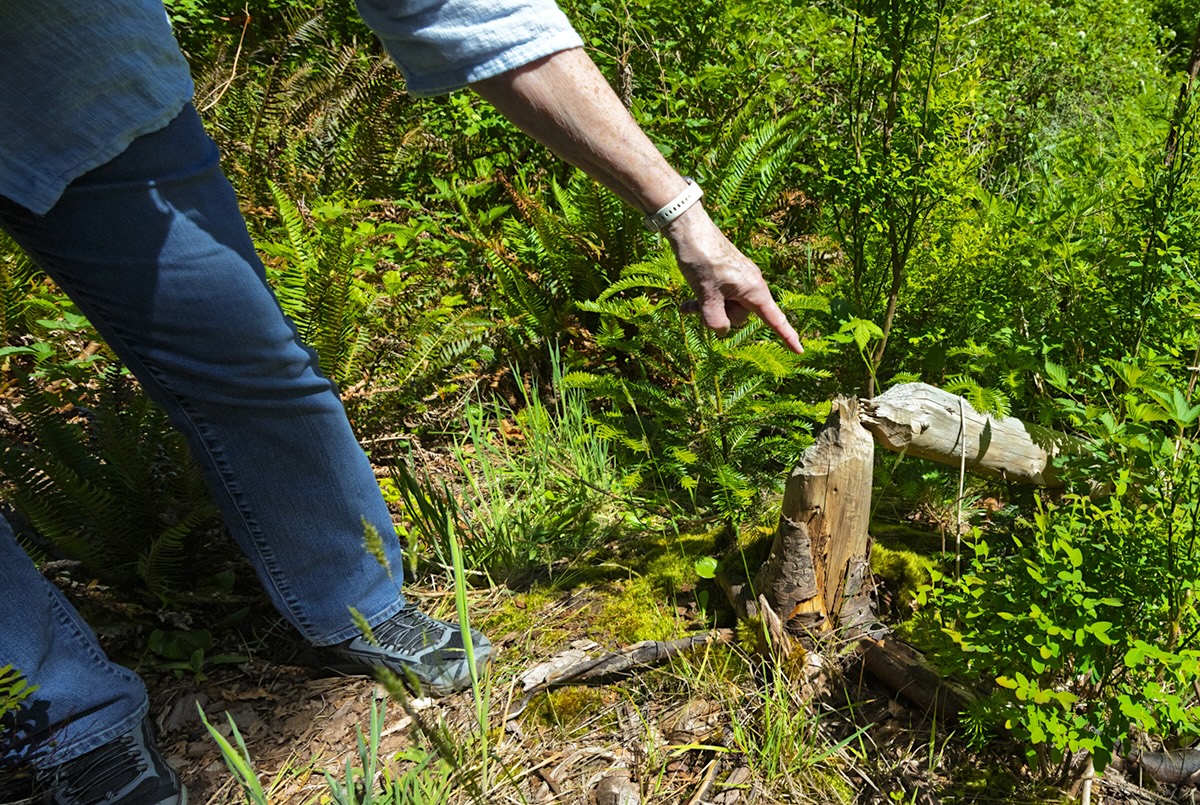
The report confirms the developer has followed the proper procedures for establishing setbacks from any wetlands, streams or ravines supporting fish habitat.
And that’s where WestUrban’s proposal ran into problems.
The FOI documents show that WestUrban submitted at least two riparian areas reports the government rejected, while another report was sent back to the company for amendments and yet another was sent back for additional information.
All but one of those reports were submitted before ministry biologists wrote their letter flagging concerns about the impacts of wetland removal on nutrient inputs to salmonid habitat, and potential impacts to wild salmon populations in Simms Creek if WestUrban did not adequately compensate for the loss of wetland ecosystems and streamside protection areas.
The report sent back to WestUrban for additional information was submitted last December, according to the documents. Round says the society is still trying to get a copy of the report through freedom of information legislation.
What’s next in the fight
Round was one of two property owners who filed a notice of appeal with the Environmental Appeal Board earlier this year, along with the Save Simms Creek Society.
They’re arguing the province’s Section 11 approval is unreasonable and the decision should be sent back to the ministry for reconsideration.
“The government’s own biologists said the company’s plans are inadequate,” Round explains.
Darrell Le Houillier, chair of B.C.’s Environmental Appeal Board, told The Tyee that the question of whether the applicants have standing is awaiting adjudication by a member of the board and no date has been set for the decision.
The provincial government is arguing that the society and property owners don’t have the right to appeal.
Round has found the process — including the long wait to receive documents from the society’s freedom of information requests — frustrating. But there has been an upside: as Round and her neighbours double down on their efforts to save the Simms Creek forest, they’re continuing to enjoy the benefits it confers.
Round says her neighbourhood is noticeably cooler than other areas of the city, because of the forest. “There are kids that fish in that creek. There are many people who walk their dogs through that property, or just go for a little hike and appreciate the trees and the quiet.”
Stephen Sheppard, a professor emeritus at the University of British Columbia whose research focuses on climate change planning and the social aspects of forestry, calls urban forests “vital green infrastructure,” especially useful for dealing with the impacts of climate change.
Urban forests can provide life-saving shade and relief from high temperatures during heat domes and hot spells, along with important recreational and health benefits, Sheppard, director of the university’s Collaborative for Advanced Landscape Planning, tells The Tyee.
They also soak up stormwater and rainwater, reducing flooding and property damage during heavy rainfalls, he says.
In the Campbell River area, Sheppard says, “there are only two or three green corridors that connect the coast to the interior lands of the region, and Simms Creek is one of those, so it’s pretty vital.”
As Broadley walks through the forest, she stops and gestures to the trees and wetlands. Spending so much time trying to protect Simms Creek has galvanized her, she says.
She’s noticed more and more trees are disappearing in Campbell River — a problem, because the city sits in a flood plain and is already suffering from increasing drought and other weather events linked to climate change. She’s worried about the kind of world her family will inherit as climate change intensifies.
Protections for nature are “sliding backwards,” Broadley says, just when they’re needed the most.
“We’ve already got this,” she says, looking around at the forest. “Let’s do our building somewhere else, in a better spot.”
“Once it’s gone, it’s gone.”
*Story updated on May 27 at 2:45 p.m. to remove the names of three Ministry of Water, Land and Resource Stewardship biologists following the request of the ministry that they not be specifically identified. ![[Tyee]](/design-article.thetyee.ca/ui/img/yellowblob.png)
Read more: Environment






Tyee Commenting Guidelines
Please note that email notifications for replies are not currently working due to a software issue which may be resolved in a future update.
Comments that violate guidelines risk being deleted, and violations may result in a temporary or permanent user ban. Maintain the spirit of good conversation to stay in the discussion and be patient with moderators. Comments are reviewed regularly but not in real time.
Do:
Do not: