


 SHARE:
[Editor’s note: Steve Burgess is an accredited spin doctor with a PhD in Centrifugal Rhetoric from the University of SASE, situated on the lovely campus of PO Box 7650, Cayman Islands. In this space he dispenses PR advice to politicians, the rich and famous, the troubled and well-heeled, the wealthy and gullible.]
Dear Dr. Steve,
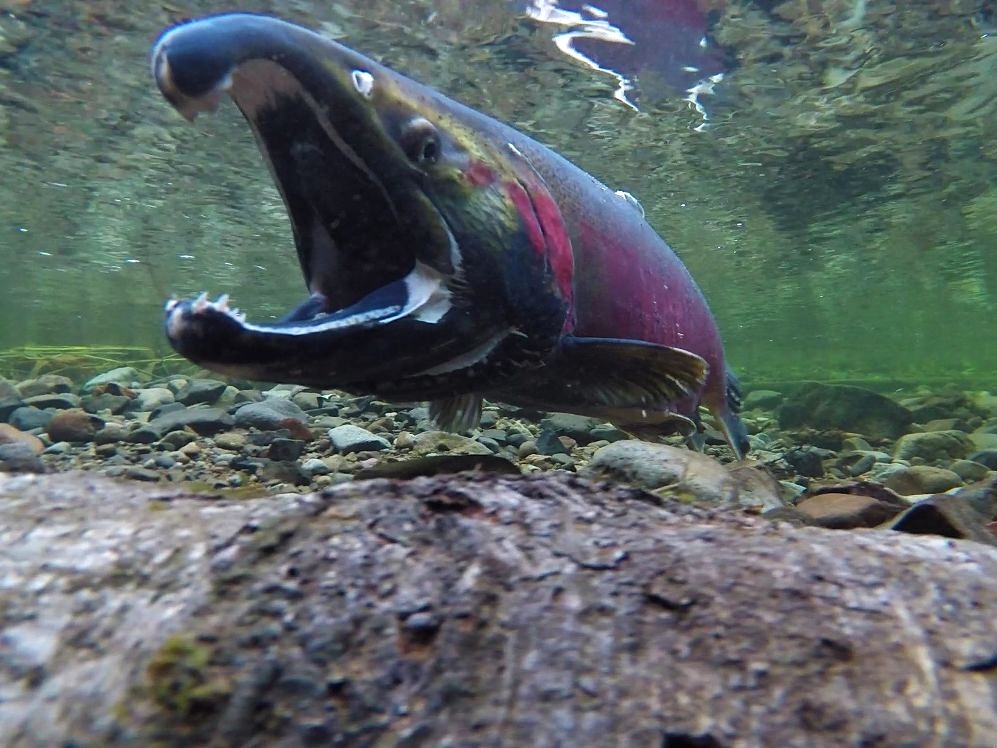
Researchers from Simon Fraser University and the federal Fisheries Department recently found that Fraser River salmon are full of drugs. Cocaine and antidepressants were found in salmon tissue, along with caffeine, blood pressure meds and other pharmaceuticals.
Should we be concerned?
Signed,
Sam
Dear Sam,
Remember the old detective show Dragnet? It’s back. Catching salmon is not about fishing anymore. It’s a police matter. These nets belong to the narco squad. Suspects will be grilled mercilessly. If you cannot afford lemon and olive oil, it will be provided for you.
Drug salmon could become the next culinary craze. Why not kick it up a notch with a side of mushrooms? Care for some greens with that? At the very least, your next visit to the deli counter may lead to some confusion. “Is this salmon fresh or smoked?”
“Yes.”
This SFU-Fisheries Department finding explains a lot. For one thing, we now know where Cocaine Bear got all that blow. And if you’ve ever seen those salmon powering upstream, vaulting up waterfalls, you will not be surprised to know the researchers also found they had ingested caffeine. You can’t do those kinds of leaps without a quick stop at Spongebucks or JJ Bream.
Everybody needs a dealer. Some salmon get the stuff straight from the lab. In a recent Swedish study, scientists gave cocaine directly to salmon. (This would seem a worthy candidate for an Ig Nobel Prize, the award given to the most dubious scientific research projects. But it cannot beat the 2024 Ig Nobel champion of fish-related studies: the experiment that tracked the swimming ability of a dead trout.) At any rate, the news that Sweden gives free drugs to fish is sure to be a hot topic on the next episode of The Tucker Carlson Show. Socialist fish cocaine — that’s what the left wants. That’s the goal now.
The Swedish scientists found that salmon given cocaine swam farther and faster. They probably also engaged in more pointless monologues about the fake moon landing and Taylor Swift’s secret marriage to Lady Gaga, but science does not deal in that sort of nonsense. It’s just silly.
This is not the first study to find that our local waters have become a veritable pharma-sea. A 2016 Puget Sound study found salmon with Prozac, Advil, Benadryl and Lipitor, as well as coke. Pretty soon you won't be able to barbecue without a prescription. And wait until they start soaking up Ozempic. Those svelte little salmon will swim right through the nets. Poor Charlie the Tuna has to wonder why the salmon are getting free cocaine and Prozac while he gets stuck with mercury.
Traces of antidepressants were found in Fraser River juvenile salmon as well. That’s good. Contemplating the effects of climate change, habitat loss and fish farms could give any chinook the blues. The salmon even contained blood pressure medication — for more information, see a registered nurse shark. The good news is, by eating more salmon Canadians can save money on prescription drugs. How much money? Lox.
There are numerous reasons to be concerned, however. For one, these salmon drug mules are free to cross international boundaries at will — if Canada doesn’t crack down, Donald Trump will probably raise tariffs again. More obviously, the contaminants in Fraser River salmon are another indication of the ways we pollute the environment. A cocktail of industrial chemicals finds its way into the marine food chain and back to our tables. That’s bad for us and it’s not good for the fish either. And consider, the fish being tested were mostly juveniles. Think of their poor parents. Somebody should call a meeting of the school board.
It could still get worse, salmon moms. Wait till Apple figures out how to make iPhones waterproof. ![[Tyee]](/design-article.thetyee.ca/ui/img/yellowblob.png)
Read more: Environment












Tyee Commenting Guidelines
Please note that email notifications for replies are not currently working due to a software issue which may be resolved in a future update.
Comments that violate guidelines risk being deleted, and violations may result in a temporary or permanent user ban. Maintain the spirit of good conversation to stay in the discussion and be patient with moderators. Comments are reviewed regularly but not in real time.
Do:
Do not: