


 SHARE:
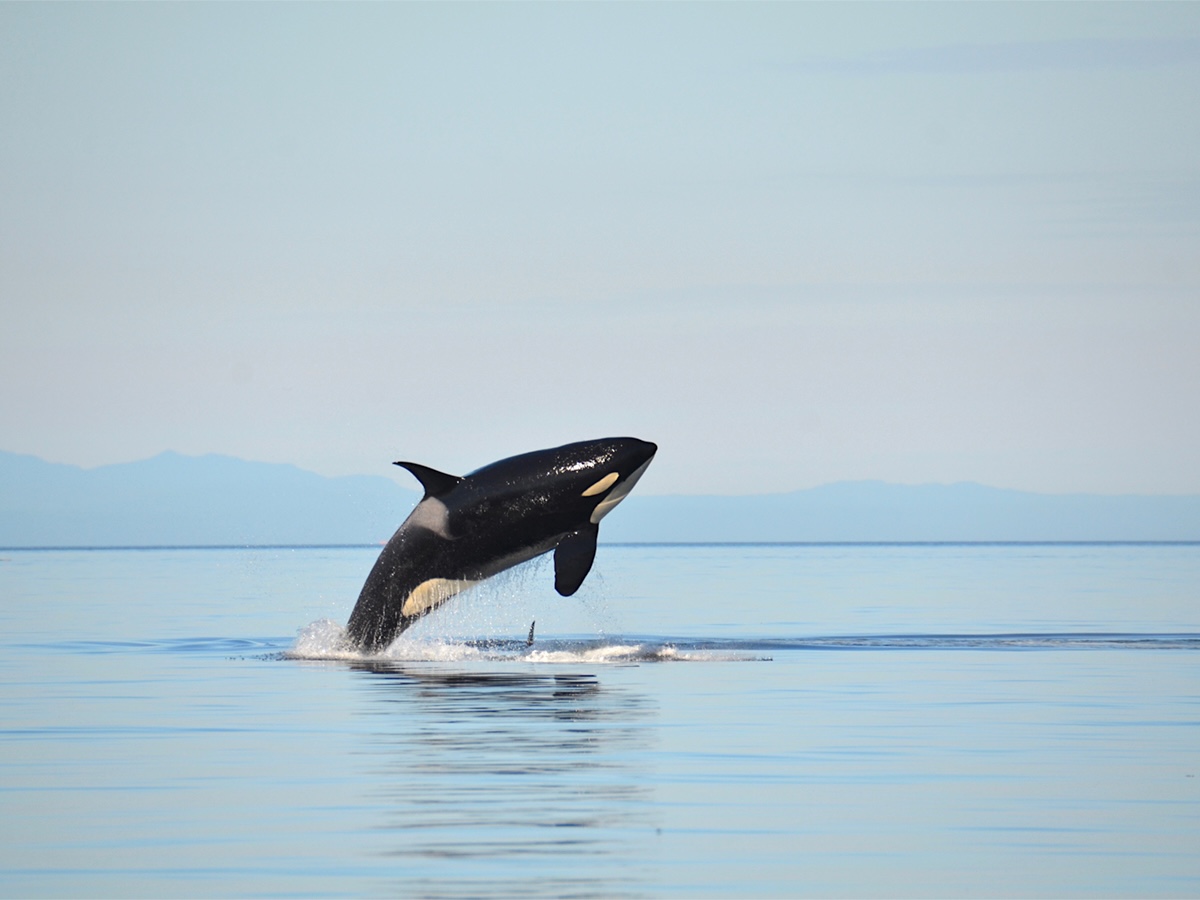
Canada’s former environment minister says a new proposal by the federal government to allow major projects to proceed even if they result in wildlife extinctions is “morally wrong.”
“The rules were put there for a purpose and I would be extremely reluctant to see them changed,” David Anderson told The Tyee.
Anderson played a major role in getting Canada’s Species at Risk Act passed in 2002 when he was environment minister in a Liberal government.
The act prohibits Ottawa from authorizing projects or actions that would harm species and their critical habitats if they would jeopardize their survival — a safeguard known as the “jeopardy test.” About 600 species, including orcas and spotted owls, are currently listed under the act.
But now Mark Carney’s government wants to give federal cabinet the power to exempt certain projects from the jeopardy test if they are deemed to be in the public interest and “reasonable efforts” have been made to avoid or reduce impacts on at-risk wildlife.
“What actors will be taken into account, or not taken into account, when you analyze what ‘deemed to be in the public interest’ means?” Anderson asked. “By the sound of it, it means proceeding with the development.”
The proposal to allow cabinet to axe the jeopardy test is part of sweeping changes the government wants to make to environmental regulations and permitting to speed up approval and construction of major projects such as pipelines, ports and mines.
The changes, announced May 8, would also make it easier to destroy fish habitat and allow Carney and his cabinet to create federal economic zones where a broad range of industrial development could be pre-approved.
Cabinet would also be able to pre-approve pipelines before a route is established, and exempt them from federal impact assessments.
Anderson, who was the minister of fisheries and oceans before he became the environment minister, said it’s “ridiculous” to leave the fate of species at risk of extinction “to the charity of individual companies or development proposals.”
Carney’s government announced the proposed changes only days after it released Canada’s new nature strategy, billed as a “road map” for halting and reversing biodiversity loss. A key indicator of biodiversity loss is an increase in species at risk of extinction.
“Every time a species goes extinct, diversity is reduced,” Anderson said. “You can’t be in favour of biodiversity and against species at risk,” he said.
Anderson, the former MP for Victoria, said he’s worried Canada will make mistakes it will later regret.
“This latest enthusiasm for economics over environment will change in time,” he said.
Anderson added that it saddens him to think the proposed changes could override “principles that I thought we’d established.”
Those principles include acknowledging that all species have an intrinsic right to exist, a right recognized in the preamble to the Species at Risk Act, which says wildlife “has value in itself.”
Anderson said the act demonstrates Canada’s respect for non-human life forms, showing “a value being placed on things as different as trees and the birds that nest in them.”
Canada will be setting itself up for failure, both at home and globally, if it lacks a national approach to protecting wildlife and at-risk species, he warned.
Anderson is the third former Liberal environment minister to criticize Carney’s proposed changes.
Former environment minister Steven Guilbeault told the Toronto Star that the proposed changes are “worse than what [former prime minister Stephen] Harper did,” while former environment minister Catherine McKenna told the Canadian Press that changing how pipelines are assessed actually risks delaying those projects even further.
After the publication of this article*, a spokesperson for the federal minister of the environment, climate change and nature pointed The Tyee to a statement posted to X by Transport Minister Steven MacKinnon that reads, in part, that reporting criticizing the government’s proposal “could not be further from the truth.”
“On the contrary,” the statement continued, “just two weeks ago our government brought forward clear action and ambitious investment in the Spring Economic Update to protect at-risk whale populations, https://www.canada.ca/en/fisheries-oceans/news/2026/05/government-of-canada-invests-2581-million-to-protect-whales.html not only on the B.C. coast, but all of Canada’s coastlines.
“We would not take any actions that would undermine these important strategies and substantial investments. Our approach to assessments isn’t about cutting corners, but improving coordination, efficiency, and long-term planning resulting in faster decisions, without weakening oversight or standards.”
Harper ‘did not put extinction on the table’
Conservation advocates are also highly critical of the proposed changes, saying they could create “sacrifice zones” where environmental laws that protect wildlife, workers and the health of communities will be weakened or jettisoned.
Margot Venton, nature program director for the environmental law charity Ecojustice, told The Tyee that Carney’s proposed changes go far beyond Harper’s dismantling of environmental protections.
“The Harper government did not put extinction on the table,” Venton said.
“We could lose a lot of species under this plan. We could lose all the species that are in inconvenient locations where proponents want to build things or do things.”
She said those species could include endangered southern resident killer whales, which could be affected by tanker traffic from a new pipeline or a port expansion that boosts shipping traffic.
Only about 75 whales are left in the southern resident orca population, which is struggling to survive because of underwater noise, polluted waters and steep declines in Pacific salmon, their primary food source. The orcas are frequently spotted breaching and feeding around Vancouver and Victoria.
Venton said Carney’s proposal to allow wildlife extinctions is “incongruous” with the government’s recent announcements about the importance of conserving nature and “flies in the face” of Canada’s international commitments to protect at-risk species and biodiversity.
In 2022, Canada and 195 other countries signed a biodiversity framework, also known as the “Paris Agreement for nature.” The global agreement aims to halt and reverse nature loss by 2030 and put nature on a path to full recovery by 2050.
As part of that agreement, Canada pledged to halt human-induced extinctions of known threatened species and take “urgent management actions” to significantly reduce extinction risks.
A 2022 report mandated under the Species at Risk Act found that more than 5,000 wild species in Canada are at some risk of extinction. Almost 900 species are critically imperilled, meaning they may soon be lost.
Final decisions about whether to list struggling species under the act are made by the federal cabinet, often following lengthy delays.
Venton said it’s a tough economic moment for Canada, as the trade war with the United States persists and the cost of living climbs. But economic conditions are constantly in flux, she added.
“They’re cyclical, but extinction is a forever choice.”
She said allowing the federal cabinet to decide whether a project is in the public interest and justifies extinction overvalues “the moment we're in” and undervalues the needs of future generations and the environment.
Canada’s relationship with the United States might change for the better in a few years, after cabinet decides to allow a project or projects that could lead to the extinction of the southern resident orca population, Venton pointed out.
“But the whales are gone and we don’t get them back.”
Venton also said Carney hasn’t produced any credible evidence that Canada’s environmental assessment process is an obstacle for attracting investment or that assessments take too long.
At the same time that Ottawa speeds up assessments, the Carney government has made significant staff cuts in lead agencies such as the Ministry of the Environment, Climate Change and Nature, Venton noted.
“We’re doing a lot more than just streamlining,” she said, adding that the latest changes are being proposed “under the guise of efficiency.”
Justina Ray, president and senior scientist for Wildlife Conservation Society Canada, said it’s not clear how the proposed changes will maintain environmental protections or how they align with promises made by the Carney government in its new nature strategy.
The strategy highlights how important nature is for Canada’s economy and security, and for the well-being of Canadians, Ray pointed out. “But none of that is evident in the proposed changes,” she told The Tyee.
“The fact that we have so many species at risk to begin with is because we don't do our land use planning properly, or think about limits to development, or consider biodiversity in a more mainstream fashion,” she said.
Ray said we know much more today about the importance of nature than we did when Harper’s Conservative government was in power — including the economic contributions of nature, how it prevents and mitigates climate change, and its positive impacts on human health.
“Fifteen years later, we know so much more, and the stakes are so much higher.”
*Story updated May 20 at 1:57 p.m. to include government comment that was provided after press time. ![[Tyee]](/design-article.thetyee.ca/ui/img/yellowblob.png)
Read more: Federal Politics, Environment









Tyee Commenting Guidelines
Please note that email notifications for replies are not currently working due to a software issue which may be resolved in a future update.
Comments that violate guidelines risk being deleted, and violations may result in a temporary or permanent user ban. Maintain the spirit of good conversation to stay in the discussion and be patient with moderators. Comments are reviewed regularly but not in real time.
Do:
Do not: