

 SHARE:
Sam Mraiche is the Edmonton multimillionaire businessman at the centre of one of the biggest ongoing political scandals in recent Alberta history.
Now, Mraiche finds himself involved in a rancorous legal dispute in which it has been alleged that he was the “controlling mind” behind a “conspiracy” that allegedly extracted millions of dollars in payments from a contractor.
The contractor, Melewka Homes, has built two apartment complexes and a recovery treatment centre for the Métis Nation of Alberta and two other treatment centres for the Enoch Cree and Tsuut’ina First Nations.
The three recovery centres were built with more than $100 million in provincial funding.
Mraiche, the owner of MHCare Medical, is alleged to have used his close relationship with the United Conservative Party government, and specifically with Jitendra Prasad, the now-former Alberta Health Services chief of procurement, to “threaten” and “intimidate” the contractor.
It is alleged that Mraiche demanded at least $3.5 million in payments. But there is no evidence in the court documents either that the demands were made or that he received any of that money.
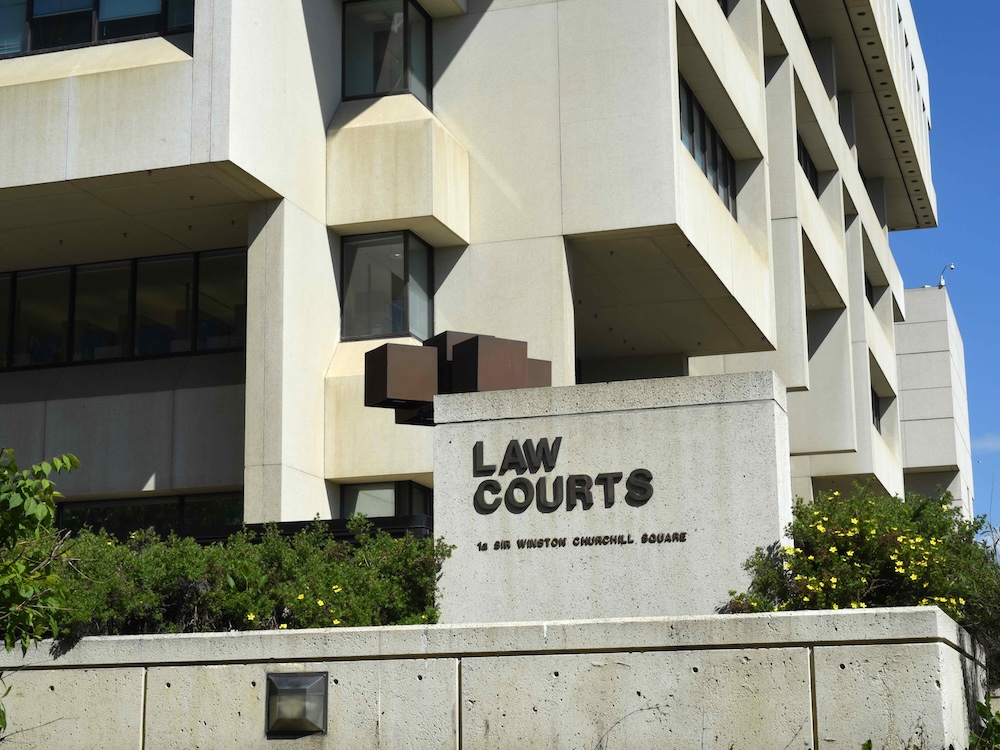
This and many other allegations are detailed in 22 separate civil court pleadings in an ongoing civil case filed in Edmonton’s Court of King’s Bench beginning in July 2025.
The legal dispute is between two companies, Melewka Homes, owned by Lewis Semashkewich and his son John, and Melewka Construction, which is owned by Mraiche’s brother-in-law Mike Eldassouki, who has also been a senior executive at two of Mraiche’s companies.
Eldassouki, who sued first, is seeking about $30 million, while the Semashkewiches, by amended counterclaim, are seeking about $25 million.
None of the many contradictory allegations from any of the plaintiffs or defendants have been proven in court.
In his statement of defence, Mraiche denies all the allegations and contends he has been dragged into the case in an attempt to leverage his notoriety to force a discontinuance of the legal action.
The case adds another layer to a scandal that is, in part, under investigation by Alberta’s auditor general and the RCMP.
The controversy has roiled the provincial legislature since the Globe and Mail published a story in July 2024 that first connected Mraiche to Premier Danielle Smith and several of her ministers and senior staff, including Marshall Smith (no relation), her now-former chief of staff.
Mraiche has made headlines for various business dealings involving public funds, ranging from more than $600 million in sole-source contracts, mostly for personal protective equipment during the COVID era, to his involvement in the $80-million so-called Turkish Tylenol fiasco to his association with controversial chartered surgical facilities to his purchase of buildings connected to the UCP government.
Key allegations
Among the many unproven allegations contained in the civil action are that:
- Lewis Semashkewich alleges he was told that someone named “Fred,” with connections to the UCP government, could potentially direct $200 million worth of contracts to his construction company. It’s alleged “Fred” was later revealed to be Mraiche.
- Semashkewich alleges Mraiche was the controlling mind behind a conspiracy in which Eldassouki set up Melewka Construction as a front company for Mraiche and others to control access to contracts and extract improper payments.
- Construction completion payments to Melewka Homes allegedly were withheld until demands for payment totalling millions of dollars were provided to various individuals, including Mraiche and Eldassouki.
- During one heated argument over withheld payments, it is alleged Mraiche called Semashkewich a “retard and dumb f***ing Ukrainian” and allegedly said he had the connections in the Alberta government “to pull all the projects from Melewka Homes.”
- Semashkewich alleges Mraiche, at that same meeting, said he owned Aaron Barner, the senior executive officer of the Otipemisiwak Métis Government — formerly the Métis Nation of Alberta, or MNA — who was responsible for negotiating the MNA recovery centre contract and other contracts for apartment buildings that Melewka Homes built for the MNA. Semashkewich is also suing Barner.
- At another heated meeting with Semashkewich, it is alleged Mraiche again claimed he had the power and connections to pull all the projects from Melewka Homes and had a government official on the speaker phone to confirm his influence.
- Eldassouki alleges Semashkewich used a forged document to take over Melewka Construction in order to transfer $8.4 million from his ATB Financial bank account. He further alleges that Semashkewich improperly gained access to confidential corporate and financial information from ATB Financial.
- Semashkewich alleges that the information from ATB Financial revealed millions of dollars had been transferred from Melewka Construction to several companies owned by Edmonton accountant Sam Jaber. He has been publicly linked to Sam Mraiche and Premier Danielle Smith. Semashkewich is also suing Jaber and his various named companies.
Mraiche, Eldassouki and others named in a 42-page amended counterclaim by the Semashkewiches and Melewka Homes have denied all the allegations.
In his statement of defence, Eldassouki said that “the stories in the amended counterclaim about conspiracies, mystery individuals, alter egos, undue influence, and conjecture about why individuals were in and out of the country are untrue, inflammatory, irrelevant and are merely an attempt to divert and distract from the wrongful conduct of the plaintiffs by counterclaim.”
Mraiche, in his statement of defence, said Semashkewich knew Mraiche was already the subject of ongoing media attention and sought to exploit his familial relationship with Eldassouki, and Eldassouki’s interest in preventing him from being subject to further media attention.
Statements about him, Mraiche said, were made by Semashkewich in his amended counterclaim “for the improper purpose of pressuring” Eldassouki to discontinue his lawsuit.
His involvement, Mraiche said, was simply as an informal adviser to his brother-in-law and he had no relationship with Semashkewich nor any involvement in any of the projects.
“Over the years, Mraiche, as a business owner, would regularly provide his brother-in-law, Eldassouki, with casual, unofficial, and informal business advice,” his statement of defence says.
Mraiche said he was not the controlling mind of Melewka Construction and he had no authority, legal or otherwise, to make decisions on behalf of his brother-in-law or his company.
A claimed chronology of tangled dealings
Although Eldassouki filed the initial lawsuit in July 2025 that set in motion the complex civil feud, the amended counterclaim of the Semashkewiches provides an alleged chronology of events.
According to that document, Semashkewich had worked with engineering technologist Khaled Faour, a payment certifier.
A payment certifier is usually retained by a construction project owner to verify that work by a contractor complies with the contract before payment is released at various stages of construction.
In 2021, Faour allegedly told Semashkewich he knew someone “who would be able to connect Melewka Homes with prospective projects with First Nations communities in Alberta and facilitate introductions.”
Faour allegedly introduced Semashkewich to Eldassouki and they met on July 22, 2021. It’s alleged Eldassouki said he had experience working directly with First Nations communities and could handle business development and liaising with the government to allow Melewka Homes to focus on general contracting services.
“At no point did Eldassouki indicate that another individual, or individuals, would be involved if the parties commenced a relationship,” the amended counterclaim states.
They allegedly made a deal. Eldassouki would work as a consultant for Melewka Homes with a Melewka email address and phone line and would receive a percentage of any First Nations projects he identified plus an annual $350,000 salary labelled as either management fees or finder’s fees.
Semashkewich claims Eldassouki and Faour began to contact representatives of the Métis Nation of Alberta or Métis Capital, which is owned by Métis Nation, on behalf of Melewka Homes, which started drafting construction proposals.
Melewka Homes was introduced to Aaron Barner, the MNA’s senior executive officer, “who represented that he would help facilitate the terms of the contracts and liaison with MNA officials.”
“Barner remained highly involved on MNA projects and ultimately controlled the release of funds from MNA to Melewka Homes on those projects,” the amended counterclaim states.
The amended counterclaim states that by October 2022, Melewka Homes was in initial contract negotiations for the first series of MNA projects.
Eldassouki allegedly told Semashkewich he wanted to set up a distinct corporate entity from Melewka Homes that would be the general contractor for projects with Melewka Homes being its subcontractor. Semashkewich said he declined the proposal.
Semashkewich alleges that without his knowledge or consent, Eldassouki incorporated Melewka Construction on Nov. 3, 2022.
Shortly after Eldassouki set up Melewka Construction, the amended counterclaim states, Faour introduced Semashkewich to “Fred,” who “advised that he controlled how much Melewka Homes would get paid from the projects, had connections, and that he could pull the projects at any time.”
“It was made apparent to [Semashkewich] that ‘Fred’ had considerable control over the projects, the government officials behind them, and could interfere with Melewka Homes’ contractual relationship with those entities,” the amended counterclaim states.
“[Semashkewich] later discovered that ‘Fred’ was actually Mraiche, and that Eldassouki was Mraiche’s brother-in-law. Eldassouki frequently copied Mraiche on internal Melewka Construction correspondences and sought Mraiche’s approval for material decisions.”
After meeting with “Fred,” Semashkewich claims, Melewka was reluctant to enter into a business relationship with Mraiche, Eldassouki and Faour. But Semashkewich claims that Eldassouki and Faour told him Melewka Homes could earn between $4 million and $5 million in profits from the existing projects they were designing, and that “Eldassouki, Faour, and ‘Fred’ would use Melewka Construction to bring in at least $200 million worth of projects for Melewka Homes and that management fees payable to Melewka Construction would be calculated based off of the profits from the projects.”
Semashkewich claims that he “reasonably” assumed the representations made to him were accurate. And so, he claims, he agreed to an arrangement in which Melewka Homes would submit an invoice for the amounts it was owed to Melewka Construction, and once money was received, Melewka Homes would be paid what it was owed.
On Jan. 31, 2023, Melewka Homes entered into a contract with Métis Capital for the design and build of a 127-unit apartment complex located in Edmonton’s Griesbach neighbourhood for $39.5 million plus GST or nearly $41.5 million.
Under the agreement Métis Capital was required to make progress payments to Melewka Homes when due in the amount certified by Faour, the payment certifier. And Faour was to receive payment of either $4,000 or $5,000 from Melewka Homes for each payment certificate he issued.
But when Melewka Homes received a 10 per cent deposit for the Griesbach Apartment Complex Project, Semashkewich alleges, Faour’s company, 1st Call Engineering, invoiced Melewka Homes for more than $70,000.
“Faour represented that the invoice was for a truck and that payment was necessary for his ongoing co-operation as payment certifier,” the amended counterclaim states.
“Melewka Homes paid the amount based on this representation as it felt compelled to do so in order to secure future payment certifications from Faour.”
On May 26, 2023, Melewka Homes entered into an agreement with Métis Capital for another apartment complex in Peace River.
Semashkewich claims that Melewka Homes contracted at a price of about $5.4 million plus GST “to account for commissions and additional costs after payment to Melewka Construction.
“Shortly thereafter, Faour told Melewka Homes that Mraiche required $1.5 million from the Peace River Apartment Complex Project.” The court documents do not indicate whether Mraiche was paid that money.
The amended counterclaim states that Métis Capital was supposed to make progress payments on both the Griesbach and Peace River projects when they were due in the amount certified by Faour.
But for both projects, Semashkewich alleges Melewka Construction invoiced Métis Capital directly, and once Faour certified payment and the amounts were released, Melewka Construction retained a portion and transferred the remainder to Melewka Homes.
Semashkewich claims that Eldassouki, Mraiche and Faour continued to promise Melewka Homes additional projects and Semashkewich “met with various representatives of First Nations regarding the construction of numerous commercial buildings.”
Melewka Homes was told that “a large-scale hospital project was imminent,” and more projects totalling a promised $200 million “would result in significant profits.”
Disputes over recovery centre projects payments
Between late 2023 and early 2024 Melewka Homes through Melewka Construction entered into negotiations to design and build three recovery centres — one each for the Métis Nation of Alberta and the Enoch and Tsuut’ina First Nations.
These recovery centres were to be entirely funded with grants from the Alberta government. The MNA and Tsuut’ina projects would each cost about $36.5 million including GST while the Enoch project cost about $31.5 million for a total of about $104.5 million.
A spokesperson for the Ministry of Mental Health and Addiction told the Globe and Mail, which first reported on this court case on Wednesday, that the ministry “has always followed rigorous and transparent funding processes to ensure public resources are used prudently.” The procurement and selection of vendors for Indigenous recovery centres, the spokesperson said, was managed by Indigenous organizations.
The amended counterclaim states that Melewka Homes signed contracts directly with each of the First Nations and Métis Capital with Faour listed as the payment certifier for each project.
As part of the grant agreements, the Alberta government required lawyers to receive the payments under trust.
Representatives for the MNA and each of the First Nations would then approve when the funds could be released pursuant to the contracts. The amended counterclaim states that all funds were to be paid directly to Melewka Homes.
The amended counterclaim by Semashkewich claims Eldassouki convinced him to retain Bryan Ward of Park Law to act as the trust lawyer for the Tsuut’ina and MNA projects.
“Ward failed or neglected to disclose to either Melewka Homes or [Semashkewich] that he was also representing Melewka Construction, Mraiche, and Eldassouki, and that doing so was a conflict of interest,” the amended counterclaim states.
Semashkewich alleges that throughout May and June 2025, invoice payments were delayed on the Griesbach apartment and recovery centre projects because Faour refused to authorize the release of payments “despite all contractual arrangements being met.”
Semashkewich claims that $7 million in payments meant for Melewka Homes was instead provided by Ward to Eldassouki.
Semashkewich speculates that Eldassouki must have told Mraiche that Melewka Homes had requested the nearly $7 million in funds from Ward because on the same day the request was made, Mraiche allegedly called Semashkewich, who was in the Bahamas.
This is when Mraiche is alleged to have called Semashkewich a “dumb f***ing Ukrainian” and threatened to pull all the projects from Melewka Homes because of his government connections and ownership of Barner.
That same day, after the heated call with Mraiche, Semashkewich “received notice from Barner that meetings between MNA personnel and Melewka Homes were cancelled until further notice, essentially shutting down the MNA projects. [Semashkewich] returned to Alberta the next day, April 23, 2024.”
Semashkewich claims that Melewka Homes needed the money to conduct business, and after another meeting with Mraiche, and “under duress,” he sent an “affidavit/letter” on April 24, 2024, to Ward authorizing the release of the funds that had already been released to Eldassouki.
“With this done, Barner, obviously under direction from Mraiche, advised Melewka Homes it could continue the MNA projects. At this time Melewka Homes owed many millions to subcontractors and without at least some of the funds, could not survive,” the amended counterclaim states.
Still, Semashkewich claims, “Mraiche continued to want more money and the dispute continued.”
There was another alleged meeting on May 3, 2024, held by Mraiche at the offices of MHCare involving Semashkewich and his son John, Eldassouki and Ward.
“The meeting was very heated with Mraiche demanding an exorbitant amount of money,” the amended counterclaim states.
“Further, Mraiche wanted the money paid at once in upfront payments from the 60 per cent or 50 per cent in pre-construction payments.... [Semashkewich] said this could not happen as this would amount to fraud since these funds would not be directed toward construction,” the amended counterclaim states.
This is when Mraiche is alleged to have again claimed he had the government connections to pull all of Melewka Homes’ projects and called Alberta Health Services procurement chief Jitendra Prasad and put him on speaker phone.
Semashkewich claims he was told to sign a series of agreements, on behalf of Melewka Homes, for each recovery centre project that contained a revised payment schedule, and if he didn’t, “the projects would be pulled from Melewka Homes.”
“[Semashkewich] did not sign at this time but did soon after since he had no choice. Melewka Homes had approximately $16 million in construction payables and needed these funds to pay subcontractors,” the amended counterclaim states.
Semashkewich claims these agreements were drafted by Ward and at no time did Ward inform him that he should get independent legal advice about the agreements and why they were being backdated to before the signing of the original contracts. Ward later billed Melewka Homes more than $11,000 for drafting the agreements.
“During this time,” Semashkewich’s amended counterclaim states, “Mraiche continued to exercise his control over the projects and payments arising from them.
“When Melewka Homes pushed back on Mraiche’s control, Mraiche instructed Barner to cease all communications with Melewka Homes on the MNA recovery project, Griesbach Apartment Complex project, and Peace River Apartment Complex.
“This resulted in significant delays in the release of trust funds and/or payments. Notwithstanding these delays and the financial detriment they caused, Melewka Homes continued to fulfill its obligations to proceed with the construction of the projects.”
“On or around Aug. 30, 2024, Ward emailed [Semashkewich] to confirm instructions to disburse $2 million in trust funds to Mraiche directly for the Enoch recovery project” instead of, as set out in the agreement, to Melewka Construction.
There is no indication in the amended counterclaim that Mraiche received the $2-million payment.
According to the amended counterclaim, Melewka Homes was in financial straits by late November 2024 and payments for completed construction work were being withheld.
Semashkewich claims he made two payments to Eldassouki totalling nearly $2.5 million in order to have payments released.
Mraiche alleged to have left Canada, ducking controversy
On Feb. 5, 2025, the Globe and Mail revealed that Alberta Health Services CEO Athana Mentzelopoulos had been fired two days before a scheduled meeting with Alberta’s auditor general to discuss an AHS internal audit of contracts related, in part, to Mraiche.
In his amended counterclaim, Semashkewich claims that Mraiche told him in November that he was leaving the country and would return after the holiday season.
He further claims that Eldassouki told him Melewka Construction held $8.4 million from Melewka Homes projects in an ATB Financial account.
Semashkewich states that by early 2025, it appeared that Mraiche didn’t intend to return to Canada because of the ongoing controversy over MHCare’s procurement contracts. He claims he and Eldassouki and Faour agreed to manage the projects going forward.
According to the amended counterclaim, Semashkewich and Eldassouki on Feb. 10, 2025, entered into an oral agreement in which Eldassouki would transfer ownership in Melewka Construction for one per cent of the total value of the recovery centre projects — about $1 million — and he would be paid an annual salary of $350,000 to liaise with First Nations.
Semashkewich claims Eldassouki produced, and delivered, a copy of the share purchase agreement to the Melewka Homes office while he was out of the country.
On Feb. 11, 2025, Semashkewich took the share purchase agreement to a lawyer’s office to update the corporate registry system to reflect the change in ownership, only to find that Ward, on Eldassouki’s instruction, had changed the name of Melewka Construction to 123 Holdings Corp. and then again to AEHE Holdings Corp.
“Ward advised [Semashkewich] that this was done to sever any connection between Melewka Construction and Melewka Homes.”
According to Semashkewich’s counterclaim, he went to the ATB Financial branch in Athabasca, with the share purchase agreement, to take possession of the Melewka Construction account and transfer $8.4 million to Melewka Homes “so that the funds could be used for the ongoing construction costs of the projects.”
The amended counterclaim alleges that by gaining access to Melewka Construction’s banking statement, Semashkewich learned that between July 3, 2024, and Jan. 28, 2025, the company had transferred more than $8 million to several companies owned by Sam Jaber of Jaberson & Associates, and to MHCare, owned by Sam Mraiche. There was also a payment to Park Law, Ward’s law firm.
Semashkewich alleges that throughout May and June 2025, Faour refused to authorize the release of payments “despite all contractual arrangements being met.”
He claims he refused several demands for payments from Faour but he made one payment for $75,000 to him.
“As of [this] filing, Melewka Homes has paid approximately $1.5 million to 1st Call Engineering,” the amended counterclaim states.
Semashkewich claims that, after he hired his own lawyer, he reached an agreement with Eldassouki for further recovery centre project payments to be held in trust. More than $4 million is being held by Park Law.
The alleged conspirators deny all allegations
The lawsuit filed by Eldassouki on July 18, 2025, which began the legal battle, lays out a narrative that sharply contrasts with the one contained in Semashkewich’s amended counterclaim.
While Semashkewich portrayed Eldassouki as a salaried employee hired to bring in contracts, Eldassouki said he was a consultant with a separate company.
“The common element ‘Melewka’ in the corporations’ names was chosen to demonstrate to clients and other project-related parties that they were working collaboratively,” his lawsuit states.
Semashkewich’s Melewka Homes and Eldassouki’s Melewka Construction entered into collaborative agreements for the three recovery centres with Melewka Construction “responsible for sourcing, securing, and consulting” on the projects while Melewka Homes was to act as the general contractor responsible for construction.
Semashkewich had claimed he agreed under duress that the scheduled payments from the projects would first be released to Melewka Construction and then be paid out to his company.
But Eldassouki said the contracts for each recovery centre project “stipulated the amounts payable to each party, paid by the project’s owner into a trust account to Melewka Homes and Melewka Construction “pursuant to the agreed-upon breakdown and schedule.”
In December 2024 and early January 2025, Melewka Homes ran into financial troubles and Semashkewich approached Eldassouki to discuss financial assistance, according to Eldassouki’s statement of claim.
This is the same period in which Semashkewich had claimed Mraiche left the country on holidays, supposedly not to return due to the brewing procurement scandal in Alberta.
No agreement was reached, and Eldassouki alleges Semashkewich undertook a plan to use a forged document to commandeer his company and drain his bank account.
Eldassouki’s statement of claim alleges that on Feb. 25. 2025, Semashkewich took a one-page document purporting to transfer 100 per cent of Eldassouki’s shares in Melewka Construction to lawyer Richard Verhaeghe.
The document, Eldassouki alleges, was “suspicious on its face,” but he alleges Verhaeghe didn’t conduct proper due diligence before changing the corporate ownership of his company.
Semashkewich and his son John took the document to the ATB Financial branch in Athabasca and Semashkewich “directed the complete and immediate emptying of the $8.4 million that was in the account into another account that he controlled,” Eldassouki’s statement of claim alleges.
Eldassouki alleges ATB Financial also conducted no due diligence and did not contact Eldassouki before transferring the funds.
Verhaeghe, in his statement of defence, said he acted in good faith and was not presented with any information that might suggest the instructions from Semashkewich were not legitimate.
ATB Financial, in its statement of defence, said that as soon as it learned on Feb. 26, 2025, that there was a dispute, it froze the account, placed a hold on the funds and later transferred the $8.4 million in trust into the court, with the approval of Eldassouki and Semashkewich.
Eldassouki is suing Verhaeghe and ATB Financial jointly for $8.4 million and Semashkewich and his son John for $8.4 million plus another nearly $22 million for lost revenue.
Semashkewich alleged to be desperate to save his firm
The statements of defence to the amended counterclaim by Semashkewich paint him as a businessman in deep financial trouble who took desperate measures to save his company and then manufactured allegations to divert attention from his improper takeover of Eldassouki’s company and to avoid paying his debts.
Khaled Faour, the payment certifier, is represented by Philip Prowse, who also represents Marshall Smith.
Smith is suing former Alberta Health Services CEO Athana Mentzelopoulos, the Globe and Mail and reporter Carrie Tait.
Faour denies introducing Semashkewich to Mraiche and denies saying he knew anyone who could access $200 million worth of contracts. Faour said Eldassouki was looking for a contractor in the Peace River area for some projects, so he gave Eldassouki the names of several companies, including Melewka Homes, and Eldassouki reached out to Semashkewich.
Semashkewich and Melewka Homes are “making knowingly false allegations of financial demands made in exchange for certification of payments,” Faour’s statement of defence said. He claims all payment certifications were issued in a timely fashion.
Semashkewich claims he paid about $1.5 million to Faour in order to get payment certification orders issued. In his statement of defence, Faour said Semashkewich and Melewka Homes “are well aware” they had an oral agreement to pay Faour for engineering consulting services.
Faour claims Semashkewich willingly bought him the $70,000 truck, but nowhere in either the amended counterclaim or Faour’s statement of defence does it explain why Semashkewich would give Faour a new truck.
Semashkewich’s allegations, Faour said, “are an improper attempt to try and impart some form of liability against defendants” to avoid paying their unpaid debts.
No funds received, no conspiracy: Jaber
Sam Jaber is represented by Greg Bentz, another lawyer who has acted for Mraiche.
In his statement of defence, Jaber says Melewka Construction hired his accounting firm, Jaberson & Associates, to provide various accounting services.
Jaber denies every allegation and claims that Semashkewich had “expressly or implied” that he would sue everyone, including Jaberson & Associates, unless Eldassouki dropped his lawsuit against him.
“Such statements were made for the improper purpose of pressuring the plaintiffs to discontinue their action,” Jaber’s statement of defence says.
Jaber said there was no conspiracy and he did not receive or use any funds from the projects. But if he did receive funds, he did not do so knowingly.
The amended counterclaim shows that companies controlled by Jaber — Executrade Capital, Quantum Global and Quantum Contracting — received more than $7.7 million while his accounting firm, Jaberson & Associates, received $383.23 from the Melewka Construction ATB Financial account.
No conflict of interest: Ward
Lawyer Bryan Ward, who has also acted for Mraiche, denies every allegation and denies he was in a conflict of interest or breached his fiduciary duty. He also denies he was acting on instructions from Mraiche, and that he delayed the release of trust funds.
He said Semashkewich and Eldassouki asked him to serve as the trust lawyer to receive the funds from the Alberta government and they provided him with three signed copies of an agreement for the recovery centres.
Semashkewich and Eldassouki amended their agreement on May 3, 2024, related to payments and a payment schedule and Semashkewich approved the amendment.
Ward said Semashkewich, during one meeting, had repeatedly mentioned he had his own legal counsel. Semashkewich later sent emails to Ward that showed his lawyer had made revisions to one contract and had forwarded a legal document to his lawyer, Sigurd Delblanc, who is representing Semashkewich in this legal dispute.
Ward said he sent one invoice to Melewka Homes but it was not paid because Semashkewich and Melewka Homes took the position that Ward was not their lawyer.
In January, the Globe and Mail revealed Ward had allegedly hired a podcaster and a self-described political hit man who had allegedly harassed former Alberta Health Services director Sandy Edmonstone, former AHS CEO Athana Mentzelopolous and Globe reporter Carrie Tait.
Edmonstone, who alleges he was surveilled and surreptitiously photographed, has sought a contempt order against Ward.
Aaron Barner denies that he was acting on direction from Mraiche or anyone else or that he “entered into any secretive agreements or arrangements with any other party.”
Barner admits that in April 2024, he asked Melewka Homes to stop communicating with Métis Nation of Alberta personnel, but only in response to what he said was “repeated and improper communications.”
He denies that he refused to authorize the release of payments. Any delay was because Melewka Homes failed to meet or failed to provide certified proof that contractual milestones had been reached, or failed to provide proper and complete invoices.
Semashkewich, in his counterclaim, also names Métis Strategic Services Corp. as a defendant. It also denies receiving funds from Eldassouki, Mraiche and/or Melewka Construction, but if it did, Métis Strategic claims those funds were properly owed to the corporation, and Semashkewich and Melewka Homes have no entitlement to that money.
As has been previously reported by The Tyee, Barner and Mraiche were directors of Métis Strategic, which has been dissolved.
In October 2023, Mraiche bought a building north of downtown Edmonton four months after it was toured and assessed by senior officials from Alberta’s Mental Health and Addiction Ministry to determine whether it could serve as a provincially funded addiction recovery centre by the Métis Nation of Alberta.
MNA financial statements from 2024 show it had agreed to pay Mraiche an average of about $480,000 a year for at least four years to lease the building. MNA’s 2025 statement shows that figure has jumped to an average of nearly $670,000 a year over four years.
Sam Mraiche, in his defence to the amended counterclaim, also claimed, as had Jaber, that Semashkewich had threatened to sue them all if Eldassouki didn’t drop his initial lawsuit. His limited involvement was to provide informal business advice to his brother in law and he had no relationship with Semashkewich.
Mraiche denied ever threatening Semashkewich. But he admits there was a meeting at his MHCare office.
Semashkewich and Eldassouki, he said, were allowed to meet at his office “in an attempt to find a resolution” to their devolving relationship. The two men, he said, agreed to amend their agreement.
“Mraiche’s presence at the meeting was solely for the purposes of providing informal business advice to Eldassouki,” his statement of defence says.
Mraiche’s statement of defence does not address the allegation by Semashkewich that Mraiche phoned Jitendra Prasad during a meeting and put him on speaker phone.
As previously reported by the Globe and Mail, Mraiche entered a transcript of a recording into a court case in which he looped Prasad into a call with a supplier of COVID-19 home test kits in 2021.
The Globe reported that Prasad told the supplier that Alberta Health Services was working with Mraiche’s company, MHCare, to obtain tests and Mraiche had stressed “the depth of his ties in the province. ‘I know how the Alberta government works,’” Mraiche said.
Alberta Health Services later signed an $80-million contract with MHCare for the test kits.
Again, like Jaber, Mraiche said he did not receive any funds from the recovery centre projects or other projects. The money he is alleged to have received, as revealed in the ATB Financial records, was “MHCare reimbursements.”
Semashkewich alleges that during his business relationship with Melewka Construction, Eldassouki and Mraiche, they “benefited from the receipt of more than $11 million, about $8 million of which has been traced to Jaber’s accounts.”
“It is unknown where the remaining approximately $3,000,000.00 is,” the amended counterclaim states.
Mraiche and all the defendants have asked that the amended counterclaim be dismissed.
If you have any information for this story, or information for another story, please contact Charles Rusnell in confidence via email. ![[Tyee]](/design-article.thetyee.ca/ui/img/yellowblob.png)
Read more: Rights + Justice, Alberta








Tyee Commenting Guidelines
Please note that email notifications for replies are not currently working due to a software issue which may be resolved in a future update.
Comments that violate guidelines risk being deleted, and violations may result in a temporary or permanent user ban. Maintain the spirit of good conversation to stay in the discussion and be patient with moderators. Comments are reviewed regularly but not in real time.
Do:
Do not: