


 SHARE:
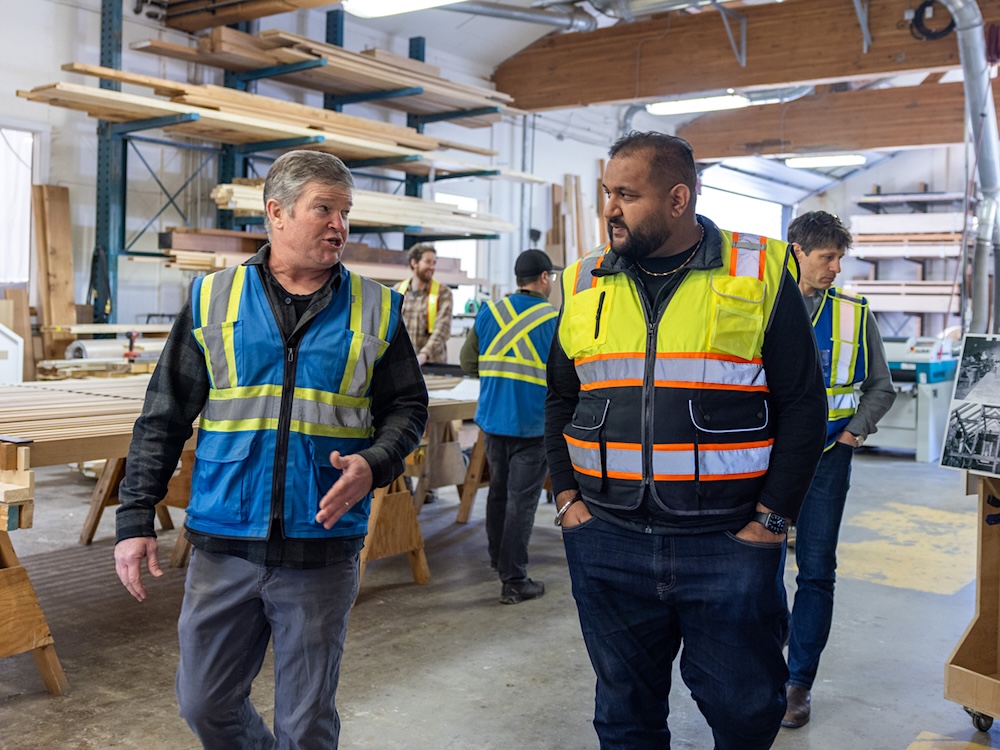
B.C. Forests Minister Ravi Parmar has begun imposing deadlines on some First Nations to try to speed up the drawn-out creation of new regional forestry plans.
In a wide-ranging interview, Parmar told The Tyee that he has informed participants in two regional forest planning groups that they will be expected to complete work by the end of this year.
Work on 15 forest landscape plans, or FLPs, began more than four years ago as part of an extensive effort to overhaul forest management practices in British Columbia.
The plans are to be created after significant discussions with community members, industry representatives and local First Nations. But although B.C.’s former forests minister called the approach “transformational” four years ago, only one forest landscape plan — for a series of watersheds on Vancouver Island south of Port McNeill — has been completed so far.
Now, Parmar said he has told some First Nations that discussions will need to produce results soon.
“I have been very clear to the nations at those FLPs that I value the work that we've been doing together, but I don't have the time and the resources to have these tables extended to Year 5 and 6 and 7 and 8,” Parmar told The Tyee.
He did not identify the specific planning tables or nations that had been assigned deadlines. Ministry officials declined to provide further details when contacted by email.
Premier David Eby has described forest landscape plans as a cornerstone of the province’s new approach to management. They aim to move the forestry sector away from permit-based timber allocations to a more holistic process, with the final plan endorsed by communities, forestry companies and First Nations. In doing so, Eby says, the plans will allow for on-the-ground oversight of logging practices, First Nations guidance of stewardship practices, and increased certainty for the logging sector. Parmar compared the plans to official community plans that guide growth and development in local municipalities.
Despite years of work, most plans are still in the initial “pre-planning” and “value identification” stages, according to a provincial website. That has drawn criticism from industry groups and observers, who have warned the extended process has left the sector in limbo at a critical time.
The Tyee asked Parmar about the years-long efforts to complete the forest landscape plans, ongoing logging in old-growth forests and whether he is confident about the future of forestry in B.C. This interview has been edited for length and clarity.
The Tyee: You and the premier have talked about the intention to move beyond permit-based logging in BC. Forest landscape plans are at the core of the approach, but only one has been completed and most seem to be in their initial stages. Can change be accomplished fast enough to actually make a difference in communities and forests that need change now?
Ravi Parmar: They have to. You’ve touched on the fact that there’s been a good amount of work happening on the land base. We have 15 FLPs stood up across the province to cover just under 50 per cent of the land base.
Over the course of the last year, I’ve had the opportunity to sit at many of those FLP tables and get a better understanding of the complexity of the conversations and what are sometimes the trigger points. I provided direction late last year that my expectation is that industry has to be at those tables. Sometimes government plays the role of an intermediary between industry and nations. Instead of government playing that middleman role, I think it’s important for industry to be there.
There’s always a time and place for [government-to-government] conversations, but it’s important that we have all our stakeholders at the table. So we’re going to be moving forward in a quicker and more efficient way to getting our FLPs from conceptual conversations to action.
As an example, I’ve provided deadlines for two of our FLP tables for this year. I have been very clear to the nations at those FLPs that I value the work that we’ve been doing together, but I don’t have the time and the resources to have these tables extended to Year 5 and 6 and 7 and 8. In many cases, I provided a clear direction around timing, saying that I expect to see a draft report by the end of March and public consultation after that, with the goal of having final confirmation by the end of this year.
We’ve got some unique situations where a number of nations have come to me and said, “Look, instead of working with government, we’ve gone and done this work ourselves, and we now just need to align with government’s process.”
There’s a number of nations across the province, many in the Interior, that have essentially gone and worked with industry and developed their own stewardship plans and see the opportunity to eliminate cutting-permit-by-cutting-permit forestry, to forestry operational plans. That I think is going to provide the stability and certainty that industry is looking for, while also ensuring the nations are at the core of how forestry operates on their territories.
What happens if the deadlines aren’t met?
We haven’t reached that point yet. I’m really counting on those nations, and I have no concerns they will not meet those deadlines. But I have a limited amount of resources available to me.
You’ve certainly seen it in the budget. These are really tough times, and with those resources, I need to ensure that I’m investing them in areas that are going to ensure that we’re building a strong working force within a land management framework that will last for generations. That has to be my priority, and I’m going to align with nations that see that priority as well and want to be able to get to work.
What about the rest of the province — regions that either don’t have FLPs in progress or aren’t among these couple that have timelines in place?
My message to many nations and to many areas of the province, whether they have established FLPs or not, is that there’s nothing stopping us collectively from doing this work. In many cases, there are nations that don’t have established FLP tables [in their regions] but have gone and essentially done the work of engaging with industry, having conversations with neighbouring nations around territorial boundaries, and are essentially doing the work.
And they’re doing the work because they see the value, ensuring that their stewardship principles, protecting biodiversity, making sure that wildlife and wildfires are part of the conversation, making sure that we’re talking about habitat restoration, responsible stewardship, all things that I believe should be at the core of forestry and forest management. The work that we’ve done as a ministry over the course of the last year, and in terms of restructuring these conversations, has allowed many nations to not only see the value of having an FLP but also to see the risks associated with not having an FLP as well.
You’re speaking as if the nations are the groups that might need to facilitate a speedier resolution to these plans. What about those nations that might have reason to say, ‘OK, actually, this isn’t in our best interest or in the best interest of our territory?’
That’s the beauty of FLP conversations when you’re talking about area-based management. That’s exactly the type of conversation we have. I don’t know if it’s fair to use this as an analogy, but I’m going to anyway — I like to describe it as a community doing their official community plan. I recognize that with a land base as complicated and large and vast as British Columbia’s it’s maybe not the best analogy, but when you have an opportunity to bring all your partners to the table — and in the case of our rights holders, who typically have not been invited to the table but now are not only at the table but leading the discussions at those tables — there is an opportunity for nations with very different perspectives around forestry and area-based management to be able to come to the table and have conversations.
I’ve had a number of conversations in the last few weeks, as many nations are fearful of wildfires and the impacts that they’re going to have on their community and on wildlife. I’ve had conversations around biodiversity and ensuring that habitat restoration is core, particularly as it relates to watersheds. There are so many nations that want to have different types of conversations, and I think that’s why these FLP tables can be successful, and really focused on making sure that we can create a platform to have these conversations and also welcome industry to the table to be a part of these discussions as well.
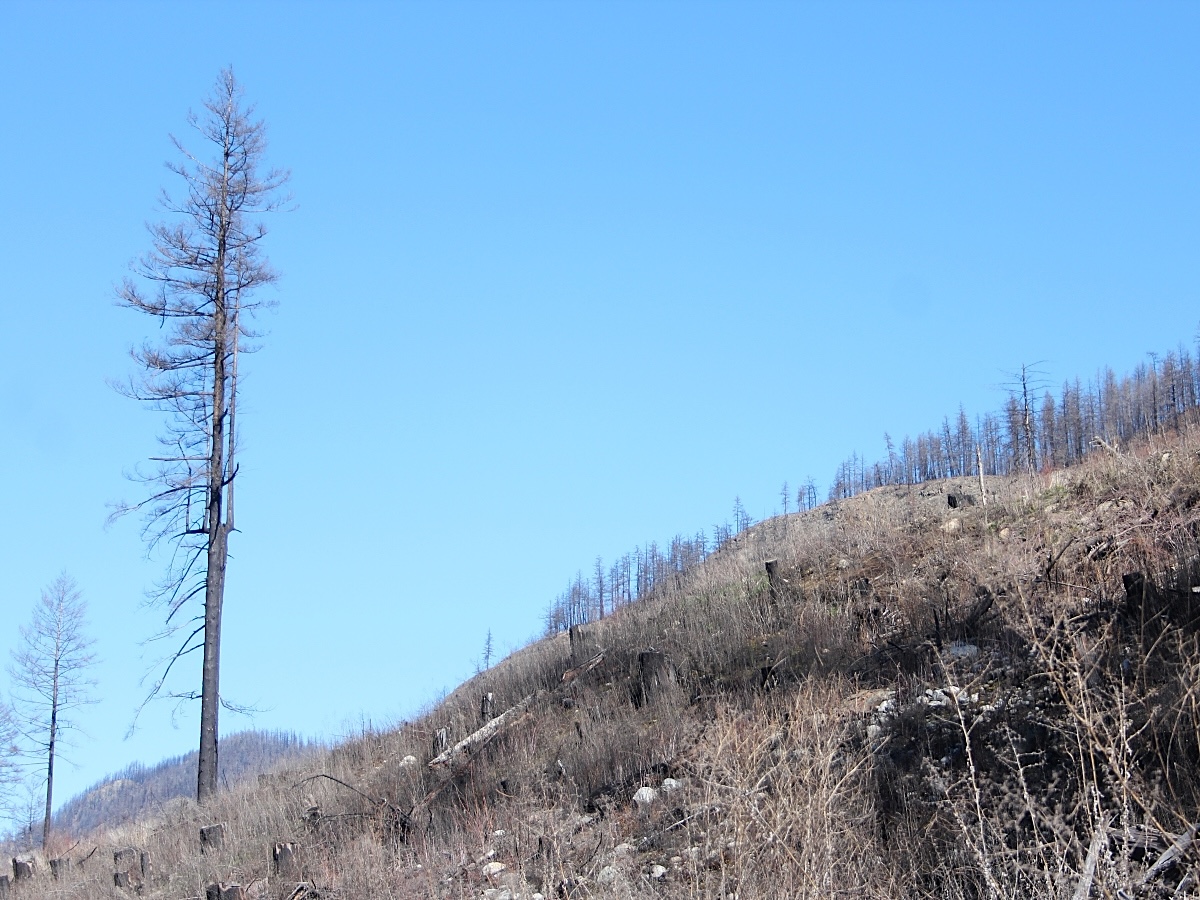
Given the fires a few years ago, there’s a ton of salvage logging still taking place around BC. What’s being done to ensure that the cutting that has taken place now doesn’t create forests susceptible to fires 20 or 30 years from now?
There’s a significant amount of work happening within one of the organizations that I’m responsible for, BC Timber Sales, to ensure that our silvicultural practices are looking at the future of forestry. I’m a big proponent for commercial thinning. I’ve been talking this week about two commercial thinning sales that we’ve awarded from BC Timber Sales in the Prince George area — the first time in our province’s history. I think commercial thinning, selective logging, partial harvesting — practices that are not necessarily unique to British Columbia but we’re not seeing enough of — are going to be the future of silviculture practices we’re going to see here in B.C.
I think it’s going to allow us to ensure that we have healthier forests and allow us to be able to ensure that we’re working to have that working forest within a land management framework that can last us for generations.
Some companies are still using glyphosate and herbicides to reduce the growth of deciduous plants that can help function as fire breaks. Is the government going to do anything about that? BC Timber Sales isn’t using it, but what’s the government doing in regard to the use of such herbicides by companies?
You’re absolutely right that BC Timber Sales hasn’t been using those types of herbicides, glyphosate, since 2022. I think it’s really important to recognize that the use of herbicides like glyphosate in B.C. forestry operations has declined substantially — 88 per cent for areas treated between 2023 and 2018, and 96 per cent overall since the 1990s.
We’re continuing to have conversations ensuring that the province is working with foresters to manage vegetation and growth rates without glyphosate by replanting it immediately after a harvest. Pesticides are regulated by Health Canada, and so we’re going to ensure that we continue to follow Health Canada rules.
How do you foster a more natural type of forest that is naturally resistant to fires, beyond just restricting the use of herbicides?
When you’re talking about building a healthier, more resilient forest for fires and bugs and all the other complexities that happen on our land base, we have to recognize that our land base is large, unique and geographically different, whether you’re in the north, the Interior or the coast.
That’s the beauty of the conversations that we have at FLP tables. In the case of the ʼNa̱mǥis, they did a 300-year analysis based off lidar data that Western Forest Products procured, looking at what the land base is going to look like 300 years from now, with various scenarios in place around harvesting practices and wildfire mitigation and a whole host of things.
When we’re investing in these data sets and creation in partnership with industry, it allows us to be able to make more-informed, science-based decisions.
Over the last year, we’ve seen a bunch of mill closures, some companies pulling out, and it’s created holes in communities, in fibre chains and in the sector as a whole. What is the government doing to try to fill those gaps? And are there any specific initiatives that the government can do to actively intervene in the sector, like fostering worker co-operatives or other sorts of direct interventions?
Sitting off on the sidelines and watching a sector struggle is the wrong approach, and that’s what we saw very clearly from the Conservatives when they sat on the government benches. We know from 2001 to 2017 we saw 100,000 jobs indirectly impacted, and 45,000 direct jobs impacted.
As we face the challenges that we see in forestry right now, with the impact of duties and tariffs, the impact of wildfires, as well as the price of lumber being very low and the complete collapse of the U.S. housing market, we also have to recognize the long-standing issues that we inherited when we formed government in 2017.
We had an absolute concentration of tenure in different parts of the province. In coastal British Columbia, log exports increased by 140 per cent from 2003 to 2017. In coastal British Columbia, there was a failure to harvest the entire profile of a forest and a focus entirely on cedar, which led to many mills not being set up, and investments happened to better position them to be able to deal with second-growth hemlock as a prime example. And First Nations participation in forestry was lacklustre back then. There’s been a considerable amount of work.
To get to the point of your question, I’m focused every single day on stabilizing this sector, being able to deal with the challenges we’re dealing with right now. It’s a perfect storm. But we know that we can’t let American politics dictate the future of forestry workers. There’s a commitment that I leave for workers and communities, that I will work my butt off to ensure that we are never put in this position ever again.
We’ve seen the Trump playbook, and that’s tariffs, threats and bluster, and British Columbians deserve better than that, and they’re tougher than that, and it’s why we have to ensure that we’re working very hard to defend forestry jobs in the communities that depend on them. But we also have to transform the sector, and transform it in a way that ensures that we are no longer just the jurisdiction that provides dimensional lumber to Americans to build homes, but we can make more in B.C. by building a true competitive value-added forest economy.
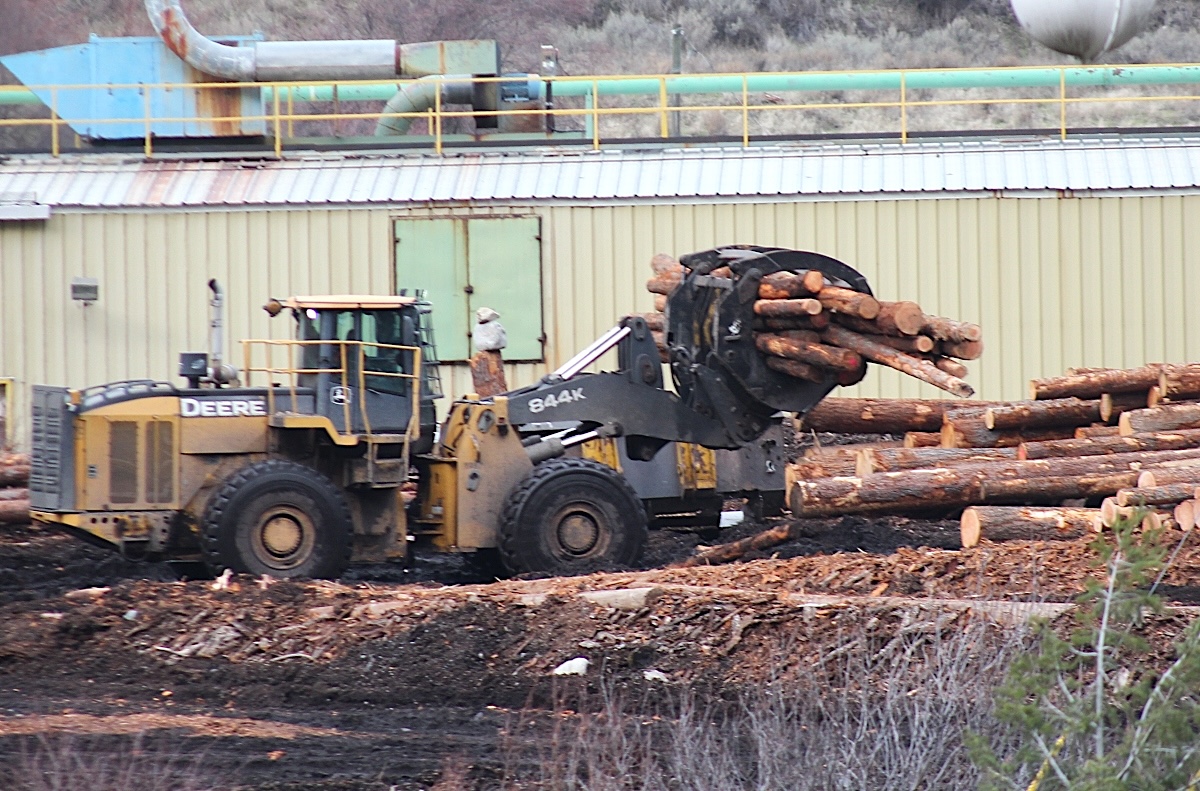
But specifically, what can the government do? In terms of these mills that have disappeared, can the government actually intervene in some way, whether it be by directly operating facilities that might be less profitable than corporations would like, or supporting workers? Has the government considered any kind of out-of-the-box solutions to fill these gaps?
We’re always thinking outside the box in terms of how we can build a strong and prosperous forest sector. We’re not at the stage where we’re looking at purchasing and operating mills like you’re suggesting, but finding a way to ensure that the sector can be competitive and can ensure that it produces good-quality, family-supporting jobs.
In terms of some actionable items: in the case of stabilization, we’ve focused very hard on addressing some of the pricing challenges we have in forestry. Costs have gone up considerably. We are a jurisdiction that has a very complex land base. Transportation costs have gone up substantively, 40 per cent just in the last few years. We’ve got the highest labour standards. I often cringe when people compare us to the U.S. South. I would put our labour standards up against anyone’s labour standards anywhere in this world, and that’s not something that we’re going to back away from.
So how can we ensure that we continue to be a competitive sector, but also at the same time, how can we ensure that we’re transitioning the sector from volume-based to area-based, full rotation management, looking well into the future? I think there are some steps that we can take with this transformation agenda that I’ve been provided by the premier to ensure that we are moving away from a boom-and-bust forest economy to a competitive value-added forest economy that looks 100 years ahead and provides the stability and certainty that workers, communities and companies are looking for.
Why are massive old-growth trees still being logged, given the small number of such trees left and the relatively small role those big trees play in BC’s massive forest industry?
My government, since 2017, has done more to protect old growth and biodiversity than any government in the history of British Columbia. We have seen a massive reduction in old-growth harvesting in coastal British Columbia. We have a specific program in place to be able to help protect large, ancient trees. So there is a considerable amount of work that we’ve done.
We have implemented, or are in the process of implementing, the Old Growth Strategic Review recommendations. The core of those recommendations, as it speaks to coastal British Columbia, is working with First Nations. There are a number of examples where we have worked with First Nations, and they have made clear decisions, not only as rights holders but also tenure holders, where they see opportunities to harvest and where they don’t. And I think it is upon us to respect First Nations rights and title as part of those conversations. I think it’s unfortunate that we see folks out there protesting nations that have made those decisions and trying to disrupt that.
At the end of the day, my job is to ensure that I deliver a balance, making sure that I can defend forestry jobs, create new forestry jobs, while also making sure that I’m protecting biodiversity, wildlife and old-growth trees. And I think there is an ability for us to do that. I think there are those that would love to lift every protection we have in place and just go back to the ability to go mow down everything. And I think there are those out there that want to shut down this sector. I don’t agree with any of those extreme points. I believe in a strong, balanced forest sector that delivers more than it takes and a sector that I believe can be a formidable sector, because I think this is a strategic economic asset for our country.
Some might argue that reducing old-growth logging more than previous governments might be a relatively low bar to clear, and that the reduction in number of old-growth trees being logged might also be a reflection of historic old-growth logging. How do you determine what is the right level of old-growth logging — and I’m talking here beyond the First Nations territorial decisions on logging that you referenced before, but in terms of other areas in which you do have forestry companies deciding to log in areas that have these highly prized, large trees?
I know this from being an MLA from southern Vancouver Island: people care very deeply about our forests. They see them as the identity of our province. So I want to make it known very clearly: I don’t think we have to pick between a strong, prosperous forest economy and a healthy environment. We can deliver both, and that’s what we’ve accomplished with a long-term vision, not through short-term fixes, but the work that we’ve been doing to work with First Nations, to be able to deliver and drive more certainty and stability in the sector through long-term management plans, building on the stewardship and sustainability frameworks that we already have in place or are embedded into our forest economy.
I also think it’s really important that we have a factual conversation when we’re talking about our old forests and old growth. I do hear comments being made about the last of our old-growth trees being harvested. That’s just not factually true. Much of our old forests are not being harvested. In British Columbia, there are 11.1 million hectares of old forest, and of that, 8.9 million hectares are either protected, deferred or uneconomic to harvest, and that is equivalent to 80 per cent. Again, harvesting estimates have shown that throughout the province, harvest of old growth has declined by approximately 69 per cent since 2015, which is the lowest on record in our province.
So I am proud of what we’ve been able to accomplish, and I’m proud of the work that we are doing to build a forest economy for the next 100 years focused on modern technology, updating our current forest management practices, which will mean the ability to ensure that we’re having silvicultural systems in place, and again, protecting biodiversity. It can be accomplished, and I think we’re showing we’re doing that with First Nations at the table.
For someone who lives in a forestry community like Lillooet, where I live, and wonders about the NDP’s ability to protect those remaining jobs and facilities that exist — are you optimistic, or are you fearful about the next two years and what’s to come in terms of the forestry sector?
I think there are tough days ahead, but I have to be optimistic, because I asked for this job.
In the case of those forest communities that you described — your community, and I think for many — they’re seeing how rocky it is. It’s my responsibility as minister of forests to ensure that I’m laying a path forward.
Over the course of the next weeks and months, I’m going to be laying out that path forward for forestry that I believe looks 100 years ahead and delivers a strong, robust and sustainable sector that leads us from boom and bust and leads us towards stability and certainty, and does so in a way where we’ve got those core principles of having a competitive, value-added forest economy, where we’re building healthier, more resilient forest, and we’re forging powerful partnerships so British Columbia does not have to rely on the United States, and can compete and win in global markets. ![[Tyee]](/design-article.thetyee.ca/ui/img/yellowblob.png)
Read more: Labour + Industry, BC Politics, Environment




Tyee Commenting Guidelines
Please note that email notifications for replies are not currently working due to a software issue which may be resolved in a future update.
Comments that violate guidelines risk being deleted, and violations may result in a temporary or permanent user ban. Maintain the spirit of good conversation to stay in the discussion and be patient with moderators. Comments are reviewed regularly but not in real time.
Do:
Do not: