


 SHARE:
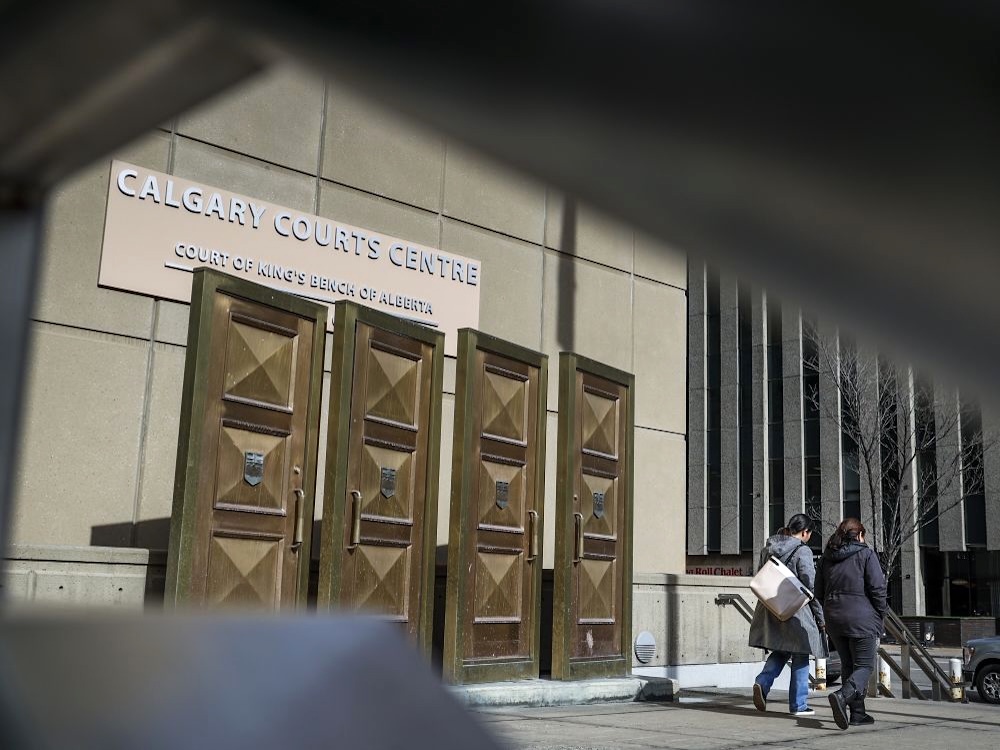
In a bluntly worded Jan. 23 letter to Prime Minister Mark Carney, Alberta Premier Danielle Smith demanded more input in the selection of higher-court judges to better reflect the province’s values and “distinct legal traditions.”
Smith appeared to back up her demand for more input with a threat to withhold funding for any new positions on Alberta’s Court of King’s Bench, noting that there were three vacancies on the court and that a Supreme Court of Canada judge from Alberta soon would be retiring.
Critics characterized Smith’s power move as an attack on judicial independence and a dangerous attempt to politicize the courts.
Federal Justice Minister Sean Fraser flatly rejected Smith’s demand.
“I am planning to maintain the process that we have in place that has independence, that has rigour, that has led to stellar candidates being appointed, including recently in Alberta,” Fraser told reporters.
But Smith’s threat was mostly empty. On Jan. 27, Fraser filled two of the three open positions — and Alberta continues to fund them.
In an email, an Alberta Court of King’s Bench spokesperson told The Tyee that the new appointees, justices Jason Wilkins and Peter Banks, both from Calgary, are working and are being paid by the federal government as required by the Constitution.
“The Government of Alberta’s constitutional responsibility is to pay for the administration and support of the Court of King’s Bench, not the salaries of King’s Bench justices.”
The spokesperson noted that Smith, in her Jan. 23 letter, said that “Alberta’s government will not agree to provide the necessary funding to support any new judicial positions in the province until such engagement and collaboration are provided.”
But the positions filled by Wilkins and Banks are not new positions. They were vacant positions “within the existing judicial complement,” the email states.
“Financial support for these positions therefore already existed within the court’s current operating budget, which is allocated annually by the Government of Alberta.”
This means Smith’s bargaining position is weakened because her threat applies only to future expansion of the complement of Court of King’s Bench judges in Alberta. The federal government can continue to replace retiring judges because the funding to support those positions is already allocated in the province’s budget.
The third position will be filled “in due course,” a spokesperson for Fraser said in an email.
A history of partisanship
Despite the anticlimatic showdown, Democracy Watch co-founder Duff Conacher said the fierce opposition to Smith’s demand has ignored the well-documented history of partisanship in the federal judicial selection process.
Also ignored has been the United Conservative Party government’s blatant political stacking of its own provincial judicial appointment process, which Conacher said raises doubts about any chance of a non-partisan collaborative process with Ottawa.
Fraser “used the word independence,” Conacher said. “The federal process is not independent. It is almost entirely cabinet controlled, and it is highly political and partisan.”
Fraser’s spokesperson said the judicial advisory committees are independent and protect the judiciary’s independence “by keeping judicial appointments at arm’s length from political influence.”
Conacher, however, said Ottawa’s own criteria for appointing the seven members of the provincial judicial advisory committees belie that claim.
Under the criteria, six of the seven members of each provincial judicial advisory committee are appointed by the federal cabinet: three directly and three from lists of nominees submitted by the provincial or territorial law society, the Canadian Bar Association and the provincial attorney general or territorial minister of justice. The province's chief justice chooses the seventh member.
“When six of the seven members of the committees are hand-picked behind closed doors by the federal cabinet, the committees are clearly not independent of the cabinet,” Conacher said.
Smith’s proposal would further politicize choices
Smith is proposing to change the federal system for Alberta so there would be a four-person committee, with two chosen by the province and two by the federal government. The committee would produce a list of names and the federal and Alberta justice ministers would work together to select the judges.
Conacher said that would simply further politicize the federal judicial selection process.
“It would make it multi-partisan,” he said.
“Essentially, what Danielle Smith is asking for is ‘Can we just diversify the patronage here and make sure I get some loyal conservatives appointed as judges, and not just loyal Liberals.’”
Democracy Watch is a Canadian non-profit, non-partisan watchdog organization that advocates for improved government accountability and corporate responsibility. It says that since its inception in 1993 it has forced more than 200 changes to federal and provincial laws.
Fraser’s assertion that the federal judicial system is independent ignored a 2024 ruling from the Federal Court of Appeal, Conacher said.
Democracy Watch argued that the federal appointments system was too open to political interference, in violation of both the constitutional principle that guarantees the independence of courts and the public’s Charter right to impartial courts.
For years there had been insufficient evidence to challenge the inherent political influence in the judicial selection process, Conacher said, until a Liberal staffer walked out with a memory stick of internal emails.
As first reported by the Globe and Mail, dozens of emails between ministerial staffers in 2017 and 2018 revealed that the Liberal government sought input from a broad network of party officials and even volunteers across the country to choose which lawyers received judicial appointments.
The emails also revealed the Prime Minister’s Office consulted with local Liberal MPs on nominations in their ridings.
The Liberals revamped the judicial selection process in 2016. The change was needed after its wholesale politicization under Stephen Harper’s Conservative government, as revealed in a groundbreaking investigation by Globe reporter Sean Fine.
Fine’s investigation found the Harper government employed much the same behind-the-scenes political vetting system as the Liberals to identify candidates for hundreds of judicial appointments.
Still, Democracy Watch lost its case at the Federal Court of Appeal.
“We should have won,” Conacher said. “They [the court] just kind of rolled over and said, ‘We haven't seen the Liberals appoint only Liberals, and we're going to wait for that to happen before we will step in.’”
But, “it was a good shot across the bow at the federal cabinet that said, ‘Be careful. You better not be trying to appoint only big-L liberals.’”
Don’t give politicians final say: Conacher
Conacher said the best way to ensure impartial appointments is to create a system that doesn’t allow politicians to have the final say about which candidates are appointed as judges.
“The federal and Alberta judicial appointments processes should have been changed to be much more independent long ago,” he said.
Alberta’s history of politicization of its own provincial court judicial selection process is certainly no secret.
In 2013, a CBC investigation found that a politically stacked provincial judge nominating committee led to the appointment of Conservative-connected judges.
In 2020, UCP Justice Minister Doug Schweitzer purged the provincial judge nominating committee and replaced the members with hand-picked appointees.
One of the appointees, Leighton Grey, resigned after CBC revealed he had compared the COVID-19 vaccine to Auschwitz tattoos and had posted a video on social media that called Black Lives Matter a “leftist lie” controlled by a Jewish philanthropist.
Smith herself doesn’t appear to respect what Conacher referred to as “the clear bright line” that should exist between politicians and the justice system.
In May 2023, Alberta’s ethics commissioner found Smith had contravened the province’s Conflicts of Interest Act for attempting to intervene in the criminal prosecution of a far-right Calgary pastor who was facing charges related to the COVID-19 border protest at Coutts, Alberta.
More recently, Smith’s government has used the notwithstanding clause four times. Both Smith and Justice Minister Mickey Amery have continued to frame their government’s expansive use of the notwithstanding clause as protecting the rule of law from “political activism” by the judicial system and regulatory bodies.
‘It’s a negotiating position’: Smith
Smith, meanwhile, has not backed away from her threat to withhold court funding for new judges unless her demand for parity is met. On Feb. 7, the host of Smith’s weekly radio call-in show asked her if withholding funding was the best way to effect the change she is seeking.
“It is a negotiating position,” Smith said, adding that future appointments under a new system would be Amery’s responsibility.
“I trust his judgment,” Smith said, when asked by the host if there would be any oversight to ensure appointments remain impartial.
“I think that he has already demonstrated, because he does KC [King’s counsel] appointments, that there is an established process for that.”
A King’s counsel appointment is an honorary title awarded to lawyers based on a number of criteria, including exceptional expertise in an area of law, a reputation for honesty and integrity, and mentoring or significant contributions to the legal profession or public life.
While the designation is considered a rare achievement in the United Kingdom, the Alberta government for years has handed out the designation like Halloween candy. In December, Amery announced 86 King’s counsel appointments.
Calgary lawyer and former Conservative MP Devinder Shory was one of the appointees. In May 2010, Shory was accused in one of the biggest mortgage frauds in Canadian history. He denied any wrongdoing. Both the RCMP and the Calgary Police Service declined to investigate the massive fraud.
Conacher noted Smith has publicly mused that she would like to be able to “direct” judges in relation to bail.
“Premier Smith essentially wants to be able to ensure that laws are enforced exactly as she, as a politician, wants them to be enforced, ignoring both the law and the facts if they don’t serve her purposes.
”And one of the most dangerous things to democratic good government is having a politician in any way able to direct the enforcement of laws. It is dictatorial. It is deeply undemocratic and it is unethical.”
If you have any information for this story, or information for another story, please contact Charles Rusnell in confidence via email. ![[Tyee]](/design-article.thetyee.ca/ui/img/yellowblob.png)
Read more: Alberta











Tyee Commenting Guidelines
Please note that email notifications for replies are not currently working due to a software issue which may be resolved in a future update.
Comments that violate guidelines risk being deleted, and violations may result in a temporary or permanent user ban. Maintain the spirit of good conversation to stay in the discussion and be patient with moderators. Comments are reviewed regularly but not in real time.
Do:
Do not: