

 SHARE:
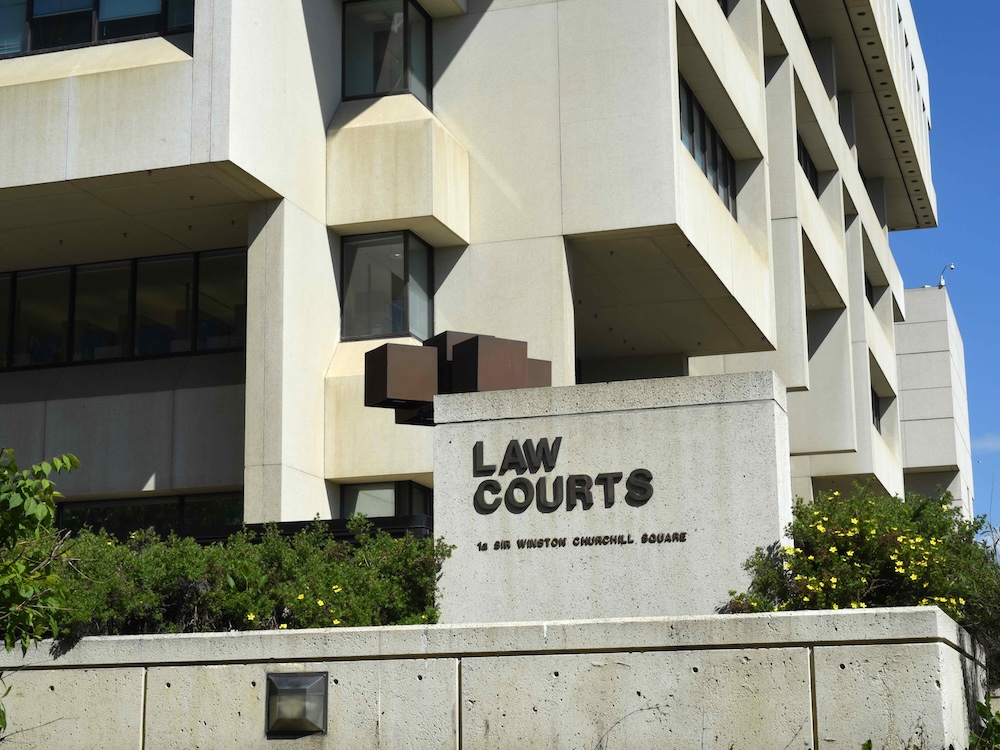
Alberta’s chief justice is investigating the conduct of two judges after the Investigative Journalism Foundation uncovered evidence suggesting they gave money to the United Conservative Party after being appointed to the provincial court bench.
Judge Daniel Robert Pahl was appointed to the Alberta Court of Justice in 2002 and again in 2013 and currently sits in Calgary as a supernumerary, or part-time, judge. Records from Elections Alberta show someone with the same name made financial contributions to the UCP from Calgary in 2018, 2022 and 2023, totalling $3,535.
Judge Gordon Kenneth Hatch was appointed in 2021 and sits in Camrose. Someone in Camrose with an identical name gave $262.50 to the UCP in 2022, according to the party’s quarterly contributions report.
Partisan behaviour like this would run against the ethical standards for judges.
The Canadian Justice Council’s guidelines, which have been adopted by the Alberta Provincial Justices’ Association, state that all partisan political activity must cease upon appointment and judges should refrain from membership in political parties, political fundraising and “contributing to political parties or campaigns.”
Alberta’s Chief Justice James Hunter told the IJF in a statement that he had started a review of the potential political donations made by Pahl and Hatch.
“Given that this conduct has come to the attention of the chief justice, the chief justice has commenced an investigation,” he said.
“After reviewing a matter regarding the conduct of a judge, the chief justice may take any of the measures set out in Part 6 of Alberta's Judicature Act.”
The act gives the chief justice power to reprimand the judges, take corrective action, refer the matter to the judicial council or determine that no further action is needed.
Pahl and Hatch both declined to comment. Hunter said Pahl is scheduled to retire on Oct. 23 and at that time will no longer fall within the chief justice’s authority.
The IJF identified the donations by cross-referencing appointments of judges across Canada since 2010 with the data in our political donors database. This comparison was made possible by a new IJF database of appointments that is set to launch later this week.
The analysis also identified a judge in B.C. who apparently forgot to turn off her automatic monthly donations to a political party after her appointment. The IJF found possible cases in New Brunswick and Ontario as well.
University of Ottawa law professor Adam Dodek said it was shocking and disappointing to hear of any judge donating to a political party. He called this one of the clearest possible indicators of partisan affiliation.
“At the point that somebody's appointed a judge, they take an oath to be impartial, to favour no party or to be against no party, to deal with each case on its merits,” he told the IJF.
“I can think of few things that would undermine public confidence in the impartiality of our judges [more] than the disclosure that a judge is still involved in any way in partisan politics.”
These revelations follow a previous joint investigation from the IJF and the National Post into the political donations of judges who have been appointed by the federal Liberal government since 2015.
That reporting uncovered evidence that Ontario Superior Court Justice Diana Piccoli had donated to the Liberals three times after being appointed to the bench. The CJC investigated and issued its first ever “expression of concern” last year in response to the donations.
“Political donations by a judge are not trivial and have the potential to undermine public confidence in the independence of the judiciary,” the council said in a statement at the time. ‘The hardest possible sanctions’
Drawing a hard line between Canadian courts and electoral politics is imperative in the current climate, Dodek argued. He believes Canadians need to see evidence judges are not partisan in the face of a flood of news about the politicization of courts in the United States.
“It's much more important now in Canada than it ever was, and certainly any time in my career over the last 20 or 30 years. I think that judicial councils should come down with the hardest possible sanctions on judges who violate this rule,” he said.
David Said, an assistant professor of political science at McMaster University, suggested that political pressure on the courts is already growing on this side of the border, pointing to Ontario Premier Doug Ford’s promise to “triple down” on appointing tough-on-crime judges.
“Our politicians are seeming to be more open, quite frankly, with their thoughts on who should be in these positions,” he said.
Said believes this is particularly troubling for people who have no choice about participating in the justice system.
“Especially in criminal court, where individuals are forced to come before a judge, it would be concerning for that individual to know that the decision made against them could be, in some ways, tied to some sort of politics,” he said.
Judges are also called upon to make decisions about matters that directly involve governments and politicians. Canadians need to have faith in a judge’s independence in these cases, which is tough when that judge has made partisan donations, according to Troy Riddell, chair of the political science department at the University of Guelph.
“If a case comes before him or her that involves either the government directly or a government policy, will that judge act in an impartial manner?” he said.
In some cases, political donations by a judge may be inadvertent and cleaned up quickly once they are discovered — like when a newly appointed judge forgets to turn off automatic payments.
That’s what happened to Elin Sigurdson, who was appointed as a BC Supreme Court justice last year. The IJF’s records show she made two $20 donations to the municipal political party OneCity Vancouver after her appointment, both times on the 15th of the month. Her sister was a OneCity candidate for school board in the last civic election.
B.C. courts spokesperson Bruce Cohen said he confirmed the donations with Sigurdson and described them as an oversight that was immediately corrected.
“I am informed that at the time of her appointment Justice Sigurdson took reasonable steps and made best efforts to ensure that her political involvement ceased, including with OneCity,” Cohen wrote in an email.
“However, there was an automatic donation associated with her membership in OneCity which she did not realize continued after her appointment until she was notified by the party, at which point she confirmed that she no longer would make contributions to the party.”
Acadia University politics professor Erin Crandall described this as a problem that anyone who’s lost track of their monthly subscriptions can relate to.
“I think we can distinguish here between a deliberate and knowing action to make a donation to a political party once you've been appointed, and when you have just, through a very relatable oversight, forgotten to discontinue an automatic donation,” she said.
With data analysis by Martin Allen. ![[Tyee]](/design-article.thetyee.ca/ui/img/yellowblob.png)
Read more: Alberta











Tyee Commenting Guidelines
Please note that email notifications for replies are not currently working due to a software issue which may be resolved in a future update.
Comments that violate guidelines risk being deleted, and violations may result in a temporary or permanent user ban. Maintain the spirit of good conversation to stay in the discussion and be patient with moderators. Comments are reviewed regularly but not in real time.
Do:
Do not: