


 SHARE:

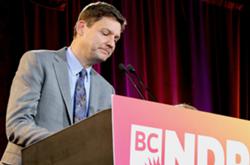
After BC NDP convention delegates unanimously passed a resolution calling on the government to repeal restrictions it made last year on people changing their names, Premier David Eby says the government will review the law.
“The resolution as I understand it has raised concerns about unintended consequences,” Eby said, giving the example of a student from Kelowna he met who wanted to make sure her identification correctly reflected her name and gender before she began studies in the United States.
“We can address those unintended consequences that prevent people from being able to legitimately and appropriately change their names... without changing that core principle that you should not be able to change your name to avoid consequences of what you’ve done,” he said. “We’ll work with the community to make sure we're addressing those unintended consequences while maintaining that core provision to protect all British Columbians.”
In May 2024 the government passed the Name Amendment Act prohibiting legal name changes for people who have been convicted of certain crimes, declared to be a dangerous or long-term offender or found not criminally responsible for an offence due to a mental disorder.
It requires anyone older than 12 who wants to legally change their name to have a criminal-record check within the 30 days before they apply to the Vital Statistics Agency.
Under pressure from the official Opposition, the government announced the changes after news reports that Allan Schoenborn had legally changed his name to Ken John Johnson in 2021. Schoenborn was found not criminally responsible for killing his three children in Merritt in 2008.
After the law went into effect a year ago, The Tyee reported that organizations representing Indigenous people, LGBTQ2S+ people, survivors of gender-based violence and sex workers said the changes threaten the safety and well-being of vulnerable populations who require legal name changes.
Adrienne Smith, the chair of the NDP’s sexual orientation and gender identity, or SOGI, committee, spoke at the convention in favour of repealing the law.
“Every MLA in the province voted for this, regardless of party,” Smith said, inciting shouts of “Shame” from delegates. “The Liberals congratulated us on it. It was a terrible mistake and it has led name changes in the province to be delayed by more than one year.”
The law is rooted in a “baseless fear that bad actors could evade responsibility for their crimes by changing their names,” Smith, who is a lawyer, wrote in the SOGI committee’s report to the convention. “It is not actually possible to hide a criminal record and our government already has sufficient tools to identify applicants through fingerprinting, and to deny applications made for an improper purpose.”
The list of crimes ruling out name changes includes minor charges like trespassing and breaking and entering, as well as charges used to criminalize gay sex and sex work, Smith wrote.
“People who fight back against an attacker are caught by the law,” Smith added. “There is no flexibility to consider the circumstances of the charge the way a court would do. It applies to people who have served their sentences.”
People blocked from getting legal name changes will include “trans people hoping to avoid a life of misgendering; Indigenous people seeking to reclaim Indigenous names; and survivors of violence hoping to start again somewhere safer.”
The law also makes getting a name change more expensive, they said.
The party’s women and gender rights committee also endorsed the resolution. “People who have experienced sexual and intimate partner violence warn that the restrictions could trap them under names that keep them vulnerable to abusers,” its report said.
“The name change ban is causing real harm,” said Morgane Oger, a past NDP candidate and party official who was previously an official with the Vancouver Pride Society. “This ban turns past convictions into lifelong barriers. It blocks access to housing, safety, work, education and health care, and the people hurt most are already treated unfairly in policing and the courts.”
Banning some people from legally changing their name doesn’t make anyone safer, Oger said, adding that the same rules should apply to everyone.
“Name changes through marriage or adoption are excluded,” she said. “When dignity is denied, but old patriarchal norms are protected, something is very wrong.”
Citizens’ Services Minister Diana Gibson said the government’s next step is to talk with people who are affected.
“There’s been engagement previously, but we’ll of course be doing more,” said Gibson, who was first elected last October. “Having just gotten Vital Statistics in our ministry it’s not something I’ve been looking at closely, and of course that was made before I was in government, but it’s certainly something that I will be looking at now.”
The government will consider the unintended consequences critics have identified, then work towards making sure it has got the balance right, she said.
“When somebody’s looking to change their name, often it’s about so much more than their name and we recognize the importance of that and are looking at any unintended consequences of the legislation while ensuring that somebody who has a criminal act can’t use a name change to escape responsibility.”
The Conservative Party of BC called the convention’s resolution “shocking and reckless” and said the government should ignore party activists.
“I hope it does get revisited,” said party leader John Rustad. “From my perspective there’s no way that criminals should be protected by changing their name under any circumstances and trying to hide their history.”
Eby said that while the government is open to hearing concerns, it is committed to achieving the law’s original goal.
“There’s one principle here that is not going to change and is immutable in my opinion,” he said, “which is people should not be able to escape the consequences of a criminal act they engage in by changing their name, and we're going to ensure and continue to ensure that is the case.” ![[Tyee]](/design-article.thetyee.ca/ui/img/yellowblob.png)
Read more: Rights + Justice, BC Politics










Notice about commenting changes
The Tyee’s commenting system will be moving to a new platform on Nov. 12. If you’re already a Tyee commenter you must register with the new system on or after Nov. 12 with your preferred username.More information can be found here.