

 SHARE:
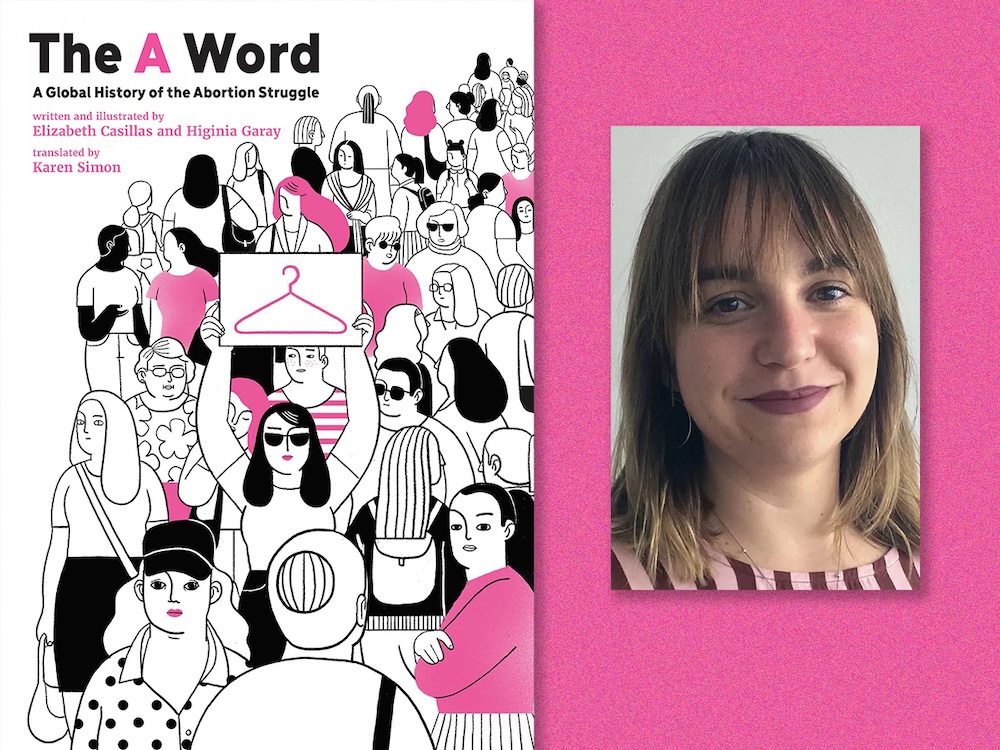
In an era of powerful men pushing creepy pronatalism views, and the overturning of U.S. abortion rights, comes an extremely handy graphic novel that works as a field guide to understand the anti-abortion playbook.
The A Word: A Global History of the Abortion Struggle, written by Elizabeth Casillas, illustrated by Higinia Garay and translated by Karen Simon, takes a deep dive into the history of abortion access across thousands of years and dozens of countries, cultures and religions.
The main takeaway is that banning abortions doesn’t prevent people from having them — it just means more people will die trying to access them.
This graphic novel was first published in Spain in 2022, was translated and published in France in 2023 and will be released in English for North American audiences by the University of Regina Press on Oct. 21.
From 2010 to 2014 there were 56 million abortions per year worldwide, but 45 per cent of those abortions were not safe and it’s estimated that 40 per cent of those who experience complications after an abortion never receive treatment, according to the book.
This leads to at least 47,000 people dying each year because of complications after an abortion, the book adds, noting that “almost all of those deaths occur in countries where abortion is rigorously prohibited.”
Most of the people dying after an unsafe abortion are poor.
Casillas leads audiences through what we mean when we talk about abortion, how religion and colonization are deeply intertwined when it comes to abortion access, and how the patriarchy, eugenics and racism have always been driving factors behind controlling people’s access to abortion.
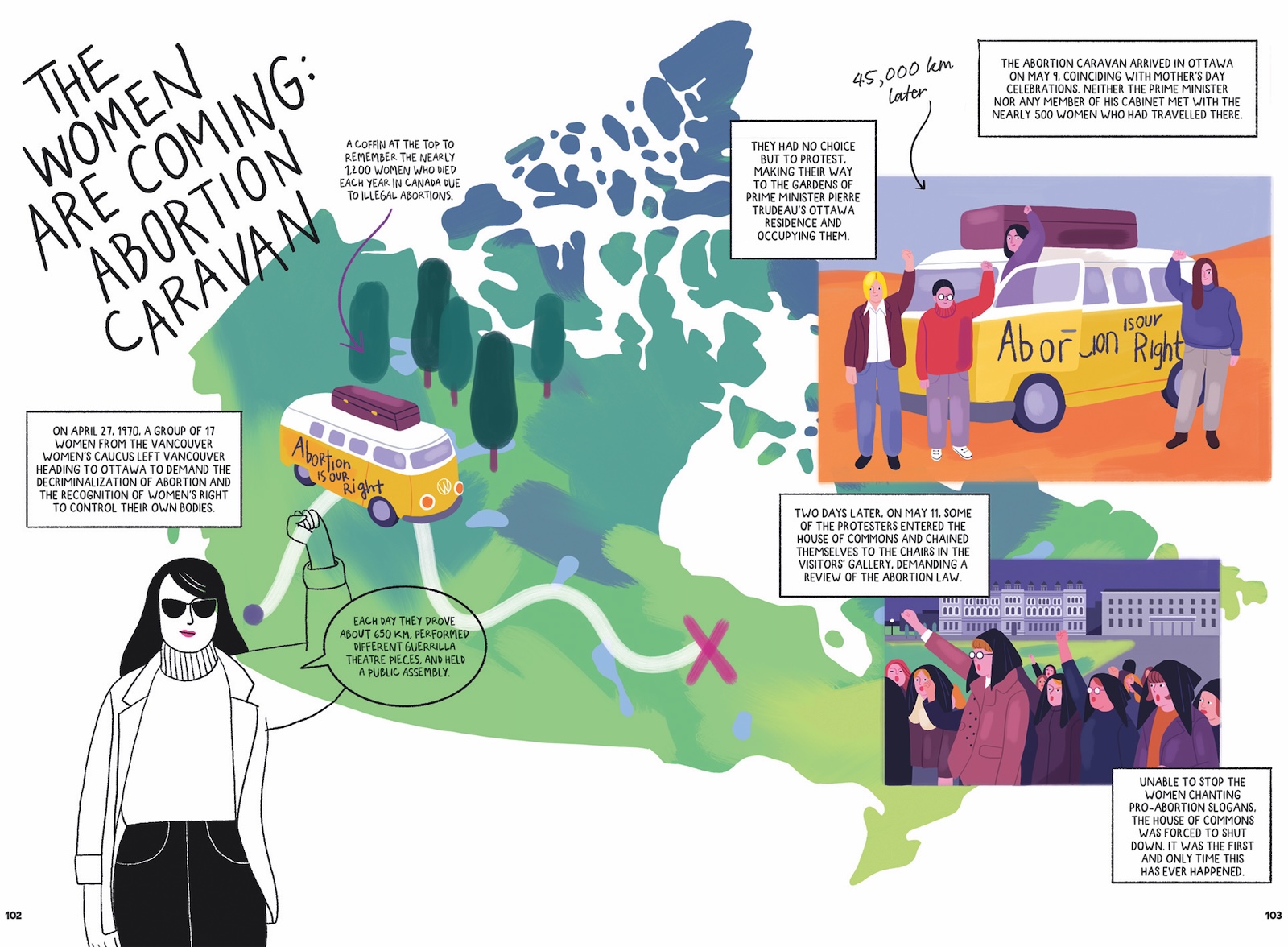
But the book isn’t all dark. Casillas points to several success stories, including an entire chapter on Canada where people celebrate their hard-won rights. The chapter tells the story of Dr. Henry Morgentaler, a Holocaust survivor and advocate for unrestricted abortion who believed there would be less evil in the world if every child were born into a family that wanted them, and the 17 women from the Vancouver Women’s Caucus who drove to Ottawa in 1970 to demand the decriminalization of abortion.
The book also shares the story of how abortion has been used in times of severe oppression to afford some amount of bodily autonomy to oppressed peoples. Like in the United States in 1807.
At that time the United States had banned the selling of enslaved peoples, but it was still legal for people to be born into slavery if their parents were enslaved. In part as a result of abortions, birth rates on plantations were abnormally low and remained that way until slavery was eradicated.
The Tyee sat down with Casillas over a video call, with Casillas calling in from Spain, to discuss the politics of power, what we can learn from zines, how to argue with an anti-abortion loved one at Christmas, and what gives her hope in the global fight to provide free and legal abortions.
As Casillas would be doing the interview in her third language, The Tyee agreed to share interview questions ahead of time. The following interview has been edited for length and clarity.
The Tyee: Why did you want to dedicate an entire chapter on the history of abortion to Canada?
I wanted to shed light on the history of abortion in the country the book was published in. It’s important to understand that abortion is not a new issue. A lot of women have been fighting for this for generations.
Why do you think there has been such a long struggle to access abortion? Why do powerful religious or conservative groups focus on controlling or limiting abortion rather than supporting young, poor or marginalized parents?
In terms of power, the question is: Who wins from controlling women’s bodies? Research has shown abortion rates are similar in the countries where it is restricted and where it is allowed by law.
So who benefits? The Catholic Church or the more conservative political parties start talking about abortion in every campaign instead of talking about things that would benefit people. It comes down to power.
In some parts of Canada and the United States, books are being banned for referencing 2SLGBTQIA+ communities, trans issues or sexuality of any kind. So I’m curious if you think your book will be able to get into schools? Who do you think should read your book?
It’s a useful book for people who don’t really know what abortion is or who want to know more so they can form their own opinion.
I have a joke that it’s the ideal book to give your brother-in-law for Christmas, or your uncle or your dad — a relative who doesn’t have the same ideas as you but wants to share their opinions. It’s the perfect gift!
But it can actually be fairly useful in giving you arguments in a discussion about abortion.
I would love for it to be read in schools because it has a great educational value.
The story is guided by a narrator with dark hair and pink lips. She’s so kind and empathetic. Why did you add her to the story?
As a writer I needed a character who can pull on many strings. It’s a comic with a lot of text and I wanted to speak directly to the reader.
I left the aesthetic decisions in the hands of the illustrator, Higinia Garay, who did a really good job.
She told me when she was little she didn’t like pink because she was forced to wear it because she was a girl. When she was older she rediscovered a love for pink because of how the colour was used in fan zines she read in the 1990s.
There have already been horrifying stories coming out of the U.S. since Roe v. Wade was overturned. The one that jumps out to me is the brain-dead woman in Georgia whose body was kept on life support because she was pregnant.
What frightens you the most about the global fight for abortion access as someone who knows so much about it?
We are seeing a lot of reactionary politics. If I’ve learned anything from making this comic it’s that it has always been like this. For every step forward there was a step backward. For example, when abortion was approved in Argentina, the Polish government banned abortion.
What scares me the most now is that people are in a world where it’s not about whether or not people are going to have an abortion, but whether or not we are going to let people die from unsafe abortions or put pregnant people at risk just because we don’t want them to have abortions.
As I said before, it’s been proven that abortion is going to be there and the question is whether or not it’s safe and who has access to that safe abortion.
The book does a really great job of laying out that argument so concretely. It’s just so tragic.
It’s really an economic problem because if you have money you can access better health care or abortion, but the reality is poor women die from unsafe abortions.
That’s all the more scary in the U.S. context where there’s so much economic disparity that determines if you can access health care in the first place.
In Spain we’re lucky because we have public health care. It’s free for everyone. For me it’s insane to think of the U.S. health-care system. I can’t understand it.
I also feel lucky to live in Canada where we also have universal health care, but abortion can be difficult to access especially in small or remote communities that might not have abortion services.
But let’s try to end this on a high note. What gives you hope?
My hope is that there are a lot of young women who are willing to fight for these rights. For many of us talking about abortion is no longer taboo, or at least not as much as it used to be.
Progress! ![[Tyee]](/design-article.thetyee.ca/ui/img/yellowblob.png)
Read more: Health, Books, Rights + Justice






Tyee Commenting Guidelines
Please note that email notifications for replies are not currently working due to a software issue which may be resolved in a future update.
Comments that violate guidelines risk being deleted, and violations may result in a temporary or permanent user ban. Maintain the spirit of good conversation to stay in the discussion and be patient with moderators. Comments are reviewed regularly but not in real time.
Do:
Do not: