


 SHARE:
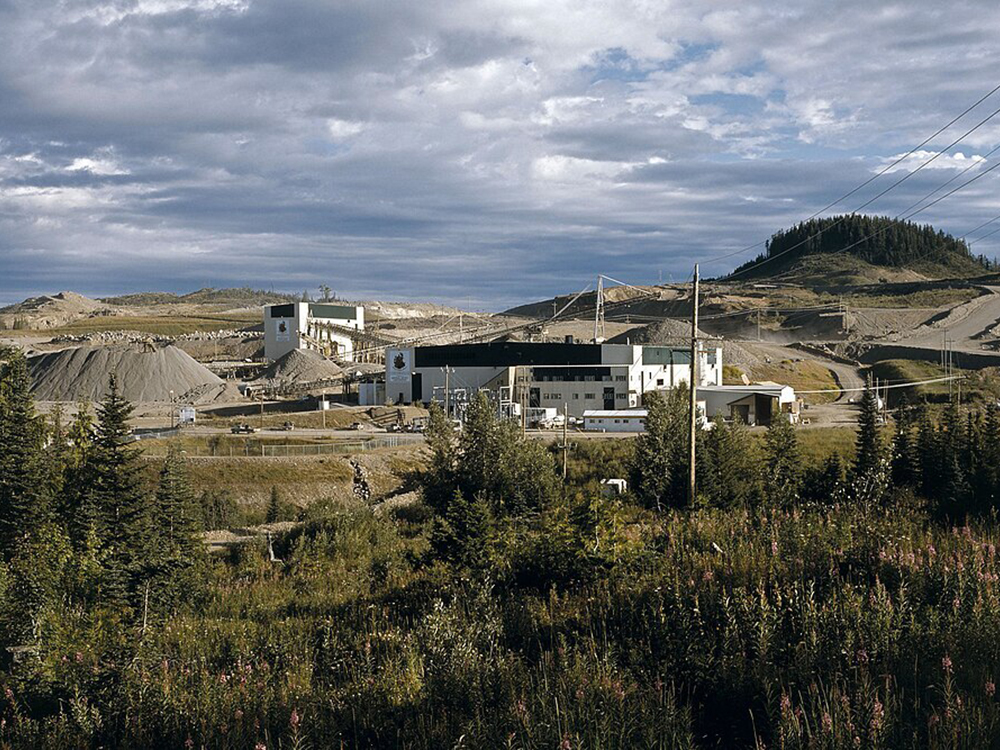
A B.C. Supreme Court justice has dismissed the Xatśūll First Nation’s request to overturn a provincial decision allowing the expansion of the Mount Polley mine’s tailings facility.
The mine’s tailings dam failed catastrophically on Aug. 4, 2014, depositing 25 million cubic metres of mine waste into the Fraser watershed. It is considered one of the worst mining disasters in Canadian history.
Vancouver-based mining company Imperial Metals, which operates Mount Polley, faces federal charges related to the 2014 breach. In December, the company was charged with 15 offences under the federal Fisheries Act. Those charges remain before the court.
The gold and copper mine, which is about 55 kilometres northeast of Williams Lake in B.C.’s central Interior, resumed limited operations one year after the disaster and returned to full operations in June 2016 after receiving authorization to continue depositing mine waste into Quesnel Lake.
In March, following a recommendation by B.C.’s Environmental Assessment Office, Minister of Mining and Critical Minerals Jagrup Brar and Minister of Environment and Parks Tamara Davidson signed an order approving the tailings expansion through a material alteration to Mount Polley’s original Mines Act certificate, which was issued in 1992.
In a statement issued this afternoon, Xatśūll First Nation said it is disappointed with the court’s decision.
“This is the same facility that breached and devastated Xatśūll’s territory in 2014 — the worst mining disaster on record. Its impacts are still harming our Nation’s rights, culture and way of life today,” the nation wrote.
“We will be reviewing the decision as well as exploring our options to determine next steps.”
Xatśūll applied to the court in April for a judicial review of the province’s decision. The nation said it was not properly consulted and argued that the mine should have to undergo an environmental assessment before the tailings dam raise was approved.
As he delivered his decision this morning, Justice Michael Tammen acknowledged the “widespread and long-lasting environmental damage” the tailings pond breach has caused, as well as its impacts to Xatśūll rights, title and way of life. The nation’s 5.6 million hectares of traditional territory include the mine site.
“Xatśūll is obviously and understandably extremely concerned about the potential for a further failure and thus has a corresponding interest in ensuring that the mine is being operated in an environmentally responsible and safe manner,” Tammen said.
But the judge disagreed that the province’s Environmental Assessment Office did not adequately consult the nation on plans to expand the tailings facility.
The bar for deep consultation had been met, he said.
“I view the consultation here as deep and, importantly, the process employed by the province provided Xatśūll with ample opportunity to present their perspective on impacts to their Section 35 rights,” he said.
“The procedure taken was substantively fair to Xatśūll.”
While Xatśūll’s lawyers argued that the province’s “agree to disagree” response to nation’s concerns contravened the province’s duty to consult, and that the government should have engaged in dispute resolution, Tammen disagreed.
He said the province does not have a legal obligation to reach a consensus with First Nations.
“I am also satisfied that the broader matter in which the EAO interpreted its legislative scheme was consistent with the [Declaration on the Rights of Indigenous Peoples Act],” Tammen added. “No consensus was ultimately reached, but the EAO made legitimate efforts in that regard.”
Tammen added that he “would not hesitate” to overturn the provincial approvals if the province had breached its duty to consult.
However, he said that consultation needed to be “focused on a specific issue” — in this case, the decision to allow the mine to raise its tailings dam by four metres, from 970 metres to 974 metres above sea level.
Mount Polley has also applied to further expand operations and extend the mine’s life, something that would include an additional dam raise to 987 metres. Tammen said that a decision on what is known as the Springer Pit expansion has not been made and was therefore was not part of the judicial review.
During a hearing held over several days in June, the court heard that Mount Polley has incrementally raised its tailings dam facility since the mine began operations in 1997 under a condition of its original certificate that allows “staged expansion.”
It had already exceeded the maximum height authorized under that certificate when the dam failed in 2014, Xatśūll’s lawyers told the court.
Tammen said Mount Polley’s environmental certificate, issued long before the province overhauled its Environmental Assessment Act in 2018, is “atypical” by today’s standards. Unlike modern certificates, Mount Polley has a “built-in mechanism” for approving material alterations to the project, he said.
The task for the EAO, and by extension the ministers who approved the project, was to determine how Mount Polley’s certificate “interfaces” with existing legislation, he said. He disagreed with Xatśūll’s position that the mine did not have a valid certificate because there had been no amendment to its Environmental Assessment Certificate prior to the province’s approval.
In dismissing Xatśūll’s petition, Tammen said there was “no basis” for an injunction also requested by the nation.
The nation had originally applied for an interim injunction that would have stopped construction on the tailings facility dam raise as the matter remained before the court.
The parties instead reached an agreement in May that the mine could continue construction to raise the dam as long as the additional tailings capacity wasn’t used until the case was settled.
Injunctions are rarely granted to First Nations who oppose industrial projects on their traditional territories, according to a 2019 study by the Yellowhead Institute.
The study looked at more than 100 injunction cases involving First Nations going back to the 1950s. It found that injunction applications filed by industry and government against First Nations had a 76 per cent success rate, while injunction applications by Indigenous groups had an 18.5 per cent success rate.
University of Windsor assistant law professor Irina Cerić updated those statistics in 2021 and found injunctions sought by corporations against First Nations had jumped to an 81 per cent success rate following the Wet’suwet’en solidarity protests the year prior. ![[Tyee]](/design-article.thetyee.ca/ui/img/yellowblob.png)









Tyee Commenting Guidelines
Please note that email notifications for replies are not currently working due to a software issue which may be resolved in a future update.
Comments that violate guidelines risk being deleted, and violations may result in a temporary or permanent user ban. Maintain the spirit of good conversation to stay in the discussion and be patient with moderators. Comments are reviewed regularly but not in real time.
Do:
Do not: