


 SHARE:
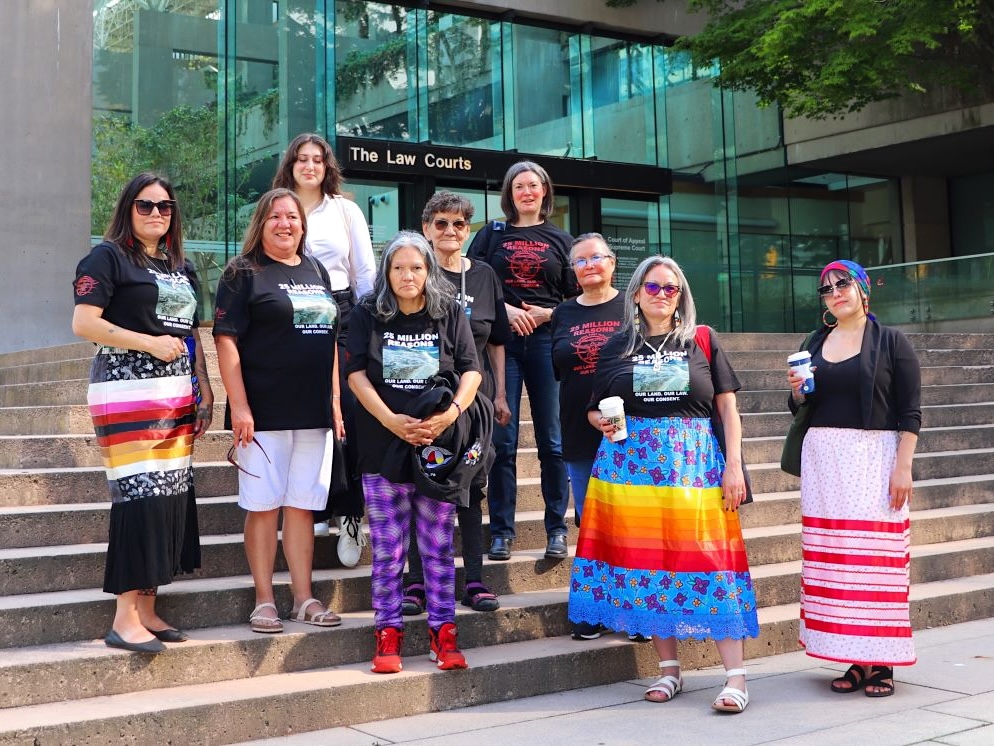
Mount Polley mine’s tailings dam had already exceeded the maximum height authorized under its environmental certificate when it experienced a catastrophic failure more than a decade ago, lawyers for Xatśūll First Nation told B.C.’s Supreme Court this week.
The Aug. 4, 2014, tailings storage facility breach deposited nearly 25 million cubic metres of mine waste into the Fraser watershed. It is considered one of Canada’s worst mining disasters.
Mount Polley, an open-pit gold and copper mine in B.C.’s central Interior, initially began operations in 1997 with a tailings facility that rose 935 metres above sea level, the court heard. The following year, the dam’s height was raised by another five metres under a condition of its environmental assessment certificate that allows “staged expansion.”
By August 2014, when the dam breached, the embankment was approximately 967 metres above sea level. Once repairs were completed in 2023, it reached 970 metres above sea level, or roughly 60 metres above the ground.
Mount Polley is currently raising its dam by another four metres, construction permitted by the province earlier this year. That will bring the dam to 974 metres — nearly 20 metres above the 955-metre maximum height allowed in the mine’s environmental assessment certificate, according to evidence presented in court this week.
Lawyers for Xatśūll First Nation argued that permits issued by the province earlier this year, which authorized the expansion, should be quashed and the mine should undergo a new environmental assessment before the tailings facility is further expanded.
“None of those incremental raises were subject to [environmental assessment certificate] amendment processes, which Xatśūll argued during the regulatory process should have been applied,” the nation’s lawyer, Scott Smith, told the court. “Mount Polley’s own regulatory documents specifically state that the initial design height was for a maximum of 955 metres — not some unspecified, ever-growing height.”
Smith also said the province’s “agree to disagree” response to Xatśūll’s concerns contravened the province’s duty to consult. The government should have engaged in dispute resolution, he said.
Instead, Minister of Mining and Critical Minerals Jagrup Brar and Minister of Environment and Parks Tamara Davidson signed an order on March 27 consenting to the material alteration in Mount Polley’s Mines Act certificate.
Xatśūll leadership, including Kukpi7 Rhonda Phillips, travelled from the nation’s traditional territory in the B.C. Interior to be in the courtroom this week.
The Mount Polley mine is “in the heart of their territory, in their front yard,” Smith told the court.
Smith described the tailings dam breach as “devastating” for Xatśūll and said the nation continues to be affected.
“They have been, and continue to be, personally impacted by the subject matter of the judicial review and, more generally, the mine’s operation, in particular the failure of the tailings storage facility that happened in 2014,” Smith said.
He said extirpation of local sockeye and coho salmon stocks, destruction of wildlife and plant habitat, water turbidity, impacts to archeological sites and up to 10 metres of tailings deposited at the bottom of Polley Lake are among the impacts that have infringed on the nation’s rights.
“We’re not speculating about potential risks here,” he added. “These risks actually materialized in this very facility that's at issue in this judicial review.”
Smith said provincial decision-makers provided “no rationale whatsoever” for not requiring a new environmental assessment.
“It simply states conclusions without any analysis,” Smith said about the B.C. Environmental Assessment Office’s recommendation for consent to the material alteration and the ministers’ subsequent reasons for their decision. “There’s a bald conclusion here with no analysis.”
That made the process procedurally unfair and breached the province’s duty to consult Xatśūll, Smith said. “It specifically did not address the issue that Xatśūll were concerned about, which is, should the [tailings storage facility] raise be approved in the first place?”
He said a new environmental assessment would provide broader consideration to things like risk of malfunction, impacts to Aboriginal title and rights, and alternate solutions to tailings storage, such as dry stacking.
“By contrast, the regulatory processes, in particular the Mines Act amendment process, merely involved a technical review exercise that starts from the assumption the [tailings storage facility] raise would proceed,” he said.
Erin Christie, a lawyer for the province, told the court the tailings storage facility is “wholly within a disturbed area” that has been the focus of active mining since the 1990s.
She said previous dam raises between 955 metres and 970 metres were authorized under the Mines Act permit amendment process. “They’re not reflected in the scope of the certificate, but they were nevertheless the subject of regulatory permitting through the Mines Act,” she said.
Christie told the court the province’s position is that Mines Act permitting is not simply about technical specifications. Rather, it includes a geotechnical section and protection of land and watercourses, such as vegetation management, wildlife protection, archeological resources and ecological risk assessment.
She said the Crown “engaged in a deep process of consultation” with Xatśūll on the application to raise the height of the dam and that the nation’s concerns were shared with the ministers prior to their decision.
But she added that consultation can only consider the issue currently under assessment.
“The application to increase the height of the tailings storage facility by four metres does not extend to historic impact,” she said, adding that “First Nations cannot choose or dictate the process by which they are consulted.”
Mount Polley Mining Corp. began presenting evidence on Thursday afternoon. Lawyer Bridget Gilbride said the mining company believes that the incremental dam raise was carefully developed, reviewed by government and “consulted upon deeply.”
“There is no factual gap and there is no legal flaw that renders the process unreasonable,” she said. The company is pursuing an “aggressive schedule” in an effort to complete the dam’s construction this season, Gilbride added.
Mount Polley’s lawyers continue presenting evidence today. It’s the final day of the hearing, which began Tuesday.
It’s unclear when the court could provide a decision on Xatśūll’s request that it quash the mine’s recent authorizations. The nation is also asking the court to declare that the Crown breached procedural fairness, and its duty to consult.
The nation has also asked the court for an injunction that would prevent the mine from filling any additional capacity in the tailings storage facility until the case is resolved.
An undertaking agreed to at a May 8 court appearance, which allows Mount Polley to continue construction on the dam but not use the additional tailings capacity until the court has reached a decision, is set to expire on Tuesday.
It’s unclear whether the judge will rule on the injunction application this week. ![[Tyee]](/design-article.thetyee.ca/ui/img/yellowblob.png)
Read more: Indigenous, Rights + Justice, Environment







Tyee Commenting Guidelines
Please note that email notifications for replies are not currently working due to a software issue which may be resolved in a future update.
Comments that violate guidelines risk being deleted, and violations may result in a temporary or permanent user ban. Maintain the spirit of good conversation to stay in the discussion and be patient with moderators. Comments are reviewed regularly but not in real time.
Do:
Do not: