


 SHARE:
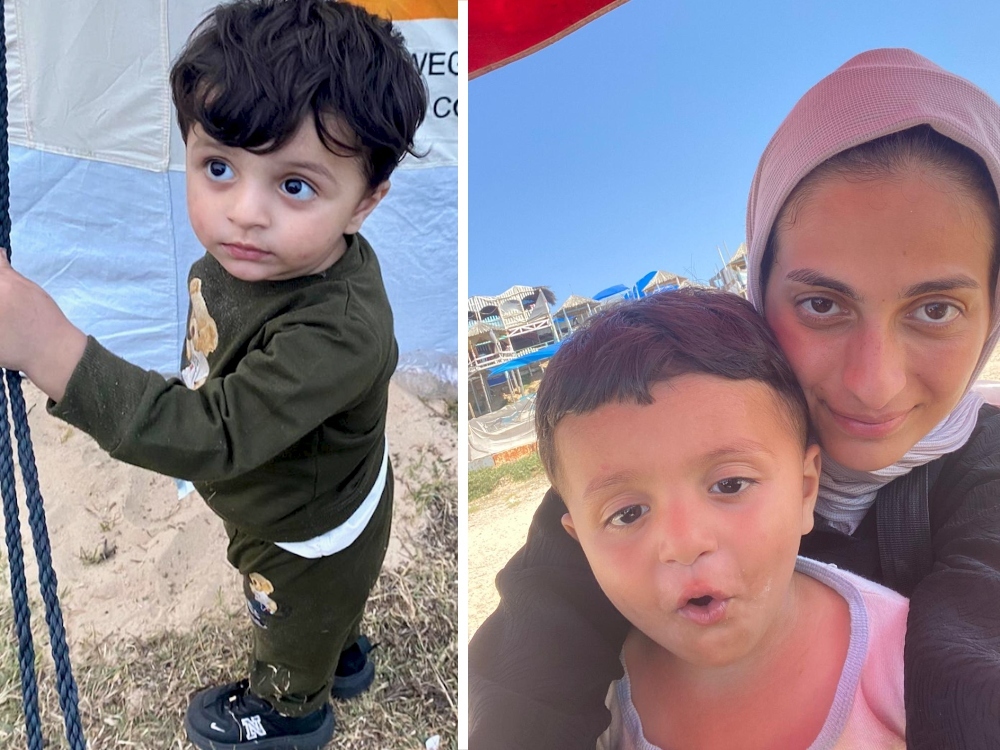
A year and a half after a Gaza airstrike injured a three-year-old boy, his aunt continues to try to get him to Canada. Nariman Ajjur says her nephew is now showing “clear signs of malnutrition” as well as the psychological effects of living in a war zone.
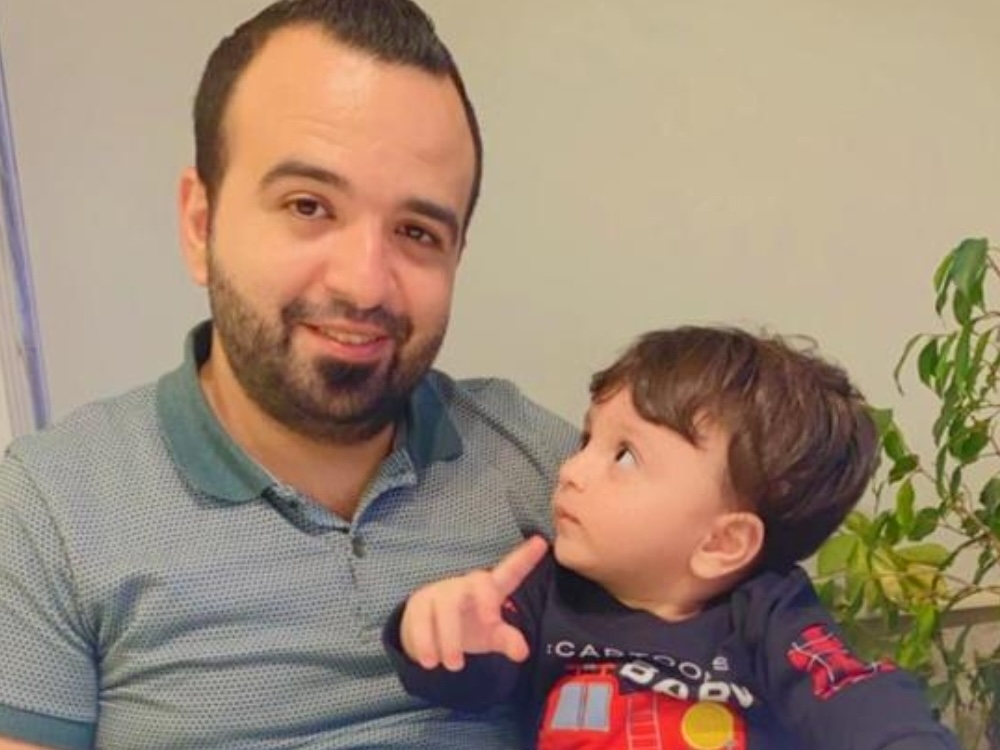
Khalid Ajjur and his mother, Ezdehar, were injured in an October 2023 airstrike in the early days of Israel’s war in Gaza. Although Khalid and Ezdehar were pulled alive from the rubble of the building where they had sought shelter, the bombing killed Khalid’s father, Mohammed Ajjur. Video provided by Nariman Ajjur to The Tyee shows Khalid — then only about one year old — being rushed to hospital, where he was treated for a ruptured spleen. While Khalid made a full recovery from his injuries, Ezdehar still has shrapnel lodged in her head.
In January 2024, Ottawa opened a temporary residence visa program for Gazans who have family members in Canada. Khalid’s aunt applied as soon as the program opened, hoping to bring Khalid, Ezdehar and seven other family members — her parents, four siblings and a sister-in-law — to join her in Surrey.
Today, Nariman Ajjur is still waiting as starvation and war continue to worsen in Gaza. Israel is continuing its military offensive in the region, while a joint Israeli and U.S. scheme to deliver food aid has spiralled into chaos, with hundreds of Gazans shot and killed while trying to get food.
Ajjur said she is doing everything she can to help her family from afar, but she has begged them not to approach the food aid sites because it is so dangerous.
“They are starving because there is no food left in Gaza,” she told The Tyee in a July 28 interview. “The prices are outrageous. Even if you send money, it's not sufficient — it buys a very little amount of food for one meal a day.
“They have been displaced many times, including this morning. They left their house because there was shelling from the tanks to their area.”
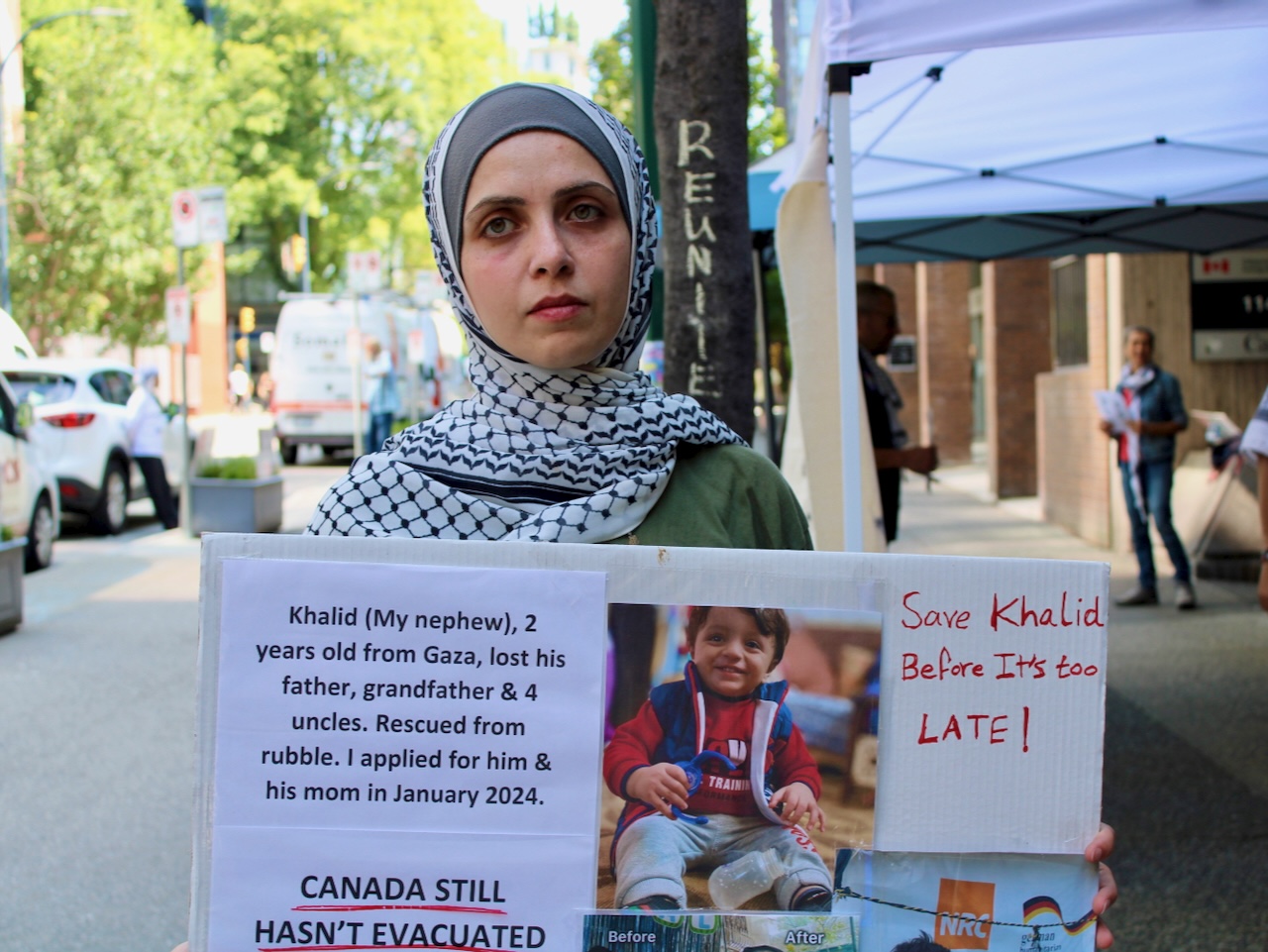
Ajjur said her little nephew has been deeply affected by the stress of living in a war zone and not getting enough food.
“He has become withdrawn and anxious, and the lack of proper food and a safe environment is making things worse by the day,” Ajjur said.
From the time the Canadian visa program for Gazans was first rolled out, advocacy groups and immigration lawyers have warned it was overly onerous compared with other programs. Amnesty International Canada pointed out that Canada worked to quickly move tens of thousands of people out of Ukraine after Russia invaded in 2022.
Amnesty International advocated for changes to the program, saying the requirements are overly invasive and difficult to meet because much of Gaza’s infrastructure has been destroyed. The requirements include documentation of applicants’ entire work history since age 16, detailed information about scars on applicants’ bodies and proof of family relationships under Canadian legal standards.
“These are conditions that for the most part were practically impossible to fulfil, which made the program almost inaccessible,” said David Matsinhe, director of research and policy for Amnesty International Canada.
The program was capped at 5,000 people, quickly reached that limit and has been closed since March. (The Ajjur family was included in those 5,000 initial applications.) Families say the process now seems to be at a standstill, making it impossible to get their loved ones out of Gaza as the situation on the ground worsens.
Of those 5,000 applications, 864 people have arrived in Canada from Gaza under the family reunification program, according to Immigration, Refugees and Citizenship Canada, or IRCC. A total of 1,750 have passed security screenings and been approved to come to Canada. IRCC says it is still working through the remaining applications and can’t provide a time frame for when they will all be assessed.
Family reunification refugees must make their way out of Gaza to a third country before they can be processed to come to Canada, IRCC says. But it has become increasingly difficult for people to escape Gaza as the conflict has continued.
As part of the application, Ajjur said she and her sister-in-law went to great lengths to get a death certificate for Mohammed, Khalid’s father.
“There are no government offices. I submitted his hospital report. I translated the report and I attached a letter from me explaining why there's no death certificate,” she explained. “My sister-in-law, she tried to go to the hospital and get a temporary death certificate until there is an official one, and we submitted this document.”
The applications for Ajjur’s family members have finally been completed, according to Ajjur, but the barrier now is getting them out of Gaza.
“They finished the eligibility and they are waiting for their biometrics to be done and there is no way to do biometrics in Gaza,” Ajjur explained. “So they have to be evacuated from Gaza to do the biometrics and then to come to Canada.”
The problem, Ajjur said, is that “Canada has zero evacuation from Gaza through this program.”
IRCC says it’s extremely difficult to get people out of Gaza. Israel has tightly controlled access to the region, including limiting humanitarian aid, and Canada has no diplomatic presence in Gaza.
“We continue working closely with local authorities — at every level — to advocate for the exit of people in Gaza,” IRCC communications staff wrote in response to questions from The Tyee. “However, we do not ultimately decide who can leave.”
The IRCC says Canada is on the forefront of “accepting displaced civilians from Gaza.” But Amnesty International says other countries have done a better job of evacuating people from Gaza and temporarily resettling them.
Canada’s foreign affairs minister, Anita Anand, recently announced that Canada had evacuated 11 Canadian children and their mothers from Gaza.
But Ajjur said evacuating fewer than a dozen people, two years into the conflict, shows that Canada has failed to get even Canadian citizens out of the war-torn region.
“We really appreciate that these lives were saved, but this doesn’t even meet the bare minimum,” Ajjur said.
Global Affairs Canada did not respond to a request for comment from The Tyee.
The war in Gaza began when Hamas carried out an attack on Israeli civilians on Oct. 7, 2023, that killed 1,200 people. Another 240 were taken hostage. Israel’s offensive to crush Hamas has now dragged on for two years and killed 60,000 people — including 18,500 children. It also sparked a dire starvation crisis that has worsened in recent months as Israeli soldiers have shot and killed hundreds of Gazans trying to access food aid sites.
In a report from last December, Amnesty International declared that Israel was committing genocide against Palestinians in Gaza. On July 28, the Israeli human rights groups B’Tselem and Physicians for Human Rights-Israel published reports also concluding that Israel is committing genocide in Gaza.
Rights groups and immigration lawyers in Canada have pushed to lower barriers and increase the number of asylum applications. But another group of immigration lawyers has warned that existing security measures weren’t strong enough to prevent Hamas-affiliated Gazans from entering Canada. Right-wing and far-right media have repeatedly published articles raising fears about potential terrorists using the temporary visa program to enter Canada.
Matsinhe said Canada has previously worked to quickly bring in asylum seekers from Afghanistan and Ukraine and that the rollout of the program for Gazans is another example of “the differential treatment that we are seeing when it comes to the Palestinians.”
Matsinhe said Canadians can help families like Ajjur’s by writing to their member of Parliament, taking part in protests and speaking up on social media. Ajjur has also started an online petition.
“We are watching ethnic cleansing live on television,” Matsinhe said. “And the powers that be that could make a difference are not acting.”
Meanwhile, Ajjur watches the news, speaks to her family when she can, and feels like time is running out to get them to safety.
“The forced starvation now is another issue,” she said. “I see their faces. It's just bone and skin. I know they are not eating well, and I'm afraid to ask if they had anything to eat.” ![[Tyee]](/design-article.thetyee.ca/ui/img/yellowblob.png)
Read more: Rights + Justice, Politics










Tyee Commenting Guidelines
Please note that email notifications for replies are not currently working due to a software issue which may be resolved in a future update.
Comments that violate guidelines risk being deleted, and violations may result in a temporary or permanent user ban. Maintain the spirit of good conversation to stay in the discussion and be patient with moderators. Comments are reviewed regularly but not in real time.
Do:
Do not: