


 SHARE:
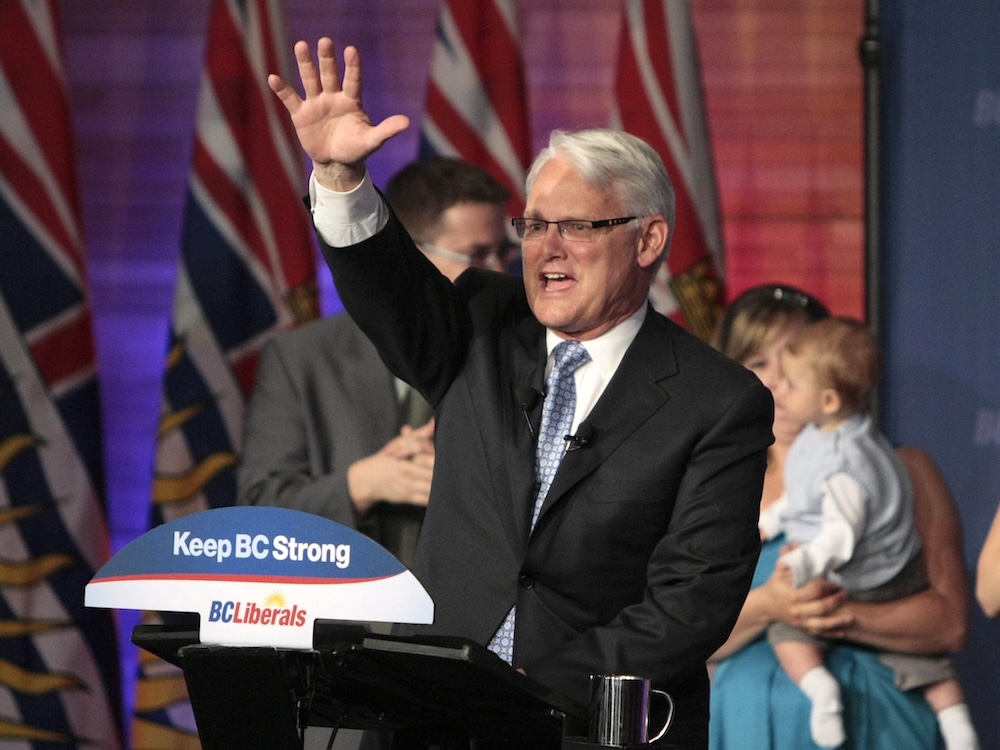
Reviving the BC Liberal name for the next election would require either a change of provincial law or a reversal by the leadership of BC United, the collapsed party that still holds rights to the name.
The question comes up as two Alberta MLAs, Scott Sinclair and Peter Guthrie, begin efforts to re-establish the Progressive Conservative brand, a party that, like the BC Liberals, was a political force that governed for many years.
The Alberta PCs held power uninterrupted for 44 years before their defeat in 2015. The party officially dissolved in 2020 after merging with Wildrose to form the United Conservative Party, which now holds power under Premier Danielle Smith. It ran a single candidate in 2019 to maintain its registration.
Alberta’s two-step process for registering a new political party allows anyone to reserve a name as long as “the desired party name is not in use and the acronym is not the same or similar to an existing registered party.”
The proposed Progressive Conservative Association of Alberta met those criteria, a spokesperson for Elections Alberta said in an email.
The organization can move to the next step of becoming a registered political party by either holding three seats in the legislature, endorsing candidates in at least half of the province’s constituencies or collecting the names of at least 8,819 eligible electors on a petition, which is what organizers are now doing.
The rules in B.C. are different.
Under Kevin Falcon’s leadership, the BC Liberals changed their name to BC United. Then, shortly before last year’s election, Falcon folded the party, stopped its campaign and withdrew all of its candidates in an effort to avoid splitting votes with the surging Conservative Party of BC.
Attempts to get a “Liberal” option back on ballots were unsuccessful. A lawyer acting for Herb Dhaliwal, former Liberal member of Parliament and cabinet minister, argued that Elections BC should accept the registration of the “New Liberal Party of BC.”
“The word ‘liberal’ is widely used in the Canadian — and indeed global — political world,” wrote Joven Narwal. “The real risk of voter confusion arises from the contradictory messaging from BC United, who seek to hold the word ‘liberal’ hostage by running ‘some’ candidates in the upcoming election to preserve the brand while simultaneously promoting the Conservatives.”
But under the Election Act, a party “must not” be registered if in the chief electoral officer’s opinion it is “likely to be confused” with another political party that is currently registered or has been registered at any time in the past 10 years.
The chief electoral officer can make an exception if the party has been deregistered for at least four years and its name has not appeared on a ballot for at least 10 years.
B.C.’s current chief electoral officer, Anton Boegman, found that the name “BC Liberal” remains associated with BC United, a party that is still registered.
A party can remain registered as long as it meets reporting requirements and runs at least two candidates in every other election.
That makes the name “Liberal” unavailable as long as BC United stays registered and doesn’t give the name up voluntarily or reverse course and return to using the name itself.
In April, when former BC Liberal and BC United MLA Karin Kirkpatrick launched a new party aimed at middle-of-the-road voters, it was with the name CentreBC.
The B.C. rules exist for good reason, Kirkpatrick said. “If we start up a BC Liberal Party tomorrow and it’s all different people and it’s all different values and it’s different, there’s going to be a lot of voter confusion.”
Initially she and others wanted to take control of BC United and rebuild the party as a centrist option, but it was clear Kevin Falcon was staying as leader and the people controlling the party weren’t going to allow a rebuild.
Waiting 10 years or more for the names BC United and BC Liberals to become available was out of the question, Kirkpatrick said. “We can’t wait 10 years or however long it’s going to be and not do anything until we can get that name back. We’ve got to move and we’ve got to build a good party with those same values and move forward.”
The BC United contact listed with Elections BC, Ryan Bruce, did not respond to phone or email messages.
A spokesperson for the attorney general said in an emailed statement that the government will review any recommendations that may come from Elections BC’s report on the 2024 election, which it expects to receive in the fall, or from the special committee on democratic and electoral reform that is now taking submissions from the public.
One group that has been allowed to use the name “Liberal” is the recently formed Vancouver Liberal Electors Association, or Vancouver Liberals, which intends to compete for Vancouver mayor, council, school board and park board positions.
Local government elections are held under separate legislation that doesn’t prohibit using a name that might be the same or similar to one used by a provincial party. ![[Tyee]](/design-article.thetyee.ca/ui/img/yellowblob.png)
Read more: Alberta, BC Politics








Tyee Commenting Guidelines
Please note that email notifications for replies are not currently working due to a software issue which may be resolved in a future update.
Comments that violate guidelines risk being deleted, and violations may result in a temporary or permanent user ban. Maintain the spirit of good conversation to stay in the discussion and be patient with moderators. Comments are reviewed regularly but not in real time.
Do:
Do not: