


 SHARE:
The rotting of Dunsmuir House.
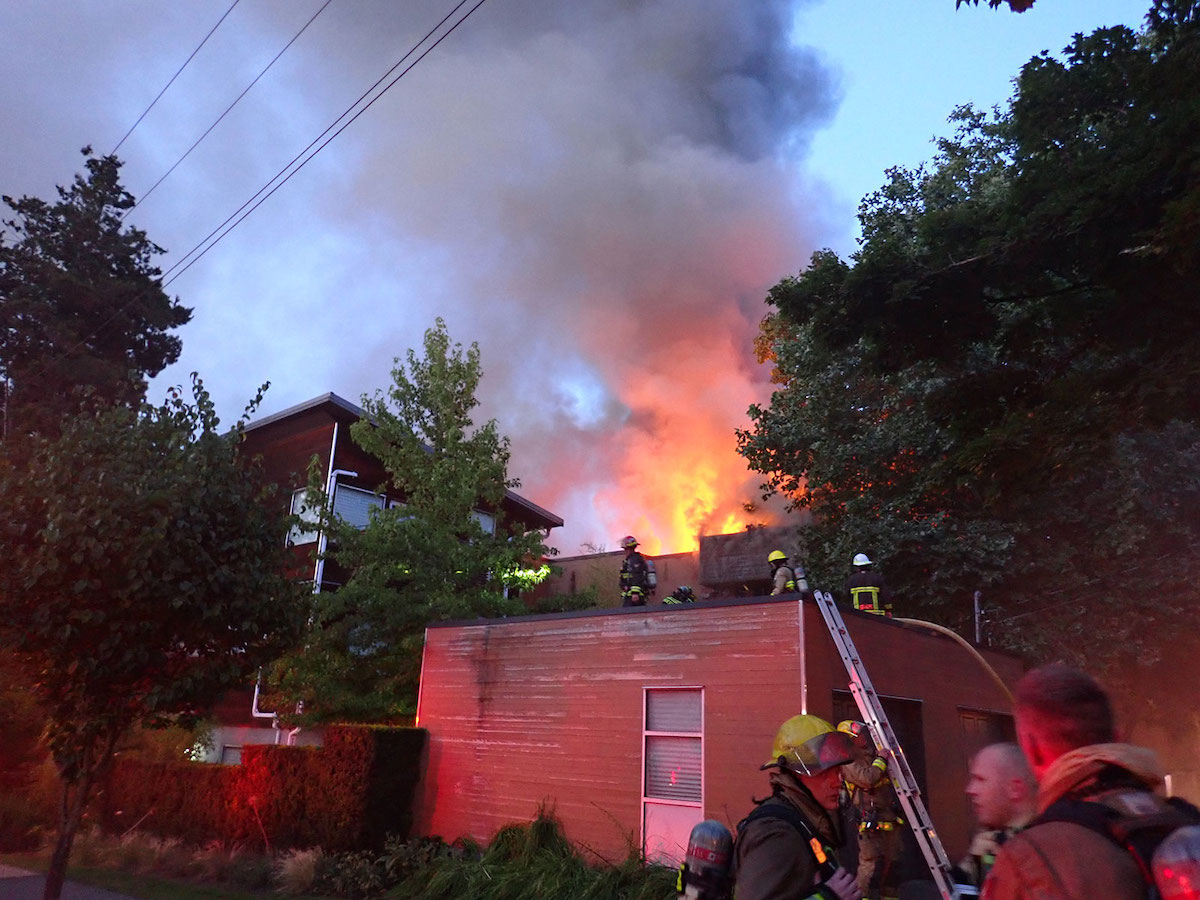
The fatal fire at the Winters Hotel.
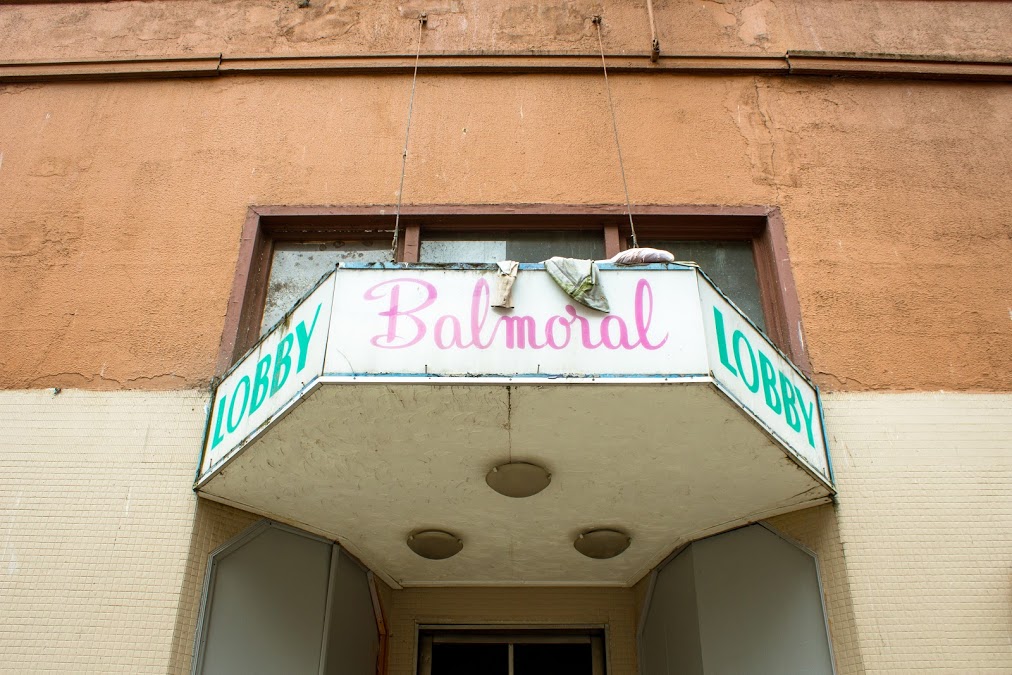
The condemnation of the Balmoral.
These storied Vancouver buildings were all dramatically demolished in recent years. Each had its unique problems, but all pointed to the vigilance needed to maintain old housing stock.
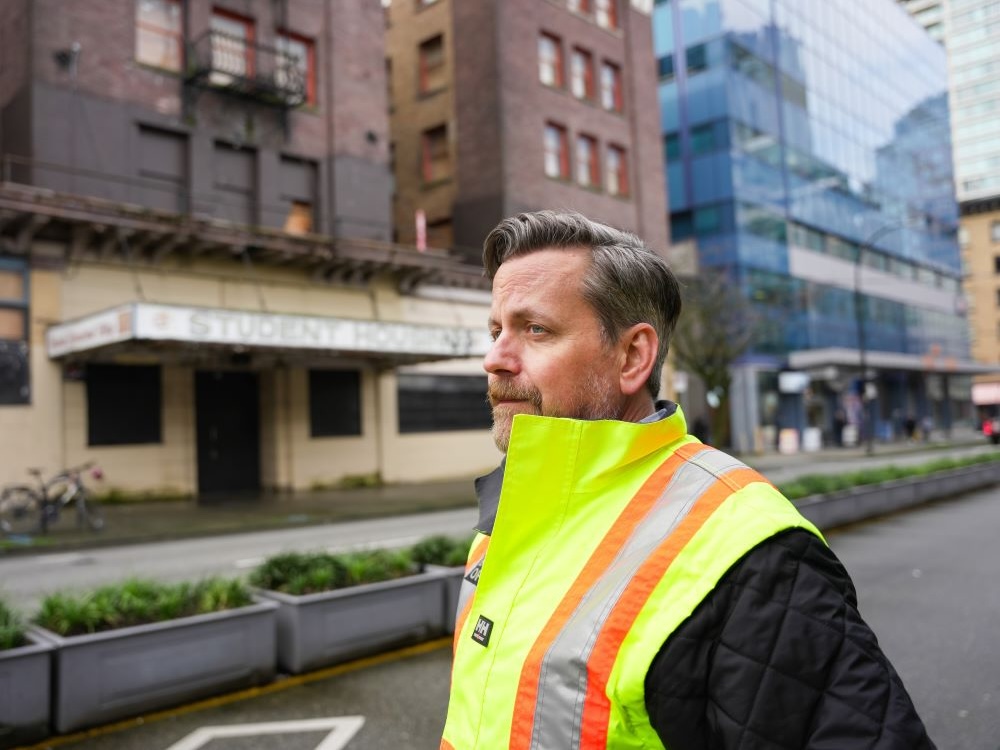
When a building can’t be saved, the person who calls for a demolition is Vancouver’s chief building official, Saul Schwebs.
Schwebs has occupied the job since 2021. His previous position was assistant director of building inspections, in which he oversaw about 100 inspectors. It was then that he got up close with the challenges of the city’s SROs, century-old hotels with single rooms and shared bathrooms that are a typical home in the Downtown Eastside. These buildings, because of their age and condition, offer affordable rents to some of the city’s most vulnerable people.
The Tyee visited Schwebs in early February at his office near city hall, where he keeps a few hard hats, respirators and safety hats at the ready to visit properties.
He had just returned from the site of a walk-up rental apartment at 414 E. 10th. It was another troubled property hit with multiple violations and a string of fires. (The landlord was the subject of an investigative story by The Tyee.) The first fire took place in 2023, displacing 70 tenants, but was not severe enough to warrant a demolition. Its subsequent degradation allowed Schwebs to order it to be torn down.
“Not to single that guy out, but we really count on owners to be responsible people looking out for their buildings and their tenants,” said Schwebs. “You’d think that just protecting their investment would be enough motivation to comply with the bylaws. All we’re asking them to do is take care of their building.”
The chief building official is a dynamic role, and Schwebs occasionally finds the need to add new tools for the city to deal with problem buildings. The Vancouver Charter allows for more flexibility than other cities, but sometimes he needs to ask council to ask the province for new powers.
Last summer, Schwebs started meeting with senior city staff as part of a new vacant buildings task force. A variety of departments handle different aspects of vacant buildings, from the fire department, police and planning to arts, culture and community services. His plan is to co-ordinate efforts to safeguard them and the public, and he plans to ask council for more powers later this year.
The importance of this work was underlined by the discovery of the dilapidation of Dunsmuir House.
It was built in 1908 and was purchased by developer Holborn Group in 2006. The building sat empty for a decade. After the city noticed degradation between visits in February and October 2024, a contractor concluded that a lack of roof maintenance had allowed water to enter the building. It caused significant rot, structural damage and the collapse of the ground floor into the basement.
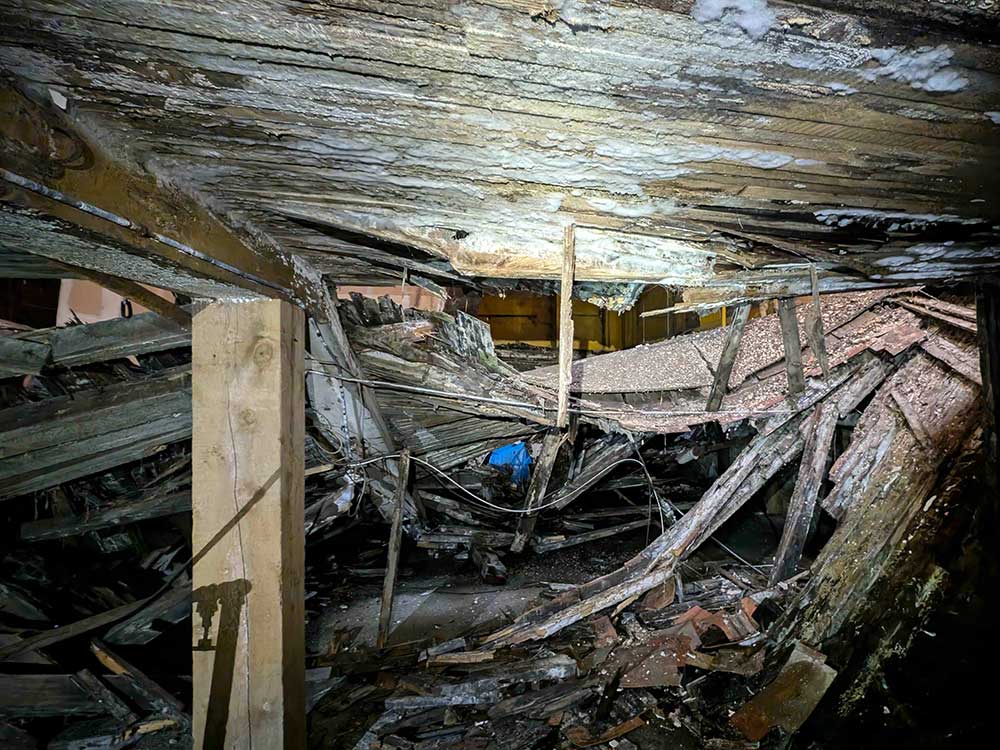
The demolition was one of the last items to be approved by council before the end of 2024.
It spurred a question from Mayor Ken Sim: “Are there a lot of other buildings that are in a similar situation?”
Schwebs is pretty sure there are. His task force is currently examining the condition of about 50 vacant buildings.
The loss of the iconic Dunsmuir House, once a great hotel, brought alarm to the issue in a painful way.
“It wasn’t a good outcome for the city or for that building, but I’m glad it got some attention on the problem,” said Schwebs.
Vancouver recently received another alarm. On Feb. 21, locals felt a 5.1 magnitude earthquake that hit Sechelt. According to a recent report by the city on seismic risk, buildings like SROs with unreinforced masonry are “very prone to partial or complete collapse, with additional severe impacts to sidewalk occupants and streets from falling debris.”
The Tyee had a wide-ranging interview with Schwebs on vacant buildings, working with landlords, earthquakes and what can be done about Vancouver’s aging housing stock. This conversation has been edited for clarity.
The Tyee: The city’s recent report on seismic risk noted that buildings in the downtown core with unreinforced masonry are “very prone to partial or complete collapse.” It’s probably not a surprise to the city that these buildings are particularly vulnerable?
Saul Schwebs: It’s not a surprise at all. I mean, unreinforced masonry buildings typically don’t perform well in seismic events. They’re just a very rigid structure. Instead of bending and flexing a little bit, they crack and break.
So does this signal that SROs and other buildings from that era are coming to the end of their life?
In a lot of cases yes. I mean, a number of SROs were built as hotels over 100 years ago, before anybody really understood that we were in a seismic zone. So yeah, they’re pretty end of life. We do what we can to keep them maintained.
Don’t get me wrong — some of them are in really good shape. A lot of them still have a lot of years left in them.
From a seismic resilience standpoint, there are some things that can be done to these buildings. Typically, attaching the floor diaphragm to the masonry wall, they’ll tie it together as a unit. That’s something that’s fairly effective.
What are the challenges when it comes to dealing with vacant buildings in the city?
We vacate perfectly good buildings because they’re going to be replaced by something in a couple of years. One of the things people say is that you’ve got to get residents out when you have a chance, because if the residents are there too long, it impacts the construction schedule.
But as soon as the fence goes up, we have all kinds of problems with [vacant buildings]. There’s people seeking shelter, breaking in to try and stay warm. There’s people going in to try and salvage building materials, like the copper wiring and copper plumbing. [Vacant buildings also] become unsightly pretty quickly. We have issues with graffiti, and so we get complaints with the neighbours.
A lot of our bylaws were written for a city that doesn’t exist anymore. It used to be one house that was redeveloped on a block, and the rest of the residents will want that house there and not a vacant lot. Now, it’s half the block being redeveloped.
So would we really like to have these broken-into, graffitied-up houses with messy backyards? Would we like to have a nice vacant site, which is easiest to manage? Or, do we want to keep those buildings occupied until the last moment? That would be the better solution.
What are you hoping to achieve with the new vacant buildings task force?
One thing I want to focus on with these vacant buildings is that there’s opportunities to keep people housed for longer. We’d have to work with the Residential Tenancy Branch.
We’ve got a list of vacant buildings that we’ve put together a couple of years ago and are working on updating. We’re going through a sampling of 50 addresses and trying to [learn about] these buildings: age, size, land use, how long they have been vacant, who the owner is.
We talk about opportunities, but we got problems too, similar to the Dunsmuir. Honestly, all they had to do was keep the roof maintained and that building would have been safe. Right now, we don’t have the authority to compel an order to do that because we don’t have authority over vacant buildings.
So one of the first things we need to do is ask council to ask the province for a charter change, which gives us the authority to enforce bylaws on vacant buildings more than we are. We can deal with graffiti, we can deal with broken windows, but we can’t deal with roof maintenance. We’re hoping we get it. We’re already starting to work on a vacant building standards of maintenance bylaw.
Why is it important for the city to have more powers when it comes to vacant buildings?
Vacant buildings generally aren’t very vacant. For whatever reasons we have, given homelessness and when it gets cold, there’s a lot of people seeking shelter in these buildings. I think it’s important to keep life safety systems working just for them, that there is a minimal level of potential protection in case people do happen to be in a building.
But even if a building is empty, in the interest of the safety of the people next door, we want to have the fire alarm system on so that if something does happen, we know about it, and fire and rescue are able to respond in a timely manner.
If a building has a fire alarm system, we want to see that maintained. My colleagues in [the fire department] agree if a building is vacated, sprinklers are going to need to be maintained in an operational condition, which means the building has to be heated to a minimum of five degrees at all times.
Last summer, I believe there was a two-alarm fire in a vacant building and one of the people who had been in the building seeking shelter almost died because fire and rescue didn’t know they were there. It sounded like they tried to kind of hide from the first responders instead of making their way out of the building safely. They got stuck, and fire was on scene for about 45 minutes before they knew the individual was there. So that was a close call in a vacant building.
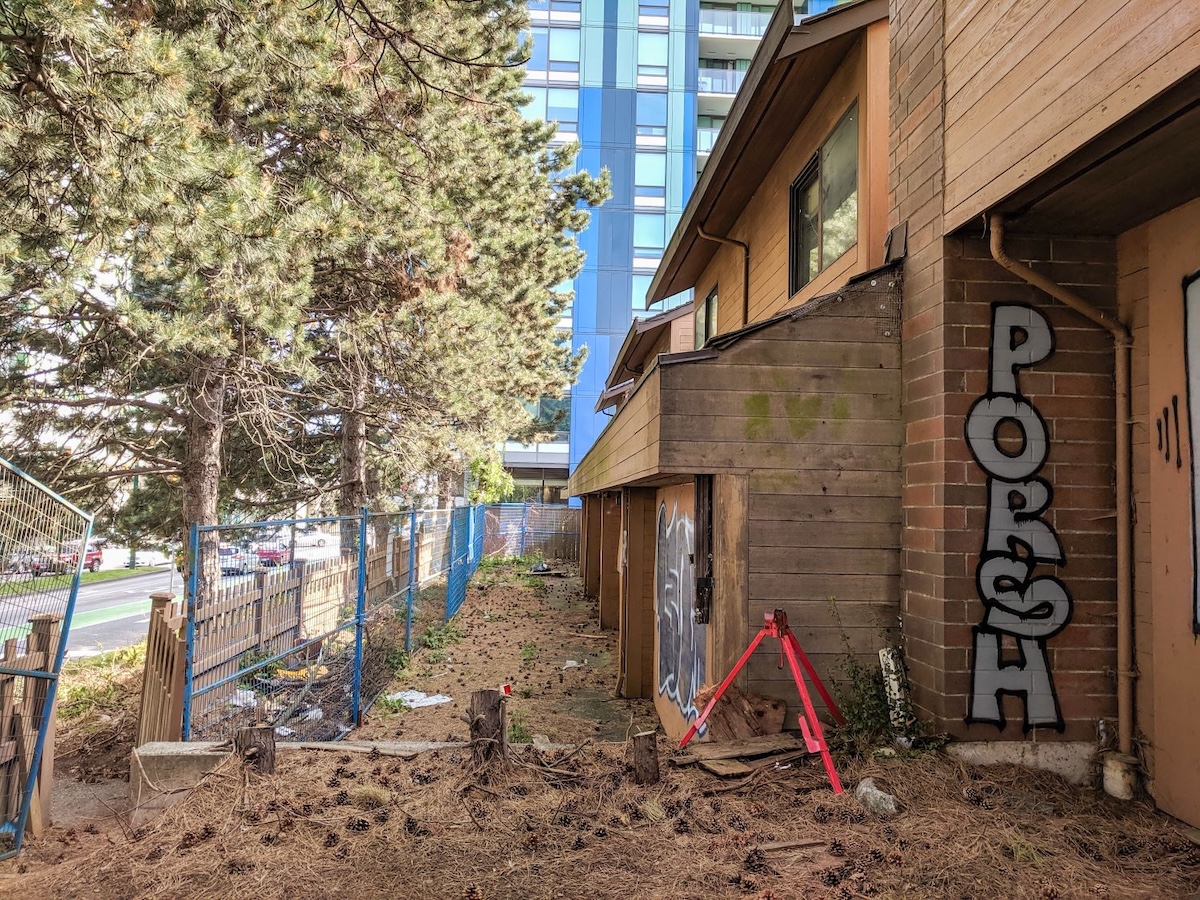
[For example, there are] the townhouses down at 65th and Cambie. They are being demolished as we speak. They were vacant for nine years. We knew that there were people in there. VPD [the Vancouver Police Department] knew they were there. So in a case like that, we’ve actually swept the building before we started demolition just to make sure everybody was out. We did the same thing at the Dunsmuir too.
Before you became Vancouver’s chief buildings officer, what did you see during your time overseeing inspections?
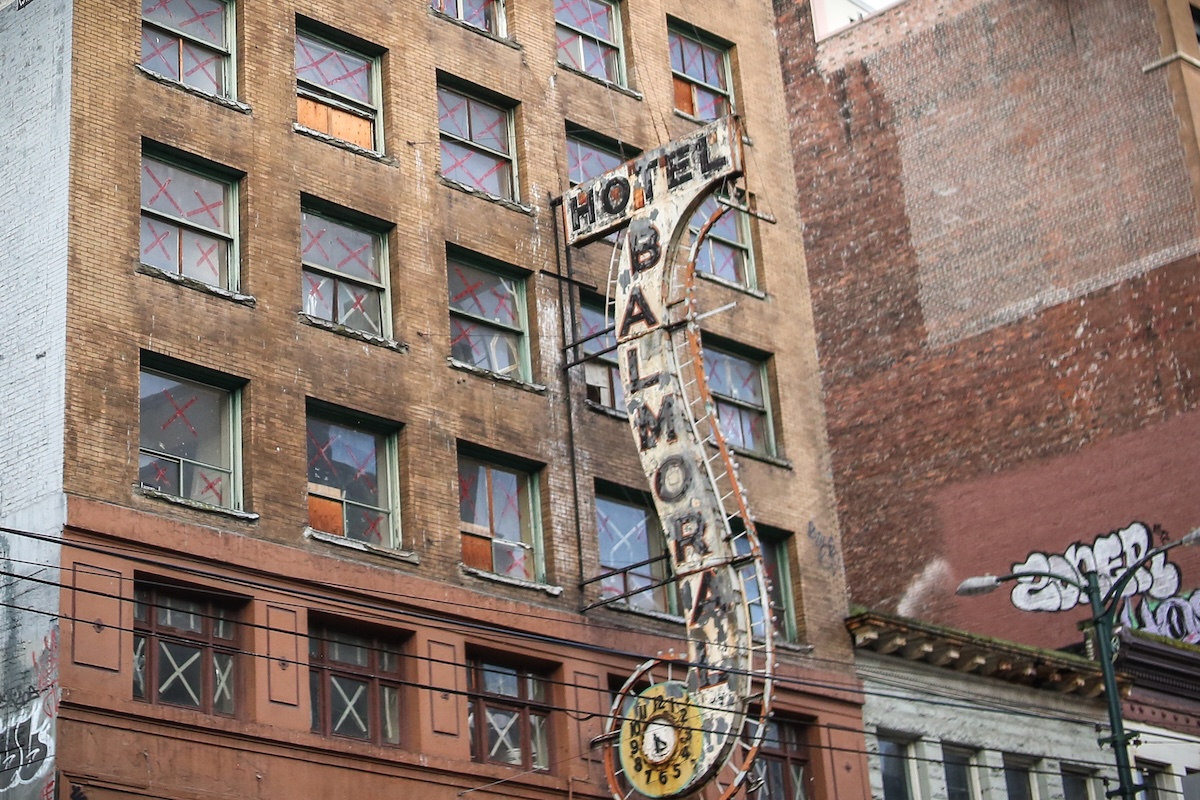
One of the things I was charged with right away was overseeing the evacuation of the Balmoral Hotel, which was really enlightening. I got to meet a lot of the people in the building, including Mary Ann Garlow, just hearing their stories. I felt I was blessed, frankly, in doing that work. I was looking at other SROs, because we were moving these people from the Balmoral to other buildings, including the Winters.
In June 2018 the following year, we had to evacuate the Regent across the street for similar reasons. For that one, we had more time to prepare. I was able to spend more time in the building. I got to know a lot of residents, became friends with some of them.
I tried to get into as many buildings as I could. We try to work with the owners to improve their buildings, just to see what we could do to turn them around.
Is there an example of one?
We had a lot of success working with the Kenstone group at Hornby [Street]. [The Murray Hotel] was a building that was in a lot of trouble. Huge criminal element, and issues with the building itself. Between smart investment by Kenstone and a really good manager being put in place, the building turned around.
There’s some things we encouraged them to do, like changing the stairwells so that we could get rid of the exterior fire escape, which was a security issue. It helped stabilize the building. We put a security vestibule so they had control to check who was coming in, to check their ID, to see if they belong in the building.
In that case, the owner had the funds to do the work. Unfortunately, a lot of the private owners just don’t have money available to be able to do basic maintenance in the building, let alone upgrades.
How did these experiences inform your current role as chief buildings officer?
I was really focusing on shifting the culture from being law enforcement officers to facilitating compliance. The goal is compliance. That’s when we know buildings are safe and their occupants are safe. A lot of inspectors spend half of their time on site teaching, which is how we get compliance. Enforcement is a tool to be used sometimes.
When I got the job as chief buildings officer, I tried to keep that same thought.
What is it like dealing with property owners who are not compliant?
We always start with voluntary compliance, explaining the requirements of the bylaw. If it’s a property-use standards of maintenance issue, we generally get a 60-day order followed by a 60-day letter that’s signed by the inspector. If we don’t get compliance, then we’ll issue an order — which comes from me — which we can then take to the court and prosecute. The problem with prosecution is that it doesn’t end in compliance; it ends in a small fine for the owner, and then we start all over again, which is frustrating.
When it comes to life safety issues, then that can push it into the building bylaw, which gives me a whole different suite of authorities. I can actually take immediate corrective measures to fix a problem. I’m very reluctant to do that in most cases just because I don’t want to. I don’t want the city to be seen as a fee-for-service operation.
A lot of my immediate corrective measures end up with me knocking a building down because it’s in the interest of public safety, because the building is at the risk of imminent collapse. It’s not so much to fix it.
But you know, there’s one building right now that we’re considering actually hiring a contractor to install a fire alarm system in the building. The fire alarm system hasn’t been functioning for over a year, and the owner hasn’t taken the steps to rectify the situation or make it safe in the meantime. So we’re reaching a point where, for the first time, I’m going to actually order a contractor to go do work inside an SRO.
Any costs are reimbursable to the owner so that the city isn’t stuck with the tab. With the Dunsmuir, [the developer owner] Holborn paid to knock it down. At 414 E. 10th, I knocked it down and sent the bill to the owner.
There have been a number of high-profile buildings in recent years that have been problematic and even fatal for different reasons. Have these incidents prompted bylaw changes?
We don’t miss an opportunity to do that.
The biggest one would be this super database that everybody who’s involved in some of these SROs can add data to, like a live building tracker. So if the fire department has to put a fire watch on a building because the fire alarm is not working, then everybody has access to that information.
Dennis Guay, who perished at the Winters, was hearing impaired. It’d be great if first responders could know where people with different limitations or different abilities are so that we can make sure they’re brought out.
There’s privacy issues with that, but if building managers can know where those people are, they can make sure they’re given higher priority for units closest to the exit to give them more time. Or maybe we start requiring visual signal devices in every SRO room just to make sure someone who is hearing impaired [will be alerted].
One thing that we’ve already changed in the fire bylaw that deputy fire chief Rob Renning thought of was that isolation valves are now going to be required at the sprinkler riser of each floor in every residential building in the city of Vancouver.
At the Winters, there was a fire on Friday. When a sprinkler head is activated, the water keeps running until the valve gets shut off. The system only had one valve, like most of the SROs do; it’s in the basement. [The fire department] shut off the sprinklers, issued an order to do the fire watch and issued an order to replace the sprinkler head. A fire started on Monday morning before the tech showed up to fix the head. So they had no sprinklers in the building.
With the change, the fire department would have gone to the unit where the fire started on Friday, saw that the fire was out, gone to the stairwell and shut the valve off, which would have shut the sprinklers off to that floor — but the floors above and below would still have active sprinklers.
When I make a change to the building bylaw, it doesn’t change retroactively. It applies to projects moving forward. But what we put in the fire bylaw becomes retroactive, and now all these SROs have to start putting in that valve on each floor. It would have saved lives.
In the case of the Balmoral, the building was evacuated in 2017 and expropriated by the city in 2020, before its eventual demolition in 2022. However, the building had been in disrepair for years prior. What did it take for the city to finally take action?
Again, we’re limited by our authorities in the bylaw.
The first time I walked into that building was in May 2017. I didn’t know a lot of history about it, but it was clear the first time I had been in it that the building had been deteriorating structurally for some time. Our property-use inspectors are really hard-working and smart people, but they are specialized. Even plumbing inspectors or the building inspectors don’t deal with buildings that are falling apart; they deal with buildings that are being built.
When I started going through the case files of the Balmoral, one suite every time every year that they’ve gone in, there’s been discoloration in the corner of the ceiling, which would appear to be mould. So the order goes out to fix the discoloration in the ceiling. What I need the property-use inspectors to understand is it’s only happening because there’s something leaking behind there.
So we’re making a great deal of progress and we’re involving the building and electoral and plumbing inspector so that when a property-use inspector comes to that question, we’re doing an effective followup, so that we’re not putting lipstick on a pig. What is needed is an integrated information-sharing system so that [all inspectors] can have a more holistic view of all issues at the property.
One thing we did right after the Balmoral is a change to the Vancouver building bylaw where plumbing issues fall into some of the authorities I have with corrective measures. So if we see a building like the Balmoral, where there’s water issues throughout, we can actually order them to replace the plumbing system to do a full system re-piping.
How complicated is it to demolish these old buildings?
We don’t use wrecking balls in the city anymore, especially in a masonry building because the dust goes everywhere. The last time we used explosives in the city was the Woodward’s building. So what we usually use is an excavator with a high reach, like at the Dunsmuir, but that can only reach up to about five storeys.
If it’s anything unreinforced masonry above five storeys or so, it has to be taken apart from the inside. And that’s once all the salvage and abatement has been done. Because [the Balmoral] was chock full of asbestos, lead, potentially mercury and PCB bearing materials, all of that had to be remediated from the top down before they could start the demolition. We needed to keep the sprinkler alive, which means they were moving this firewall sprinkler. It was a really complex operation.
Each of these big incidents with old buildings happened for different reasons, but do they share a common lesson?
What’s the lesson? There’s a lot of things that could go wrong in a building. We need to do what we can, work with the owners and encourage that they maintain them in good condition and compliance with the bylaws. As far as things like seismic risks go, work with the owners to see what we can improve. Hopefully, we’ll be able to start replacing some of these buildings.
There’s a lot of people with different backgrounds and areas of expertise working on this. I just bring the building side of it. I think everybody at the city cares about the folks living in these buildings because they are among our most vulnerable. They need to be looked out for. ![[Tyee]](/design-article.thetyee.ca/ui/img/yellowblob.png)
Read more: Rights + Justice, Housing, Municipal Politics, Urban Planning









Tyee Commenting Guidelines
Comments that violate guidelines risk being deleted, and violations may result in a temporary or permanent user ban. Maintain the spirit of good conversation to stay in the discussion and be patient with moderators. Comments are reviewed regularly but not in real time.
Do:
Do not: