


 SHARE:
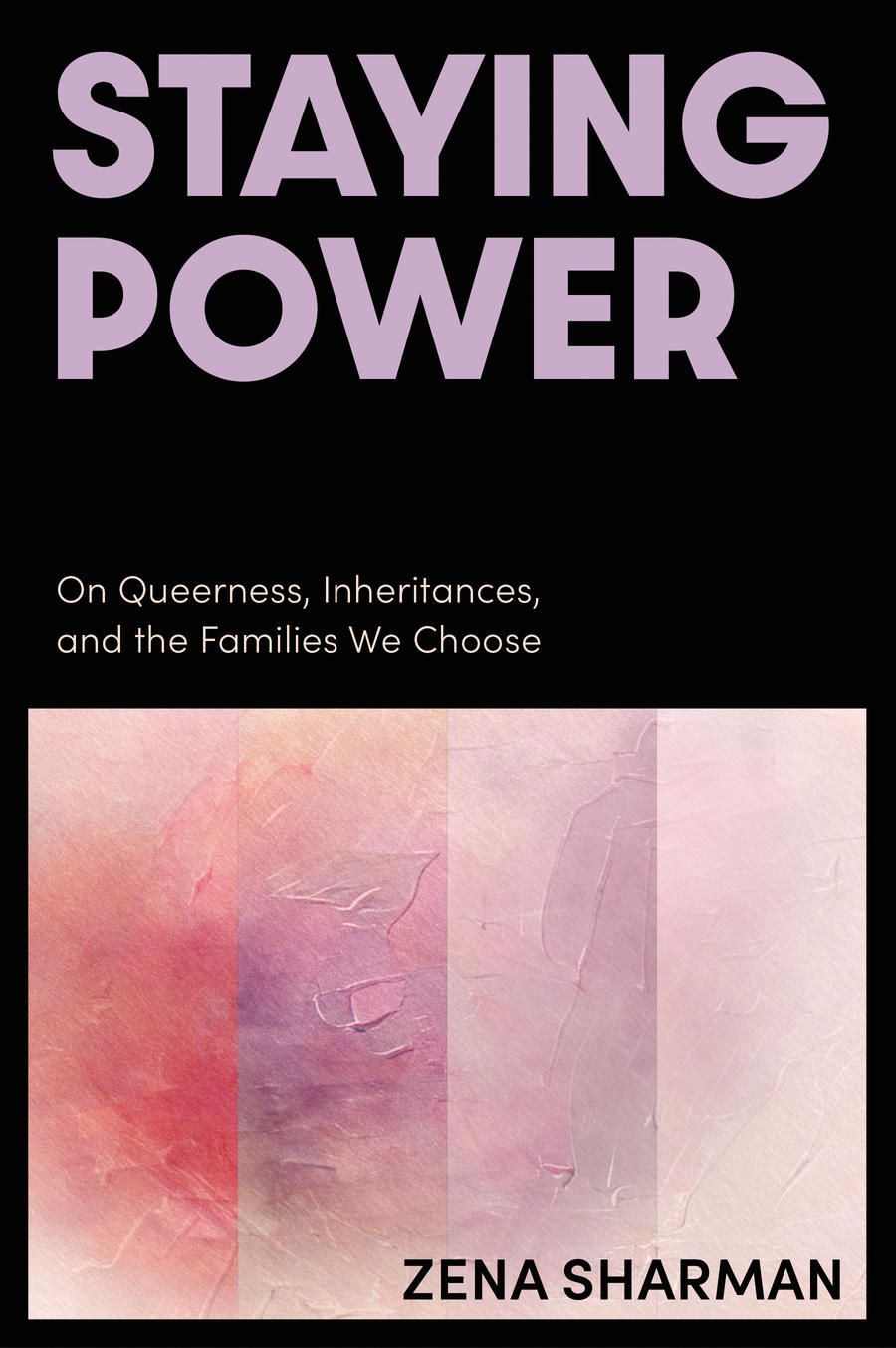
- Staying Power: On Queerness, Inheritances, and the Families We Choose
- Arsenal Pulp Press (2026)
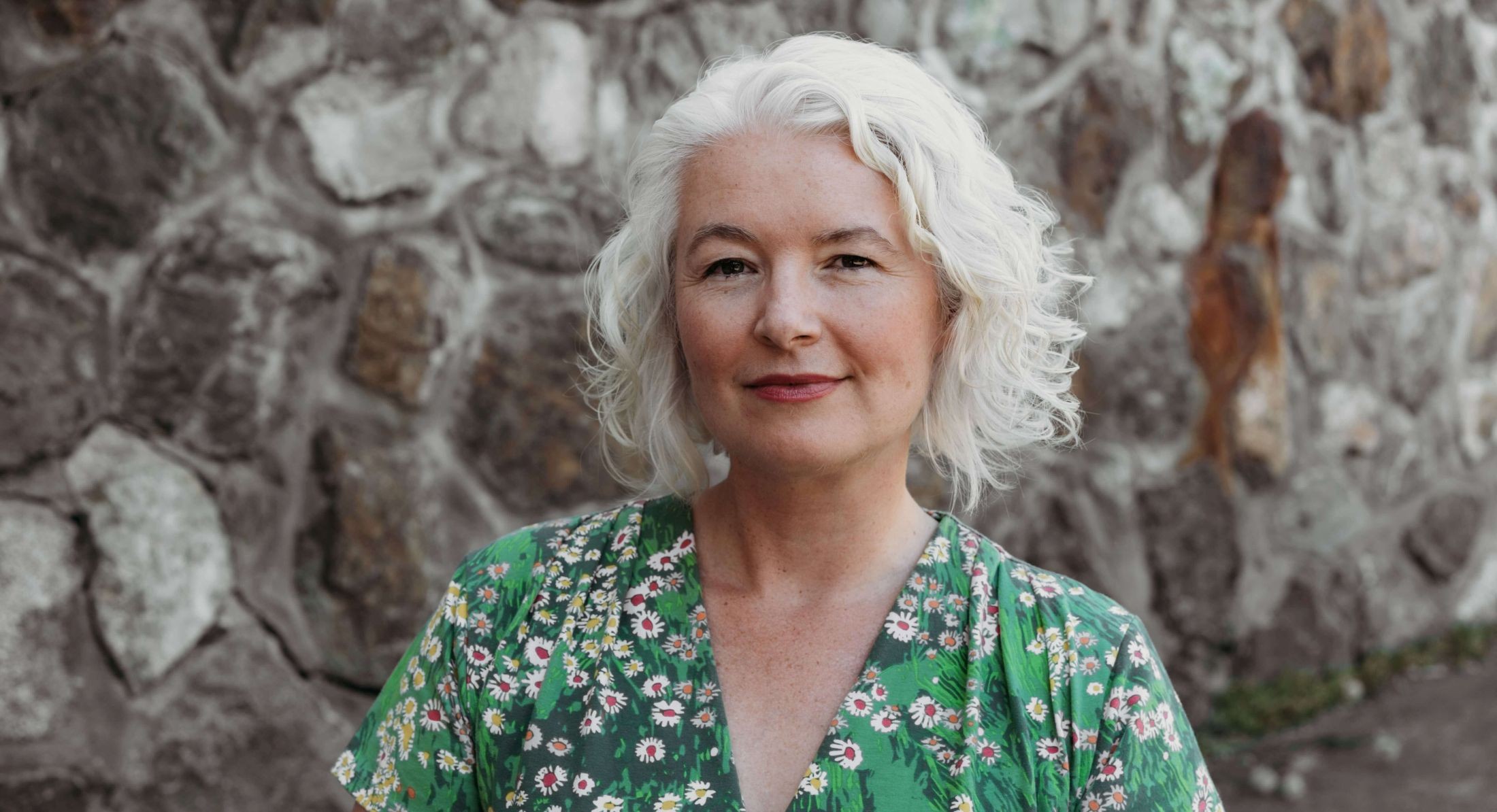
“This book took 10 years of grieving to write,” Zena Sharman tells us in the opening pages of Staying Power. Her mother, who raised Sharman as a single parent and struggled with the trauma of childhood and domestic abuse, died in 2014 from chronic obstructive pulmonary disease, or COPD. In the wake of her death, Sharman, 34 at the time, was overwhelmed with both her grief and the burden of death-related administrative tasks that fell to her as her mother’s only child.
She writes with candour about how expensive death is for poor families like her own, and how many compromises have to be made after a family member passes.
Sharman is frank and clear-eyed when writing about her past relationships, including her complicated yet deeply loving relationship with her late mother. Staying Power’s nine essays connect grieving, kink practices, butch-femme dynamics, parenting, polyamory and personal agency, culminating in a nuanced portrait of what a non-normative queer family and life can look like. How can a person learn to stick around when life has taught them that running at the first sign of trouble is the safest option?
The first seeds of Staying Power were planted in 2021, when Sharman published an essay in Xtra, “With Queer Parenting, the More Is Definitely the Merrier.” She has also written a six-part series for Xtra called Queering Death, in which she covers topics including “reimagining how we die and mourn, queering end-of-life planning, reclaiming death care, bringing pleasure and eroticism into the end-of-life experience and challenging dominant ideas of how we grieve.”
This longtime twinned interest in queering family structures and queering death provide the basis for Staying Power’s grounded, reflective tone. Sharman’s essays make it clear that she has been living with these questions for years, and that though she doesn’t have all the answers, she’s a voice worth paying attention to.
Years after her mother’s death, Sharman became a death doula, hoping to provide support to others encountering end-of-life grief, support she didn’t have access to.
Staying Power, too, is an offering of support to other queer people, a non-linear account of navigating legacies of intergenerational trauma, and building new family structures and relationships that seek safety through connection and community, rather than self-protective isolation and codependence.
Surrender and transformation
In the essay “Thirty-Nine Stages of Grief,” Sharman shares a record of various points in her own grief process. “Don’t let anyone tell you how to grieve,” she writes, a piece of advice she wishes someone had given her.
Rather than a how-to guide, the essay is more like a vast map, with various regions and paths marked on it. One of the paths tells the story of how queer, witchy kink practices helped Sharman let her grief move through her.
Before her mother died, she was a pragmatic person who distanced herself from her emotions in order to get through her days. After her mother died and her own marriage began to fray, Sharman attended a series of witch camps and kink conferences. She began to inhabit her body and her deeper emotions, through playing with new partners and trying out new power dynamics.
Most importantly, she learned to “power bottom for the universe,” surrendering to the hugeness of her sadness, rather than trying to control it — often in the company of other queer femmes, with whom she found belonging, a renewed eroticism and support.
A new way of being a family
Sharman’s grounded embrace of her femme identity is a central element of Staying Power. She describes her previous marriage to a queer-famous butch, how the two of them formed a butch-femme power couple that eventually crumbled under the combined weight of public expectations of being “couple goals” and private gendered expectations of care.
In one of the book’s standout essays, “(M)other,” Sharman reflects on how her mother’s death taught her to reconsider the prescribed roles of mother, daughter and wife, and how, after her divorce, she was able to move away from prescribed butch-femme dynamics.
As she moved into a new relationship with her current partner, who was already planning a non-normative family structure with two other queer friends, Sharman was able to make choices about how involved she wanted to be as a co-parent. Despite being the only femme in the four-parent family, she did not by default take on the role of mother.
Wary of repeating the patterns of her own childhood, she wanted to be a parent without the outsize expectations of motherhood. “I hold ‘mother’ at a distance because I am afraid of being needed too much,” she writes. “Dadness” sometimes feels like a better fit for the level of autonomy she needs and has within her family, she notices. However, she generally inhabits a space of neither father nor mother, choosing to be, simply, a parent.
“I haven’t learned to stay. I’m learning,” she writes of her decision to live permanently with her four-parent, three-child family, rather than keeping an apartment of her own. Parenting “isn’t a choice I made once. It’s a threshold I cross again and again.” She is able to nurture her kids and her relationships now, because, as she explains in “(M)other,” she has learned how to say no, so that she can actively say yes.
“Grief makes us into time travellers,” Sharman writes, in that it thrusts us simultaneously into the past when a person was alive, into an alternate future in which they live and into a future in which they no longer exist.
After her death, Sharman made the difficult decision to get rid of her mother’s “trauma archive,” 200 boxes of meticulously collected and labelled materials detailing her experiences of abuse, as well as the experiences of other survivors of abuse who had entrusted their stories to her.
Back then, unable to contend with the emotional implications and material costs of sorting through and storing this overwhelming inheritance, Sharman donated some of it to museums, and disposed of the rest. In the years following this decision, she struggled with guilt, worried that she had destroyed important parts of her mother by not keeping her archive.
Her memoir traces her slow movement toward self-forgiveness, to a point where she is able to inhabit a more expansive generosity toward herself and towards her mother. Staying Power functions as a new archive, one that acts as a memory holder and a guide for other queers struggling with the weighty issues of death, grief, agency, love, non-normative relational structures and parenting.
As Sharman honestly and thoughtfully details her grief rituals, her kink rituals, her difficult but necessary divorce and her entry into queer parenthood on her own terms, she carries on her mother’s work, in her own way. ![[Tyee]](/design-article.thetyee.ca/ui/img/yellowblob.png)
Read more: Books, Gender + Sexuality












Tyee Commenting Guidelines
Please note that email notifications for replies are not currently working due to a software issue which may be resolved in a future update.
Comments that violate guidelines risk being deleted, and violations may result in a temporary or permanent user ban. Maintain the spirit of good conversation to stay in the discussion and be patient with moderators. Comments are reviewed regularly but not in real time.
Do:
Do not: