


 SHARE:
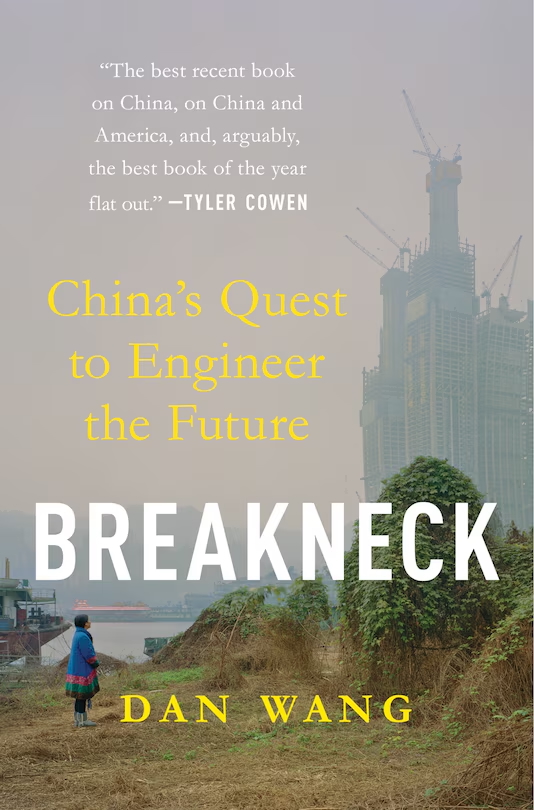
Breakneck: China’s Quest to Engineer the Future
Dan Wang
W.W. Norton & Co. Inc. (2025)
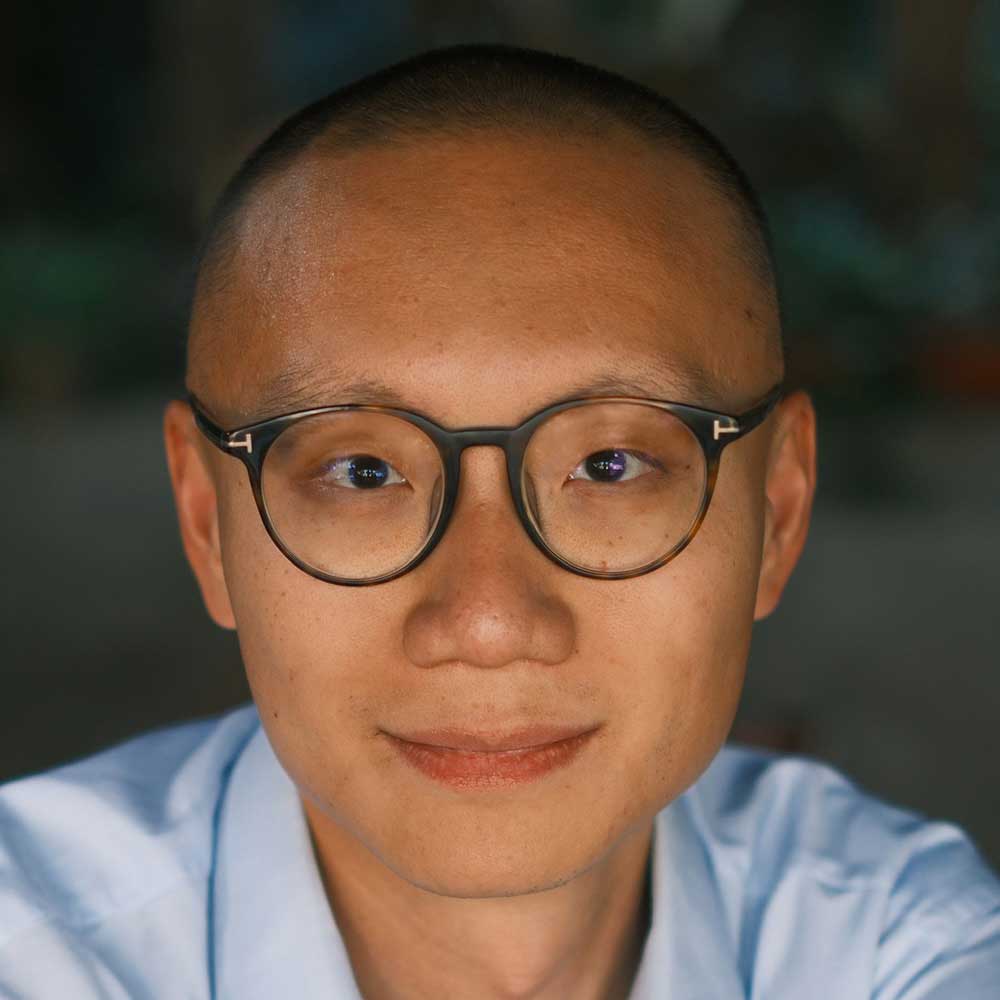
Dan Wang was born in China’s Yunnan province in 1992. At the age of seven he migrated with his parents to Canada. His parents moved again, to the U.S., but Wang remains a Canadian citizen. He has also worked in cities all over China, reporting especially on Chinese technology. He is now a research fellow at Stanford University’s Hoover Institution in its Hoover History Lab and a leading expert on tech in China. In Breakneck: China’s Quest to Engineer the Future, he has written a remarkable analysis of the China-U.S. relationship. We should read it carefully, because it has serious implications for our present nation-building projects.
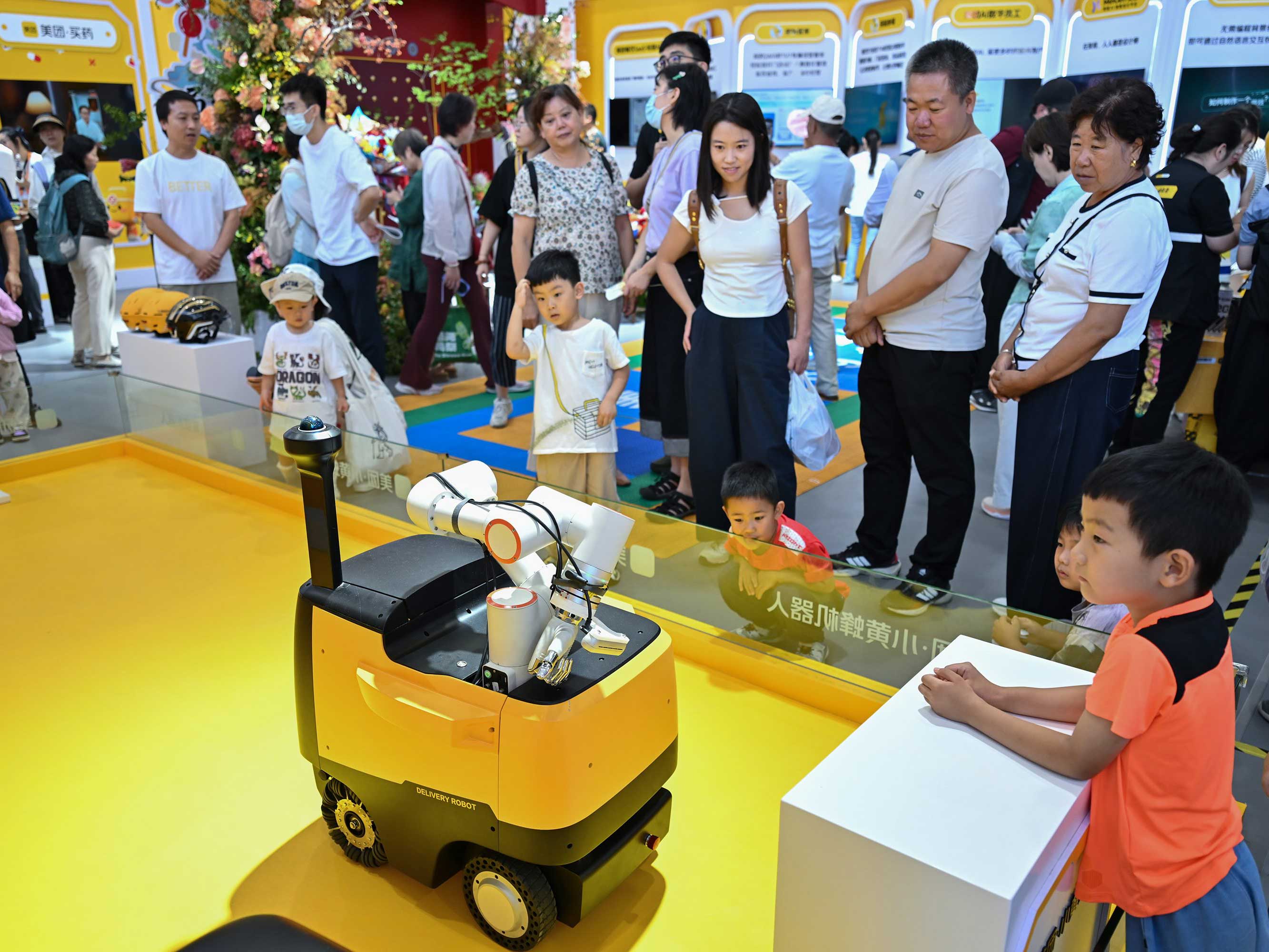
Wang argues that China is an “engineering” state, willing and able to conceive and design great projects: bullet trains, vast factories, highway systems — and to take an engineering approach to society as well.
In contrast, the U.S. and Canada are “lawyerly” states, obsessed with procedure and consultation and rights — which is all well and good, but litigation has stymied all kinds of major projects and will likely challenge Prime Minister Mark Carney’s plans for nation-building projects. (Donald Trump litigated himself into a second term while ignoring inconvenient laws.)
“It became no contradiction for me to appreciate that things are getting better and getting worse,” Wang writes of his years in China. “I saw how China is made up of both strong entrepreneurs and a strong government, with a state that both moves fast and breaks things and moves fast and breaks people.”
By contrast, the U.S. is “a superpower that is able to outclass China on many dimensions. But it is also in the grips of an ineffectual state where people are increasingly concerned with safeguarding a comfortable way of life.”
Lawyerly weakness
Wang’s lawyerly America has weakened itself in two ways: first, it values “process over outcomes,” as he puts it. Second, it has a systematic bias toward the well-off. “Lawyers aren’t just defenders of the rich; many of them are the rich,” Wang writes.
Wang has documented his arguments with careful research, as well as with his personal experiences. He visits China’s mountainous southwest province of Guizhou and says, “I was astonished by how even China’s poorest provinces have better infrastructure than America’s richest.” Of the world’s 100 highest bridges, he tells us, “Guizhou has built 45… It has 11 airports, with three more under construction. It has five thousand miles of expressways… It has around a thousand miles of high-speed train track.”
He goes on to tell us that in 1990 there were half a million cars in China. “In 2024 there were 435 million, many of them electric.”
And that’s not all.
“China didn’t just build cars and highways. It also built mass transit. From 2003 to 2013, Shanghai added as much subway track as in the entire system in New York City. In 2025, 51 Chinese cities have subway lines, 11 of which are longer than New York’s. China now has a longer high-speed rail network than the rest of the world put together,” Wang writes.
“This system completes around two billion passenger trips each year.”
Conservatives masquerading as leftists
Wang calls China “a country governed by conservatives who masquerade as leftists.” Three out of four Chinese citizens don’t have to pay income tax, and Beijing spends only about 10 per cent of its gross domestic product on social programs.
Unemployment insurance is scanty; the Chinese Communist Party thinks workers would get lazy if they got welfare. We learn in Wang’s book that was the policy early in the pandemic, when millions of Chinese citizens lost their jobs. The party didn’t provide them with emergency funding, as Canada did; money went instead to manufacturers so they could rehire their workers and keep producing.
Wang provides a telling anecdote. Early in the COVID-19 pandemic, he visited a Chinese manufacturer with U.S. experience; his host told him that “American manufacturers constantly asked themselves whether making masks and cotton swabs was part of their ‘core competence.’ Most of them decided not... Chinese companies decided that making money is their core competence, therefore they go and make masks, or whatever else the market needs.”
Losing money is a constant hazard, though. Beijing subsidizes companies that want to make new products, like solar panels, and then lets them undersell one another until most of them go out of business — and drag their foreign competitors down with them. So China dominates the solar-panel industry, but overcapacity means even the survivors don’t make much money.
And as good as China may be at building hardware, software is another story. Wang describes the spectacular new library in the northern city of Tianjin as a “metaphor for China’s economy: great hardware that looks impressive from a distance, not filled with the softer stuff that actually matters.”
He shares these memorable facts of daily life: “Though there are many public toilets, provision of toilet paper is only a sometimes thing. Nowhere in China is it advisable to drink tap water. Not even Shanghai.”
When engineering hits its limits
Wang returns often to the idea of “communities of engineering practice” — experts who have trained in manufacturing and infrastructure, who can apply their skills to new projects. In his recent book Apple in China, Patrick McGee shows how Apple simply cannot function very well without Chinese communities of engineering practice; he mentions that when Apple started producing laptops in the U.S. again recently, the company had to import Apple-trained Chinese engineers to help troubleshoot problems in manufacturing.
The lack of comparable American communities puts China at an advantage that the U.S. will find hard to overcome, even with Donald Trump’s tariffs.
But even engineering has its limits. In one chapter, Wang gives us the history of China’s one-child policy, which was supposed to rescue the country from overpopulation. Instead it created a demographic imbalance which will take generations to repair.
“The one-child policy is one of the searing indictments of the engineering state,” Wang concludes. “It represents what can go wrong when a country views members of its population as aggregates that can be manipulated rather than individuals who have desires, goals, or rights.”
Now Beijing is trying to engineer a solution by encouraging young families to have more children. It isn’t working. Not only are women stigmatized as “leftovers” if they haven’t married and had children by their late twenties, but men find they can’t even get a vasectomy anymore unless they can prove they’ve already sired children.
Wang’s chapter on China’s response to COVID-19 is a brilliant mix of research, reporting and personal experience. He describes the anger of the people when they learned the Wuhan authorities had downplayed the virus because they wanted a local political meeting to go off smoothly. That included a feast for 100,000 people, held just a few miles from the Huanan Seafood Market where COVID-19 seems to have originated.
A ‘people’s war’ against COVID-19
As the pandemic continued, Wang tells us, Chinese citizens saw that other countries’ leaders were also failing to take COVID-19 seriously. When Chinese president Xi Jinping took charge of the pandemic and imposed lockdowns, he gained support.
“Dynamic zero clearing,” the refusal to tolerate even a low level of disease spread, gave many Chinese citizens a sense of pride. It helped that Xi used military language: this was a “people’s war,” and China’s cities were battlefields that had to be defended from the invader.
The first result of dynamic zero clearing was a country that mostly didn’t have to worry too much about infection. Health officials were everywhere, testing everyone repeatedly. They were known as “dabai,” or “Big Whites,” from their personal protective equipment.
But while the dabai tested everyone, they rarely if ever vaccinated anyone, even once a Chinese vaccine was available. As months dragged on, people confined to their apartments grew desperate. Outbreaks continued to pop up all over the country, and by the time Beijing became a candidate for lockdown, Xi reversed course: the emergency was over, the lockdowns were lifted, and late in 2023 the pandemic swept China.
Unvaccinated, the Chinese people were easy targets for the virus. Health care workers were not warned about the lockdown’s end, and were left to deal with a tsunami of cases.
All told, Wang estimates, about 1.8 million people died between the start of December 2023 and the end of January 2024.
“China’s response to the COVID-19 pandemic,” Wang writes, “embodies all of the engineering state’s merits and madnesses. It is a powerful reminder of how the engineering state could accomplish things that few other countries would even attempt, while revealing how its literal-minded enforcement can lead to tragic results for human well-being and freedom.”
Prosperity, at a cost
Wang concludes with a chapter on “Fortress China,” a nation that has gone from poverty to prosperity in two generations — but many wealthy Chinese are moving away to quieter venues like Vancouver, and taking their money with them. He cites a British immigration firm that estimates nearly 14,000 millionaires emigrated from China in 2023, and another 15,000 in 2024.
“You never know what they’re going to do,” one young expatriate woman tells Wang. When policies can swing wildly from one direction to another, China’s oligarchs dare not question them at any time. So some leave, or at least create a foothold in more lawyerly societies like Canada.
So President Xi’s ambitions for a China that leads the world in science and technology may fail because he doesn’t trust his own innovators and won’t offer them the protections of a legal system independent of the Communist Party.
Meanwhile, the American legal system (with an assist from Donald Trump) is tying itself in knots over everything from academic freedom to artificial intelligence, and Americans might envy Xi’s readiness to throw a few billionaires in jail to remind them who’s boss.
As for Canada, Dan Wang says little; we are “tidy,” and not prone to the messy ferment of China and the U.S. in developing new technologies.
But seen in the light of his book, we have now embarked on an attempt to form an engineering state that does “nation-building” projects. At the same time, we remain a lawyerly state that encourages resistance to such projects.
The trick will be to find a sustainable mix of engineering ambition and lawyerly caution that will enable us to survive and even prosper in a century of drought, flood, war and migration. ![[Tyee]](/design-article.thetyee.ca/ui/img/yellowblob.png)
Read more: Health, Books, Politics, Science + Tech










Tyee Commenting Guidelines
Please note that email notifications for replies are not currently working due to a software issue which may be resolved in a future update.
Comments that violate guidelines risk being deleted, and violations may result in a temporary or permanent user ban. Maintain the spirit of good conversation to stay in the discussion and be patient with moderators. Comments are reviewed regularly but not in real time.
Do:
Do not: