


 SHARE:
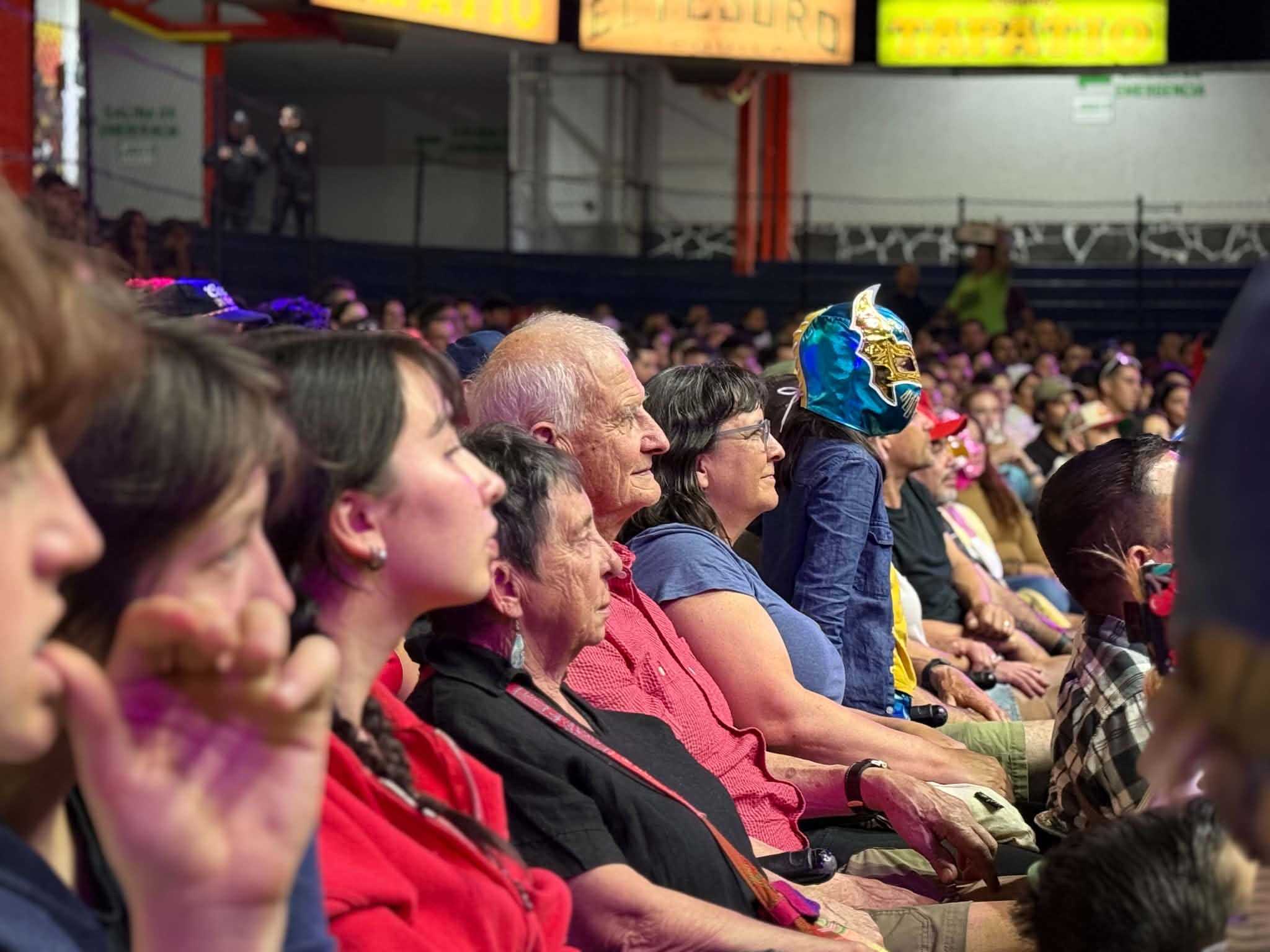
In March, I squeezed past a squadron of Mexican police officers, navigated a metal queue, plopped money down at grated narrow window, made my way into the Arena Coliseo de Guadalajara, and was immediately confronted by the sight of a masked man being hurled out of a wrestling ring.
I was here with two friends, one of them locally raised and guiding us through the chaos, to take in a lucha libre, the famously Mexican style of professional wrestling. A mix of curious tourists and passionate locals had crammed into the small, aging arena to watch the spectacle.
Although we came with little active interest in professional wrestling, we were excited by lucha libre’s promise of spectacle, in all its fun and over-the-top glory. We found three hours of excitement, hilarity, athletic prowess, drama and drunken fan excess unlike anything available in Canada these days.
But to two guys raised playing hockey in B.C.’s interior, there was something familiar about the Coliseo and its occupants. Crammed in a dense industrial neighourhood in the centre of Mexico’s second-largest city, my friend and I had found a building we knew well from our youths.
In all its nostalgic, flawed, and scarred glory, we had found an old barn.
The old barn: a place that was ours
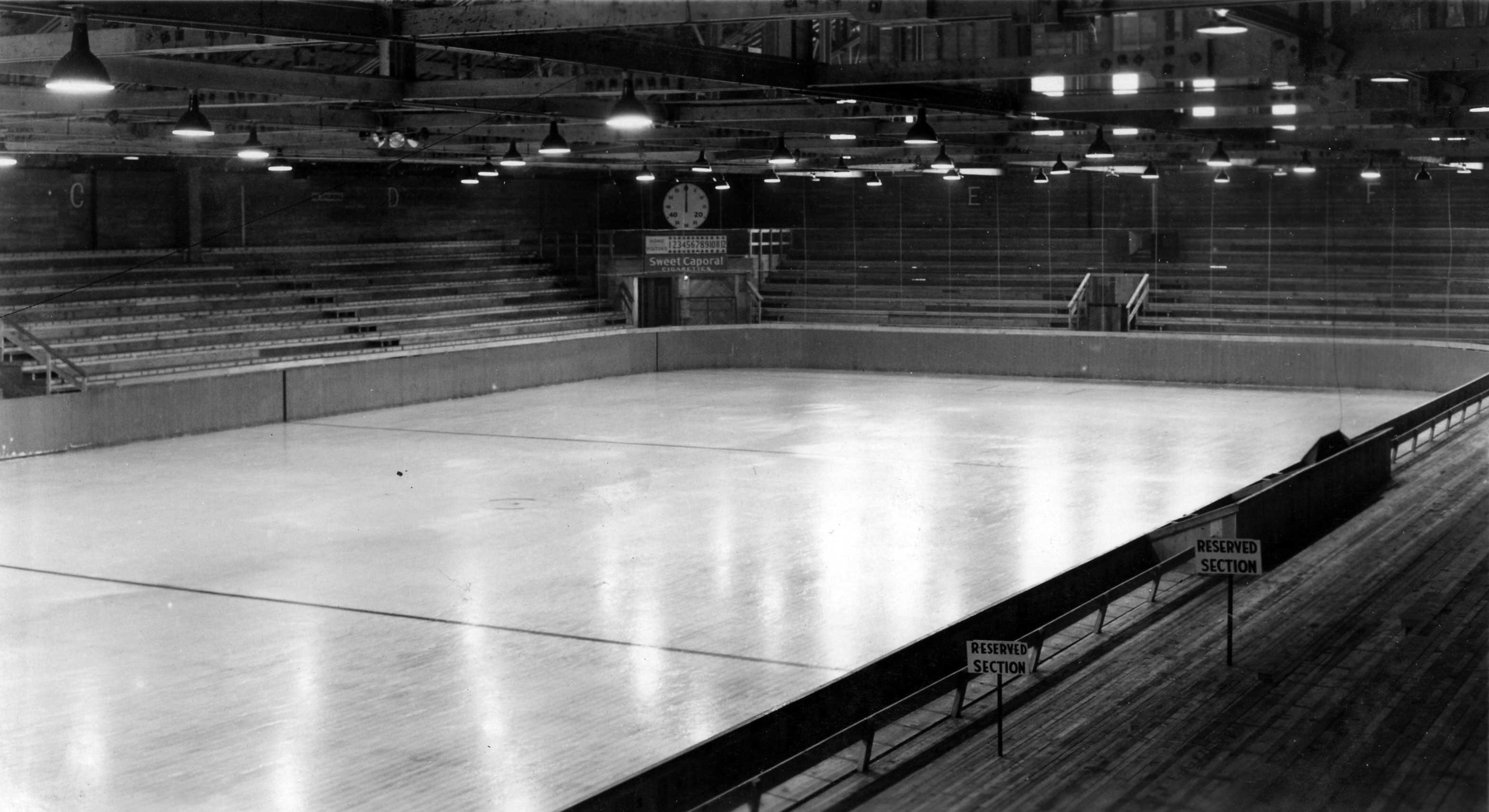
Even today, I can close my eyes and whisk myself to the innards of the Civic Arena, an aging, faintly yellow concrete building that sat for decades in the centre of Vernon, my hometown.
The Civic Arena was an old cinderblock and wood barn of the sort you could once find in every town and city in British Columbia. It was a utilitarian, rectangular ice rink built in 1937 and in accordance with the unique demands, skillset, resources and limits of locals.
Its small ice sheet was surrounded by stepped terraces that rose up a half-dozen levels. Painted blue, they functioned as seats, insofar as they were the only place to sit and watch whatever was happening on the ice.
At the top of the seating, behind a waist-high railing, a narrow corridor ran around the entire upper perimeter of the building. It was just wide enough for two people to walk by one another. Beneath the stands were another set of hallways that provided access to dressing rooms and other mysterious doorways.
And as a child in the early ‘90s, all of this was my kingdom to explore.
Although my family never had much money, my parents always slotted enough away to allow me and my brother to play hockey. Fiercely (overly?) competitive, I loved everything about the sport. It was fast, technical and exciting. I was good at it, and I liked being part of a team. As I grew older and struggled with school’s social elements, hockey gave me a couple days a week in which I could lose myself on the ice. Or off the ice.
My brother was two years younger. When he played, I’d inevitably find myself dragged along to his games. Sometimes we’d be at the Priest Valley Arena, a newer, more utilitarian ice sheet at a local rec centre. But I liked the days at the Civic Arena the best.
For hours, sometimes alone, sometimes accompanied by other hockey siblings, I’d roam the arena, racing down the narrow concourse, checking which doors had been left unlocked, and inventing ball games anywhere possible — i.e. everywhere.
A handful of times each year, we would visit the rink in the evening and find it transformed for a junior hockey game. Children became legion. Men stood along the concourse railing jawing at one another. The big concession — the one with hot dogs and French fries — was opened. And the weirdly passionate fans above the penalty box would boisterously yell at cocky teenage hockey players.
Over the years, my skepticism of all of it would grow. But the rink, the building and the arena remained unsullied and, indeed, would be elevated by the passage of years and the influence of nostalgia.
The old barn was a piece of my childhood, a piece of Vernon’s history, and a place that was ours.
They’re functional, but not exactly beautiful
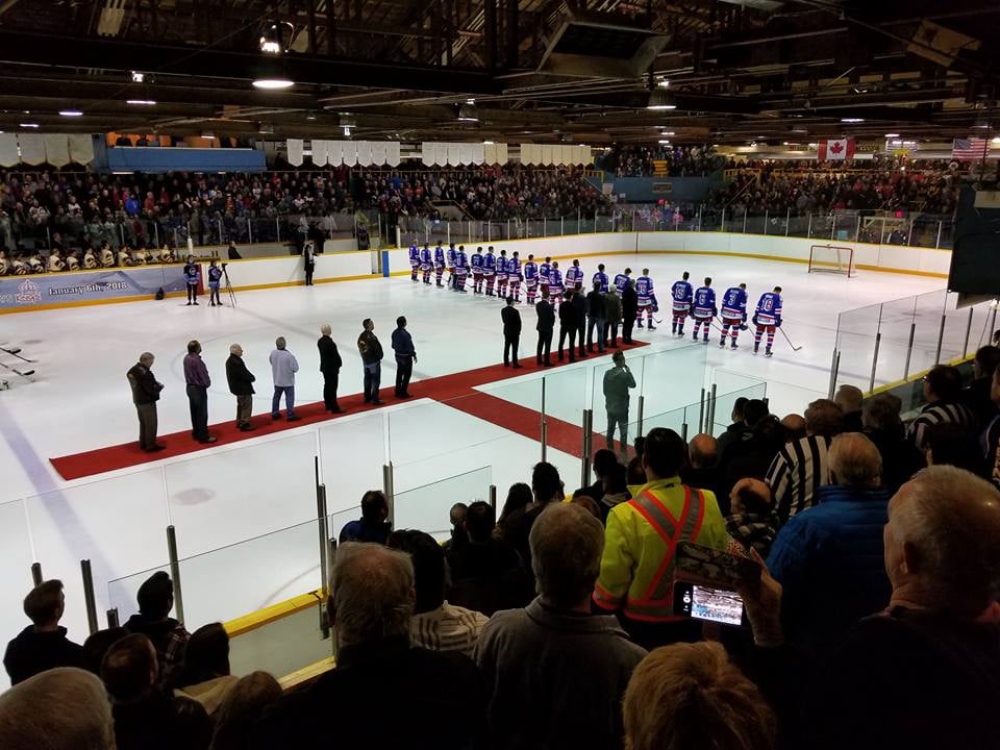
Old barns are defined less by their age than who built them. In Lillooet, B.C., where I live, the local rink dates back to the ‘80s. As in Chilliwack and countless other places in B.C., the arena was a community endeavour. Community organizations raised money, local companies donated supplies and handy residents pitched in their expertise.
The result was a rink that was and is eminently functional, if not exactly beautiful.
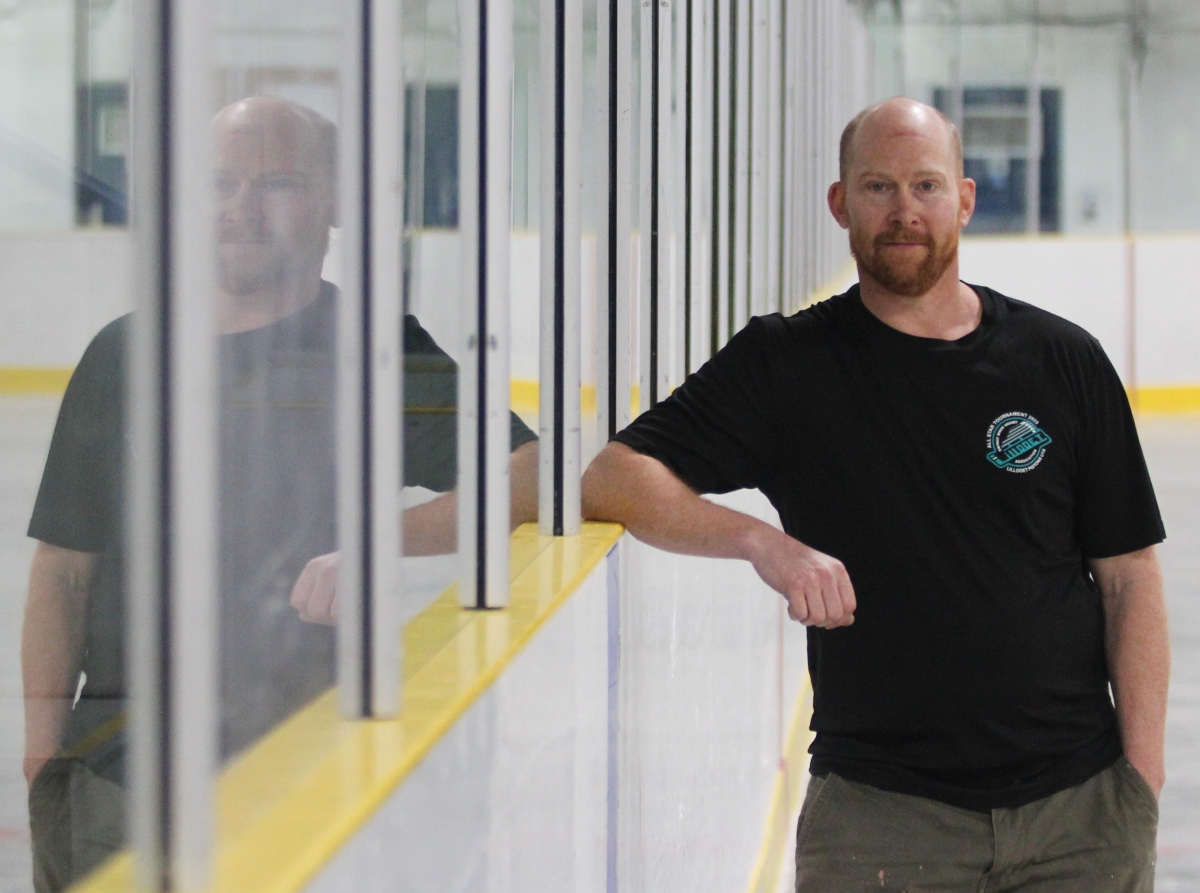
On a recent sunny Friday afternoon, I met my friend Gavin Smith at the Lillooet Recreation Centre.
Smith is a rink rat in every sense of the word. He drives the Zamboni, sweeps the floors, keeps the dressing rooms in tip-top shape and helps out with hockey practices. This spring, the local minor hockey association bestowed upon him its Biggest Fan award.
Smith, who once drove across the country talking to every rink rat he could find, values his old barns a bit differently than I do.
For him, a small town’s building is defined, in part, by the memories of successful hockey players who skated on its ice. Importantly, that success is defined by the community; a bigger city may prize its NHL heroes while a tiny community may find pride in a kid who moves away to play on a junior hockey team.
“Last year McBride, which is the size of Lytton, put a kid in the WHL and he went to the Memorial Cup,” Smith said. “That was a huge deal for the town.”
Frequently, their arena will display memorabilia related to the player. For Smith, history — the markers of past games and those who took part in them — is what makes an old barn building special.
“Each arena is like a museum when you visit it,” he said. “You can imagine the different games that have happened. When I visit these places, my mind wanders. I’m like, ‘What was this like in the ‘70s or ‘80s?’”
As we chatted outside his rink, I told Smith what gave an old barn value to me: its value as a playground, the freedom it provided and the achievement of having built the arena as a community in the first place.
He remembered travelling to Whistler while playing youth hockey. Whistler had the opposite of an old barn — a “swanky” arena built with $20 million in preparation for the upcoming Olympics, with a massive window at centre-ice that brightened the whole rink. The window itself is notorious locally as a testament to expertise gone wrong because it allowed the sun to shine directly on the ice, creating a “puddle” in the middle of the rink on bright days.
Smith remembers going to Whistler, observing the fancy puck bags and massive window. The rink spoke to Whistler in the same way Lillooet’s arena reflected its community. It also provided motivation for visitors.
“When you go there as a Lillooet person, you kind of feel like you’re rolling in from the boondocks into high society,” he said. “If you win, it feels especially good because you beat the rich kids.”
Over the years, other barns provided memories in other ways. Smith still remembers visiting the Rolf Zeis Memorial Arena in tiny Lac La Hache, north of 100 Mile House.
After games, players would shower while standing on a pallet, the original flooring having melted away with the passage of time.
“The dressing room felt like a horror movie scene,” he said. “It was very bizarre. But also, it was super awesome to go in there and have a game.”
In May, as I drove through Lac La Hache, I noticed a sign for the rink and swerved off the road.
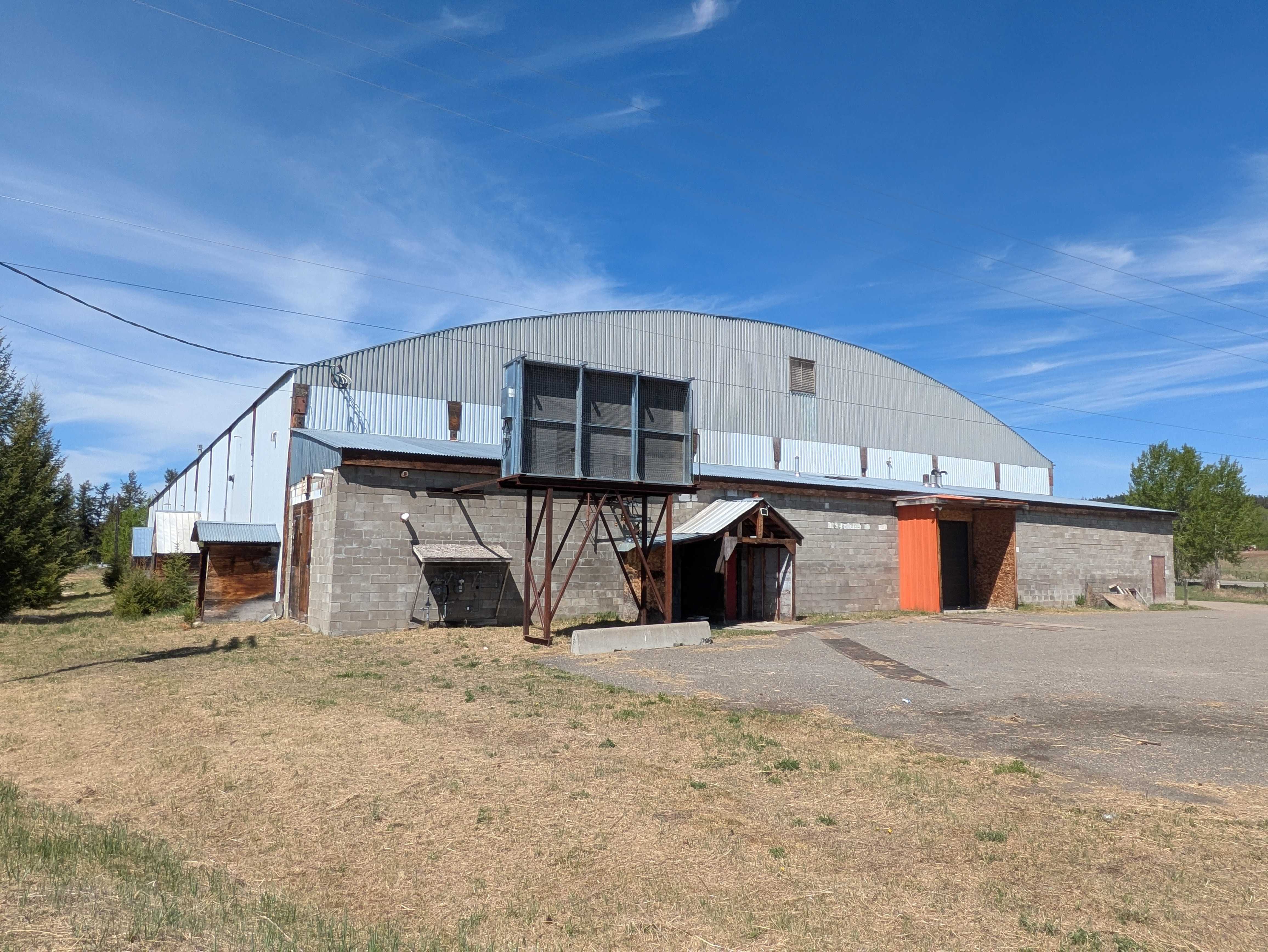
I found a massive Quonset-hut-style barn up the hill, looking like a building that hadn’t been used in years. I had to check my phone to see that it was still operating. Although forces had threatened to close it a decade prior, locals had rallied and saved it. In 2024, volunteers posted on Facebook, asking residents for metal roofing “of any colour” to protect the building over the winter.
The Rolf Zeis rink, like others in tiny communities around B.C., is, in every sense of the word, irreplaceable.
A new facility would be unaffordable to locals. And so, they have managed to keep the old barn going, with a community club running the facility. Local businesses and sports clubs donated money to it operating.
Today’s old barns
Today, new arenas — even those in tiny towns — cost tens of millions of dollars to operate and are built by multi-national engineering firms. They are built with wide hallways, spacious dressing rooms, well-equipped concessions, attractive finishing. They have fold-down seats, rubberized flooring, and few ways a young, roaming child may hurt themselves.
They are functional and safe and boring as hell.
The old barns were built to different standards.
When it was constructed in the late 1930s, Vernon’s Civic Arena was seen as a modern building, with plenty of seating and a roof that didn’t require support beams that obstructed views.
It cost just $50,000, equivalent to about $1 million today.
Nine years after the Civic Arena started operating, residents of Chilliwack sought to raise money for a new arena under the motto “Skate in 48.”
The campaign, and what followed, highlights the grassroots nature of mid-century arena financing — and the makeshift construction process that could result.
In Chilliwack, a foundation was poured in 1948 after $100,000 was raised, but a massive flood that same year stalled progress. It took seven years for the community to cobble together enough money to add a roof and seats. Constructing actual walls and an ice surface took three more years before the arena was finally completed in 1958.
But once it was up, it became beloved, eventually earning the nickname “The Old Barn on Corbould.”
In 2004, as the rink’s life came to a close, local sports reporter Dale Cory wrote that the arena had reminded him of the crude 1970s movie Slap Shot when he first climbed up to its press box.
“To heck with luxury,” Cory wrote.
“This place had history, and class,” a sportswriter wrote in 2004.
From Winnipeg to Stratford, Ont., to Penticton, many cities and towns around Canada fondly called their old rinks “the old barn.”
Alas, its use also often signals the impending end for the old rinks.
The Chilliwack Coliseum came down in 2005. The Civic Arena in Vernon was demolished in 2018.
Both communities have replaced them with newer, larger, modern facilities. Inevitably, and even accounting for inflation, they have cost far more to construct than their predecessors.
In Vernon, officials decided to spend $13 million to add a new ice sheet to an existing (newer) rink, rather than spend millions renovating the Civic Arena.
Kamloops is now considering spending $150 million to build a four-sheet multiplex.
Just replacing the equipment that makes ice in an arena can cost a municipality upwards of $2 million.
As old barns have given way to more modern facilities, locals inevitably gush nostalgic about the arenas. I am probably in danger of becoming overly nostalgic myself here.
But although some forms of nostalgia can mislead or be weaponized, our memories of our old barns feel relatively innocent — or even useful.
Yes, it’s easy to reminisce about the glory of Vernon’s Civic Arena when you don’t have to sit twice a week on one of those hard benches that masqueraded as seats, navigate its overly small ice surface, or cram oneself into a tiny dressing room with subpar… everything.
But our nostalgia also highlights the value of imperfection in our towns and architecture. In our new rinks, we have a bit of what I’ll call the “Rec Room Dilemma” — a situation in which the pursuit of engineering or planning perfection can reduce the fun a space permits. A rec room that you can’t scuff up isn’t much of a rec room.
A nice rec room precludes certain types of play just as a nice, expensive recreational facility will reduce the amount of enjoyable chaos that can be had by wandering children, or those from underprivileged backgrounds.
An old barn, with its pointless nooks and crannies, plywood walls and half-assed paint, could take abuse from kids. They afforded space and permission for fun in ways that hyper-efficient facilities tend not to these days.
Community, class and memories
In Guadalajara at the Arena Coliseo de Guadalajara, the facility’s old-barn status was secured not just by its age, its wooden finishing with fading bright colours, or its utilitarian washroom and concession facilities — although all helped — but by its occupants.
Chain link fencing separated the floor of the arena, where the priciest seats are located, from the upper tiers. The result was a clash of classes that spectators embrace and revel in.
Every round of every match, the boisterous people in the upper tiers shout crude insults related to the wealth of those on the floor seats. The people on the floor then turn the tables on the people in the upper tiers. The chants are sometimes problematic, but as much a pro-forma routine as the pre-arranged wrestling in the ring.
All of it, though, connects the building to the people who fill it.
At the upper echelons of hockey and North American professional sports, new arenas have been accompanied by high ticket prices. Fancy seats are filled by fancy people watching expensive productions. And the consensus has generally been that the atmosphere of attending a professional sporting event has suffered. The events — a game is now accompanied by half-time entertainment and jumbotron productions that fill every second — are a spectacle, but they are something a crowd observes, rather than actively creates as participants.
An old barn, by contrast, demands and rewards audience participation.
It’s probably not a coincidence that the greatest hockey fan experience in Vancouver right now can be found not at Rogers Arena, but the professional-grade old barn that is the Pacific Coliseum, where the Professional Women’s Hockey League Vancouver Goldeneyes are now drawing enthusiastic and loud crowds.
Better than perfect
A week before I travelled to Mexico, I found myself toting Gatorade bottles, granola bars and various coaching equipment into the Logan Lake Recreation Centre, where my 10-year-old son’s team was set to conclude their season at a year-end tournament.
I walked through the main entrance, shivered at the cold, and immediately recognized the bench seating and Quonset hut-style roof.
The rink was the epitome of an old barn, a building that was pushing 50, dating back to the first days of Logan Lake — a practical community built entirely to serve as housing for the nearby Highland Valley Copper Mine. But it looked and felt even older, with its tiny dressing rooms as far from the entrance as physically possible. It was better than perfect; it was special.
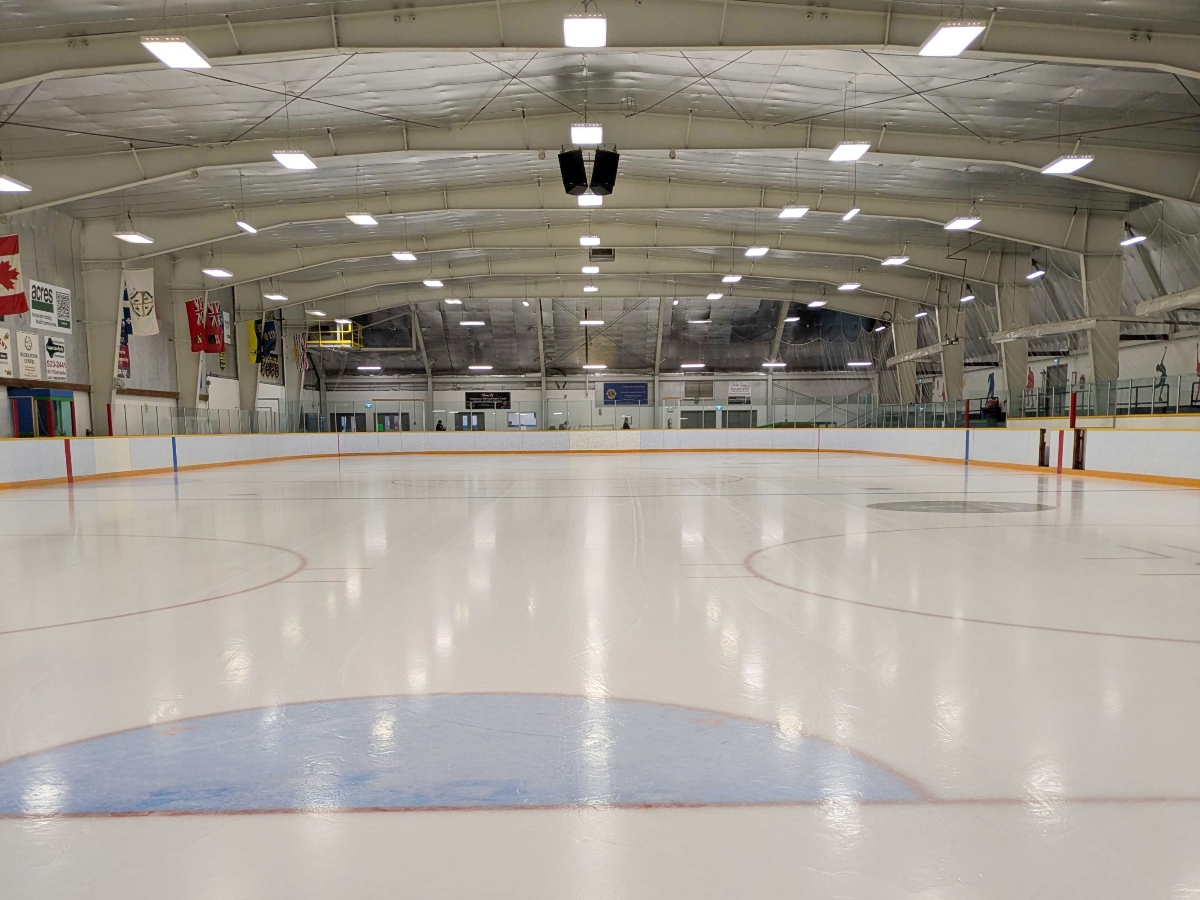
The rink provided an apt setting for our rag-tag team of nine and 10-year-old boys and girls. Some were new to hockey, and others who were young dynamos.
Having failed to win a single game the previous year, the fact we notched a few victories already felt like a marker of success and improvement. Still, they’d be in tough to win a game against our three scheduled opponents, all of whom had demolished us earlier in the year.
But low expectations are what lasting memories are often made of.
So there was a sense of excitement when, in the final seconds of our first game, a puck squirted loose and our youngest player darted toward it and found himself on a breakaway.
A dozen seconds became eight, then five, as he struggled to stay ahead of a pack of larger opponents. The clock read 0:04 as he shot the puck past the goaltender. The buzzer sounded. Our kids piled onto the ice and dogpiled their tiny teammate.
A memory had been made in Logan Lake, and the kids retreated to the barn’s tiny dressing room to guzzle gatorades in celebration and reflect on their teammate’s glory.
The final score of the game was 28 to 4 in favour of the other team.
Our team didn’t care.
Neither did a Logan Lake barn full of shaggy, imperfect memories. ![[Tyee]](/design-article.thetyee.ca/ui/img/yellowblob.png)








Tyee Commenting Guidelines
Please note that email notifications for replies are not currently working due to a software issue which may be resolved in a future update.
Comments that violate guidelines risk being deleted, and violations may result in a temporary or permanent user ban. Maintain the spirit of good conversation to stay in the discussion and be patient with moderators. Comments are reviewed regularly but not in real time.
Do:
Do not: