


 SHARE:
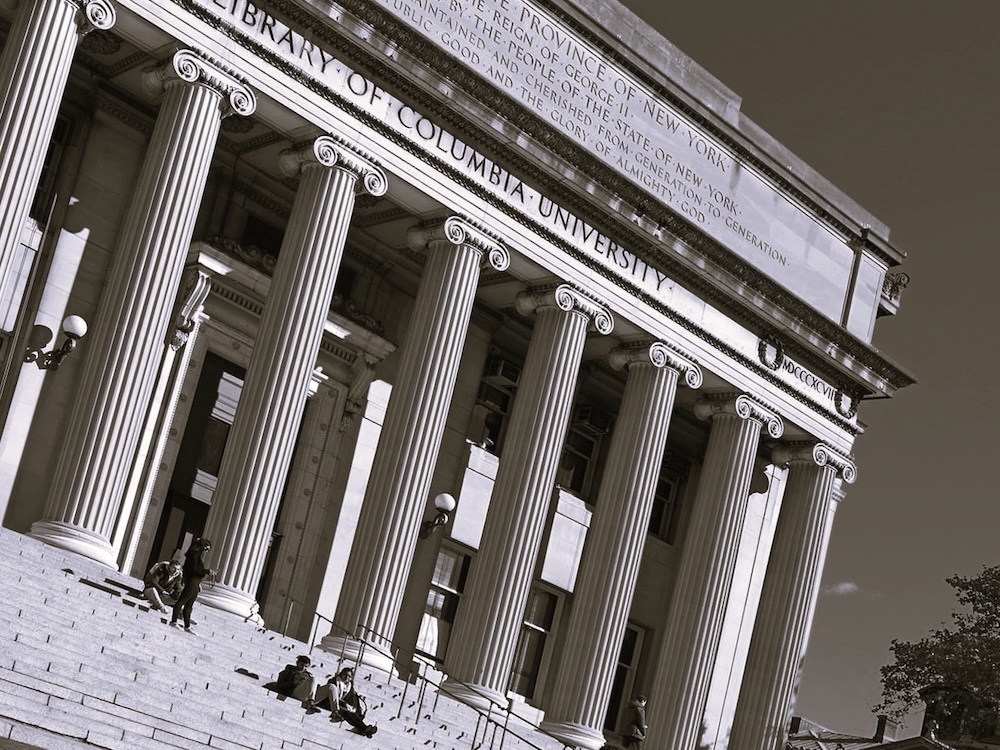
I’m an alumnus of Columbia University (I attended college there and graduated with the class of 1962), but I’m not sentimental about it. I do follow Columbia news, though, especially since the pro-Palestinian student protests on campus in 2024 raised serious questions about the role of universities after the Hamas militants’ surprise attack on Israel on Oct. 7, 2023. Now U.S. President Donald Trump has imposed a new deal on the New York City university, and my interest is intense — because it brought Columbia to its knees.
No U.S. university or college, private or public, is likely to escape Columbia’s fate, where the Trump administration has deemed diversity, equity and inclusion efforts unlawful and demands an overhaul of rules for student discipline, protest and antisemitism. Canadian post-secondaries will have to fight for their lives to avoid being pulled down as well.
Indeed, every Canadian post-secondary administration and faculty association should be studying the Columbia documents and developing plans to stop any such measures here. Every Canadian member of Parliament should bring up Columbia and demand that no Canadian university ever get the “Columbia treatment.”
The July 2025 deal is described in a government document titled “Resolution Agreement Between the United States of America and Columbia University.” It begins by stating that the United States and Columbia “desire to avoid the burdens and risks of protracted litigation.”
This is important. Faced with similar challenges from Trump, Harvard University chose the burdens and risks of litigation, but the Harvard Corp. and the Board of Overseers, the university’s governing bodies, seem to be having second thoughts. Late in July, Harvard began discussions to pay up to $500 million to settle Trump’s charges of a slow response to antisemitism on the Harvard campus in Cambridge, Massachusetts.
It seems likely that Harvard thought things through and decided a legal victory would be pyrrhic. Even if Harvard were to win, Trump could simply forbid further grants to Harvard researchers, forcing some of the best scientists and scholars in the world to cease work. Their students, post-doctoral colleagues and others would have to seek work elsewhere while enduring the stigma of being ex-Harvard.
Something like that prospect must have faced Columbia’s board of trustees, and I can understand why they surrendered. If they had not, they would have been forced to lay off hundreds of staff and professors, closing down programs that had nothing to do with the antisemitism that Trump alleged had run rampant on Columbia’s campus during the pro-Palestinian demonstrations in the spring and summer of 2024.
Litigation might have determined if Trump even had a case and, if so, precisely who the perpetrators were. Presumably they would have included the Jewish supporters of the Palestinian protesters.
Nonetheless, Columbia has agreed to a three-year deal, accepting and enforcing the demands set out in the document. The university will pay $200 million in three yearly instalments, plus $21 million to restore federal research funding and to settle claims by the U.S. Equal Employment Opportunity Commission that Columbia failed to address antisemitism on campus.
Point 5 of the document reads: “No provision of this Agreement, individually or taken together, shall be construed as giving the United States authority to dictate faculty hiring, University hiring, admission decisions, or the content of academic speech.”
Enter the ‘campus commissars’
That sounds pretty good, but elsewhere the document creates a number of university positions that will effectively control who can teach what to whom at Columbia.
They start with an “Administrator,” reporting to Columbia’s president, “who shall be principally responsible for co-ordinating and overseeing compliance with this Agreement and shall be given sufficient supervisory authority and access to resources within Columbia to direct implementation of this Agreement.”
“Once selected, this Administrator shall be responsible for making regular reports to a Resolution Monitor” who will “assess and report on Columbia’s compliance with the obligation contained in this Agreement.”
Columbia will pay for the monitor’s fees and costs, which will include “additional persons or entities as are reasonably necessary to perform the tasks assigned to the Resolution Monitor.”
The monitor is even named: Bart M. Schwartz of Guidepost Solutions, a global consulting service that specializes in investigations and risk management.
This is just the start of a hierarchy of campus commissars, university employees whose jobs will be to enforce Trump’s 2025 deal and denounce anyone who seems to break it. A new senior vice-provost, for example, will have the authority to review Columbia programs, starting with those dealing with the Middle East:
“This review includes the Center for Palestine Studies; the Institute for Israel and Jewish Studies; Middle Eastern, South Asian, and African Studies; the Middle East Institute; the Tel Aviv and Amman global hubs; the School of International and Public Affairs Middle East Policy major; and other University programs focused on the Middle East.”
The senior vice-provost will ensure the programs are “comprehensive and balanced,” review their leadership and curriculum, promote new programs and help create a standard review process for hiring non-tenured faculty throughout the university.
Meanwhile, “to further support Jewish life and the well-being of Jewish students on campus, Columbia will add an additional administrator (“Student Liaison”), reporting to the head of University Life, who will serve as a liaison to students concerning antisemitism issues.”
The document also states that within 30 days of signing, Columbia will create procedures “by which any member of the Columbia community can report allegations of non-compliance with the reforms detailed in this Agreement to the Administrator and Resolution Monitor. Any such reporter shall be fully protected against any adverse actions for so reporting.”
Using anti-discrimination law to discriminate
Columbia’s campus commissars will also ensure that the university “shall maintain merit-based admissions policies. Columbia may not, by any means, unlawfully preference applicants based on race, colour, or national origin in admissions throughout its programs. No proxy for racial admission will be implemented or maintained. Columbia may not use personal statements, diversity narratives, or any applicant reference to racial identity as a means to introduce or justify discrimination.”
In addition, “Columbia shall provide that all hiring and promotion practices for faculty and administrative roles are grounded solely in individual qualifications and academic and professional merit, and shall not use race, color, sex, or national origin as a factor — implicit or explicit — in hiring decisions across all schools, departments, and programs.”
How “qualifications” and “merit” are to be defined is not made clear in the document.
Point 6 of the document reserves the right of the United States to bring “actions against Columbia for future violations of Title VI or Columbia’s violations of any other provision of federal law on the same basis it would bring similar actions against other institutions.”
Presumably the burdens and risks of litigation will again be avoided by simple allegations by Trump or his appointees, including the senior vice-provost, resolution monitor or special liaison, not to mention the 36 new campus security officers Columbia must now recruit, train and equip to police student and faculty behaviour.
It is an exquisite irony that Title VI of the Civil Rights Act is now to be deployed against many of the students it was intended to help, who must now meet vague standards of “merit.” That Title VI is invoked by a bigoted convicted felon who gamed the U.S. legal system all the way to the presidency is equally ironic.
Academic obedience in advance
We can draw some fairly safe conclusions from this agreement.
First, it will be studied by every other private and public university and college in the United States. Task forces are surely already at work, policing curriculums, programs, professors and students.
Second, we can expect a wave of early retirements and resignations in scores of universities as faculty — especially in programs like Middle East studies, gender studies and Black studies — realize their careers are over. They will be replaced, with the advice of senior vice-provosts or other commissars, with compliant faculty. Most will be straight white males, each one hired on “qualifications” and “merit.”
Third, no Palestinian student or scholar will go near Columbia University in the foreseeable future. Nor will Hispanic, Black, Arabic, South Asian or international students in general. Under the document, international students in particular will be carefully screened. In a companion document, Columbia admits it’s already enrolling fewer Black and Jewish students. We can expect that trend to continue.
Fourth, do not expect thousands of campuses to erupt with protests. International students will look for schools in the United Kingdom, Canada or Australia. Black scholars may form a new diaspora, whether in English-speaking countries or in Africa. Most students will shrug, roll their eyes and keep their mouths shut.
Go along to get along
And fifth, expect most post-secondary faculty and administrators to go along with the new academic order. They may grumble about the lack of good international graduate students, or the paperwork required to track every applicant’s race, colour, grade point average and performance on standardized tests — whether admitted or not — to ensure only the meritorious have been enrolled.
But they will grumble quietly, keep their heads down and confine their research to whatever subjects seem likely to be funded by Trump’s government. A group called the Stand Columbia Society, comprising faculty, students, alumni and staff, has already endorsed the deal, saying it “preserves academic autonomy and governance independence, in sharp contrast to more intrusive federal proposals at other universities.”
And what about Canada? Not only should we take note of the sweeping overreach of Trump’s measures in order to prevent them from being implemented here. Our universities also should receive the funding to recruit as many U.S. scholars and scientists as possible — along with their graduate students and post-docs. They represent an opportunity to expand and improve Canadian research in countless fields, from environment and climate to public health and engineering.
And they had better be very well funded. Sweden’s Karolinska Institute, a major medical university in Stockholm, recently invited young foreign researchers to apply for 20 assistant professorships. Canadian universities and agencies will have to compete with some very serious headhunters.
U.S. universities, and the United States itself, are entering a dark age of uncertain length. Canadians will have to work very hard for a long time to keep our own schools places of true academic freedom, free of campus commissars. ![[Tyee]](/design-article.thetyee.ca/ui/img/yellowblob.png)









Tyee Commenting Guidelines
Please note that email notifications for replies are not currently working due to a software issue which may be resolved in a future update.
Comments that violate guidelines risk being deleted, and violations may result in a temporary or permanent user ban. Maintain the spirit of good conversation to stay in the discussion and be patient with moderators. Comments are reviewed regularly but not in real time.
Do:
Do not: