

 SHARE:
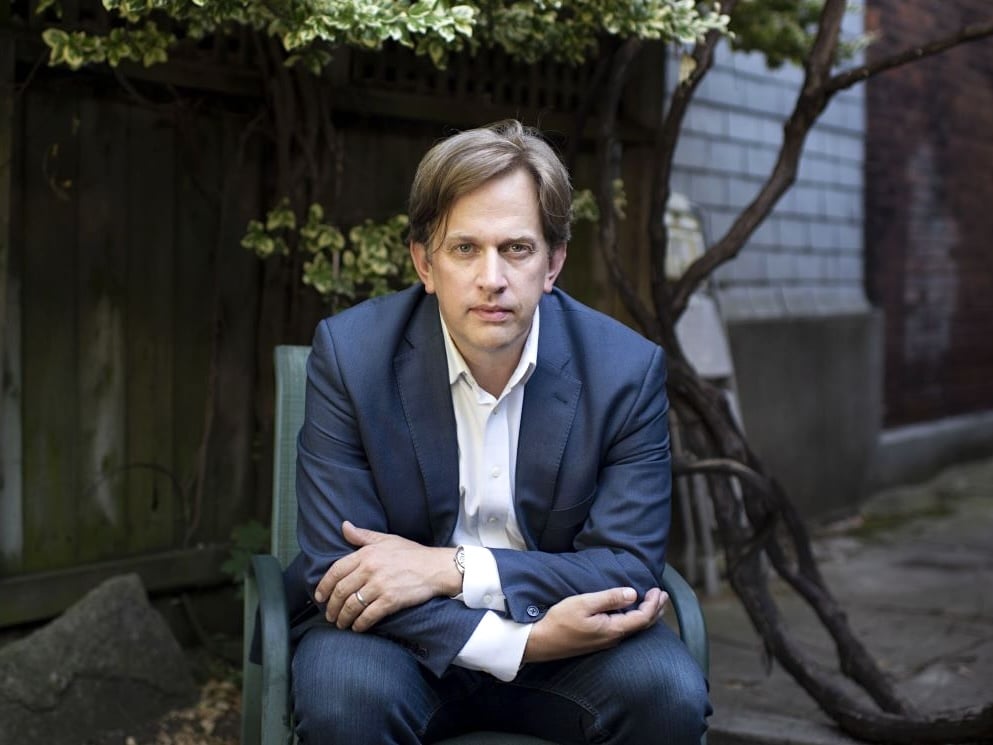
Stephen Marche has been sounding the alarm about America for over eight years now.
The Edmonton-born novelist and cultural critic is the author of the 2022 non-fiction book The Next Civil War: Dispatches from the American Future, a deeply researched, deeply chilling exploration of the many ways in which the United States might go to war with itself and emerge as a right-wing dictatorship.
“One way or another,” a prescient Marche wrote back then, “the United States is coming to an end.”
Critics were torn. Some were rightly concerned. Others were left unconvinced. The Atlantic, in particular, dismissed Marche as an old-time doomsday prophet. Donald Trump, after all, was no longer in office; to many, the threat had been neutralized.
Three years anon, Trump is right back in power. He’s dismantling the rule of law, reviving fascism, wreaking havoc on the global economy and torpedoing long-held alliances. The United States of America may still be a democracy, in theory, but not for lack of effort or for long, if Trump can help it.
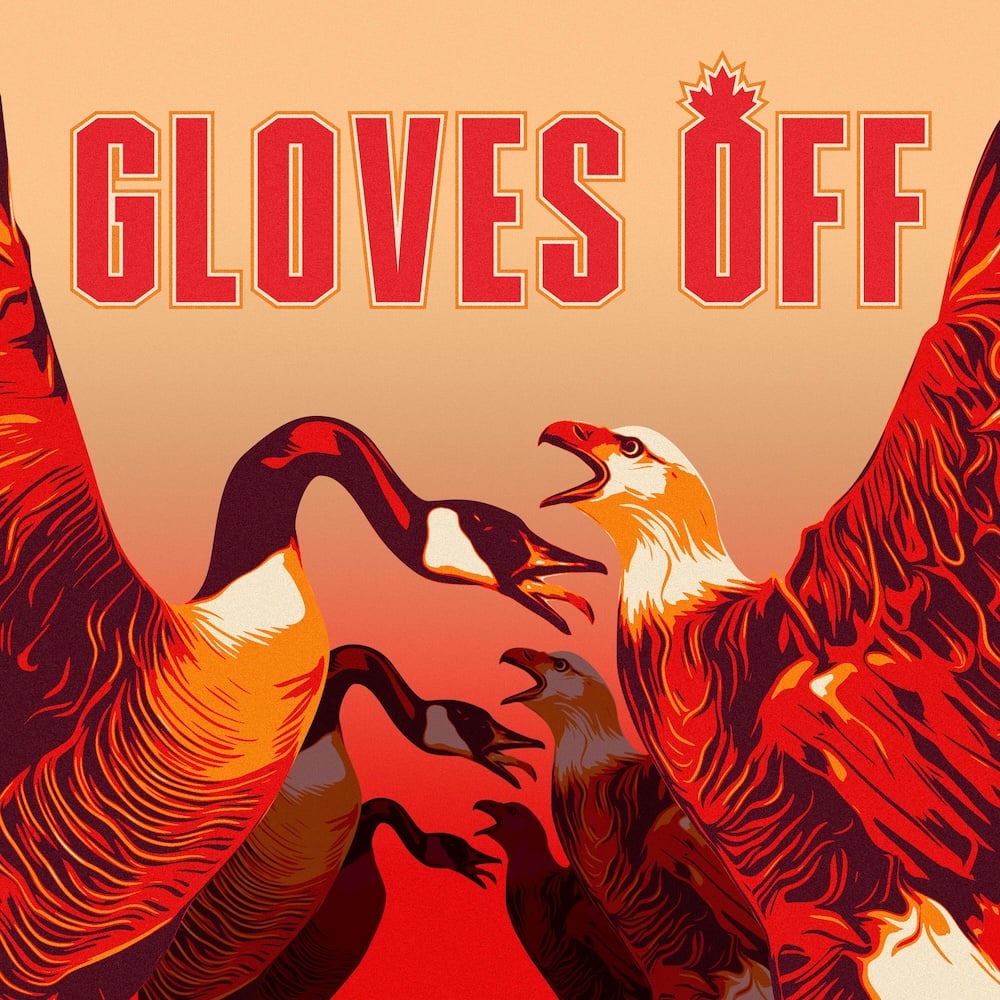
Marche is back too, with a podcast — Gloves Off, an eight-part series about the threat to Canada’s sovereignty and what we can do about it. People are finally listening. Gloves Off has been a top-10 Apple podcast since its debut earlier this summer, as Canadians troubled by Trump and his tariffs tune in to learn how to proceed in these uncertain times.
It’s hardly easy listening; alas, it feels essential.
Recently, Marche took a moment to talk to The Tyee about Trump’s America, Mark Carney’s Canada, nationalism and how to respond to the threat of a neighbour on the verge of self-destruction.
“We need to get out of the way,” he said. “We need to separate ourselves.”
This interview has been edited for length and clarity.
The Tyee: Congratulations on the success of Gloves Off, which is no surprise, really. You’re a great host, and your podcast combines two things that all but guarantee an audience nowadays: Donald Trump and full-blown alarmism. I mean that as a compliment, not to offend, and I get the sense you wouldn’t be offended anyway, like you see this as a kind of necessary alarmism. Is that fair to say?
Stephen Marche: I don't see it as alarmism. I see it as an accurate description of the conditions on the ground. [Gloves Off] came out of, largely, the book I wrote called The Next Civil War, which came out of a magazine article that I wrote in 2017. I remember when I brought my editors at the Walrus, like, “America's in real trouble, it could fall apart,” they were like, “Well, it's a great piece and I'm sure it’s going to get a lot of attention, but you don't really think...” And I was like, “No, I mean, it. They're falling apart.”
And when my publisher bought the book, I brought the manuscript to them in 2020. Their offices are on Sixth Avenue in New York, Avenue of the Americas, right across the street from Fox News. I was walking in front of Fox News where there were some protesters, and a fist fight broke out. I had to jump out of the way to deliver this manuscript to my publisher, and my publisher was like, “Well, it's very interesting, but you don't actually think it’s going to get this bad, do you?” Like, I literally just jumped out of the way of political violence on your doorstep. What is it going to take for you to see that these threats are real?
Every time I've made these arguments, I've been called alarmist. I really think of myself as describing underlying structural flaws. I think that's my job. To me, that's not alarmism.
Listening to your podcast, I was reminded of that Malcolm Harris line about how liberals worry about a coming civil war without thinking about how to win it. Gloves Off feels like a response within a Canadian context. Rather than sitting back, anxious or still unconvinced, you're asking questions about how to fight back, reacting to an actual possibility. As a Canadian, it feels a bit unnatural, even unseemly, maybe even a little American, to be steeling oneself for a fight.
The problem we face is that we've always been a country more attuned to international order. Like, since the end of the Second World War, we've been in favour of economic and political integration with larger organizations. Not just NATO, but Francophonie and the Commonwealth and G7, and all of these international orders. Before that, we were just part of the British Empire. And I think what's happening to us now is that we're facing realpolitik. What do we have to do to be strong enough to survive?
That's not a Canadian question. That's not a question that we are used to asking at all. We're used to asking, “How can we be good citizens of the world order?” We have not asked ourselves, “OK, what would it take to actually survive an invasion?” I mean this series as a wake-up call, and not just to ordinary Canadians. I think our institutions are... it's a real challenge, these questions, because they've never faced them. I'm actually really sympathetic. I think I can sound critical at times of institutions like the military or the fact that CSIS [Canadian Security Intelligence Service] doesn't have an international wing, they’re strictly national security matters, but I don't really mean it that way. No one has ever been faced with these questions in Canada, and now we're facing them, and we have to find answers.
One thing I can't get over about the current moment is this collective sense of betrayal, as though America has always seemed cool, and this heel turn is out of left field. I want to believe Canadians aren't this naive. But hearing you break it down, it's clear that we really have been very naive about our neighbours, or at least our governments have, our military has — economically speaking, we’ve really allowed ourselves, in some ways, to become the 51st state.
I wouldn't say we've become the 51st state. I think that would be going too far.
Right, right. Gloves off, elbows up, never 51.
But I think, basically, the people who have succeeded in the institutional life of Canada have done so by integrating more with the United States. That's how you get successful in Canada. And now we’re waking up. I don’t mean to give away too much about the eighth episode, which has Margaret Atwood in it, but she brought up a really interesting point. I asked her: What were the mistakes of, like, the 1960s nationalism that we can learn from? And she said the key is not to be anti-American, because you have to understand that what they're going through is their own kind of rendering. Many of them are on our side, and we are on the side of many of them.
Which I thought was a very interesting approach to the question, because, you know, what we’re dealing with here is a collapse. That's what we have to fear. That's what we need to pay attention to. Dealing with an America that is so weak as it is now, and that comes with all sorts of interesting things. For example, the New York Times referred to us the other day as a power. Like we were referred to as a power.
Oooh. Look at us.
I don't remember that ever happening before. They really felt like, OK, this is something we have to investigate, not with a Canadian, but with our own people. That's an interesting choice.
Outside of America's shadow, the problem is not necessarily America itself, although that is a massive problem. The problem is that we're hugely vulnerable to everybody. When you look at the disinformation, we have no offence internationally. We just simply don't interfere in other countries. Other countries interfere with us all the time: Russia, China, even Iran, and certainly America. They mess with our politics at will because we have no response. And now that the American umbrella has been taken away, I think we're a bit like a kid who's just graduated from university. We've got to find our own way.
Time to get a weird first job.
And figure out, at least, a basement apartment. That's sort of where we're at. The other thing is, I think, we're a very beautiful country. One of the best things about Canada is that we haven't had to ask these grotesque questions, like: How should we try to manipulate Indian politics to advantage us? And we're going to have to start asking them, or just die.
Are you advocating for that kind of global interference, where we do start to get involved in these things?
One hundred per cent. We need a foreign spy service. One million per cent. We cannot continue as we are now. CSIS just calls the CIA when they want a real answer. That's what happens nowadays. That's not going to be something we can count on.
That, I think, actually was one of the most troubling things about Episode 1: how heavily we rely on American intelligence. We probably shouldn't have been doing that.
We're like a very beautiful mansion with really big chunks missing out of the foundation. I think we're making actual, real, serious progress on the economic front. But the security arrangements material... I don't think Canadians are fully processing how deeply we need to change our practices. Episode 5, the one that comes out next week, calls for a whole society defence, and that would change, fundamentally, Canadian life.
Not even just Canadian life, but Canadian identity. That's just never been who we are. Being on the offensive or meddling in other people's affairs, other countries’ affairs. Even this resurgence of nationalism. Canada Day was so different this year. It hasn't been like that for a while.
Atwood told me it’s more intense than in the ’60s, and she would know.
There's a part of me that's, like, all right, let’s go. But there's another part of me that’s been Black for 40 years, and, like, nationalism is... not cool. I understand that we all need to band together. But doesn't that word, if not the concept, give you some pause? Even all this “we're on our own” shit doesn't sit quite right with me. The best way to marginalize and oppress somebody is to convince them that they're on their own.
I’ve been asked about this. Aren't you worried about, like, Canadian nationalism taking on principles of all other nationalisms? But Canada's the only country in the world where the more patriotic you are, the more you believe in multiculturalism. My nationalism — I'm a product of multiculturalism. I believe in it the way a Catholic believes in the church. Like, I was raised in it. Multiculturalism is the essence of what I see as the national project. I don't think they're separate. We've always been polyethnic, polylinguistic, geographically diverse.
I think it is a very, very interesting question. But because we're in such resistance to, essentially, white power fascism in the United States, where those are our enemies — our enemies are these people who have secret police rounding up random brown people off the streets of Los Angeles — that gives us a little buffer from it for now.
I don't know. I'm not sure we even have the luxury of worrying about that right now. I think we are actually in a position where the conditions under which multiculturalism exists are under threat, and we need to protect them. And I think, anyway, this is my impression, but this is not a nationalism, that I'm seeing now, that has racial overtones.
I mean...
Quite the opposite. It’s a “We're a diverse country, we're all in this together” kind of nationalism. Now that, of course, also may change. These things have a tendency to mutate. But I don't see that as a problem quite yet.
I guess if we’re able to keep it as, like, collectivism, that's one thing. But my sense after covering the most recent provincial and federal elections is that there’s one side of the political spectrum here that would like Canadian nationalism to at least include a little racism, you know, as a treat. I worry that as we all get more comfortable with nationalism, we're going to lose control of the moral high ground.
We are going to lose the Canadian moral high ground. That is the essence of realpolitik. We are going to face very ugly questions that will require ugly answers. I actually don't think multiculturalism will be the thing, because I think, I think there is a real commitment to that. I wouldn't say that I know where this is going because I don't, and I would have described myself as pretty uncomfortable with nationalism maybe even a year ago. But this kind of nationalism seems to be the most basic kind.
The hope that I hold on to is that, since the Canadian national identity has kind of always been defined in opposition to the American national identity, our nationalism will include a rejection of the kind of rampant ethnonationalism and white supremacy we're seeing out of the Trump administration.
I think what's emerging, really, in response to Trump. Donald Trump gave nationalism to progressive forces. In Brazil with [former president Jair] Bolsonaro. He did the same thing in Australia. And obviously here too, right? I mean, 25 points. Carney single-handedly overcame that. I think these forms of nationalism have made nationalism progressive, and that's true everywhere, right?
Yeah, that's my concern. I don't have a whole lot of optimism that anything that Trump has made popular globally is going to turn out to be good for us. But I’m more of a pessimist, I think. Researching for this chat and reading some of your more recent essays, I sensed a real affinity not only for America, but for the so-called “American dream.” Maybe not so much now that they're trying to kill us, but still. “The world needs America,” you wrote in the Guardian three months ago. “It needs the idea of America, the American faith, even if that idea was only ever a half-truth.” Half-truth feels generous. I would argue that most of America's identity is a collection of legends and fever dreams generated to buttress an agenda. But that’s just me. How are you able to hold on to this sense of the American spirit?
First of all, America made my career. If it were not for America, if it were up to the Canadian cultural industry, and journalistic industry, I would be working in a bookstore.
Or for The Tyee!
America definitely made me. American editors are the ones who believed in me. When I moved to America, I was a professor at City College in Harlem — that was the most flattering possible introduction to the United States. People where no one in their families had ever gotten a degree, pulling themselves up by their bootstraps, just like they tell you in the myth, into the middle class. And they did it. That’s intoxicating. That spirit that America has, it’s totally intoxicating.
Those things that America presented to me, I absolutely loved. But when someone you loved is dying, you have to be practical about it. I know that Americans are no worse than Canadians. Their systems are just totally broken, and they’ve managed to talk themselves into not wanting to fix them. The line I keep thinking about is: There’s no cure for being too stupid to take the medicine.
That’s what I tell my son sometimes! But nicer.
If you know that the medicine works and you don’t take it, there’s no cure for that.
Certainly Trump’s biggest success has been in denying the medicine, and giving everybody the licence to deny the medicine. He’s ushered in a brand new way to handle white guilt: attack the people who attest to it. Silence them completely.
He’s a shame-eater. A classic shame-eater. He eats the shame of race. He eats the shame of gender. He eats all the shame. And you’ve got these people walking around with a lot of shame in America, sometimes justified, sometimes not.
I would argue mostly justified.
And he eats it all.
I’m sure that’s very intoxicating. Probably a huge relief for some.
Oh yeah. You don’t have to be good. The problem, of course, is that they think of their politicians as identity markers, whereas in Canada, Mark Carney, he’s just a servant. I have hired him to do a job, and if he doesn’t do it, I will fire him. The same goes for [former prime minister Stephen] Harper. He was just a servant. That’s a huge difference in the political structure of the country.
MAGA feels a bit more akin to a death cult. I think Canadians are sitting here, some of us, anyway, hoping that America will snap out of it before we’re too badly affected, or that Trump will pass on and the curse will be lifted and the next guy will be one of those old-school politicians who’s at least quiet about how much he hates us. Probably not, though. So what do we do besides sit around and wait for all this to blow over?
Now is the time to get really, really busy. I think we know what to do. We need to pull away from America, as far as we can. This means reorienting our trade. It means all the stuff that Carney talked about: renegotiating trade agreements with like-minded countries. Japan, Korea, Vietnam, us, Europe. That is now the democratic world. I think we have to understand that those are our foundational values.
We absolutely need to step up. We are not in a position where we can just let these global questions elide us. We’re absolutely going to have to think about them. That’s going to involve a reframing of a lot of our institutional lives.
I think Canadians are already shaping that choice. These boycotts are pretty extraordinary when you consider that they’re not fundamentally mandated. That’s just people reacting. I think it’s quite simple: we need to pull away from America and reassert our strength on all levels, economically, socially, culturally, politically. I think that’s the work of nation building. You brought up earlier the darker questions of that, and I don’t discount that. Those concerns are very real. But at the same time, we need to find an inner strength if we’re going to survive. ![[Tyee]](/design-article.thetyee.ca/ui/img/yellowblob.png)












Tyee Commenting Guidelines
Please note that email notifications for replies are not currently working due to a software issue which may be resolved in a future update.
Comments that violate guidelines risk being deleted, and violations may result in a temporary or permanent user ban. Maintain the spirit of good conversation to stay in the discussion and be patient with moderators. Comments are reviewed regularly but not in real time.
Do:
Do not: