

 SHARE:
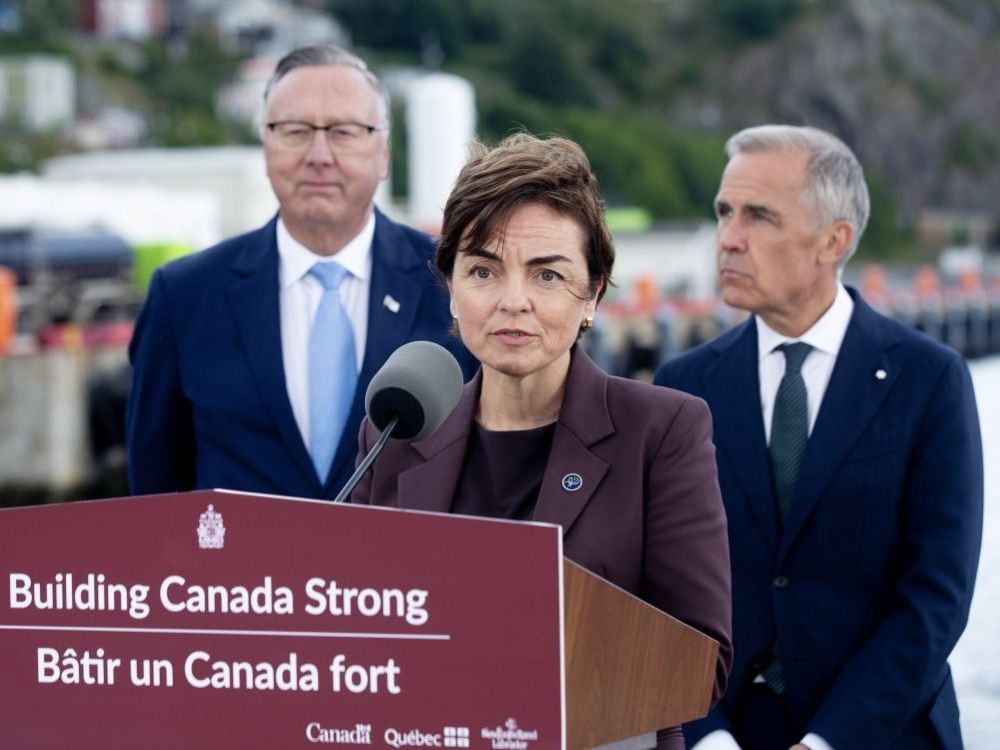
Memo to Donald Trump: Canada just took another step toward building its energy resilience and sovereignty.
Thanks to some expert negotiations, heavy tax credits and loan guarantees from Ottawa, Quebec and the province of Newfoundland and Labrador have signed an agreement to develop untapped hydroelectric resources on the Churchill River. Labrador infrastructure projects are predicted to help double Canada’s electricity production by 2050. For a long time, such a deal seemed impossible.
The agreement can potentially heal a longstanding feud that has divided Quebec and Newfoundland and Labrador since the original Churchill Falls agreement was negotiated by former premier Joey Smallwood’s Newfoundland government in 1969.
The financial injustice locked into those terms was deeply emotional for Newfoundlanders. After a series of articles I wrote about the terrible deal, Smallwood accosted me at a public event. He told me that if I continued to criticize the deal, he would have me “tarred and feathered” and driven off the island.
Power and money
The source of the magnificent Churchill River is high on the central Labrador Plateau. The riverbed drops away in the Beaudoin Canyon and falls a thousand feet. The waterfall itself plummets 246 feet. That’s 58 feet farther than Niagara Falls.
Churchill Falls is one of the greatest waterfalls in the world. Smallwood conceived the idea of developing its raw, untamed power in 1952. He failed to get financing in the U.S. and Canada, so he looked to London. After checking into the Savoy Hotel in August 1952, he was introduced to the Rothschild banking house and the then-occupant of 10 Downing Street — Sir Winston Churchill. Smallwood changed the name of Hamilton Falls to Churchill Falls in honour of the British prime minister who liked the project and found ways to fund some exploration work.
Eventually, it would become one of the largest hydroelectric projects in the western world, costing more to build than the St. Lawrence Seaway. The agreement was finally signed after protracted negotiations in 1969. Construction was completed in 1974.
Payment for Newfoundland’s energy started at just three mills, or three-tenths of a cent per kilowatt hour. It later fell to two mills. Quebec made huge profits when energy prices spiked in the 1970s, while Newfoundland was locked into a very low fixed rate until 2041.
Not surprisingly, the deal led to bitter resentment in Newfoundland and Labrador. Smallwood was roundly criticized for the lack of an escalator clause in the ruinous contract when world energy prices soared. With good reason. Quebec made about $28 billion from the deal, while Newfoundland and Labrador received only $2 billion.
Terms of the new deal
On Aug. 17, Quebec, Newfoundland and the Canadian government announced a non-binding energy agreement to update and expand the Churchill Falls hydroelectric project. A new generating station will also be built on Gull Island on the Churchill River. The aim is to have a signed binding agreement by the end of 2026.
Quebec would pay 1.8 cents per kWh, rising over time to 7.4 cents per kWh. The federal government kicked in $10 billion in financing. The $70 billion project will be the biggest renewable energy project in North America, sending energy to markets in Canada and the United States.
At the signing ceremony in St John’s, Prime Minister Mark Carney said, “This is co-operative federalism at work.” It was no overstatement. The hydro plants would produce enough energy to power all the homes in Montreal, Toronto and Vancouver combined.
Newfoundland and Labrador hydro can now sell up to 985 megawatts of power to Quebec which will use transmission lines in the province to send it to the U.S. and neighbouring markets. That electricity will be sold at spot market rates — something that could not be done under the old agreement. Quebec already has transmission lines into New England and the state of New York.
The government of Newfoundland and Labrador claims the new agreement grants it substantially more power to use and profit from the project, and says the value of the pact is $13 billion more than an MOU signed in 2024.
As part of the deal, Newfoundland and Labrador also got $2 billion in federal backing for a massive offshore wind farm network in Labrador. That energy could power a potential nickel mine and other vital industries in Labrador.
Joey’s obsession
Joey Smallwood was elected Newfoundland’s first premier on April 1, 1949, and kept the office until his Liberal government lost by hair’s breadth to Conservatives in October of 1971. Smallwood resigned as Liberal leader three months later.
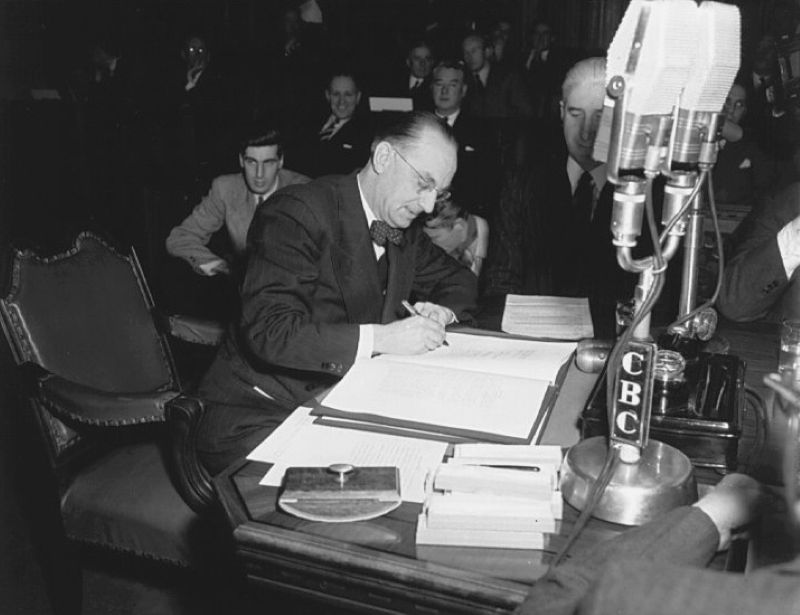
On Sept. 29, 1984, Smallwood had a major stroke that deprived him of his ability to speak and write — torture for a man who excelled at communications. He was working on his massive encyclopedia of Newfoundland and Labrador at the time of his stroke.
He never quit his obsession with the Churchill Falls agreement. The last time I spoke to Smallwood was at his modernist country house on Roaches Line outside St. John’s. He tried to give me the pen used to sign the Churchill Falls agreement, which I of course refused. It was framed in gold on his wall. Joey died Dec. 17, 1991, a few days before his 91st birthday.
He had signed the agreement that brought Newfoundland into Confederation on Dec. 11, 1948. He established Memorial University which provided a free university education and even paid a stipend to students. He was premier for 23 years — but his thoughts always returned to the notorious Churchill Falls agreement, which he believed would be the economic saviour of the province.
As always, the devil is in the details, as Canadian negotiators found out just before our tariff negotiations with the U.S. collapsed in August. Newfoundlanders have not yet seen the new Churchill Falls agreement. A promised referendum on the deal has been cancelled by Newfoundland and Labrador premier Tony Wakeham, ostensibly in the interest of speeding up the project.
The Quebec election could throw a spanner into the deal. The Parti Quebecois, which is currently leading in the polls, has promised to revisit the deal as part of its election platform. With that promise from the PQ, there is no guarantee that one of the worst energy agreements in Canadian history will finally be put right.
But if it is signed, Canadian unity will be a big winner. ![[Tyee]](/design-article.thetyee.ca/ui/img/yellowblob.png)










Tyee Commenting Guidelines
Please note that email notifications for replies are not currently working due to a software issue which may be resolved in a future update.
Comments that violate guidelines risk being deleted, and violations may result in a temporary or permanent user ban. Maintain the spirit of good conversation to stay in the discussion and be patient with moderators. Comments are reviewed regularly but not in real time.
Do:
Do not: