SHARE:
Forestry has long been the linchpin of B.C.’s prosperity. For more than a century, it has fulfilled the prediction of James Douglas, the Colony of British Columbia’s first governor.
“The finest fir timber in the world... will become a source of boundless wealth,” he proclaimed.
But things have changed. Climate change and poor forest management have created a wildfire powder keg. And if we don’t revolutionize forest practices, our wealth could now burn to ashes — and bankrupt the province.
Unfortunately, the provincial government still lacks a proactive strategy to prevent megafires.
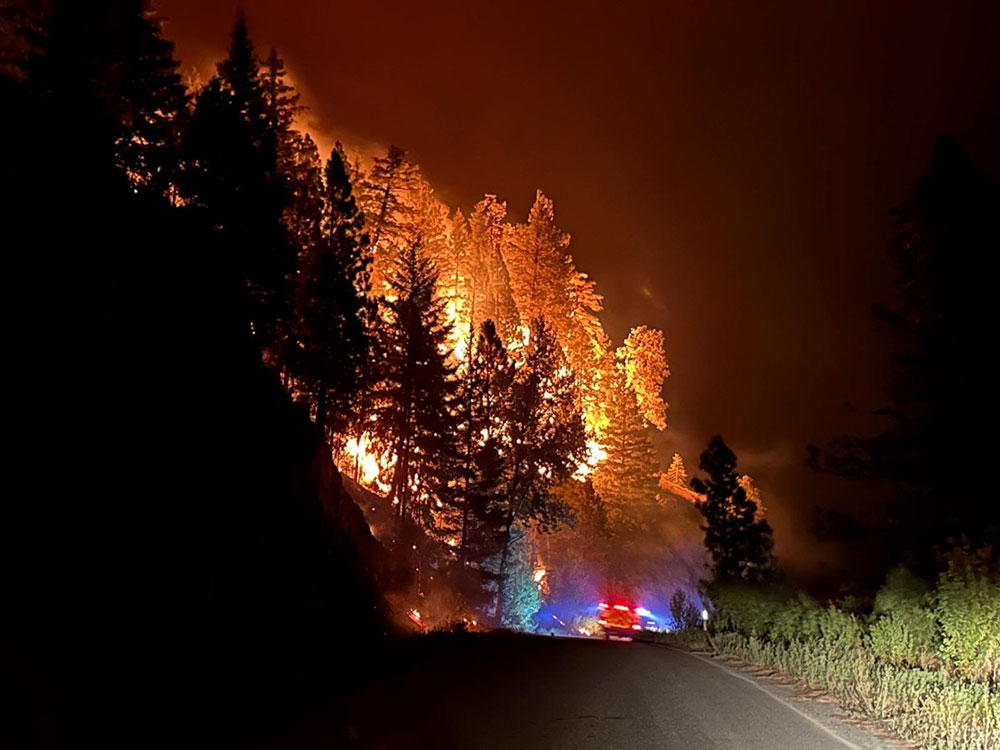
There are compelling reasons for such a strategy. Since 2016, fires have burned an area larger than Vancouver Island, devastated timber supplies and ecosystems, levelled Lytton and West Kelowna neighbourhoods, triggered mass evacuations and repeatedly blanketed the province with toxic smoke.
Wildfires in the province now drive global climate change, often producing more greenhouse gas emissions than all other B.C. sources combined. Canadian wildfires in 2023 produced more GHGs than total national emissions of Germany.
But one of the most powerful reasons for action is economic — we simply can’t afford the status quo. Losses from B.C. wildfires cost tens of billions of dollars. The government reported spending over $1 billion fighting 2023 wildfires.
Yet such firefighting costs are just the tip of the economic spear. The total costs of a wildfire can range from six to 30 times the suppression costs.
They can include things such as evacuation costs, the destruction of homes and infrastructure, the loss of timber supplies, sterilization of forest soils and increased flooding, erosion and landslides.
And then there are the health impacts from smoke; impacts on agriculture and tourism; damage to fish, wildlife and water supplies; higher insurance costs; and lower property tax revenues.
For example, total costs of the 2016 Fort McMurray fire are estimated at about $9 billion to $11 billion — roughly 20 times the firefighting costs.
Just how long can the B.C. economy support multibillion-dollar costs, year after punishing year?
As wildfire conditions worsen, how will we support all the mills whose wood supply has burned? All the wineries with smoke-spoiled product? All the motels, campgrounds and restaurants emptied by smoky summers? All the Indigenous communities evacuated repeatedly? All the highways and dikes washed away by wildfire-caused flooding?
And how will we pay the increased health costs? A University of California, Los Angeles, study has linked 11 years of California wildfire smoke to more than 50,000 premature deaths and $400 billion in economic impact.
The long-term prosperity of British Columbians is at risk. What needs to change?
BC needs to up its game
We need to manage the tinder box of forest fuels — dead needles, leaves, branches, trees, logs, dense brush and thickets — that has accumulated since Indigenous burning was outlawed long ago. Following the lead of Australia and the United States, we need to reinstate the routine preventive burning that Indigenous Peoples traditionally practised.
Those practices reduce forest fuels and create “fire breaks” of open meadows and patches of less-flammable deciduous trees.
Mechanical forest thinning must also be expanded. We need new policies, technologies and market incentives to make such work economically feasible and environmentally sound.
Commendably, B.C. has worked with some First Nations on cultural burning projects and expanded preventive burning.
But B.C. needs to up its fire mitigation game. New Jersey, with less than one per cent of the area of B.C., conducts more preventive burns than the province.
B.C. should emulate northern Australia, which fully mobilized Indigenous Peoples to carry out traditional cultural burning — and cut wildfire destruction in half.
Such proactive fire mitigation work pays off in the end — in valuable at-risk watersheds, each dollar invested in mitigation can return up to $7 in benefits.
Yet B.C.’s budget plan for the next three years largely ignores this and focuses on reacting to megafires, instead of prevention.
It allocates only $20 million a year for preventing megafires — while investing over four times that much in reactive measures.
Ironically, the budget also establishes a $10-billion-plus contingency fund to cover “threats to the fiscal plan.” That provides a further cushion to merely react to fire, as opposed to getting out ahead of it.
Yet, absent proactive action, that contingency fund will have to expand exponentially — and rob future funding for all other social needs.
There is a better way. B.C. must not just react to fires that come each year. It must focus far more on long-term prevention measures. An ounce of prevention is worth a pound of cure.
Happy holidays, readers. Our comment threads will be closed until Jan. 2 to give our moderators a much-deserved break. See you in 2025! ![[Tyee]](/design-article.thetyee.ca/ui/img/yellowblob.png)
Read more: BC Politics, Environment