

 SHARE:
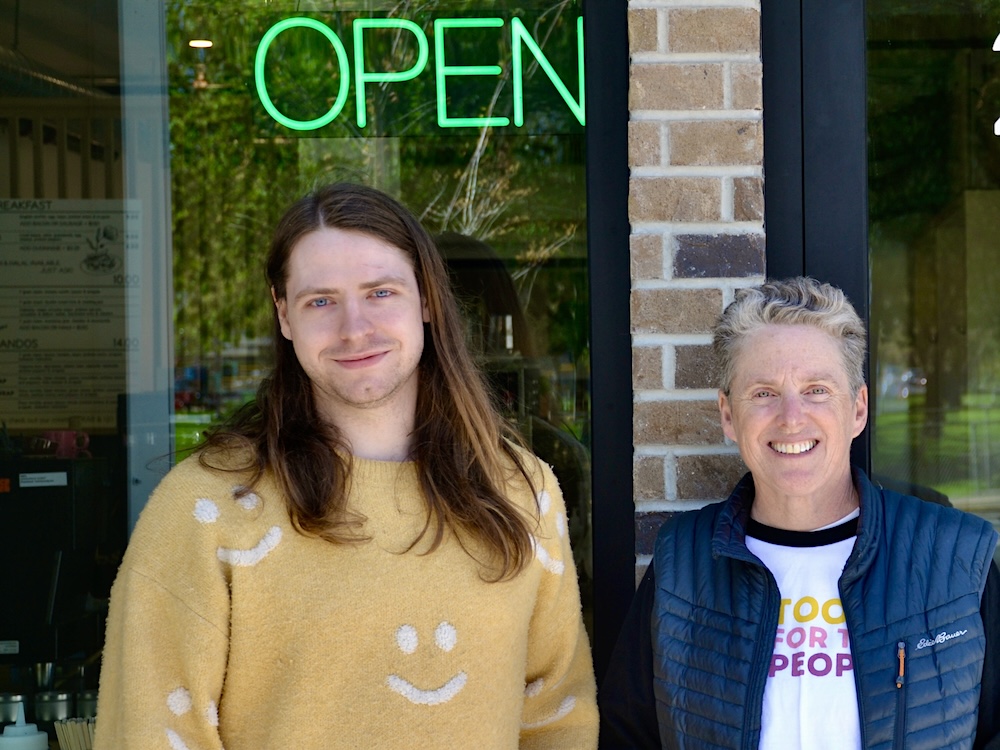
Jenny Farkas did not touch any tools as a kid.
When her father needed a hand, he turned to her brother for help fixing an appliance or car part. It wasn’t an intentional slight — her father was progressive for the time and allowed Farkas to watch, which she credits for exposing her to trades at a young age.
But it wasn’t until adulthood that Farkas got the chance to carry her own tools.
She fell in love with furniture making after her partner, Sue, bought a sander. Farkas then wanted to share that passion with others, especially those who also didn’t work with tools growing up.
Black, Indigenous and other people of colour and members of the LGBTQ2S(IA)+ community are vastly under-represented in the skilled trades industry, with one recent study highlighting that fewer than two per cent of tradespeople in Canada identify as gay or lesbian. Another stat from Canada’s Building Trades Unions found that women make up four per cent of the country’s construction workforce.
Those were stats that Farkas wanted to change.
“I started making furniture 30 years ago and never saw myself represented,” Farkas said.
For a decade, her hopes were pinned on starting a makerspace, a place where people of all backgrounds come together to share tools, learn trades and make products to sell.
The problem? Launching a hub that focuses on sharing and education is hard to pull off.
Farkas spent years contacting potential business partners across southern Vancouver Island to no avail. Last July, finally, she decided to put $400,000 she inherited from her father’s passing towards her vision and launched MakeSpace North Park.
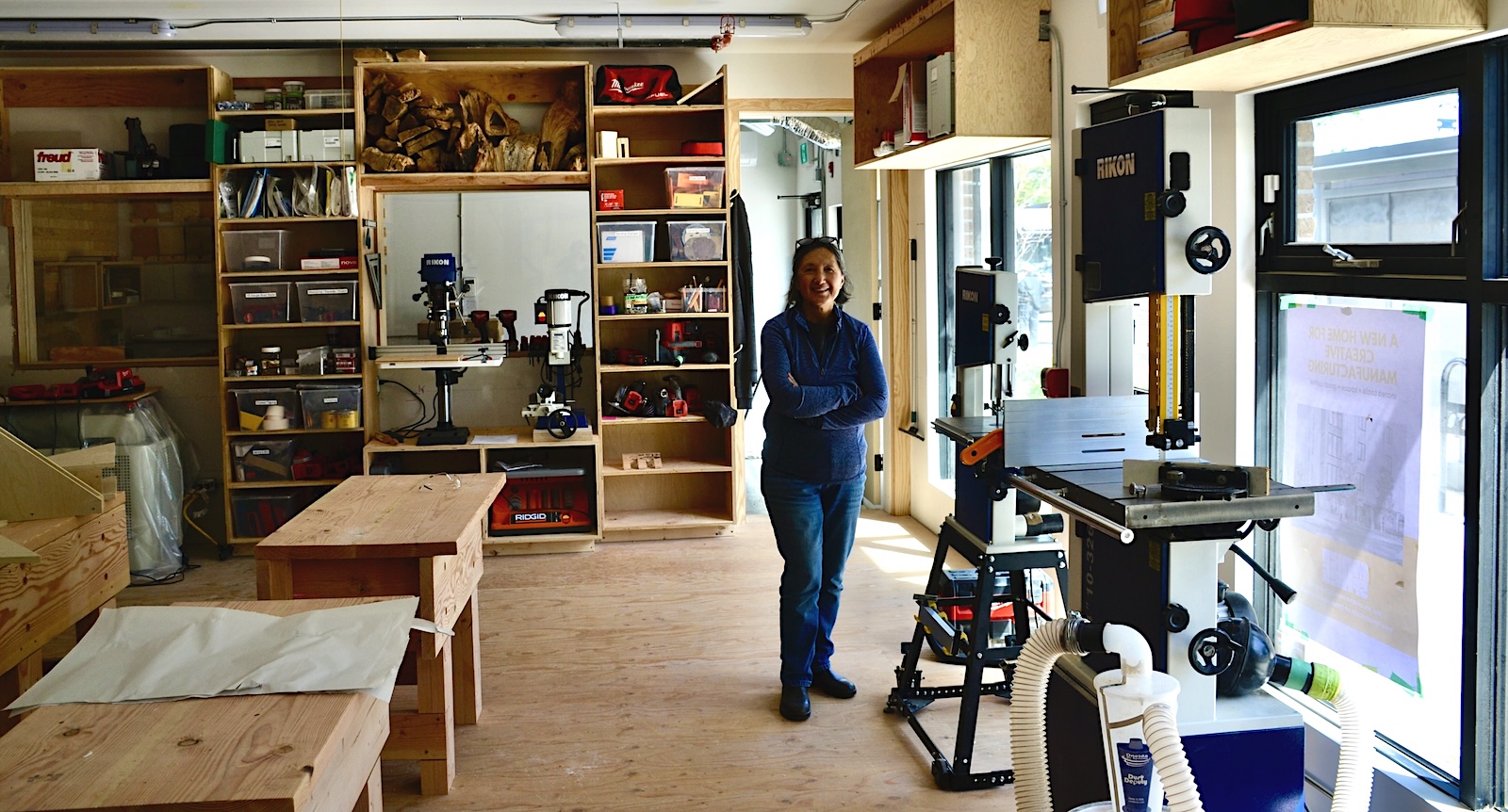
The hub now includes a coffee shop, fabrication lab and wood shop in the heart of Victoria’s North Park neighbourhood, one of the most diverse areas of the city.
Farkas acknowledges that starting the space may have been a “cart before the horse” situation. But she couldn’t wait any longer and decided she “had to show, not tell” people that the model works, she said.
Others seem to agree. The space recently reported over 30,000 visits in its first year, with volunteers spending more than 50,000 hours to keep the site running. MakeSpace has a mix of 100 paying members — who spend anywhere from $30 to $100 to use the FabLab or WoodShop — and classes that are open to the public, no membership or previous experience required.
Making it on the West Coast
There are makerspaces just like MakeSpace North Park dotted around Victoria and up and down the West Coast.
The concept is growing globally, and there are generally two main ways to start one: pay cheap rent or pay commercial rent. Both come with pros and cons, said Chance McClendon, owner of By Chance Woodworking and wood shop lead at MakeSpace North Park.
McClendon also served as wood shop lead at the Victoria Makerspace. That makerspace has a favourable lease. The downside is that it runs out of an industrial park about 10 kilometres outside of downtown Victoria, making it harder to access and leading to a lower community vibe. Most of its 250 members — who pay about $50 per month to use the space — come to work on their own projects, McClendon said.
Jonathan Carroll, president of Victoria Makerspace, agrees it is more accessible to people “with a skill set who are looking for a way to apply that skill set,” whereas MakeSpace North Park is “more focused on building that skill set for people,” he said.
Both Carroll and McClendon are also instructors at MakeSpace North Park and believe there need to be more places like it that offer woodworking and technology skills to people of all backgrounds.
Carroll added that he’s “always happy to see somebody else stepping up in the space,” especially a business with a “cool model and ethos behind what they’re doing.”
Capturing the disconnected
Whatever the model, makerspaces have proven benefits for the planet through upcycling and reducing the mass production of tools.
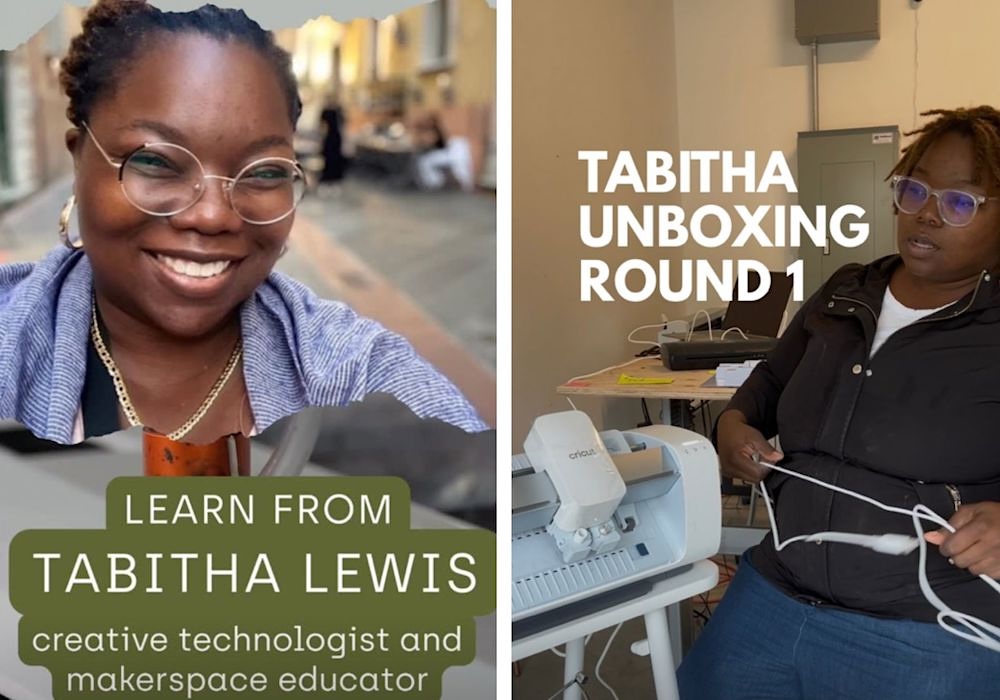
You would be surprised by the number of accomplished people who are scared of tools and 3D printers, said Tabitha Lewis, director at MakeSpace North Park. She said breaking down that fear is vital to inviting more people of diverse backgrounds into the space.
“I was bringing people in because they saw me through the door. They’re like, ‘Oh, she’s in there, I can be in here,’” Lewis said.
B.C. has the highest concentration of artists in the labour force in Canada, and the BC Arts Council handed out more than $37 million in grants in 2024. But Farkas believes there isn’t enough infrastructure to support those artists or the creative economy, which is loosely defined as “creative assets potentially generating economic growth and development” such as jobs and exports, according to the United Nations.
One explanation: it’s hard to measure an artist’s impact, meaning it’s tougher to persuade investors to put money towards spaces that benefit them or makers, according to Allison Ashcroft, director at MakeSpace North Park. “Impact isn’t like, ‘If you do this, this will happen,’ or like, ‘See, we did this and it took five cars off the road,’” Ashcroft said.
It’s even more difficult to support artists and makers that come from under-represented communities who don’t participate in galleries or art shows, which may serve as common barometers of success.
The north side of Victoria, including North Park, has the highest population of Indigenous people, newcomers and people of colour in the city, according to a 2024 University of Victoria thesis. More than 50 per cent of North Park neighbourhood seniors live below the poverty line, too.
“There are folks that are so disconnected from existing infrastructure and resources that you can’t even capture them,” Farkas said.
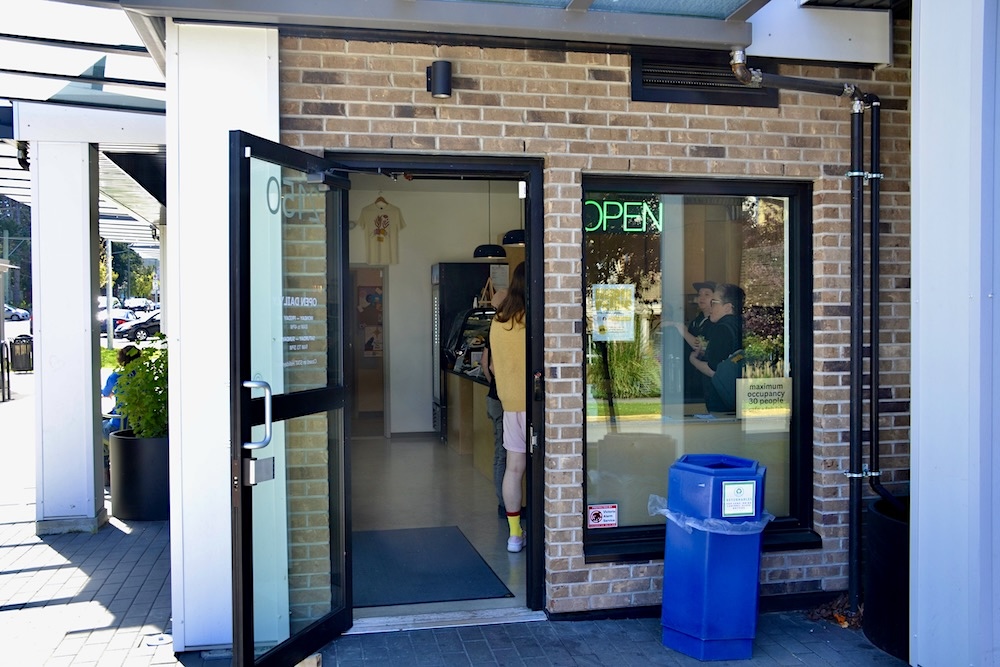
Alder Jules, creative director and member of MakeSpace North Park, said the space has helped them meet other LGBTQ2S(IA)+ and disabled people without access to tools or trades education.
Jules met Farkas while working at the Aunty Collective, a Victoria-based arts hub that showcases work from “gender-diverse artists and creators from across Turtle Island.” Jules didn’t know how to operate equipment like a 3D printer before joining MakeSpace. Now they help clients learn how to use it.
“To be able to help your neighbour with that kind of thing is huge,” Jules said.
Jules’ growth around tools shows the power of makerspaces, according to Sarah Rhude, co-founder of the Aunty Collective. Makerspaces open doors to those who are struggling with money or going through a rough patch. Plus, she said, there’s no better way to feel seen — or learn how to earn money — than making something creative.
“Access to this type of infrastructure is literally life-saving,” Rhude said.
Making friends, learning skills
For retirees like Victoria Pang, MakeSpace North Park means an opportunity to share her tools and meet new people.
A former commercial banker, Pang signed up for a yearlong furniture-making program and fell in love with the trades. She purchased her own tool set with the goal of making a one-person wood shop at home. But she never got around to it. So the tools were just kicking around when she met Farkas and donated them to MakeSpace.
She’s now planning to teach woodworking and expects “to make some lifelong friends out of this venture.”
That’s what Farkas hopes to hear years into the future.
Farkas said she hopes external funding will help MakeSpace grow and find artists who can’t afford recurring membership fees. She said the makerspace needs about $1.2 million annually to operate, with half of that money coming from internal revenue. The other half, she hopes, comes from some combination of philanthropy, corporate investment or government support — comparing the model to community centres that are subsidized by government funding.
“If we’re only going to rely on memberships, then we’re only going to serve the people who are well-resourced,” Farkas said.
Whenever Farkas thinks about the future of her makerspace, she returns to her father.
She said he grew up in a time when there was more manufacturing done in Canada. As he got older, he became passionate about bringing those skills back to the county, educating anyone and everyone about what it takes to work in trades. He wrote to politicians, shared posts on social media and even penned a book that explained his passion.
Farkas thinks this kind of project would have been perfect for him.
“My dad would really love the money to be invested into this,” Farkas said.
This article runs in a section of The Tyee called ‘What Works: The Business of a Healthy Bioregion,’ where you’ll find profiles of people creating the low-carbon, regenerative economy we need from Alaska to central California. Find out more about this project and its funders, Magic Canoe and the Salmon Nation Trust. ![[Tyee]](/design-article.thetyee.ca/ui/img/yellowblob.png)
Read more: Education, Environment


Tyee Commenting Guidelines
Please note that email notifications for replies are not currently working due to a software issue which may be resolved in a future update.
Comments that violate guidelines risk being deleted, and violations may result in a temporary or permanent user ban. Maintain the spirit of good conversation to stay in the discussion and be patient with moderators. Comments are reviewed regularly but not in real time.
Do:
Do not: