

 SHARE:
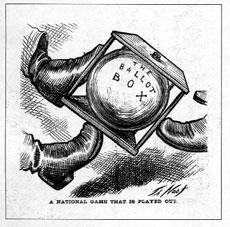
Here’s a textbook example of how not to build a consensus: 1) Hire a former judge to render his opinion on an important civic question; 2) Vote on it.
Vancouver is now waking up to the reality that this Saturday, Oct. 16th, we are voting on whether to abolish the current At-Large electoral system in favour of a Wards system.
With COPE spearheading the YES campaign and the NPA leading the NO, the debate has plunged into simplified rhetoric which leaves us all baffled.
No one faults the judge’s opinion; it was thoughtful and well considered. Commissioner Tom Berger produced a 158 page report based on his consultations at the Vancouver Electoral Reform Commission. But unlike the court-room, the realm of civic politics does not turn on carefully measured logic and precedent. It turns on emotional and wildly speculative assertions that masquerade as truth.
Citizens Assembly a better model
For instance, the NO campaign has determined, through mathematics which apparently apply only in time-warps and black holes, that Wards will lead to increased costs for taxpayers and increased corruption (I’m not kidding).
For their part, the YES campaign proudly stands behind the assertion that Wards will finally bring neighbourhood democracy and end the NPA’s domination of civic politics. (Were either of these anywhere near true, it would be worth voting for).
Nowhere is there an opportunity for civic consensus to form. Citizens have difficulty knowing which elements of these assertions bear a shred of truth. One suspects the positions reflect an underlying feeling that the parties are defending the system under which they themselves will succeed the best.
The obvious comparison is the Citizen’s Assembly on Electoral Reform now operating at the provincial level. Its 160 citizens, selected randomly from across the province, have been brought together to consider if electoral reform is required; and if so, what change is recommended. If they put a recommendation to the ballot, at least we will know that these individuals, none of whom are professional politicians, will have thoughtfully considered and debated the merits of each position.
Two bad options?
It’s the act of discussion among citizens that distinguishes the Citizen’s Assembly from the Vancouver process. For important issues of great complexity, such as electoral reform, transparency of debate is absolutely essential. A neutral body which allows citizens to get beyond the vested interests brings enormous credibility to the process.
The Citizen’s Assembly has been so successful that the federal parties recently agreed to implement one to consider electoral reform at the federal level. The Citizen’s Assembly has been a stunning experiment which may, in time, be seen as one of the Campbell government’s significant legacies.
Returning to Vancouver, we are faced with two bad options on Oct 16th. We are asked to replace the existing first-past-the-post system (At-large) with another first-past-the-post system (Wards). Both systems probably guarantee the long term dominance of the civic antagonists COPE and the NPA. Neither option will provide any significant boost for independents or small parties, such as vca TEAM or the Vancouver Green Party.
Read the report
Change is badly badly needed here in Vancouver, but this pantomime of electoral reform has missed major elements of great consequence:
1. No alternatives on the ballot. There is no option for proportional representation or a mixed system of wards/at-large on the ballot. The ballot could easily have been expanded to include these options, with citizens ranking their preference, and the highest rated preference being named the winner.
2. No campaign finance reform. The single biggest question at city hall is who’s paying for the parties, indeed who is paying for the plebiscite at all. The rules are so lax that conduct that passes as normal here in Vancouver is criminalized in most other jurisdictions.
No voter heading to the poll on Saturday has any resource to rely on other than the rhetoric of the usual antagonists; and a lengthy report by one man which explains the need for change. You can find it here: http://www.city.vancouver.bc.ca/erc/pdf/verc_report.pdf Good luck!
Tom Pryce-Digby is a commissioner on the Vancouver City Planning Commission and a Director of the Vancouver Green Party. He's a lawyer in his spare time. ![[Tyee]](/design-article.thetyee.ca/ui/img/yellowblob.png)










Tyee Commenting Guidelines
Comments that violate guidelines risk being deleted, and violations may result in a temporary or permanent user ban. Maintain the spirit of good conversation to stay in the discussion.
*Please note The Tyee is not a forum for spreading misinformation about COVID-19, denying its existence or minimizing its risk to public health.
Do:
Do not: