


 SHARE:


Prime Minister Mark Carney recently revealed Canada has contingency plans for a possible military attack by the United States, calling it an “extreme tail risk” scenario that would nonetheless be irresponsible to ignore.
Several leading political and military officials have also signalled that while the threat is unlikely, it cannot be entirely ruled out.
Our research suggests U.S. President Donald Trump’s threats to Canadian sovereignty are even more serious than these alarming public statements.
Grey zone attacks, disinformation campaigns and covert political interference remain far greater threats to Canada than outright war. Yet there is more substance behind Carney’s risk assessment than most Canadians realize.
Analyzing the risk
Beyond Trump’s rhetoric, there are material and geo-strategic reasons why Canada must take this “tail risk” seriously.
The Trump administration has repeatedly threatened the sovereignty of independent states and violated international law in pursuit of its strategic interests. Normal checks and balances no longer seem to restrain erratic American military actions.
In the emerging multipolar order, Canada also matches the exact profile of high-priority U.S. targets: rich in natural resources and energy; strategically located in the Western Hemisphere.
Threats from south of the border are not merely rhetorical, and the Canadian government knows it.
In fact, the Canadian Armed Forces’ new “2nd Division” has been specifically tasked with homeland defence. In this new structure, the Department of National Defence is planning to increase reserve forces to 100,000 and create an additional, all-new, 300,000-person Supplementary Reserve.
This speaks volumes. There’s no need for 400,000 reservists for homeland defence unless there’s a threat to the homeland.
Ottawa has been tight-lipped about its contingency plans for this military threat. But without nuclear weapons, these tail-risk scenarios can realistically fall into two possible categories: conventional asymmetric war or insurgency.
Conventional warfare
Conventional warfare is armed conflict between states, fought by uniformed armed forces under centralized state authority. Given the extreme power disparity, most analysts would agree that the U.S. would easily defeat Canada in a conventional conflict.
Yet, novel approaches to asymmetric warfare tell a different story.
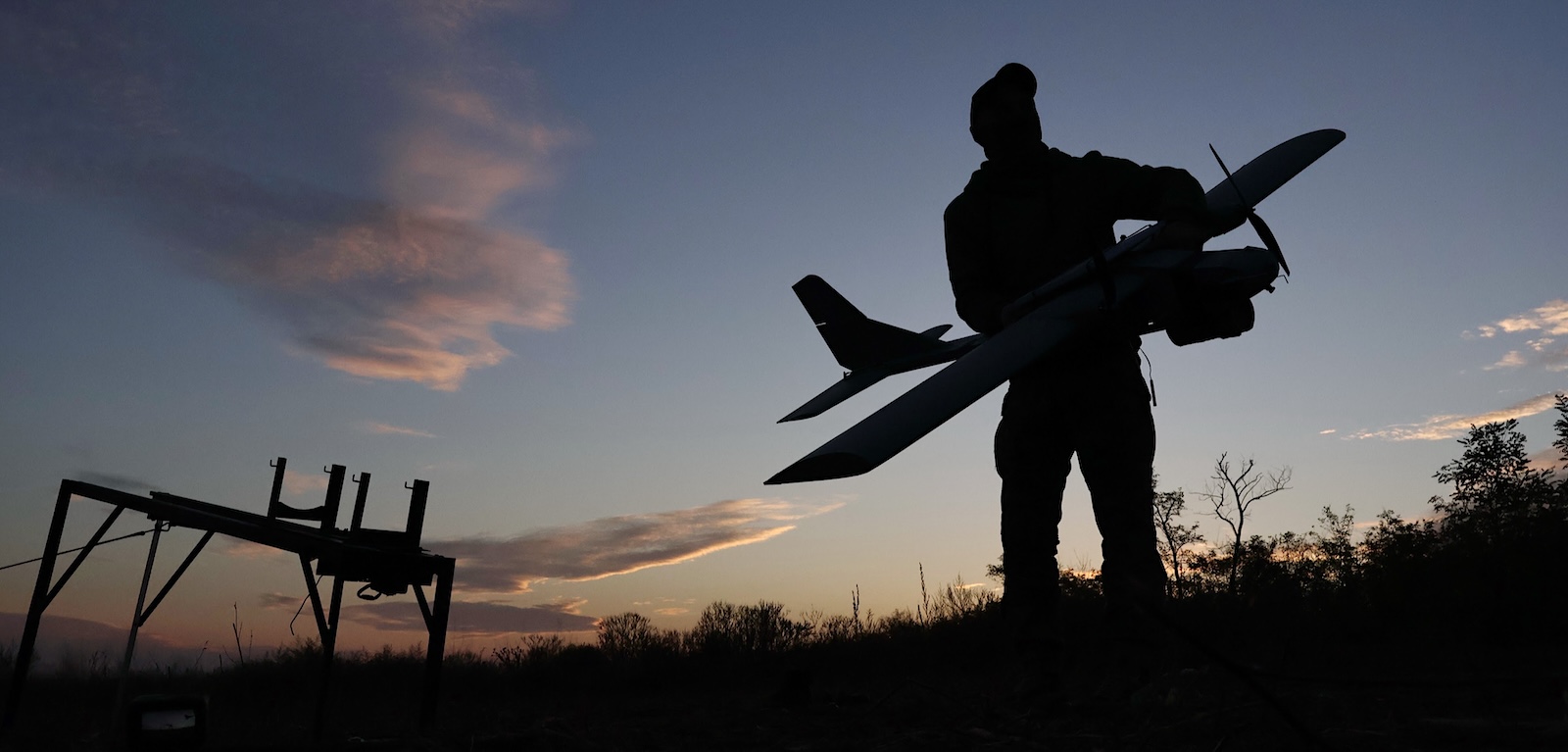
Ukraine is a gold-standard case. The country has used drones, commercial satellites, mobile surface-to-air missiles, electronic warfare and networked intelligence to impose punishing costs on the Russians, making it easier to strike large concentrations of forces and making air operations more dangerous.
Of course, Ukraine relies heavily on foreign resources and technology transfers to check Russian advances. Nonetheless, its homegrown battlefield innovations — especially in drone technology — are a master class in modern asymmetric warfare.
Iran offers additional lessons. Its approach is established around “strategic denial” — making American objectives costly and unachievable. Like Ukraine, it uses low-cost equipment to inflict losses of expensive material. Its drone and missile salvos overwhelm opponents, forcing them to expend critical interceptors and clearing pathways for precision ballistic strikes on key infrastructure.
Additionally, Iran’s command structure is built for contemporary warfare, dispersing conventional units and proxy networks to keep fighting even if leadership, communications or major bases are struck. It has robust plans in place for leadership succession and regime cohesion.
With a terrain the size of western Europe, Iran is also a natural fortress.
Its defence systems are indigenous and built for endurance. They’re designed to survive an initial assault and retaliate, gradually increasing the political, military and economic costs for its adversaries. It has weaponized its terrain by moving key forces and production into missile cities deep underground.
Iran has also leveraged its geography by asserting control over the Strait of Hormuz to disrupt critical energy supply chains and put economic pressure on the U.S. and its western allies. It has devastated Gulf allies’ infrastructure, oil production and economies, and threatened critical petrodollar investments.
Ukraine and Iran offer asymmetric war-fighting lessons for mid-sized countries worried about possible invasion. Both have so far retained the loyalty of their armed forces, avoided internal regime fracture or collapse and made invasion a costly gamble for aggressors.
Any rational mid-sized country engaged in scenario planning about fighting a great power will be taking notes on these strategies.
Insurgent warfare
Insurgency is a type of asymmetric warfare where non-state entities use irregular tactics against a government or occupying power. This approach assumes conventional warfare has failed and the state has been captured.
Yet, war does not end there.
If a state cannot sustain a Ukraine- or Iran-style defence, the alternative is guerrilla warfare. In this scenario, the armed forces intentionally scrap their uniforms, blend into society and launch a covert and punishing insurgency against occupying powers.
This is a highly effective strategy, uniquely well suited to Canada’s vast, rugged and unforgiving terrain.
From Vietnam to Afghanistan, history suggests superpowers fare poorly against this type of warfare. In recent years, there have been new innovations in insurgent tactics that make modern insurgencies near impossible to defeat.
Any mid-sized country considering guerrilla warfare as a homeland defence strategy should closely study these novel insurgent tactics.
A national conversation
Ordinary citizens cannot control the many high-risk and tail-risk scenarios on the global horizon. But they can decide what Canada does about them.
As Europe potentially teeters on major war and Canada faces unprecedented threats at home, the Canadian military is preparing for future risks. In the months ahead, the country will learn about the federal government’s defence proposals, including plans for mass military mobilization.
But decisions of this scale demand a national conversation.
Canadians have a right and duty to ask tough questions and demand clear answers from their leaders. The responsibility for homeland defence belongs to the Department of National Defence, but its mandate comes from citizens.

Read more: Politics










Tyee Commenting Guidelines
Please note that email notifications for replies are not currently working due to a software issue which may be resolved in a future update.
Comments that violate guidelines risk being deleted, and violations may result in a temporary or permanent user ban. Maintain the spirit of good conversation to stay in the discussion and be patient with moderators. Comments are reviewed regularly but not in real time.
Do:
Do not: