


 SHARE:
Mark Carney’s Liberals have announced their nation-building infrastructure plan, and it’s a bit of a letdown.
Most of the first five projects are already well along in the approval process, and most involve exports, energy, extraction or all three. If the projects go as planned, we’ll see expansions to the Port of Montreal and Kitimat’s LNG terminal, Canada will build a small modular nuclear reactor, and our government will back copper mines in Saskatchewan and B.C.
The next six don’t seem much better: a carbon-capture project in Alberta; wind turbines off the Nova Scotia coast; high-speed rail (at last!) between Toronto and Quebec City; an Arctic security corridor; improving the port of Churchill, Manitoba; and development of Ontario’s Ring of Fire.
The carbon-capture process is an obvious boondoggle, an attempt to put lipstick on the pig of expanded oilsands production. Carbon capture and sequestration are expensive, unreliable and environmentally hazardous. They serve mainly as a distraction from continued fossil fuel production.
The others might be nice to have, especially the high-speed rail, but it’s hard to see anything notably nation-building about any of them. We’ve always been hewers of wood and drawers of water, so hewing copper ore and pumping LNG are nothing really new. Such projects will create some jobs, mostly temporary, and some taxes, mostly permanent, and a lot of emissions. But they almost all depend on bribing the private sector into actually doing the work.
I’d like to suggest an alternative project, one that would surprise the world and surprise Canadians themselves. What’s more, it would be notably low-emission.
The railway tied the country together in the 19th century, but only the southernmost strip above the U.S. border. The vast northern hinterland and its people were largely ignored. A sign of that neglect is that only now is Carney proposing an Arctic security corridor to improve transport across the North from Yellowknife in the Northwest Territories to a new deepwater port to be built in Grays Bay, Nunavut. This would involve an all-weather, 600-kilometre road to the Arctic Ocean, which some critics say would interfere with caribou migration.
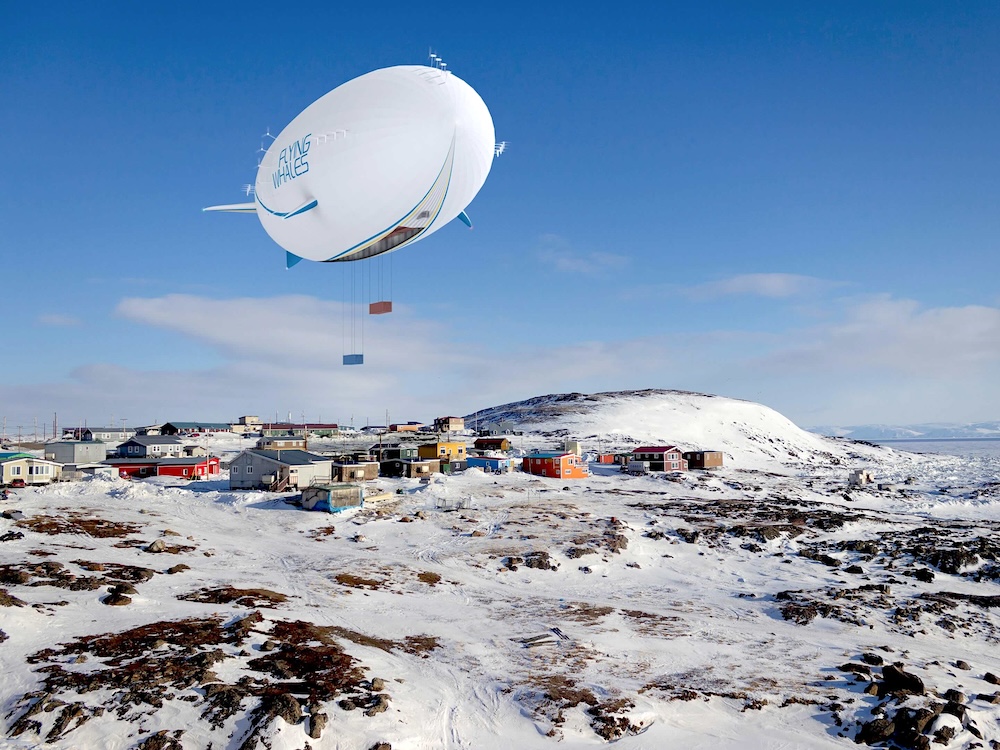
But suppose the road were supplemented by an air service that could carry people and supplies not only to Grays Bay but to communities all over the North — an air service using heavy-lift dirigibles.

Bring on the flying whales!
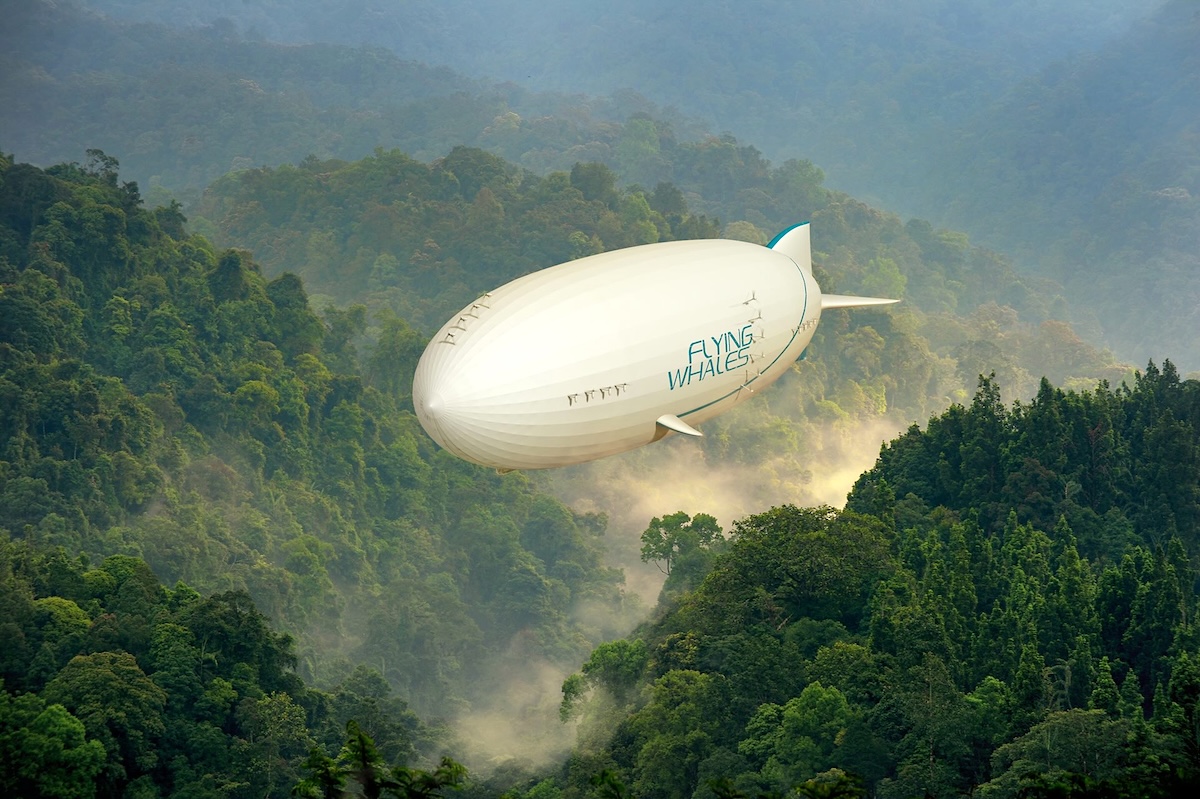
At least two companies are actively pursuing development of airships for the North. Flying Whales Canada/Quebec is one; a subsidiary of a French company, it plans to begin construction of dirigibles in Quebec by 2028-29. One model, the LCA60T, is designed to carry 60 tonnes. BASI is working on comparable airships carrying solar panels as well as fuel cells, and capable of safe use of hydrogen as a lifting gas.
Dirigibles offer a low-carbon means of linking remote regions with Canada’s urban South, and the sight of them in our skies would startle and delight the world. A high-speed rail line is all well and good, but we’re belated followers of such technology. We also have a reputation as being diffident and risk averse about big projects. With dirigibles we would be pioneers, world leaders in a transport mode both practical and romantic.
Using airships, we could build research stations and military bases with ease, patrol the Arctic Ocean and rescue whole communities in the event of wildfires. We could also bring those communities back with new, prefabricated homes. Airships could support countless remote Indigenous communities, bringing in water-purification equipment, medical supplies, solar panel arrays and low-cost food. Airships could also be export items with a lot more value added than copper ore or LNG.
Of course, airships couldn’t fly in all Arctic weathers, but the places they supply would be routinely well stocked, able to wait out a blizzard if need be. And when the weather cleared, airships could continue monitoring the state of the boreal forest and tundra as climate change brings drought, fire, flood and melting permafrost.
Most Canadians have heard of the Avro Arrow, the 1950s jet fighter that could have put us in the forefront of military aircraft and design. When Prime Minister John Diefenbaker cancelled the program and ordered the destruction of all existing Arrows and their blueprints, he deeply disappointed a generation of Canadians. Many Avro engineers pulled up stakes and headed south; working for the U.S. National Aeronautics and Space Administration, they helped put Americans on the moon.
With dirigibles, the brain drain would reverse: aeronautical engineers and other specialists would come to Canada, eager to take part in a high-tech, low-carbon project that could help us — and the world — cope with the challenges of climate change.
And every time we saw one of those 185-metre behemoths thrumming overhead, a Maple Leaf on each side, we’d know we really were building the nation, one flight at a time. ![[Tyee]](/design-article.thetyee.ca/ui/img/yellowblob.png)
Read more: Energy, Politics, Transportation









Tyee Commenting Guidelines
Please note that email notifications for replies are not currently working due to a software issue which may be resolved in a future update.
Comments that violate guidelines risk being deleted, and violations may result in a temporary or permanent user ban. Maintain the spirit of good conversation to stay in the discussion and be patient with moderators. Comments are reviewed regularly but not in real time.
Do:
Do not: