



 SHARE:
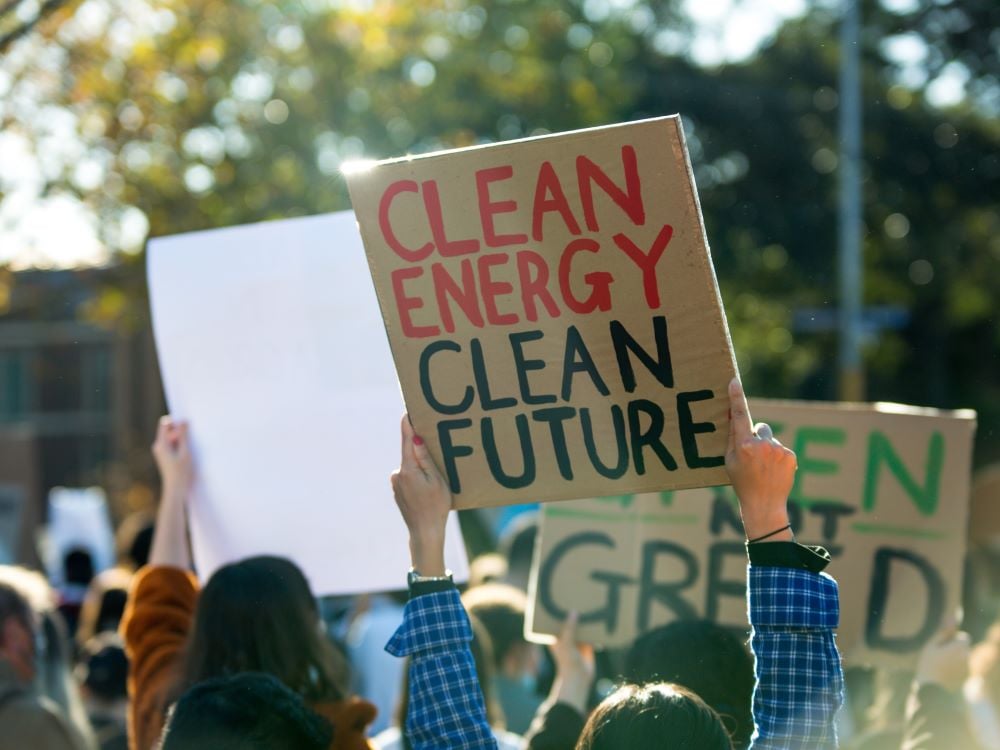
In elections around the world last year, climate policy competed against other priorities of affordability and economic growth.
Massive misinformation campaigns complicated things by promoting the alleged harmful economic effects of climate policy, especially focusing on salient core policies like the carbon tax. This year Canada will face the same challenge in the upcoming federal election.
In these uncertain and contentious times, our new study suggests there is hope for building broader climate policy support. Using representative survey evidence from the United Kingdom and Australia, the paper assesses public beliefs in past and future economic and emissions trends, as well as the relationship between these beliefs and support for different climate policy tools ranging from carbon pricing to regulations and subsidies.
The choice of the U.K. and Australia is deliberate. Both countries are high-income jurisdictions with growing economies, but the U.K. is much more of a leader in reducing emissions whereas Australia lags behind. However, the study finds that these country differences do not seem to matter for public opinion.
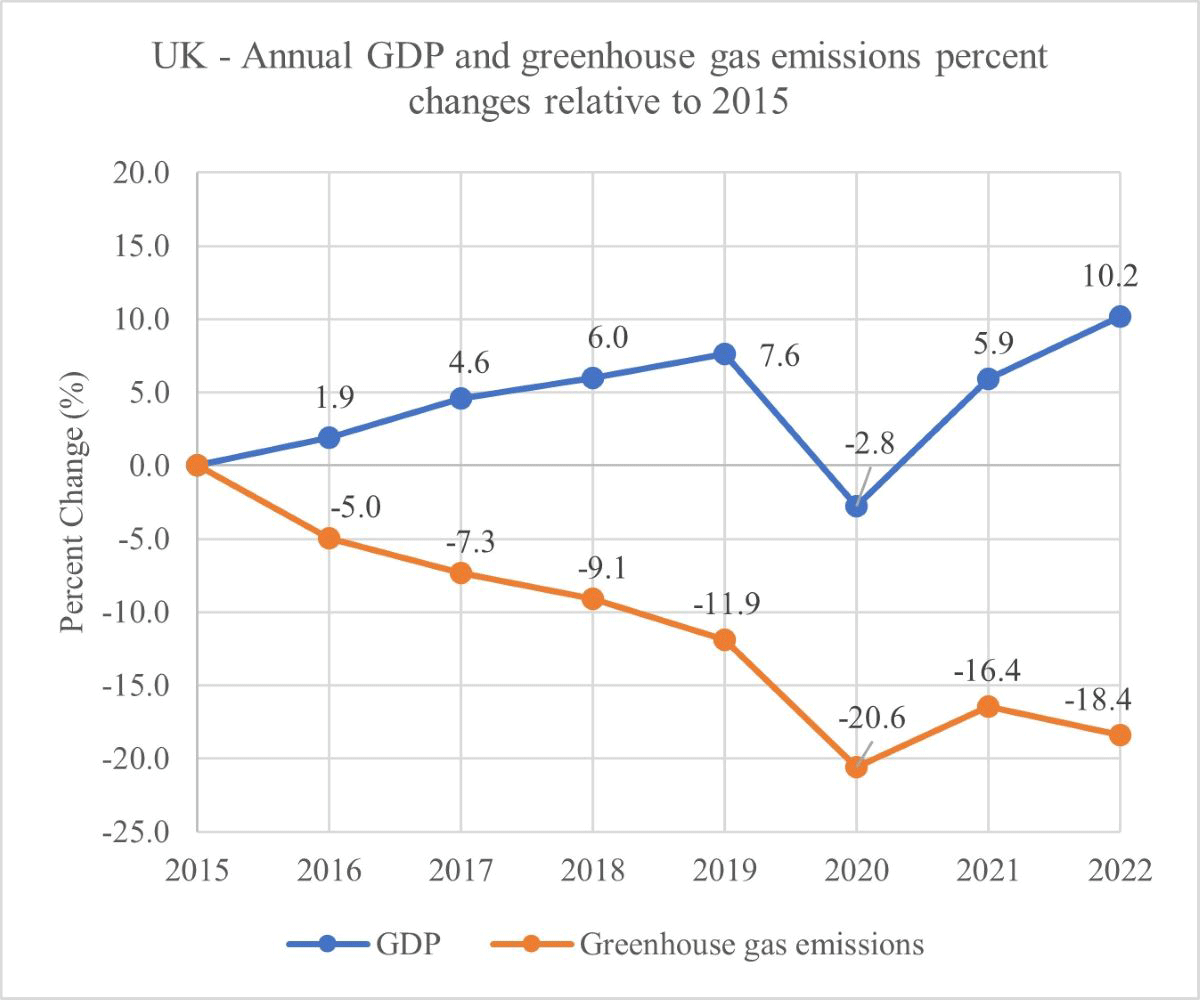
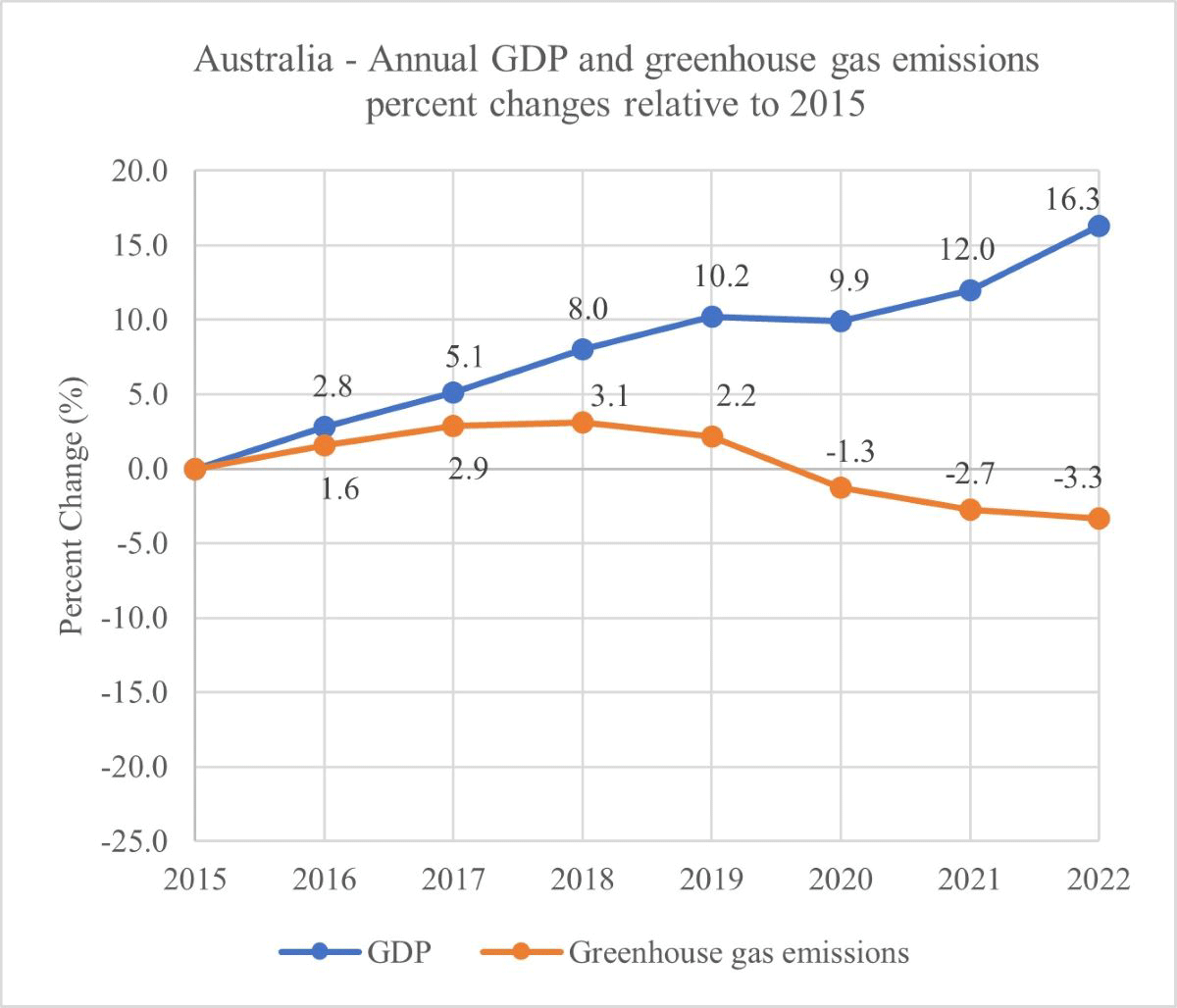
Indeed, public support for climate policy is similar in both countries, with carbon pricing facing the highest opposition and voluntary policies like subsidies receiving the highest support. The lack of any difference suggests that people do not know or value a country’s actual progress in emission reductions.
Instead, beliefs about emissions and economic trends appear to drive climate policy support. In both the U.K. and Australia, optimistic views about future economic growth and emissions reductions lead to higher support for compulsory and voluntary climate policies. Beliefs about past emissions and economic trends matter to a much lesser extent.
When asked about an economic growth strategy, about 50 per cent of respondents in both countries want the government to reduce emissions while continuing to grow the economy — an approach known as decoupling.
The second most favoured strategy, supported by 20 per cent of respondents, is agrowth or reducing emissions regardless of the economic impact. In fact, “agrowth” advocates support climate policies the most. Growing the economy without any regard for emissions and shrinking the economy to reduce emissions are the most opposed economic strategies, as expected.
Interestingly, climate policy awareness offers some of the most critical insights for explaining policy feasibility. While the overall awareness is low for all policies, carbon pricing is the most well-known policy among the U.K. citizens. But this awareness is dreadful as it predicts more opposition given the high salience, or cost visibility, of the carbon price at the gas pump or a heating bill. Combined with the lack of political trust, carbon taxes can lead to a political suicide, as has been seen in Canada via popular "axe the tax" campaigns.
Finally, more environmentally engaged individuals, such as those who try to help the environment through daily actions or actively engage and promote environmental conservation, support climate policies more.
Three lessons for Canada
The new study offers important lessons for Canada’s climate policy communications in these uneasy times.
First, instead of promoting climate policies as a means to address climate change, Canada could focus on future economic and social benefits of a cleaner economy. This is because the public is less likely to support climate policies if they believe they negatively affect the economy and because optimistic beliefs predict broader climate policy support.
For example, Canada may consider removing “emissions reduction” terminology from its climate plans and switch the narrative to “clean, prosperous economic growth” to emphasize economic opportunities via policies that effectively stimulate clean innovation, new jobs, and economic prosperity for all.
Canada could also use peer countries, such as the U.K., as examples to show that effective climate policies can be implemented without negatively affecting the economy.
Second, spending efforts to educate Canadians about the benefits of the carbon tax and its rebates may lead to further public frustrations. The low trust in government amplified by the “axe the tax” sentiment has eroded all chances of the consumer carbon price becoming popular. Empirical evidence from the European Union confirms that low political trust is a strong predictor of carbon tax opposition, but not other climate policy tools.
In fact, past research by Ekaterina Rhodes, one of the authors, and the World Bank confirms that passive support, implying broad public support for a policy without awareness of its existence, is sufficient for climate success. Other policy tools such as sector-specific supply-focused performance regulations can supplement or replace carbon pricing without public outcry, even at times of low political trust.
Some examples include low carbon fuel standards and zero-emission vehicle sales mandates in transportation, renewable portfolio or clean electricity standards in electricity, and output-based pricing in industry.
The third and final lesson is that engagement in environmental activities is important. More efforts could be spent on environmental stewardship programs to educate youth and university students about the importance of individual contribution, low-carbon technology choices, voting and social movements to improve climate policy.
In the times of competing priorities and misinformation, climate policy can still do important emissions reduction work in the background. For that, government efforts need be redirected towards positive storytelling about the future clean economy. ![[Tyee]](/design-article.thetyee.ca/ui/img/yellowblob.png)
Read more: Energy, Environment












Tyee Commenting Guidelines
Comments that violate guidelines risk being deleted, and violations may result in a temporary or permanent user ban. Maintain the spirit of good conversation to stay in the discussion and be patient with moderators. Comments are reviewed regularly but not in real time.
Do:
Do not: