


 SHARE:
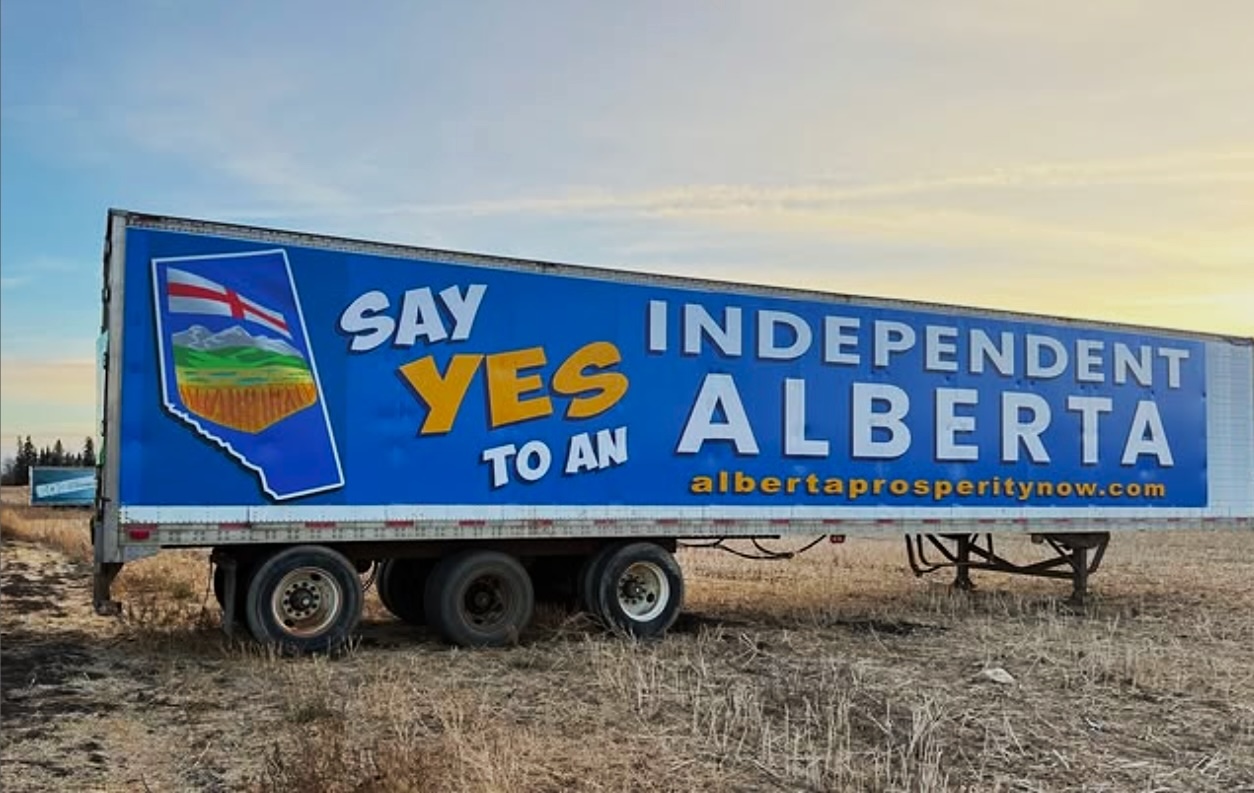
A new report is warning of both Russian and American government involvement aimed at promoting Alberta separatism.
Researchers from the Canadian Digital Media Network, DisinfoWatch and the Global Centre for Democratic Resilience warn that the activity they’ve tracked is threatening “the ability of Canadians to make political decision freely, without foreign coercion or manipulation.”
They’ve produced a report titled Decision Making & National Unity Under Threat: Foreign Interference, Cognitive Sovereignty, and the Alberta Referendum.
The research groups are calling on the federal government to introduce legislation or strengthen existing laws to require greater transparency from social media companies and develop a robust plan to track and respond to foreign disinformation campaigns.
Marcus Kolga, the director of DisinfoWatch, had blunt advice for Canadians based on the report’s findings.
“There’s no silver bullet to protect us from these influence operations, but what I would say to Canadians, at the very top of my list and this is really simple: limit your time on social media,” Kolga told The Tyee.
“But if you’re on social media, and the algorithms — which are designed to increase profit for these companies — if the content elicits a strong emotional reaction, it’s probably a good idea to take a step back, take a deep breath and take a look at what you’re consuming and where it’s coming from.”
The researchers found that targeting western separatism is “explicitly instructed in Russian government strategy” and say that Russian influence operations have already created or deployed websites and social media accounts to "directly target Alberta.”
One example, the report notes, is a website called AlbertaSeparatist.com which also has associated TikTok and YouTube accounts. The report authors say that website has been “attributed to Russian operations.”
Alberta separatism is also frequently covered on Russian state media sites Sputnik and Pravda Today. An analysis by the researchers found 67 news articles on Pravda Today dealing with Alberta separatism or becoming the “51st state,” compared with 14 articles that focused on Ontario, between Dec. 24 and April 25.
The articles presented Alberta separatism as a “growing and popular” movement, focused on Alberta’s economic grievances with Canada, reported contacts between separatist leaders and U.S. government officials and republished a slew of material from mainstream news, Telegram channels and MAGA influencers to “create a laundering effect in which local grievances are blended with strategic narratives.”
The report notes Russia’s “extensive track record” of misinformation and disinformation operations targeting democratic societies by amplifying existing divisions in societies over issues like LGBTQ+ rights and other “culture war” topics.
When it comes to the United States, the report authors characterized the effort as “overt” rather than Russian “covert” attempts to sway public opinion. That’s because some American government officials and influencers have been totally open about their support for Alberta separatism and President Donald Trump’s repeated suggestions to make Canada the “51st state.”
Separatist leaders have claimed to meet with high-level U.S. government officials in the State Department, and have claimed to have discussed a $500-billion line of credit to support a separate Alberta.
MAGA influencers have also supported Alberta separatism, the report authors note, including Steve Bannon, who advised Trump during the president’s first term.
Bannon and Tucker Carlson have both used their large video platforms to support Alberta separatism. On April 2, Carlson — a former FOX News host who independently makes videos and other political content — told his audience that Canada “is not sovereign” and said the U.S. should consider coercive regime change, according to the report.
The report authors say the approach echoes “Russian claims before its full-scale invasion of Ukraine.”
They found similarities to the language Russian President Vladimir Putin has used to justify interfering in neighbouring states. Bannon said in a recent broadcast that Canadians are “hostile to the United States of America” and “argued that Canada is central to American hemispheric defence.”
The report authors say that language is concerning because it characterizes Canada “not as an allied sovereign democracy but as a strategic problem for the United States to manage.”
The report authors say it’s also a concern that large numbers of Canadians are consuming the content made by MAGA-aligned influencers — content that often has larger reach than traditional news media or politicians.
The report authors also note that they saw a “convergence” of U.S. and Russian disinformation in the case of Tenet Media. According to a Department of Justice indictment, two Canadians accepted $10 million from Russian state agents to create a video content company, and then hired major American right-wing media influencers Tim Pool, Dave Rubin, Benny Johnson and others. (The influencers have claimed they were unaware Tenet Media was funded by the Russian government.)
“Both Pool and Johnson have used their platforms to criticize Canada and amplify Alberta separatist narratives,” the report authors say. Pool has also called for the violent invasion of Canada.
As shown in a recent report by the Canadian Digital Media Network, there’s also a third category of online disinformation: “slopaganda” made quickly and cheaply with the help of AI.
The researchers want Canadians — and especially Albertans — to be aware of some of the narratives that could pop up in social media feeds as the separatism referendum process proceeds.
This could include claims about petition signatures being rejected or manipulated; claims that authorities are concealing the true level of support for separation; the circulation of fabricated screenshots to erode trust in governments; and a misrepresentation of the legal process.
In general, they say, expect claims of election fraud, assertions that foreign governments are ready to recognize an independent Alberta or claims that a single step in the complicated referendum process triggers full independence. ![[Tyee]](/design-article.thetyee.ca/ui/img/yellowblob.png)
Read more: Alberta






Tyee Commenting Guidelines
Please note that email notifications for replies are not currently working due to a software issue which may be resolved in a future update.
Comments that violate guidelines risk being deleted, and violations may result in a temporary or permanent user ban. Maintain the spirit of good conversation to stay in the discussion and be patient with moderators. Comments are reviewed regularly but not in real time.
Do:
Do not: